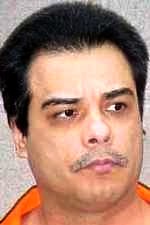
Ernest Valencia Gonzales
Murderer Brian Kevin Rosenfeld
Murderer · USA · 1985
Brian Kevin Rosenfeld Brian Kevin Rosenfeld was sentenced to three concurrent l…
23 victims
Brian Kevin Rosenfeld
Murderer · USA · 1985
Brian Kevin Rosenfeld Brian Kevin Rosenfeld was sentenced to three concurrent l…
23 victims
 Yahweh ben Yahweh
Murderer · USA · 1980
Yahweh ben Yahweh was born and legally named Hulon Mitchell Jr. (October 27, 19…
23 victims
Yahweh ben Yahweh
Murderer · USA · 1980
Yahweh ben Yahweh was born and legally named Hulon Mitchell Jr. (October 27, 19…
23 victims
 Russell Ellwood
Murderer · USA · 1991
Russell Ellwood was a former taxi driver. Authorities suspected him of killing…
20 victims
Russell Ellwood
Murderer · USA · 1991
Russell Ellwood was a former taxi driver. Authorities suspected him of killing…
20 victims
 Robert Martines Perez
Murderer · USA · 1994
Name: Robert Martines Perez · Other name used in proceedings: Robert Martinez P…
15 victims
Robert Martines Perez
Murderer · USA · 1994
Name: Robert Martines Perez · Other name used in proceedings: Robert Martinez P…
15 victims
 Moses Sithole
Serial killer · South Africa · 1994
Moses Sithole (November 17, 1964) was a serial rapist and serial killer in Sout…
38 victims
Moses Sithole
Serial killer · South Africa · 1994
Moses Sithole (November 17, 1964) was a serial rapist and serial killer in Sout…
38 victims
 Andrea Matteucci
Serial killer · Italy · 1980
Andrea Matteucci (also known as “Mostro di Aosta”) was an Italian serial killer…
4 victims
Andrea Matteucci
Serial killer · Italy · 1980
Andrea Matteucci (also known as “Mostro di Aosta”) was an Italian serial killer…
4 victims
 James Canham Read
Murderer · United Kingdom · 1894
James Canham Read was a middle-aged married bookkeeper at the London Docks. He…
1 victim
James Canham Read
Murderer · United Kingdom · 1894
James Canham Read was a middle-aged married bookkeeper at the London Docks. He…
1 victim
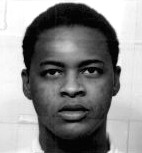 Richard James Wilkerson
Mass murderer · USA · 1983
Richard James Wilkerson (#756) Richard James Wilkerson was executed by lethal i…
4 victims
Richard James Wilkerson
Mass murderer · USA · 1983
Richard James Wilkerson (#756) Richard James Wilkerson was executed by lethal i…
4 victims
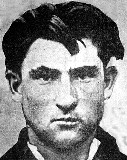 Jules-Alexandre Ughetto
Mass murderer · France · 1928
Paris, 17th September. A woodcutter made a plea at the trial of two lads. He sa…
5 victims
Jules-Alexandre Ughetto
Mass murderer · France · 1928
Paris, 17th September. A woodcutter made a plea at the trial of two lads. He sa…
5 victims
 Melinda Loveless
Homicide · USA · 1992
Defendant: Melinda Loveless Victim: Shanda Renee Sharer Shanda Renee Sharer was…
1 victim
Melinda Loveless
Homicide · USA · 1992
Defendant: Melinda Loveless Victim: Shanda Renee Sharer Shanda Renee Sharer was…
1 victim
- Gender
- male
- Country
- USA
- Location
- Maricopa County, Arizona, USA
- Date of birth
- February 8, 1964
- Age at first offence
- 26
- Characteristics
- armed robbery, robbery
- Victim profile
- Darrel Wagner
- Method of murder
- St abbing with knife
- Date(s) of murder
- February 20, 1990
- Years active
- 1990
- Date of arrest
- 3 days after
- Status
-
Sentenced to death
Sentenced to death on April 27, 1992
Parties
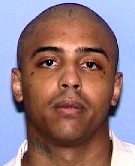
Ernest Valencia Gonzales was the defendant.
Timeline
- February 20, 1990 — The Wagner family returned to their town house in Phoenix from dinner after celebrating Darrel Wagner's recent promotion; Deborah Wagner noticed a light shining out their opened front door.
- February 23, 1991 — Phoenix police arrested Gonzales.
- January 1991 — A prior trial ended in a hung jury.
- May 23, 1991 — Trial began.
- June 6, 1991 — Verdict was returned.
- April 27, 1992 — Gonzales was sentenced to death on the murder conviction; the court also imposed prison terms on noncapital convictions.
- March 23, 1995 — The Supreme Court of Arizona issued an opinion in the case, affirming.
- October 27, 1999 — A warrant of execution was issued by the Arizona Supreme Court for the execution of Ernest Valencia Gonzales #58534 on December 8, 1999.
- November 16, 1999 — A stay of execution was issued by the Arizona Supreme Court in the scheduled execution.
- December 8, 1999 — A scheduled execution date appeared in the warrant for the execution of Ernest Valencia Gonzales #58534.
Background
On the evening of February 20, 1990, the Wagner family returned to their town house in Phoenix from dinner where they had celebrated Darrel Wagner's recent promotion. Shortly before 7:00 p.m. on February 20, 1990, Roger Daughtry returned home from work and noticed that his porch light was on; he went inside and saw that someone had disassembled his stereo and moved his speakers. Suddenly, a man appeared from behind the speakers, looked at Daughtry, and ran out of the house. Daughtry later identified that man as Ernest Gonzales.
Jeri Sheer, Daughtry's neighbor, took out her trash with her dog, which ran toward a man holding what looked like a tire iron. Sheer looked at the man, grabbed her dog, and went back into her house. When she looked out the window, she noticed the man heading west, in the direction of Darrel and Deborah Wagner's townhouse. Sheer later identified the man as Gonzales.
About 7:10 p.m., Darrel Wagner, his wife Deborah, and Deborah's seven-year-old son arrived home from dinner. As they walked into the small courtyard of their townhouse, they noticed their front door was ajar. Darrel went to investigate while Deborah and her son waited at the gate.
Gonzales was a parolee. After the murder, Gonzales went from the Wagner residence to his girlfriend's house, where she helped clean his wound. Her daughters, Catherine and Martha Trinidad, testified at trial about comments Gonzales made the night of the murder, his clothing, and the "bag" he had with him containing a woman's driver's license and pictures of a boy with red hair—the color of Deborah's son's hair.
The offence
When Deborah turned back toward her home after sending her son for help, she saw that Gonzales had shoved her husband out the front door, stabbing him. Gonzales ignored Deborah's pleas to stop stabbing. Deborah climbed on his back, and Gonzales stabbed her twice; one cut damaged her spleen, colon and diaphragm and the other punctured her lung. Gonzales then fled. Darrel Wagner lived long enough to help his wife up and then began a conversation with the 911 operator while gasping for air. Gonzales had stabbed him 7 times.
Darrel Wagner died from stab wounds to his chest, one skewered the lower lobe of his right lung and another went into the left ventricle of his heart. Deborah spent five days in intensive care.
After Gonzales moved through the Wagner residence and left, he was said to have left with Deborah's purse.
Investigation and evidence
Phoenix police arrested Gonzales on February 23, 1991.
The police went back to the Wagner townhouse one week after the murder to gather additional physical evidence. They collected additional blood samples and removed weatherstripping to see whether a lug wrench had been used to pry open the door.
A tire iron and bloody towel were also discussed in the appellate issues. Gonzales argued they were seized in violation of the Fourth Amendment, but the court stated that Martha Trinidad voluntarily gave the police the evidence on her own initiative and that no search took place.
Arrest
Trial
Charges and counts
Gonzales was tried on a six-count indictment:
- felony murder of Darrel Wagner,
- first-degree burglary,
- aggravated assault of Deborah Wagner,
- armed robbery of Deborah Wagner,
- theft, and
- burglary of Roger Daughtry's residence.
Proceedings
The first trial ended in a hung jury. Gonzales claimed this was because of Deborah's less-than-positive in-court identification. The second jury found Gonzales guilty on all six counts. At the second trial, Deborah identified Gonzales without hesitation.
Witness issues
Martha Trinidad, the daughter of Gonzales's girlfriend, testified at the first trial. Before the second trial, the prosecution personally served both Martha and her mother on Martha's behalf. Martha ran away from home, and neither the state nor her family could find her. The court admitted her former testimony at the second trial because of her unavailability. Gonzales argued that this denied him the right to cross-examine and confront a witness, contending the state failed to make a good-faith effort to secure Martha Trinidad's presence at trial.
Identification issues
Gonzales moved to suppress the in-court identifications, and the court held a Dessureault hearing and admitted both the out-of-court and in-court identifications. Gonzales argued that the photographic line-up shown to Jeri Sheer and Roger Daughtry was impermissibly suggestive, including claims about the background brightness in Gonzales's photo, facial expression, mustache differences, and that Sheer and Daughtry knew a suspect had been arrested before viewing photos. The court concluded there was no evidence of suggestion or police misconduct and admitted the identifications.
Gonzales also argued that Deborah's presence during jury selection and her sitting at the defense table in the first trial made identification procedures impermissibly suggestive; Gonzales had failed to object before trial, and the court treated the objection as waived regarding that specific issue.
Right to counsel
Some time after the second trial, the court granted Gonzales's request to again proceed pro per, and on its own initiative appointed him advisory counsel. On the day scheduled to hear Gonzales's motion for new trial, the judge granted advisory counsel's motion to withdraw without objection from Gonzales. When the judge sought argument on the motion, Gonzales asked the court to appoint new advisory counsel and to grant a continuance. The court denied the request. After several days of argument, the court denied the motion for new trial. The record described that advisory counsel was appointed at the conclusion of the hearing to assist Gonzales at the sentencing phase, and the court later granted Gonzales's request that advisory counsel become counsel of record for the aggravation/mitigation hearing.
On appeal, Gonzales argued he was denied his right to counsel, including an argument that the trial court did not downplay the magnitude of a possible death sentence and that he withdrew waiver and was thereafter denied appointed counsel at the start of the hearing on his motion.
Evidence admission issues
Gonzales challenged admission of blood and weatherstripping evidence gathered one week after the murder. The court overruled his objection to the admission of the physical evidence, and the appellate court rejected arguments under Rule 403 and chain of custody, stating contamination arguments went to weight and were explored on cross-examination and argued to the jury.
Gonzales argued he was denied due process by the trial court's refusal to appoint serology, fingerprinting, and identification experts for the second trial. The appellate court stated Gonzales failed to make the threshold showing of reasonable necessity.
Impartiality of the trial judge
Before the second trial, Gonzales moved to disqualify Judge Howe, arguing bias and prejudice. The record stated that Judge Coulter heard the motion and denied it. Gonzales pointed to exchanges he claimed demonstrated animosity, and the appellate court found the exchanges did not support a claim of bias and that they did not take place in front of the jury.
Victim presence in courtroom
Gonzales argued that Deborah's presence in the courtroom during jury selection and her possible presence during trial after she testified prejudiced him and denied him the right to a fair trial. The appellate court rejected the argument, stating Deborah had a constitutional right to attend proceedings she had the right to attend, that she attended jury selection on her own initiative, sat in the back row, and neither the court nor counsel knew she was there until several days later. The appellate court also stated there was no evidence that prospective jurors noticed Deborah or knew who she was during jury selection, and that there was no evidence Deborah intended to remain after she testified.
Use of hospital statements
While Gonzales was being treated in the hospital for an injury he received during his arrest, he was interrogated by police in violation of Miranda rights. The trial court excluded his statements in the state's case-in-chief but ruled them admissible to impeach under Harris v. New York. Gonzales argued that the statements should have been excluded for all purposes because his medical condition rendered all statements involuntary. The appellate court discussed State v. Conner, finding waiver of the challenge because Gonzales chose not to testify, and it also agreed with the trial court's voluntariness finding.
Sentencing
At sentencing, after an aggravation/mitigation hearing, the court returned a special verdict and found two aggravating circumstances:
- grave risk of death to others, and
- pecuniary gain.
The court found no mitigating factors sufficiently substantial to call for leniency.
Gonzales was sentenced to death on the murder charge and was also sentenced to three consecutive life terms in addition to the death penalty, described as prison terms on noncapital convictions.
Appeals
Supreme Court of Arizona decision
In State v. Gonzales, 181 Ariz. 502, 892 P.2d 838 (1995), the Supreme Court of Arizona reviewed the automatic appeal and affirmed. The opinion stated Gonzales was found guilty of felony murder, aggravated assault, theft, armed robbery, and two counts of burglary, and that the sentence on the murder conviction was death.
The opinion addressed issues including witness unavailability and admissibility of in-court identifications, right to counsel, blood and weatherstripping evidence, appointment of experts, impartiality of the trial judge, victim presence during jury selection, and use of Gonzales's statements for impeachment. The opinion also addressed sentencing issues, including propriety of the death sentence, whether pecuniary gain supported the aggravator, whether grave risk to others was supported, and whether felony murder and character evidence constituted mitigating circumstances. The opinion rejected arguments regarding victim impact statements.
Legal outcomes on specific issues (as described in the decision)
- The appellate court held there was no error in admitting Martha Trinidad's former testimony at the second trial due to unavailability.
- The appellate court held the photographic line-up and subsequent identifications were admissible and not impermissibly suggestive under the described analysis.
- The appellate court held the trial court did not abuse its discretion in denying the request for appointed advisory counsel and denying a continuance in connection with the motion for new trial.
- The appellate court held the trial court did not abuse its discretion in admitting blood and weatherstripping evidence and rejected chain-of-custody arguments.
- The appellate court held the trial court did not abuse its discretion in refusing to appoint serology, fingerprinting, and identification experts because Gonzales failed to make the necessary threshold showing.
- The appellate court held the trial court properly denied Gonzales's motion for disqualification.
- The appellate court held Deborah's presence during jury selection did not deny Gonzales a fair trial.
- The appellate court held Gonzales's challenge to hospital statements being admissible for impeachment was waived by his choice not to testify, and it also agreed with the voluntariness finding.
- The appellate court held the aggravating factors for pecuniary gain and grave risk of death to others were proved beyond a reasonable doubt and that no mitigating circumstances warranted leniency.
- The appellate court held victim impact information and recommendations were permissible in the described constitutional and statutory framework.
Outcome
The Supreme Court of Arizona affirmed Gonzales's convictions and sentences.
The warrant of execution was issued on October 27, 1999 for an execution date of December 8, 1999, and a stay of execution was issued on November 16, 1999.
Spotted an error, or have more information about this case?