
Lewis Eugene Gilbert
Murderer Brian Kevin Rosenfeld
Murderer · USA · 1985
Brian Kevin Rosenfeld Brian Kevin Rosenfeld was sentenced to three concurrent l…
23 victims
Brian Kevin Rosenfeld
Murderer · USA · 1985
Brian Kevin Rosenfeld Brian Kevin Rosenfeld was sentenced to three concurrent l…
23 victims
 Russell Ellwood
Murderer · USA · 1991
Russell Ellwood was a former taxi driver. Authorities suspected him of killing…
20 victims
Russell Ellwood
Murderer · USA · 1991
Russell Ellwood was a former taxi driver. Authorities suspected him of killing…
20 victims
 Robert Martines Perez
Murderer · USA · 1994
Name: Robert Martines Perez · Other name used in proceedings: Robert Martinez P…
15 victims
Robert Martines Perez
Murderer · USA · 1994
Name: Robert Martines Perez · Other name used in proceedings: Robert Martinez P…
15 victims
 Billy Frank Vickers
Murderer · USA · 1993
Billy Frank Vickers Vickers was executed by lethal injection in Texas on Januar…
14 victims
Billy Frank Vickers
Murderer · USA · 1993
Billy Frank Vickers Vickers was executed by lethal injection in Texas on Januar…
14 victims
 Edward Charles Allaway
Homicide · USA · 1976
Edward Charles Allaway Edward Charles Allaway was found not guilty by reason of…
7 victims
Edward Charles Allaway
Homicide · USA · 1976
Edward Charles Allaway Edward Charles Allaway was found not guilty by reason of…
7 victims
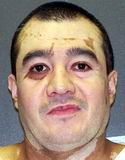 Edgar Arias Tamayo
Murderer · USA · 1994
Edgar Arias Tamayo Tamayo was sentenced to death on November 18, 1994. He was e…
1 victim
Edgar Arias Tamayo
Murderer · USA · 1994
Edgar Arias Tamayo Tamayo was sentenced to death on November 18, 1994. He was e…
1 victim
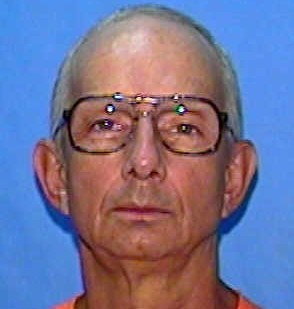 Dusty Ray Spencer
Murderer · USA · 1992
Dusty Ray Spencer (DOB: 02/13/52) was convicted and sentenced to death for the…
1 victim
Dusty Ray Spencer
Murderer · USA · 1992
Dusty Ray Spencer (DOB: 02/13/52) was convicted and sentenced to death for the…
1 victim
 Tianle Li
Murderer · USA · 2011
Tianle Li was convicted of fatally poisoning her husband, Xiaoye Wang, with tha…
1 victim
Tianle Li
Murderer · USA · 2011
Tianle Li was convicted of fatally poisoning her husband, Xiaoye Wang, with tha…
1 victim
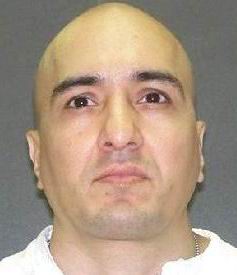 Peter Anthony Cantu
Murderer · USA · 1993
Defendant: Peter Anthony Cantu Victims: Jennifer Ertman (14), Elizabeth Pena (1…
2 victims
Peter Anthony Cantu
Murderer · USA · 1993
Defendant: Peter Anthony Cantu Victims: Jennifer Ertman (14), Elizabeth Pena (1…
2 victims
- Gender
- male
- Country
- USA
- Location
- Ohio/Missouri/Oklahoma, USA
- Date of birth
- October 29, 1971
- Age at first offence
- 23
- Characteristics
- crime spree, kidnapping
- Victim profile
- Roxanne Ruddell, 37 / Ruth Lucille Loader, 79 / William Brewer, 86, and Flossie Mae Brewer, 76
- Method of murder
- Shooting
- Date(s) of murder
- 1994
- Years active
- 1994
- Date of arrest
- September 3, 1994
- Status
-
Executed
Executed by lethal injection in Oklahoma on July 1, 2003
Case record: Lewis Eugene Gilbert
Background
Lewis Eugene Gilbert was 31 at the time of the 1994 killing of Roxanne Lynn Ruddell at Lake Stanley Draper in Cleveland County. Gilbert was involved in a multi-state crime spree through Ohio, Missouri and Oklahoma that left four people dead.
Gilbert was also under a double death sentence in Missouri for the murders of an elderly couple. Gilbert confessed to the murders.
There were reports that Gilbert had started his crime spree after “mistakenly” being released from an Ohio prison. A spokesman for the Ohio Department of Rehabilitation and Correction stated that Gilbert had served a short prison term for breaking and entering and theft just prior to the murder in Oklahoma, and that the spokesman had no information as to any mistake made in releasing him in 1994. The spokesman stated that, according to records viewed, Gilbert was released after serving his prison time.
The offence
Gilbert and Eric Elliott approached Roxy Lynn Ruddell to steal her truck. Ruddell was fishing at Lake Stanley Draper. She told the men that they could take the truck if they didn’t hurt her.
Despite the offer, prosecutors said Ruddell was forced to sit under a nearby tree and then shot three times in the head by Gilbert.
Gilbert and Elliott were suspected of killing Ruth Loader in Port Washington, Ohio. Prosecutors said Gilbert and Elliot kicked in the door of Loader’s home near Port Washington, Ohio, about 80 miles northeast of Columbus. Prosecutors said Loader was tied up, stole $40 and her car and put her in the trunk. Prosecutors said she was taken to the woods and shot in the head. Her remains have not been found. Loader disappeared Aug. 29, 1994.
Gilbert and Elliott stole Loader’s car and drove to Missouri, where prosecutors said they killed an elderly couple, William Brewer, 86, and Flossie Mae Brewer, 76. On Aug. 30, 1994, their car became stuck in the mud in Callaway County. The killers walked to the home of William Brewer and Flossie Mae Brewer. They later shot and killed the Brewers and stole their car, cash and rifles. Each was shot three times in the head.
After the Oklahoma killing, Gilbert and Elliott took the second stolen car to Lake Stanley Draper, where they saw the victim fishing alone near Point 6. Intending to steal her pickup, the defendants tied the victim’s hands, made her walk a short distance, and sit in the “v” at the base of a tree. Gilbert then shot her three times in the head.
Approximately three days later, Gilbert and his co-defendant were apprehended in New Mexico sleeping in a ditch, and Ruddell’s pickup was found nearly a mile away.
Investigation
Authorities said Gilbert confessed to killing Roxanne Ruddell. Authorities also said he confessed to killing Ruth Lucille Loader in eastern Ohio, where the crime wave began.
Authorities said prosecutors in Oklahoma said Gilbert and Eric Elliot kicked in the door of Loader’s home near Port Washington, Ohio, about 80 miles northeast of Columbus, tied her up, stole $40 and her car and put her in the trunk.
Authorities said that Gilbert and Elliot were captured about a week later near Santa Fe, N.M., while sleeping in a ditch.
While being questioned by a New Mexico lawman, prosecutors said Gilbert admitted to kidnapping and murdering Ruddell.
At sentencing, the jury found the existence of aggravating circumstances that included: that there was a probability that Gilbert would commit criminal acts of violence such that he constituted a “continuing threat to society,” and that the murder was committed for the purpose of “avoiding or preventing a lawful arrest or prosecution.”
Arrest
Gilbert and Eric Elliott were arrested about a week later while sleeping in a ditch in New Mexico.
Trial
Gilbert was convicted in the District Court, Cleveland County, Tom A. Lucas, J., of first-degree malice aforethought murder, kidnapping, and robbery with firearms, and sentenced to death.
Gilbert was tried by jury and convicted of:
- First Degree Malice Aforethought Murder (Count I) (21 O.S.1991, § 701.7), Case No. CF-94-1125, District Court of Cleveland County
- Kidnapping (Count II) (21 O.S.1991, § 741)
- Robbery with Firearms (Count III) (21 O.S.1991, § 801)
In Count I, the jury found the existence of two (2) aggravating circumstances and recommended the punishment of death. In each of Counts II and III, the jury recommended as punishment life imprisonment and fines of ten thousand dollars ($10,000). The trial court sentenced accordingly.
Sentencing
At the sentencing stage of the trial, the prosecutor argued, and the jury found the existence of, two aggravating circumstances:
- that there was a probability that Gilbert would commit criminal acts of violence such that he constituted a “continuing threat to society,” and
- that the murder was committed for the purpose of “avoiding or preventing a lawful arrest or prosecution.”
The trial court sentenced Gilbert to death for Ruddell’s murder, in accordance with the jury’s recommendation.
Appeals
Gilbert appealed, raising thirteen propositions of error, but his convictions and death sentence were affirmed by the Oklahoma Court of Criminal Appeals (OCCA). Following affirmance of conviction for murder and other offenses, he filed an application for post-conviction relief before the OCCA, urging eight grounds and requesting an evidentiary hearing; this application was denied.
In September 1999, Gilbert filed a petition for a writ of habeas corpus in federal district court, seeking relief on seven grounds. The petition was denied and the appeal followed.
Habeas corpus appeal (Tenth Circuit)
Gilbert v. Mullin (Habeas - 10th Circuit Court of Appeals) 302 F.3d 1166
Lewis Eugene Gilbert, Petitioner-appellant, v. Mike Mullin, Warden, Oklahoma State Penitentiary, Respondent-appellee
United States Court of Appeals, Tenth Circuit. September 3, 2002
The appellate court granted a certificate of appealability (“COA”) pursuant to 28 U.S.C. § 2253(c) with respect to three of his claims of legal error:
- that his right to a fair trial was violated by a coerced verdict at the sentencing stage of the trial;
- that he was improperly denied his request for a competency evaluation in state court; and
- that there was insufficient factual support for the jury's finding of the existence of the “avoid arrest” and “continuing threat” aggravating circumstances.
The Tenth Circuit independently reviewed the record and concluded that Gilbert was not entitled to habeas relief on any of these claims and affirmed the dismissal of his petition.
The appellate court described evidence relevant to the “avoid arrest” aggravating circumstance as including that Gilbert admitted to killing one woman in Ohio and stealing her car, driving it to Missouri where an elderly couple was killed for their car, driving that car to Oklahoma where Mrs. Ruddell was killed and her pickup taken by [Gilbert] and his co-defendant to New Mexico. The court concluded that the evidence was ample to support the jury’s finding that the murder was committed for the purpose of avoiding or preventing lawful arrest or prosecution.
The appellate court also described testimony as supporting the aggravating circumstance, stating: testimony that Gilbert admitted that the victim pleaded with him to take her car and swore she would not notify police, but that Gilbert disbelieved her and killed her. The court stated that the jury could have concluded that there was no reasonable doubt that Gilbert’s intent in killing Ruddell was to take her truck in order to avoid arrest for the previous murders and to eliminate a potential witness to his stealing of Ruddell’s truck.
The appellate court described factors relevant to the “continuing threat” aggravating circumstance as including: unadjudicated murders committed in Ohio and Missouri; prior convictions for child endangerment, theft, and breaking and entering in Ohio; and prior convictions for the unauthorized use of a motor vehicle and for embezzlement by bailee in Oklahoma. The appellate court concluded this evidence was sufficient for a rational trier of fact to have found the essential elements of the aggravating circumstance beyond a reasonable doubt and that the OCCA’s determination was not unreasonable.
The Tenth Circuit’s disposition stated that the district court’s dismissal of Gilbert’s petition for a writ of habeas corpus was AFFIRMED.
Oklahoma Court of Criminal Appeals (direct appeal and post-conviction)
Gilbert v. State, 951 P.2d 98 (Okla. Crim. App. 1997)
The Court of Criminal Appeals held that: (1) district court's failure to order pretrial competency evaluation was not error; (2) defendant's confession to murder was voluntary; (3) defendant was not entitled to aiding and abetting instruction; (4) any error resulting from causation instruction focusing on whether defendant's conduct was substantial factor in bringing about victim's death was harmless error; (5) evidence was sufficient to support murder conviction; (6) Allen instruction given to deadlocked jury during sentencing deliberations was not per se coercive; and (7) sentence of death was appropriate.
The Court of Criminal Appeals affirmed the judgment and sentences.
Chapel, P.J., and Strubhar, V.P.J., concurred in result.
Gilbert v. State, 955 P.2d 727 (Okla. Crim. App. 1998) (PCR)
(1) Simmons was not an intervening change in law so as to warrant postconviction review of counsel's alleged failure to challenge constitutionality of jury instruction on sentencing option of life without parole; (2) appellate counsel's omission of claim did not constitute ineffective assistance; (3) issues which were raised or could have been raised on direct appeal were barred; (4) proposition that Court adopt recommendation of American Bar Association and impose moratorium on executions was not properly raised under postconviction statute; (5) there was not cumulative error; (6) defendant was not entitled to evidentiary hearing; (7) proposition that state's clemency scheme, as currently applied, denies death sentenced petitioners due process was not properly raised under postconviction statute; (7) response to application for postconviction relief was not necessary; and (8) defendant was not entitled to additional discovery.
Applications denied.
Chapel, P.J., and Lane, J., concurred in result.
OPINION DENYING APPLICATION FOR POST-CONVICTION RELIEF, EVIDENTIARY HEARING AND DISCOVERY
The opinion stated that petitioner Lewis Eugene Gilbert was convicted of First Degree Malice Aforethought Murder (Count I) (21 O.S.1991, § 701.7) and Robbery with Firearms (Count III) (21 O.S.1991, § 801), Case No. CF-94-1125, in the District Court of Cleveland County. It stated that, in Count I, the jury found the existence of two (2) aggravating circumstances and recommended the punishment of death, and that in each of Counts II and III the jury recommended life imprisonment and fines of ten thousand dollars ($10,000). It stated that the court affirmed the convictions and sentences in Gilbert v. State, 951 P.2d 98 (Okl.Cr.1997). It stated that petitioner filed his Original Application for Post-Conviction Relief in this Court on October 27, 1997, in accordance with 22 O.S.Supp.1995, § 1089.
The opinion stated that, after reviewing petitioner’s application and requests for discovery, evidentiary hearing and other requests, the court concluded that there existed no controverted, previously unresolved factual issues material to the legality of petitioner’s confinement; that petitioner could have previously raised collaterally asserted grounds for review; that grounds for review which were properly presented had no merit; and that the current post-conviction statutes warranted no relief. Accordingly, the court denied petitioner’s Application for Post-Conviction Relief and Application for an Evidentiary Hearing and Discovery.
Other details
At Gilbert’s trials, defense lawyers tried to show that Gilbert was not competent, suffering from deficit disorder, post traumatic stress disorder and borderline personality disorder. They also argued that Gilbert had a low IQ and suffered a brain injury at some time during his life.
Gilbert’s appeals lawyers also claimed ineffective assistance of counsel.
In Missouri, authorities said Gilbert and Elliot went to the Brewers’ home and asked to use the phone. They held the Brewers at gunpoint, marched them into the cellar and shot each of them in the head three times, authorities said.
Ruddell’s remains have not been found.
Ruddell told the men that they could take the truck if they didn’t hurt her.
Gilbert v. State, 951 P.2d 98, 103, 122 (Okla. Crim. App. 1997) was referenced in the habeas decision for the murder aggravators found at sentencing.
Gilbert was pronounced dead at 8:11 p.m. EDT after receiving a lethal mix of drugs at the Oklahoma State Prison.
Gilbert was executed on July 1, 2003, after an appeals court denied a stay of execution.
Timeline
- 1994 — Gilbert and Eric Elliott were involved in a multi-state crime spree through Ohio, Missouri and Oklahoma, leaving four people dead.
- Aug. 29, 1994 — Ruth Lucille Loader disappeared.
- Aug. 30, 1994 — Their car became stuck in the mud in Callaway County.
- September 3, 1994 — Gilbert’s execution was carried out for the kidnapping and murder of Roxanne Lynn Ruddell at Lake Stanley Draper in Cleveland County in 1994.
- August 1994 (about three days later from Oklahoma events) — Gilbert and Elliott were apprehended in New Mexico sleeping in a ditch; Ruddell’s pickup was found about a mile away.
- September 3, 2002 — Tenth Circuit considered the habeas appeal in Gilbert v. Mullin (302 F.3d 1166).
- October 27, 1997 — Gilbert filed his original application for post-conviction relief in the Oklahoma Court of Criminal Appeals.
- July 1, 2003 — Oklahoma execution by lethal injection at the Oklahoma State Prison; Gilbert was pronounced dead at 8:11 p.m. EDT.
Spotted an error, or have more information about this case?