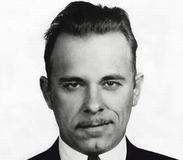
John Dillinger
Murderer?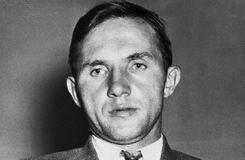 Bruno Hauptmann
Murderer? · USA · 1932
Bruno Hauptmann was a German carpenter and former criminal. He was sentenced to…
1 victim
Bruno Hauptmann
Murderer? · USA · 1932
Bruno Hauptmann was a German carpenter and former criminal. He was sentenced to…
1 victim
 Richard Allen Williams
Murderer? · USA · 1992
Boone County Prosecutor Kevin Crane dismissed the charges in August 2003 after…
10 victims
Richard Allen Williams
Murderer? · USA · 1992
Boone County Prosecutor Kevin Crane dismissed the charges in August 2003 after…
10 victims
 James DeBardeleben
Murderer? · USA · 1965
James DeBardeleben (James Mitchell “Mike” DeBardeleben), born March 20, 1940, w…
8 victims
James DeBardeleben
Murderer? · USA · 1965
James DeBardeleben (James Mitchell “Mike” DeBardeleben), born March 20, 1940, w…
8 victims
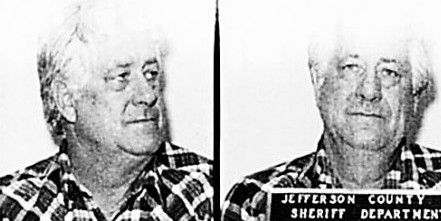 Thomas McCormick
Murderer? · USA · 1975
Thomas McCormick recruited homeless men from a Denver church mission to work on…
8 victims
Thomas McCormick
Murderer? · USA · 1975
Thomas McCormick recruited homeless men from a Denver church mission to work on…
8 victims
 Todd Warzecha
Murderer? · USA · 1972
Todd Warzecha was a prime suspect in two unsolved Mid-Michigan murders. Michiga…
6 victims
Todd Warzecha
Murderer? · USA · 1972
Todd Warzecha was a prime suspect in two unsolved Mid-Michigan murders. Michiga…
6 victims
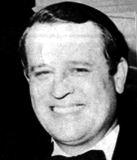 Dr. John Robert Hill
Murderer? · USA · 1950
Dr. John Robert Hill was a prominent Houston surgeon. His wife was Joan Robinso…
5 victims
Dr. John Robert Hill
Murderer? · USA · 1950
Dr. John Robert Hill was a prominent Houston surgeon. His wife was Joan Robinso…
5 victims
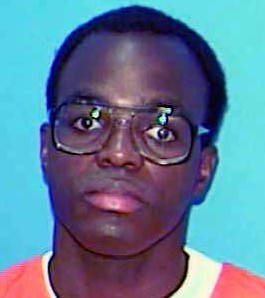 Arthur Barnhill
Murderer · USA · 1995
Arthur Barnhill was convicted and sentenced to death for the 08/06/95 murder of…
1 victim
Arthur Barnhill
Murderer · USA · 1995
Arthur Barnhill was convicted and sentenced to death for the 08/06/95 murder of…
1 victim
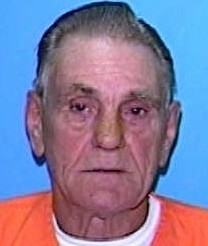 George Porter
Murderer · USA · 1986
George Porter was born on 02/18/32. He was associated with an Eighteenth Judici…
2 victims
George Porter
Murderer · USA · 1986
George Porter was born on 02/18/32. He was associated with an Eighteenth Judici…
2 victims
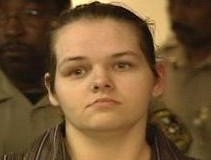 Brandy Holmes
Murderer · USA · 2003
Brandy Aileen Holmes was convicted of first-degree murder and sentenced to deat…
1 victim
Brandy Holmes
Murderer · USA · 2003
Brandy Aileen Holmes was convicted of first-degree murder and sentenced to deat…
1 victim
 Carl Junior Isaacs
Mass murderer · USA · 1973
Carl Junior Isaacs was a white male. He was born on 08/09/1953, was 5'08'' tall…
6 victims
Carl Junior Isaacs
Mass murderer · USA · 1973
Carl Junior Isaacs was a white male. He was born on 08/09/1953, was 5'08'' tall…
6 victims
 Benjamin Boyle
Murderer · USA · 1979
Benjamin Herbert Boyle was convicted for the murder of Gail Lenore Smith, and h…
2 victims
Benjamin Boyle
Murderer · USA · 1979
Benjamin Herbert Boyle was convicted for the murder of Gail Lenore Smith, and h…
2 victims
 Akiyoshi Umekawa
Murderer · Japan · 1963
Akiyoshi Umekawa ( 梅川 昭美 , Umekawa Akiyoshi , March 1, 1948 - January 28, 1979)…
5 victims
Akiyoshi Umekawa
Murderer · Japan · 1963
Akiyoshi Umekawa ( 梅川 昭美 , Umekawa Akiyoshi , March 1, 1948 - January 28, 1979)…
5 victims
- Gender
- male
- Country
- USA
- Location
- Ohio/Indiana/Wisconsin/South Dakota/Iowa, USA
- Date of birth
- June 22, 1903
- Age at first offence
- 30
- Characteristics
- bank robbery, fugitive, spree killer, police officer
- Victim profile
- Officer William Patrick O'Malley, 43
- Method of murder
- Shooting
- Date(s) of murder
- 1933 - 1934
- Years active
- 1933–1934
- Date of arrest
- —
- Status
-
Died in custody
John Dillinger was shot and killed by the FBI special agents on July 22, 1934, at approximately 10:40 p.m.
Names and identification
- John Dillinger (John Herbert Dillinger, Jr.; June 22, 1903 – July 22, 1934)
- John Dillinger was also described as a Midwestern bank robber, auto thief, and fugitive.
Timeline
- June 22, 1903 — John Herbert Dillinger was born in the Oak Hill section of Indianapolis, Indiana.
- June 21, 1933 — Dillinger robbed his first bank, taking $10,000 from the New Carlisle National Bank in New Carlisle, Ohio.
- May 10, 1933 — Dillinger was paroled after serving nine and a half years.
- May 22, 1933 — Dillinger was released from Indiana State Prison at Michigan City.
- August 14, 1933 — Dillinger robbed a bank in Bluffton, Ohio.
- October 12, 1933 — Pierpont, Clark, and Makley arrived in Lima, impersonated Indiana State Police officers, and killed Sheriff Jess Sarber before releasing Dillinger.
- October 14, 1933 — Dillinger and Pierpont and others robbed the Auburn, Indiana police department arsenal, stealing multiple weapons and ammunition including bulletproof vests and a Thompson machine gun.
- October 20, 1933 — Pierpont and Dillinger entered the Peru, Indiana police arsenal and made off with machine guns, sawed-off shotguns, ammunition, and bullet-proof vests.
- October 23, 1933 — Dillinger robbed the Central National Bank of Greencastle, Indiana, along with Pierpont, Makley, and Harry Copeland or John Hamilton; the gang escaped with $74,728.
- November 20, 1933 — Pierpont entered the American Bank and Trust Company in Racine, Wisconsin; Dillinger, Makley, and Hamilton entered afterward.
- January 15, 1934 — Dillinger and Hamilton robbed the First National Bank in East Chicago, Indiana, and killed Officer William Patrick O'Malley.
- January 21, 1934 — A fire broke out at the Hotel Congress in Tucson, Arizona.
- January 22, 1934 — The Congress Hotel fire was caused by a boiler in the basement.
- January 25, 1934 — Officers arrested Clark and Makley and later Dillinger after he returned to the bungalow where Clark was captured.
- January 26, 1934 — The gang appeared before the Justice of the Peace C.V. Budlong at the Pima County Courthouse; bond was set at $100,000.
- January 29, 1934 — Dillinger was flown to Crown Point, Indiana.
- January 30, 1934 — A 13-car motorcade with 180 armed guards took Dillinger to the Lake County Jail at 7:40 p.m.
- February 5, 1934 — Dillinger entered the Lake County Court for a preliminary hearing before Judge William J. Murray; he was shackled with no less than fifty armed guards.
- February 9, 1934 — Dillinger was arraigned and a trial was set for March 12.
- March 3, 1934 — Dillinger escaped from Crown Point jail with inmate Herbert Youngblood.
- March 4, 1934 — Billie Frechette rented a room at the Santa Monica Apartments in Minneapolis.
- March 6, 1934 — The second Dillinger Gang robbed the Security National Bank and Trust Company in Sioux Falls, South Dakota, escaping with $49,500.
- March 13, 1934 — Dillinger and gang robbed the First National Bank in Mason City, Iowa, escaping with $52,000.
- March 16, 1934 — Herbert Youngblood, a fellow escapee from Crown Point, was shot dead by three police officers in Port Huron, Michigan; Deputy Sheriff Charles Cavanaugh was fatally wounded and died a few hours later.
- March 20, 1934 — Dillinger and Billie moved into apartment 303 of the Lincoln Court Apartments in St. Paul, Minnesota, using the aliases “Mr. & Mrs. Carl T. Hellman”.
- March 30, 1934 — Daisy Coffey filed a report with the FBI's St. Paul field office including information about a Hudson sedan parked in the garage behind the apartments.
- March 31, 1934 — Hyming Dan? (Lincoln Court Apartments incident described as a shootout; Dillinger was wounded in the left calf during his escape.)
- April 4, 1934 — Dillinger convalesced until Wednesday, April 4 with Dr. Clayton E. May; May’s illicit patients and nursing services by Augusta Salt were also described.
- April 6, 1934 — Hubert and Dillinger left Mooresville at about 8:00 p.m.
- April 7, 1934 — Dillinger and Hubert rammed a car driven by Mr. and Mrs. Joseph Manning near Noblesville, Indiana.
- April 9, 1934 — Billie Frechette was arrested by agents at a tavern at 416 North State Street in Chicago; Dillinger watched from his car.
- April 20, 1934 — Dillinger and gang arrived at Little Bohemia Lodge in Manitowish, Wisconsin for a vacation.
- April 22, 1934 — The FBI surrounded Little Bohemia Lodge after being tipped off by Mrs. Emil Wanatka; the gang escaped without firing a shot.
- April 23, 1934 — John Hamilton was fatally wounded while attempting to drive into St. Paul.
- April 27, 1934 — John Hamilton died in Aurora, Illinois.
- May 2, 1934 — The bloodstained getaway car was found abandoned at 3333 North Leavitt, Chicago.
- May 15, 1934 — Trial of Billie Frechette, Dr. Clayton May, and Augusta Salt began in St. Paul.
- May 23, 1934 — Frechette and May were found guilty of conspiring to harbor John Dillinger; Salt was released and charges dropped; Frechette was sentenced to two years at the women’s federal prison in Milan, Michigan; Dr. May was sentenced to two years at Leavenworth penitentiary.
- May 24, 1934 — East Chicago Officers Martin O'Brien and Lloyd Mulvihill were killed by mobsters in East Chicago; John Dillinger and Van Meter got the blame.
- June 3, 1934 — Dr. Loeser began plastic surgery on Homer Van Meter.
- June 22, 1934 — Dillinger celebrated his 31st birthday with Polly Hamilton at the French Casino nightclub in Chicago.
- June 26, 1934 — Dillinger attended Cubs game at Wrigley Field with Polly Hamilton.
- June 30, 1934 — A robbery of the Merchants National Bank in South Bend, Indiana, was described as involving Dillinger, Van Meter, Baby Face Nelson, Pretty Boy Floyd and John Paul Chase; the gang escaped with $30,000; it was also stated there was no solid evidence Dillinger and Floyd were involved.
- July 21, 1934 — Ana Cumpănaș (a/k/a Anna Sage) contacted the FBI.
- July 22, 1934 — FBI agents closed in on Dillinger outside the Biograph Theater in Chicago and shot and killed him as he reached for his pistol; the time was approximately 10:40 p.m.
- July 24, 1934 — Dillinger’s body was returned to Mooresville and was put on exhibition at intervals.
- July 25, 1934 — Audrey Hancock allowed public viewing of Dillinger; Dillinger was buried next to his mother at Crown Hill Cemetery in Indianapolis, Indiana.
Background
John Herbert Dillinger was born on June 22, 1903 in the Oak Hill section of Indianapolis, Indiana, the younger of two children born to John Wilson Dillinger (July 2, 1864 – November 3, 1943) and Mary Ellen “Mollie” Lancaster (1860–1907). Dillinger’s older sister Audrey was born March 6, 1889. Dillinger’s mother died in 1907 just before his fourth birthday. Audrey married Emmett “Fred” Hancock in 1907 and they had seven children together. Dillinger’s father remarried in 1912 to Elizabeth “Lizzie” Fields (1878–1933). They had three children: Hubert (born c. 1913), Doris M. (December 12, 1917 – March 14, 2001), and Frances Dillinger (born c. 1922). Dillinger disliked his stepmother initially but later came to love her.
Dillinger was frequently in trouble with the law as a teenager for fighting and petty theft, and he quit school to work in an Indianapolis machine shop. His father moved the family to Mooresville, Indiana, in about 1920 due to fears the city was corrupting his son.
Dillinger was arrested in 1922 for auto theft and enlisted in the United States Navy where he was a Fireman 3rd Class assigned aboard the battleship USS Utah. He deserted a few months later when his ship was docked in Boston and was eventually dishonorably discharged.
Dillinger met Beryl Ethel Hovious and they married on April 12, 1924. Their marriage ended in divorce on June 20, 1929. Dillinger began planning a robbery with Ed Singleton after difficulties holding a job and preserving his marriage.
Dillinger was known for “bewildering personality” and bullying of smaller children.
The offence
Bank robberies and police-arsenal robberies
Dillinger was described as a bank robber, auto thief, and fugitive. His gang was described as robbing two dozen banks and four police stations.
Dillinger is known to have participated with “The Dillinger Gang” in twelve separate bank robberies between June 21, 1933 and June 30, 1934.
Specific robberies described included:
- June 21, 1933 — New Carlisle National Bank in New Carlisle, Ohio; $10,000 was taken.
- July 17, 1933 — Commercial Bank in Daleville, Indiana; $3,500 was taken.
- August 4, 1933 — First National Bank in Montpelier, Indiana; $6,700 was taken.
- August 14, 1933 — Bluffton, Ohio bank robbery; $6,000 was taken.
- September 6, 1933 — Massachusetts Avenue State Bank in Indianapolis; $24,000 was taken (also described as $21,000).
- October 23, 1933 — Central National Bank of Greencastle, Indiana; $74,728 (also described as $74,802).
- November 20, 1933 — American Bank and Trust Company in Racine, Wisconsin; $27,000 (also described as $27,789 and $28,000).
- January 15, 1934 — First National Bank of East Chicago, Indiana; $20,000 was taken.
- March 6, 1934 — Security National Bank and Trust Company in Sioux Falls, South Dakota; $49,500 was taken.
- March 13, 1934 — First National Bank in Mason City, Iowa; $52,000 was taken.
- May 3, 1934 — First National Bank in Fostoria, Ohio; $17,000 was taken.
- June 30, 1934 — Merchants National Bank in South Bend, Indiana; $30,000 was taken (and it was also stated there was no solid evidence Dillinger and Floyd were involved).
Charges connected to homicide
Dillinger was also described as having been charged with but never convicted of the murder of an East Chicago, Indiana, police officer who shot Dillinger in a bulletproof vest during a shoot-out, prompting Dillinger to return fire. It was described as his only homicide charge.
Dillinger was officially charged with Officer O’Malley’s murder in the East Chicago bank robbery, although it was also stated that the identity of the actual killer was debatable and that it was questioned whether Dillinger participated in the robbery at all.
East Chicago bank robbery and shooting of Officer William Patrick O’Malley
On January 15, 1934, Dillinger and Hamilton robbed the First National Bank in East Chicago, Indiana. Dillinger entered the main room and opened a leather case containing a Thompson and yelled: “This is a stickup. Put up your l and get back against the wall.” The bank vice president Walter Spencer kicked a button which touched off the burglar alarm.
Officers arrived including Patrick O’Malley, Hobart Wilgus, Pete Whalen, and Julius Schrenko. Wilgus entered by himself but was covered by Dillinger, and Dillinger emptied cartridges from Wilgus’s pistol and tossed it back. Dillinger told Wilgus, “You oughtn't be afraid of this thing. I ain't even sure it'll shoot.” Dillinger also told Hamilton, “Don't let those coppers outside worry you. Take your time and be sure to get all the dough. We'll take care of them birds on the outside when we get there.”
During the confrontation, Officer O’Malley fired four times at Dillinger; bullets bounced off Dillinger’s bulletproof vest. O’Malley fell dead with “eight holes in a line across his chest.” Hamilton was shot in the right hand and four times in the groin. Hamilton lost two fingers and earned the nickname “3-finger-jack.”
Investigation
J. Edgar Hoover created a special task force headquartered in Chicago to locate Dillinger.
An informant Ana Cumpănaș (a/k/a Anna Sage), described as a madam from a brothel in Gary, Indiana threatened with deportation for “low moral character,” contacted the FBI on July 21, 1934 and offered information about Dillinger in exchange for help preventing deportation. The FBI agreed to her terms, but she was later deported nonetheless.
Cumpănaș revealed that Dillinger was spending his time with Polly Hamilton and that the couple would go to see a movie together the following day. She offered to wear an orange dress so police could easily identify her, and she was unsure which theater they would attend, the Biograph or the Marbro.
Arrest and death (Biograph Theater incident)
Federal agents and officers from police forces outside Chicago were formed into teams, and the police were split into two groups. One team was sent to the Marbro Theater while another surrounded the Biograph Theater at 2433 N. Lincoln Avenue on the north side.
Sage, Hamilton, and Dillinger were observed entering the Biograph at approximately 8:30 p.m. The film showing was described as “Manhattan Melodrama,” starring Clark Gable, Myrna Loy and William Powell.
Samuel P. Cowley contacted J. Edgar Hoover for instructions. Cowley was described as recommending they wait outside rather than risk a gun battle within the theater and telling agents not to put themselves in harm’s way, and that “any man could open fire on Dillinger at the first sign of resistance.”
During the stakeout, the Biograph’s manager thought the agents were criminals setting up a robbery and called Chicago police, who were waved off by federal agents.
When the film ended, Purvis stood by the front door and signaled Dillinger’s exit by lighting a cigar.
Purvis and other agents reported Dillinger turned his head and looked directly at the agent as he walked by, glanced across the street, reached into his pocket but failed to extract his gun, and ran into a nearby alley. Other accounts stated Dillinger ignored a command to surrender, whipped out his gun, headed for the alley, and agents already had the alley closed off.
Three men pursued Dillinger into the alley and fired. Clarence Hurt shot twice, Charles Winstead three times, and Herman Hollis once. Dillinger was hit from behind and fell face first to the ground. Dillinger was struck four times, with two bullets grazing him and one causing a superficial wound to the right side. The fatal bullet entered through the back of Dillinger’s neck, severed the spinal cord, passed into his brain and exited just under the right eye, severing two sets of veins and arteries.
An ambulance was summoned, and it soon became apparent Dillinger died from the gunshot wounds; he was officially pronounced dead at Alexian Brothers Hospital. According to investigators, Dillinger died without saying a word.
The special agents shot and killed Dillinger on July 22, 1934 at approximately 10:40 p.m.
Two female bystanders, Theresa Paulas and Etta Natalsky, were wounded. Dillinger bumped into Natalsky just as the shooting started. Natalsky was shot and taken to Columbus Hospital.
Winstead was later thought to have fired the fatal shot and was described as receiving a personal letter of commendation from J. Edgar Hoover.
Aftermath
Dillinger’s body was available for public display at the Cook County morgue. An estimated 15,000 people viewed the corpse over a day and a half. Up to four death masks were also made.
On July 24, the body was returned to Mooresville and exhibited at intervals during the evening to satisfy the curiosity of the crowd. Funeral services were held the next day at 2 p.m. at the home of Audrey Hancock, Dillinger’s sister, in Maywood.
Dillinger’s gravestone was replaced several times because of vandalism by people chipping off pieces as souvenirs. Hilton Crouch (1903–1976), an associate of Dillinger on some early heists, was described as buried only a few yards to the west.
Dillinger was buried next to his mother at Crown Hill Cemetery in Indianapolis, Indiana.
Other details
Relationship with Evelyn Frechette and Polly Hamilton
Evelyn “Billie” Frechette met Dillinger in October 1933 and they began a relationship on November 20. On December 19, 1933, they rented a two-story house located at 901 South Atlantic Avenue, Daytona Beach, Florida. After Dillinger’s death, Billie was offered money for her story and eventually penned a memoir for the Chicago Herald and Examiner in August 1934.
Rita “Polly” Hamilton was described as a teenage runaway from Fargo, North Dakota. She met Anna Cumpănaș Chiolak (aka Ana Sage) in Gary, Indiana, worked periodically as a prostitute in Anna’s brothel, and married Gary police officer Roy O. Keele in 1929. She divorced in March 1933. In the summer of 1934, Hamilton was a waitress at the S&S Sandwich Shop at 1209 ½ Wilson Avenue in Chicago. She shared living space with Sage and Sage’s twenty-four-year-old son, Steve, at 2858 Clark Street. Dillinger and Hamilton met in June 1934 at the Barrel of Fun nightclub at 4541 Wilson Avenue and dated until Dillinger’s death.
Lincoln Court Apartments shootout (St. Paul)
Dillinger and Billie moved into apartment 303 of the Lincoln Court Apartments, 93–95 South Lexington Avenue (now Lexington Parkway South) in St. Paul, Minnesota, on Tuesday, March 20, using the aliases “Mr. & Mrs. Carl T. Hellman.”
Daisy Coffey, the landlord/owner, testified that she spent most evenings furnishing apartment 310 and enabled her to observe what was happening in apartment 303 directly across the courtyard. Coffey went to the FBI’s St. Paul field office on March 30 to file a report including information about a Hudson sedan. The building was placed under surveillance by two agents, Rufus Coulter and Rusty Nalls.
The next morning at approximately 10:15, Nalls circled the block and saw Van Meter park a green Ford coupe. Coulter and St. Paul Police detective Henry Cummings knocked on the door; Frechette answered, said she was not dressed, and asked them to come back. Coulter went to the basement caretakers’ apartment to use the phone, returned, and waited with Cummings.
Van Meter asked if his name was Johnson. Coulter said it was not. Van Meter replied, “I am a soap salesman.” When asked where his samples were, Van Meter said they were in his car. Van Meter said he had no credentials and continued down. Coulter followed after waiting 10 to 20 seconds.
As Coulter reached the lobby, Van Meter opened fire on him. Coulter fled outside chased by Van Meter; Van Meter ran back into the front entrance. Nalls pointed out the Ford so Coulter could disable it; Coulter shot out the rear left tire.
Van Meter escaped by hopping on a passing coal truck. Frechette testified that she told Dillinger the police had shown up after speaking to Cummings. When Van Meter fired at Coulter, Dillinger opened fire through the door with a Thompson submachine gun, sending Cummings scrambling for cover. Dillinger then stepped out and fired another burst at Cummings.
Cummings shot back with a revolver but ran out of ammunition, hitting Dillinger in the left calf with one of five shots. Dillinger and Frechette hurried down the stairs, exited through the back door, and drove away in the Hudson.
The couple drove to Eddie Green’s apartment at 3300 South Fremont in Minneapolis, Minnesota. Green called his associate Dr. Clayton E. May at his office at 712 Masonic Temple in Minneapolis. Dr. May drove Dillinger to 1835 Park Avenue, Minneapolis, to the apartment of Augusta Salt, who had been providing nursing services and a bed for May’s illicit patients for several years. May treated Dillinger’s wound with antiseptics. Dr. May was promised $500 for services but received nothing.
Eddie Green visited Dillinger on Monday, April 2, hours before Green would be mortally wounded by the FBI in St. Paul.
Plastic surgery allegations and related deaths
Art O’Leary was described as stating that Dillinger expressed interest in plastic surgery as early as March 1934 and asked O’Leary to check with Piquett about it. Piquett visited Dr. Wilhelm Loeser. Loeser had practiced in Chicago for 27 years before being convicted under the Harrison Narcotic Act in 1931 and sentenced to three years at Leavenworth, paroled early on December 7, 1932.
Loeser testified he performed facial surgery and obliterated fingerprint impressions on fingertips using caustic soda. It was described that Dillinger chose general anaesthetic. Cassidy administered an overdose of ether described as causing Dillinger to suffocate; Loeser pulled Dillinger’s tongue out with forceps and forced both elbows into his ribs. The procedure continued with only a local anaesthetic. Loeser removed moles from Dillinger’s forehead, made an incision in his nose and an incision in his chin and tied back both cheeks.
Loeser met with Piquett again on Saturday, June 2, with Piquett saying more work was needed and Van Meter now wanted the same work. Loeser and Cassidy performed work simultaneously on June 3 and later minor work was done Tuesday, June 5. Loeser stated: “A man came in before I left, who I found out later was Baby Face Nelson. He came in with a drum of machine gun bullets under his arm, threw them on the bed or the couch in the bedroom, and started to talk to Van Meter. The two then motioned for Dillinger to come over and the three went back into the kitchen.”
Agents arrested Loeser at 1127 South Harvey, Oak Park, Illinois, on Tuesday, July 24. On Friday, July 27, Jimmy Probasco jumped or “accidentally” fell to his death from the 19th floor of the Bankers’ Building in Chicago while in custody.
On Thursday, August 23, Homer Van Meter was shot and killed in a dead-end alley in St. Paul by Tom Brown, former St. Paul Chief of Police, and then-current chief Frank Cullen.
Deliberations and outcomes in Frechette’s trial
Frechette’s trial began May 15, 1934 in St. Paul. On May 23, Frechette and Dr. May were found guilty of conspiring to harbor John Dillinger. Nurse Augusta Salt was released and charges dropped. Frechette was sentenced to two years at the women’s federal prison in Milan, Michigan. Dr.
Pardons related to Anna Sage
On December 15, 1934, pardons were issued by Indiana Governor Harry G. Leslie for the offenses of which Anna Sage was convicted on November 24 and April 16, 31.
Spotted an error, or have more information about this case?