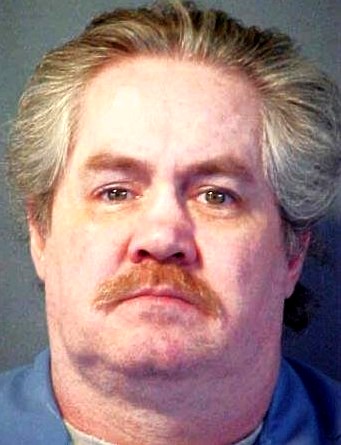
Jimmy Glass
Murderer Ervil LeBaron
Murderer · USA · 1972
Ervil Morrell LeBaron (1925 to August 16, 1981) was the leader of a polygamous…
35 victims
Ervil LeBaron
Murderer · USA · 1972
Ervil Morrell LeBaron (1925 to August 16, 1981) was the leader of a polygamous…
35 victims
 Brian Kevin Rosenfeld
Murderer · USA · 1985
Brian Kevin Rosenfeld Brian Kevin Rosenfeld was sentenced to three concurrent l…
23 victims
Brian Kevin Rosenfeld
Murderer · USA · 1985
Brian Kevin Rosenfeld Brian Kevin Rosenfeld was sentenced to three concurrent l…
23 victims
 Marvin Gray
Murderer · USA · 1975
Marvin Gray was convicted killer who claimed responsibility for 23 slayings and…
23 victims
Marvin Gray
Murderer · USA · 1975
Marvin Gray was convicted killer who claimed responsibility for 23 slayings and…
23 victims
 Yahweh ben Yahweh
Murderer · USA · 1980
Yahweh ben Yahweh was born and legally named Hulon Mitchell Jr. (October 27, 19…
23 victims
Yahweh ben Yahweh
Murderer · USA · 1980
Yahweh ben Yahweh was born and legally named Hulon Mitchell Jr. (October 27, 19…
23 victims
 Russell Ellwood
Murderer · USA · 1991
Russell Ellwood was a former taxi driver. Authorities suspected him of killing…
20 victims
Russell Ellwood
Murderer · USA · 1991
Russell Ellwood was a former taxi driver. Authorities suspected him of killing…
20 victims
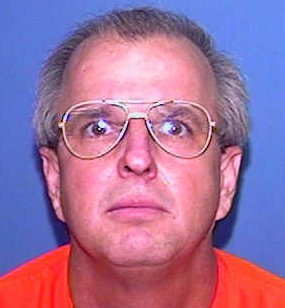 James Aren Duckett
Murderer · USA · 1987
Name: James Aren Duckett · Date of birth: 09/04/57 · Court: Supreme Court of Fl…
1 victim
James Aren Duckett
Murderer · USA · 1987
Name: James Aren Duckett · Date of birth: 09/04/57 · Court: Supreme Court of Fl…
1 victim
 Pamela Smart
Murderer · USA · 1990
Pamela Ann Smart (née Wojas) (born August 16, 1967) was convicted in New Hampsh…
1 victim
Pamela Smart
Murderer · USA · 1990
Pamela Ann Smart (née Wojas) (born August 16, 1967) was convicted in New Hampsh…
1 victim
 Guinevere Garcia
Murderer · USA · 1977
Guinevere Garcia was also known as Guinevere Falakassa Garcia. She was convicte…
2 victims
Guinevere Garcia
Murderer · USA · 1977
Guinevere Garcia was also known as Guinevere Falakassa Garcia. She was convicte…
2 victims
 Antoine François Desrues
Murderer · France · 1777
Antoine François Desrues (1744–1777) was a French poisoner. Desrues was born at…
2 victims
Antoine François Desrues
Murderer · France · 1777
Antoine François Desrues (1744–1777) was a French poisoner. Desrues was born at…
2 victims
 Martha Grinder
Murderer · USA · 1864
Martha Grinder was convicted of murder in the first degree for poisoning Mary C…
2 victims
Martha Grinder
Murderer · USA · 1864
Martha Grinder was convicted of murder in the first degree for poisoning Mary C…
2 victims
- Gender
- male
- Country
- USA
- Location
- Webster Parish, Louisiana, USA
- Date of birth
- 1962
- Age at first offence
- 20
- Characteristics
- fugitive
- Victim profile
- Newton Brown, 55, and his wife, Erlene Nealy Brown, 51
- Method of murder
- Shooting
- Date(s) of murder
- December 25, 1982
- Years active
- 1982
- Date of arrest
- January 6, 1983
- Status
-
Executed
Executed by electrocution in Louisiana on June 12, 1987
Case record: Jimmy Glass
Parties
- Defendant: Jimmy L. Glass
- Victims: Newton Brown; Erlene Nealy Brown
- Co-accused / cellmate: Jimmy Wingo
- Prosecution / corrections / officials named in proceedings:
- Frank Blackburn, Warden, Louisiana State Penitentiary at Angola, Louisiana (respondent in the federal appeal)
- Corrections Commissioner C. Hall Phelps
- Warden Hilton Butler
- Governor Edwin W. Edwards
- Detective / deputy named: Sheriff’s Deputy Jimmy Morgan
- Trial-court and appellate judges named in the federal appellate opinion: POLITZ, GARWOOD, HIGGINBOTHAM
Timeline
- December 24, 1982 — Jimmy Glass and Jimmy Wingo escaped from the Webster Parish jail in Minden, Louisiana.
- December 25, 1982 — Glass and Wingo broke into the Browns’ residence in Dixie Inn, robbed and ransacked their home, and shot and killed Newton Brown and Erlene Nealy Brown; the next day the Browns’ child found Newton and Erlene Brown bound and gagged in their bed with Newton shot through the head.
- January 5, 1983 — Jimmy Wingo was flushed out of the woods in Texas and arrested.
- January 6, 1983 — Jimmy Glass fled to San Diego, California, and was arrested.
- January 8, 1983 — After receiving Miranda warnings and signing a waiver, Glass was questioned in San Diego by two Louisiana police officers dispatched to escort him back to Louisiana; Glass told the officers that he shot the Browns because Wingo forced him.
- January 9, 1983 — Glass waived extradition and was voluntarily returned to Louisiana.
- January 10, 1983 — Glass expanded his account to the officers in Louisiana without prompting by the officers.
- June 12, 1986 — The United States Court of Appeals, Fifth Circuit denied Glass’s requested certificate of probable cause, dismissed the appeal, and vacated the stay of execution previously entered.
- June 12, 1987 — Jimmy L. Glass was executed by electrocution in Louisiana.
- June 16, 1987 — Jimmy Wingo was executed.
Background
Jimmy L. Glass was executed in Louisiana on June 12, 1987. Glass was convicted of shooting to death Newton Brown and Erlene Nealy Brown while burglarizing their Dixie Inn home on Christmas Day, 1982. Glass and Jimmy Wingo had escaped from the Webster Parish Jail the day before. Glass claimed that Wingo forced him at gunpoint to kill the Browns.
Glass argued in the U.S. Supreme Court case Glass v. Louisiana that executions by electrocution violated the Eighth and Fourteenth Amendments as “cruel and unusual punishment.” The U.S. Supreme Court found that electrocution as an authorized method of execution was constitutional.
Glass’s last words were: “I'd rather be fishing.”
Glass was described as a high school dropout. A sheriff’s deputy described him as a neglected high-school dropout who never held a job for more than a few weeks. The deputy said Glass wanted to be tough, drank to feel tough, and was taken in by Jimmy Wingo’s tough jailhouse talk.
The offence
At approximately 8:00 p.m. on December 24, 1982, Glass and Jimmy Wingo escaped from the Webster Parish jail in Minden, Louisiana. The two later broke into the Browns’ residence in Dixie Inn, robbed the Browns, ransacked their home, and before making their getaway in the Browns’ automobile, shot and killed the two helpless victims. The next day, one of the Browns’ children found his dead parents, bound and gagged in their bed and shot through the head.
At trial, Glass testified that he and Wingo waited until the family’s lights were out, kicked in the door, and tied up the Browns with electrical cord before ransacking the house. Glass testified that when Wingo put a shotgun to his head, he tiptoed up to the bed, closed his eyes, and pulled the trigger of his pistol as it pointed at Newton Brown. Glass testified that Erlene Brown started to scream and he shot her as well.
Glass was described in connection with the killings as condemned for killing Newton and Erlene Brown.
Investigation and arrest
After the escape on December 24, 1982, Jimmy Wingo was flushed out of the woods in Texas and arrested on January 5, 1983. Glass fled to San Diego, California, where he was arrested on January 6, 1983.
On January 8, 1983, after receiving Miranda warnings and signing a waiver, Glass was questioned in San Diego by two Louisiana police officers dispatched to escort him back to Louisiana. Glass told the officers he shot the Browns but that he did so because Wingo had forced him to. Glass waived extradition and was voluntarily returned to Louisiana on January 9, 1983.
On the following day, without any questioning or prompting from the officers, Glass expanded his account by telling the officers that he had shot the Browns only after Wingo had pointed a shotgun at him, threatened to kill him, and told him that because Glass had mentioned Wingo’s name in earshot of the Browns as they ransacked the home, Glass would have to kill them. Glass did not seek suppression of his inculpatory statements and used them to support his defense based on duress. Glass consistently asserted that Wingo had forced him to kill the Browns, and he so testified at trial.
Sheriff’s Deputy Jimmy Morgan described Glass.
Trial
Glass was indicted for murder, pleaded not guilty and not guilty by reason of insanity, and was tried separately from Jimmy Wingo. Because of extensive local publicity, the trial was moved 200 miles south to Lafayette, Louisiana.
During pretrial proceedings, pursuant to La.C.Cr.P. arts. 644 and 650, the presiding judge appointed a two-doctor sanity commission. One psychiatrist testified that Glass was legally sane both at the time of the interview and at the time of the offense. The second psychiatrist addressed Glass’s sanity at the time of the interview and concluded that he was competent to stand trial and assist in his defense. The Louisiana Supreme Court stated that a fair reading of Dr. Turner’s testimony and brief report led it to conclude that the doctor did examine for and testify to defendant’s sanity at the time of the offense, and that under these circumstances it was not error for the trial judge to refuse to appoint another doctor; the Louisiana Supreme Court found that the sanity commission fulfilled its duties and that the assignment of error was without merit.
Glass’s defense at trial was lack of willfulness because of Wingo’s coercion. After a five-day trial on the guilt phase, the jury convicted Glass of capital murder. The penalty phase continued the next day. At the penalty phase, the state relied on the evidence previously adduced and the written reports of the members of the sanity commission.
Glass testified and also offered testimony including:
- A criminal justice expert concerning the adaptability of 20-year-old men to life sentences.
- An Episcopalian minister as an expert on Christian ethics and morals on the subject of murder and the taking of human life and, on the basis of two interviews, on Glass’s remorsefulness.
- Glass’s mother.
After deliberating for several hours, the jury returned sentences of death for both murders. The Louisiana Supreme Court affirmed the convictions and sentences.
Louisiana Supreme Court citation: State v. Glass, 455 So.2d 659 (La.1984).
Federal habeas and appellate proceedings
Jimmy L. Glass petitioned for a writ of habeas corpus, 28 U.S.C. Sec. 2254, and sought a certificate of probable cause under 28 U.S.C. Sec. 2253 in the United States Court of Appeals, Fifth Circuit case Jimmy L. GLASS, Petitioner-Appellant, v. Frank BLACKBURN, Warden, Louisiana State Penitentiary at Angola, Louisiana, Respondent-Appellee. No. 85-4499. The appeal arose from the United States District Court for the Western District of Louisiana.
The Fifth Circuit panel included: POLITZ, GARWOOD, and HIGGINBOTHAM.
The Fifth Circuit denied the requested certificate of probable cause, dismissed the appeal, and vacated the stay of execution previously entered.
Issues addressed by the Fifth Circuit
Psychiatric examination
- Glass argued he was deprived of his constitutional right to an independent psychiatric examination because only one of the two sanity commission members specifically considered legal sanity at the time of the murders.
- The Fifth Circuit discussed Ake v. Oklahoma and concluded that the psychiatric evaluation provided Glass satisfied Ake, noting that one doctor expressly and one implicitly concluded he was sane at the time of the murders and that access to a competent psychiatrist beyond the sanity commission was available upon request.
Suppression of statements
- Glass contended trial was tainted by admission of inculpatory statements made to officers in San Diego on January 8, 1983 and in Minden on January 10, 1983.
- The Fifth Circuit held the Edwards claim was procedurally barred under state procedural default rules because Glass had failed to seek suppression at trial, and concluded Glass had not shown adequate cause because the decision not to object was strategic, intended to buttress the duress defense.
Ineffective assistance of counsel
- Glass contended trial counsel were ineffective during the penalty phase by failing to call friends and relatives as mitigating witnesses. Affidavits attached to Glass’s state petition said the witnesses would have pleaded for Glass’s life and testified about Glass’s difficult home life as a youth, his father’s alcoholism, and his sensitive and decent nature.
- The Fifth Circuit held Glass failed to show prejudice.
Grigsby (McCree) claim
- Glass contended he was denied due process because he was convicted by a death-qualified jury from which Witherspoon-excludables were excused.
- The Fifth Circuit stated the contention was foreclosed by Lockhart v. McCree.
Prosecutorial misconduct
- Glass raised complaints about the prosecutor’s questions and argument. The Fifth Circuit discussed one issue involving references during cross-examination and rebuttal about whether anyone had been executed and that “the law in Louisiana is that we do have the death penalty,” concluding there was no Caldwell violation in the remarks and that the jury was instructed twice that the choice was their responsibility.
- The Fifth Circuit quoted: “It is the job of the jury now to determine what would be the appropriate punishment in the case.”
Compulsion defense
- Glass cited Chambers v. Mississippi, arguing due process was violated because Louisiana does not recognize compulsion as a defense to murder under La.R.S. 14:18(6).
- The Fifth Circuit stated there was no fundamental right to commit murder even under duress, and discussed that at the penalty phase a mitigating factor could include that “[t]he offense was committed while the offender was under the influence or under the domination of another person,” which the trial judge had charged as a mitigating factor.
Double-counting of aggravating factors
- Glass argued two of the four aggravating factors found by the jury were impermissible double-counting.
- The jury found four statutory aggravating factors: (1) the offender was engaged in the perpetration of aggravated burglary; (2) the offender knowingly created risk of death to more than one person; (3) the offense was committed in an especially heinous, atrocious, and cruel manner; and (4) the offender at the time of the offense was imprisoned after sentence for commission of an unrelated forcible felony.
- The Louisiana Supreme Court upheld the first two factors and pretermitted evaluation of the latter two.
- The Fifth Circuit concluded the rationale Glass relied on did not warrant relief and addressed the interplay of aggravating factors.
Admission of letter
- Glass objected to use by the prosecution of a letter he wrote to his mother during the flight from San Diego, arguing seizure violated the Fourth Amendment.
- The Fifth Circuit stated the claim was rejected by the Louisiana Supreme Court and that this precluded review under Stone v. Powell.
9-12. Remaining claims
- The Fifth Circuit stated it reviewed additional claims including Witherspoon excusal, alleged disproportionate penalty under Enmund v. Florida, alleged error in the specific intent charge, and alleged insufficiency of the evidence under Jackson v. Virginia, and found them without merit.
Sentencing
The jury convicted Glass of capital murder after a five-day guilt phase trial and returned death sentences for both murders after deliberating for several hours at the penalty phase.
The Louisiana Supreme Court affirmed State v. Glass, 455 So.2d 659 (La.1984).
The U.S. Supreme Court addressed Glass’s challenge to electrocution and found it constitutional as an authorized method of execution.
Governor Edwin W. Edwards refused commutation of the sentence.
Outcome
Jimmy L. Glass was executed by electrocution in Louisiana on June 12, 1987.
He was pronounced dead at 12:14 A.M. Corrections Commissioner C. Hall Phelps stated this at the time of execution. The execution was described as occurring early today, and Glass grinned as he was strapped into the electric chair.
When asked if he had a final statement, Glass said: “Yeah, I think I'd rather be fishing.”
Glass’s appeal had been rejected without comment by the United States Supreme Court. The high court also refused to stop Louisiana executions on Sunday and Tuesday, and refused to stop any execution unless new evidence indicated the person was innocent, as described in connection with Governor Edwin Edwards.
Jimmy Wingo was scheduled to die June 16, 1987, and was executed on June 16, 1987.
Other details
- Glass and Jimmy Wingo had escaped Christmas Eve after being let out of their cell to make holiday telephone calls to their families.
- They followed the railroad tracks from Minden to the Browns’ home in the town of Dixie Inn.
- Glass denied he was responsible for the shooting, blaming it on Wingo, and both men denied doing the shooting and blamed it on each other so they were both executed.
- The Browns’ children found the bodies on Christmas morning.
- At the time of the killings, Newton Brown was 55 and his wife, Erlene Nealy Brown, was 51.
- The Fifth Circuit described the required constitutional standard and concluded Glass failed to make the “substantial showing of the denial of [a] federal right” necessary for issuance of a certificate of probable cause.
- A translated quotation attributed in the proceedings to counsel or court contexts included:
“I'd rather be fishing.” “Yeah, I think I'd rather be fishing.”
- The federal appellate decision included verbatim footnotes and quotations, including the Louisiana Supreme Court’s statement:
“A fair reading of the testimony of Dr. Turner, coupled with his brief report, including its reference to defendant's knowing the difference between right and wrong, the appropriate test for time of offense insanity under La.R.S. 14:14, leads us to conclude that the doctor did examine for and testify to defendant's sanity at the time of the offense. Under these circumstances, it was not error for the trial judge to refuse to appoint another doctor. Having determined that the sanity commission appointed by the trial court fulfilled its duties, we find that this assignment of error is without merit.”

Spotted an error, or have more information about this case?