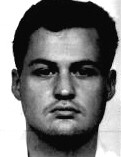
Spencer Corey Goodman
Murderer Brian Kevin Rosenfeld
Murderer · USA · 1985
Brian Kevin Rosenfeld Brian Kevin Rosenfeld was sentenced to three concurrent l…
23 victims
Brian Kevin Rosenfeld
Murderer · USA · 1985
Brian Kevin Rosenfeld Brian Kevin Rosenfeld was sentenced to three concurrent l…
23 victims
 Russell Ellwood
Murderer · USA · 1991
Russell Ellwood was a former taxi driver. Authorities suspected him of killing…
20 victims
Russell Ellwood
Murderer · USA · 1991
Russell Ellwood was a former taxi driver. Authorities suspected him of killing…
20 victims
 Robert Martines Perez
Murderer · USA · 1994
Name: Robert Martines Perez · Other name used in proceedings: Robert Martinez P…
15 victims
Robert Martines Perez
Murderer · USA · 1994
Name: Robert Martines Perez · Other name used in proceedings: Robert Martinez P…
15 victims
 Billy Frank Vickers
Murderer · USA · 1993
Billy Frank Vickers Vickers was executed by lethal injection in Texas on Januar…
14 victims
Billy Frank Vickers
Murderer · USA · 1993
Billy Frank Vickers Vickers was executed by lethal injection in Texas on Januar…
14 victims
 Jesse Caleb Compton
Murderer · USA · 1997
Jesse Caleb Compton Jesse Caleb Compton was sentenced to death in 1998. · June…
1 victim
Jesse Caleb Compton
Murderer · USA · 1997
Jesse Caleb Compton Jesse Caleb Compton was sentenced to death in 1998. · June…
1 victim
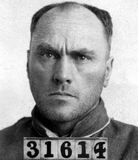 Carl Panzram
Serial killer · Angola · 1920
Carl Panzram (28 June 1891 – 5 September 1930) was an American serial killer. C…
22 victims
Carl Panzram
Serial killer · Angola · 1920
Carl Panzram (28 June 1891 – 5 September 1930) was an American serial killer. C…
22 victims
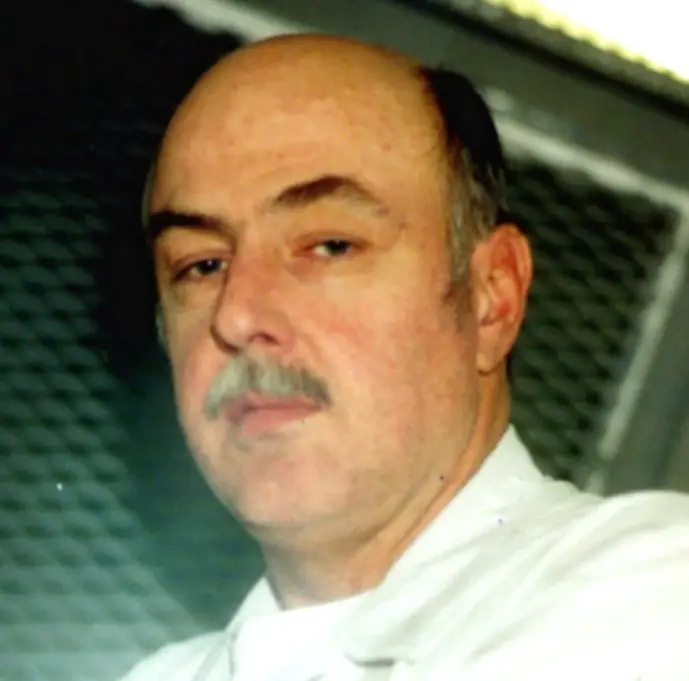 Roy Michael Roberts
Murderer · USA · 1983
Roy Michael Roberts was convicted and sentenced to death for alleged participat…
1 victim
Roy Michael Roberts
Murderer · USA · 1983
Roy Michael Roberts was convicted and sentenced to death for alleged participat…
1 victim
 Carole Tregoff
Murderer · USA · 1959
Carole Tregoff was convicted in connection with the murder of Barbara Finch. Sh…
1 victim
Carole Tregoff
Murderer · USA · 1959
Carole Tregoff was convicted in connection with the murder of Barbara Finch. Sh…
1 victim
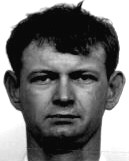 Allen Wayne Janecka
Murderer · USA · 1975
Name: Allen Wayne Janecka · July 6, 1979 — A neighbor discovered the corpses of…
4 victims
Allen Wayne Janecka
Murderer · USA · 1975
Name: Allen Wayne Janecka · July 6, 1979 — A neighbor discovered the corpses of…
4 victims
- Gender
- male
- Country
- USA
- Location
- Harris County, Texas, USA
- Date of birth
- October 28, 1968
- Age at first offence
- 23
- Characteristics
- robbery, kidnapping, abuse
- Victim profile
- Cecile Ham (female, 38)
- Method of murder
- Beating
- Date(s) of murder
- July 2, 1991
- Years active
- 1991
- Date of arrest
- August 7, 1991
- Status
-
Executed
Executed by lethal injection in Texas on January 12, 2000
Case information
Spencer Corey Goodman was convicted of the capital offense of the intentional murder of Cecile Ham in the course of robbery or kidnapping.
The offence
Cecile Ham left her Houston residence at approximately 1:20 p.m., July 2, 1991. At the time of her disappearance, Ham was 48 years old, approximately five feet three inches in height, and approximately 130 pounds in weight. She owned a red 1991 Cadillac automobile. A friend at the residence expected her to return, but she did not return, and she was reported missing the next day.
Goodman admitted in his confession and testimony that he abducted Ham from a Walgreens parking lot in Houston while she was getting into her car. In a written statement, Goodman explained that he had been released on parole and was supposed to report to Texas House at 5:30 p.m. that day, but instead he started walking west and ultimately ended up in the Walgreens parking lot.
Goodman wrote that he saw a white female drive up in a 1991 red Cadillac, that she went into the Walgreens store, and that when she came out and opened the driver’s door to get into the car, he ran up behind her while the driver’s door was still open. He wrote:
“I shoved her over with one hand and punched her just under the left ear, to knock her out. She fell over to the passenger's side and was knocked unconscious. I got into the driver's seat. I think that I may have hit her in the back of the neck to make sure that she was unconscious.”
Goodman continued:
“I then used martial arts and broke the lady's neck. I don't know why I did it, but I know that I was lost. I then put her in the trunk of the car.”
Goodman also wrote that he drove away with Ham’s car, went through her purse, and took about $20 and some change, and also took credit cards. He stated that he used an Exxon gas card and signed the name on the card.
Goodman wrote that he knew Ham was dead when he put her in the trunk because he “felt on her pulse.” He then dumped the body in an open field near Uvalde.
At trial, Goodman testified and admitted the abduction, but denied breaking her neck or intending to cause her death. In Goodman’s defense testimony, he admitted that while in the Walgreens parking lot in Houston on July 2, 1991, he struck Ham in the head and neck with his fist in order to steal her car, but he denied breaking her neck or intending to cause her death.
Investigation
After Ham was reported missing, a deputy sheriff in Eagle County, Colorado arrested Spencer Corey Goodman on August 7, 1991, after a high-speed automobile chase through the Colorado mountains. Goodman surrendered to the deputy only after driving Ham’s Cadillac over a low cliff and wrecking it.
Goodman gave a written statement shortly thereafter. On August 9, 1991, at a Houston police station, Goodman gave a videotaped statement consistent with his earlier written statement.
The videotape showed that Goodman was an adult male approximately twenty years of age, apparently healthy and strong, and approximately six feet in height and 200 pounds in weight.
On August 8, 1991, after being returned to Texas, Goodman led law enforcement officials to the remains of his victim’s body, which he had dumped in an open field near Uvalde. An autopsy confirmed that they were those of Ham and revealed that the cause of her death had been “blunt trauma to [her] head and neck.”
Arrest
On August 7, 1991, a deputy sheriff in Eagle County, Colorado arrested Spencer Corey Goodman after a high-speed automobile chase through the Colorado mountains. Goodman surrendered only after driving Ham’s Cadillac over a low cliff and wrecking it.
Trial
Charges and conviction
On January 13, 1992, Goodman was indicted in Fort Bend County, Texas, with the capital offense of the intentional murder of Cecile Ham in the course of robbery or kidnapping.
A jury found Goodman guilty of the capital offense on May 26, 1992.
Punishment phase
A separate punishment hearing ensued. On June 1, 1992, the jury answered affirmatively the two special issues submitted to them and, in accordance with state law, the trial court assessed punishment at death.
The trial involved testimony from multiple witnesses, including Houston Police Department Sergeant J.W. Belk, who testified that, based on his experience in more than 100 homicide investigations, he believed Goodman had the “psychological profile” of a “cold-blooded murderer.” Sociologist James W. Marquart testified that an individual with appellant’s background would pose “a risk” of future acts of criminal violence. Gregory Eric Holmes testified that Goodman once told him that he (i.e., Goodman) had been a gang member while in prison and had engaged in gang violence. David William Carleton testified that Goodman had threatened his life during an encounter several days after Goodman committed the instant offense.
Goodman’s statement and admissions during the case
Goodman testified in his defense and admitted the abduction but denied breaking her neck or intending to cause her death.
In his written statement, Goodman described his actions in detail, including the decision to take Ham’s car because his “feet hurt,” striking her to knock her unconscious, hitting her in the back of the neck to ensure unconsciousness, using martial arts and breaking her neck, putting her in the trunk, driving the car to the area of a high school, asking a man in a truck how to get to I-10, and later taking money and credit cards from Ham’s purse. Goodman’s statement also described the timeline he believed led up to the abduction, including his release on July 1, 1991 from the old Bexar County Jail where he was being held at a Wackenhut Parole Violators Facility, being given a bus ride back to Houston by Wackenhut and dropped off on the east side of town at 9:30 a.m., and being given papers to report to Texas House at 5:30 p.m. that night.
Goodman’s written statement included the following passages:
“On July 1, 1991, I was released from the old Bexar County Jail where I was being held [at a ] Wackenhut Parole Violators Facility. I was given a bus ride back to Houston, Texas by Wackenhut and dropped off on the east side of town at 9:30 a.m. I was given my papers to report to Texas House at 5:30 p.m. that night. Instead of going to the halfway house I started walking west. I walked most of the night. . . . . I laid down for a while along the side of the railroad tracks but I kept getting eat up by mosquitos so I could not sleep. During the day on Tuesday, July 2, 1991, I started walking out Memorial Drive. During the mid-afternoon it started raining. I walked up into a Walgreens parking lot maybe about 4:00 p.m. and just hung around the parking lot for about 20 to 30 minutes.”
Goodman’s statement continued:
“I saw a white female drive up in a 1991 red Cadillac. She pulled up in the firelane along the blind side of the parking lot and then went into the Walgreens store. At that time I was not really watching her, but I don't think that she stayed inside the drug store very long. When the lady came out of the store she opened the driver's door and started getting into the car. I decided at that point that I wanted to take her car from her.”
Goodman also wrote:
“I had been walking for a long time and my feet hurt and I wanted some transportation.”
He then described the assault and aftermath as quoted above, and further wrote:
“I then pulled off the main road and parked on a side road off behind this little building. I then used martial arts and broke the lady's neck. I don't know why I did it, but I know that I was lost. I then put her in the trunk of the car.”
Goodman wrote further:
“I knew that she was dead when I put her in the trunk because I felt on her pulse.”
Sentencing
On June 1, 1992, following the affirmative answers to the two special issues, the trial court assessed punishment at death.
Appeals
Texas Court of Criminal Appeals
Goodman appealed automatically to the Texas Court of Criminal Appeals. The Texas Court of Criminal Appeals affirmed the conviction and sentence on April 10, 1996, and denied a motion for rehearing on May 15, 1996.
Goodman did not seek certiorari review to the United States Supreme Court.
State habeas corpus
Goodman filed an application for state writ of habeas corpus with the convicting court on April 24, 1997. The trial court entered findings of fact and conclusions of law recommending that habeas relief be denied, and these findings were adopted by the Court of Criminal Appeals on October 8, 1997. Goodman did not seek certiorari review to the Supreme Court.
Goodman filed a second application for state writ of habeas corpus with the convicting court on June 1, 1998. The Court of Criminal Appeals dismissed the second application as an abuse of the writ under statutory provisions on July 1, 1998.
Federal habeas corpus
Goodman filed a federal habeas petition in the United States District Court for the Southern District of Texas, Houston Division, on November 4, 1997, and an amended petition on April 27, 1998. On May 29, 1998, prior to the State filing a response to the petition, Goodman unilaterally dismissed his federal action.
On July 13, 1998, Goodman returned to the federal district court by filing a second federal habeas petition. Goodman filed an amended petition on October 5, 1998. The State responded to the merits of the claims raised in the petition and argued that the second petition was not timely filed under the controlling federal habeas statute.
On February 22, 1999, the district court entered an order dismissing the petition as time barred and denying Goodman permission to appeal.
On March 23, 1999, and April 7, 1999, the district court entered orders denying several post-judgment motions filed by Goodman.
On September 16, 1999, the United States Court of Appeals for the Fifth Circuit denied Goodman permission to appeal.
Goodman then filed a petition for writ of certiorari to the United States Supreme Court, which was pending before the Court.
Outcome
On January 12, 2000, Goodman was executed by lethal injection in Texas.
A Houston Chronicle account described Goodman’s final moments, stating that he was pronounced dead at 6:22 p.m., 9 minutes after the flow of lethal drugs began.
Minutes before the execution, a witness turned to the victim’s husband, Bill Ham, manager of rock group ZZ Top, and asked how he was doing. Bill Ham replied: “Great.”
Goodman expressed love for his family and a woman named Kami in a final statement. Goodman then said, “That's it, warden. Thank you, chaplain.” The account further stated that Goodman gulped 3 times, sputtered loudly about a half dozen times and then fell into unconsciousness before being pronounced dead at 6:22 p.m.
The execution occurred after Goodman’s appeal and a request to stay the execution were pending before the U.S. Supreme Court.
Aftermath
The Houston Chronicle account described that Goodman’s relatives were not present at the execution though they had visited him in the preceding days. The witnesses included ZZ Top manager Bill Ham and a brother of Ham’s late wife, Cecile.
A written statement attributed to Bill Ham and Cecile’s mother, Louella Autrey of Waxahachie, was released before leaving the courthouse after sentencing. The statement included the following quotations:
“The goodness that was Cecile will never again touch our lives,”
“The sweetness of her smile and humor in adversity will never strengthen us again except as a memory. Every good and gracious trait that was Cecile is gone but will never be forgotten.”
The statement thanked law enforcement officers and prosecutors and challenged the community to work for a system that “considers the rights of victims to be of supreme importance.” It also included:
“In memory of our beloved Cecile, the charge is to work toward a system dedicated to the freedom to live our lives unharmed and safe.”
Assistant District Attorney Fred Felcman made closing-argument remarks, calling the defendant “society's worst nightmare,” and reminded jurors of Goodman’s courtroom conduct when he tried to leave during testimony:
“Even then, for some reason, he feels he has the right to leave whenever he wants to,”
Prosecutors reminded jurors that Goodman had “spit in the face of society,” and described that time and time again leniency had been extended through the criminal justice system:
“Time and time again, leniency has been extended to this man through our criminal justice system. Just as often, this man has spit in the face of society.”
Goodman’s adoptive father, Barnard Goodman Sr., testified that his immediate family feared the defendant and that Goodman, at his own request, remained outside the courtroom during that testimony. Under cross-examination, Barnard Goodman Sr. placed the decision of life in prison or death in the jury’s hands and said:
“At this point, he's broken the heart of our family, and we would rather not be any further involved in this than we have to,”
A letter from Barnard Goodman Sr. to his son included:
“I tried so hard when you were young to turn you around,”
“We couldn't turn you around and you continued to do things that were against our laws, God's laws and the laws of society.”
A final statement by Spencer Goodman included:
“That's it, warden. Thank you, chaplain.”
A personal account attributed to Megan Goodman stated:
“I used to think that anyone on death row had to be a monster, including my own Uncle Spencer.”
“The crime was not something that was talked about in my family and frankly he was never talked about either.”
“I decided that I wanted to know the whole story about what he had done and who exactly he was.”
“So, without telling anyone in my family, I wrote him a letter telling him that I wanted to talk to him.”
“He wrote back and said that he would love to see me.”
“I prepared myself to go and visit a monster.”
“I was sure that that was what he was.”
“I sat down and talked to my Uncle for the first time since I was in third grade.”
“By the end of our two hour visit I had completely changed my opinion of him.”
“There is not a day that goes by that I don't miss him.”
“The most important thing that he taught me was to search for my own truth, don't just take one persons point of view as truth, because the truth is probably somewhere in the middle.”
“My Uncle did a horrible thing in his life but that doesn't mean that he was horrible.”
“I believe that it was Ghandi that said, "If we all took an eye for an eye then the whole world would be blind."”
“My Uncle was the most loving person that I have ever known and I was lucky that I got the chance to get to know the man that I did.”
Timeline
- July 2, 1991 (approx. 1:20 p.m.) — Cecile Ham left her Houston residence; she did not return and was reported missing the next day.
- July 1, 1991 — Goodman was released from the old Bexar County Jail where he was being held at a Wackenhut Parole Violators Facility; he was to report to Texas House at 5:30 p.m.
- July 2, 1991 (approx. 4:00 p.m.) — Goodman stated he walked into a Walgreens parking lot and stayed for about 20 to 30 minutes before the encounter.
- August 7, 1991 — Goodman was arrested in Eagle County, Colorado, after a high-speed chase; he surrendered only after driving Ham’s Cadillac over a low cliff and wrecking it.
- August 8, 1991 — After being returned to Texas, Goodman led law enforcement officials to Ham’s remains in an open field near Uvalde.
- August 9, 1991 — Goodman gave a videotaped statement at a Houston police station.
- January 13, 1992 — Goodman was indicted in Fort Bend County, Texas, for the capital offense of the intentional murder of Cecile Ham in the course of robbery or kidnapping.
- May 26, 1992 — A jury found Goodman guilty of the capital offense.
- June 1, 1992 — The jury answered affirmatively the two special issues; the trial court assessed punishment at death.
- April 10, 1996 — The Texas Court of Criminal Appeals affirmed the conviction and sentence.
- May 15, 1996 — The Texas Court of Criminal Appeals denied a motion for rehearing.
- April 24, 1997 — Goodman filed an application for state writ of habeas corpus with the convicting court.
- October 8, 1997 — The Court of Criminal Appeals adopted findings of fact and conclusions of law recommending habeas relief be denied.
- November 4, 1997 — Goodman filed a federal habeas petition in the United States District Court for the Southern District of Texas, Houston Division.
- April 27, 1998 — Goodman filed an amended federal habeas petition.
- May 29, 1998 — Goodman unilaterally dismissed his federal action.
- June 1, 1998 — Goodman filed a second application for state writ of habeas corpus with the convicting court.
- July 1, 1998 — The Court of Criminal Appeals dismissed the second state application as an abuse of the writ.
- July 13, 1998 — Goodman filed a second federal habeas petition.
- October 5, 1998 — Goodman filed an amended petition in the federal habeas proceedings.
- February 22, 1999 — The district court dismissed the federal petition as time barred and denied permission to appeal.
- March 23, 1999 — The district court denied several post-judgment motions filed by Goodman.
- April 7, 1999 — The district court denied several post-judgment motions filed by Goodman.
- September 16, 1999 — The United States Court of Appeals for the Fifth Circuit denied Goodman permission to appeal.
- January 12, 2000 — Goodman was executed by lethal injection in Texas.
Prior criminal history
At the punishment phase of trial, the State presented evidence of Goodman’s significant criminal record. On January 10, 1989, in Harris County, Goodman was convicted of the felony offense of burglary of a building and sentenced to imprisonment for two years. On March 6, 1989, in Runnels County, Goodman received seven years deferred-adjudication probation on a felony charge of unauthorized use of a motor vehicle. On August 27, 1990, Goodman’s deferred-adjudication probation was revoked and he was convicted of unauthorized use of a motor vehicle and sentenced to imprisonment for five years.
Goodman was paroled in December 1990, but he violated the conditions of his parole and was sent to the Wackenhut Parole Violators Facility in Bexar County. Goodman was paroled from Wackenhut on July 1, 1991, and immediately violated parole conditions again by not reporting to the Texas House, a “halfway house,” in Houston.
Drugs and/or alcohol
There was no evidence of drug or alcohol use connected with the instant offense.
Other details
Ham was identified as the wife of Bill Ham, manager of the rock group ZZ Top.
Goodman led officers to the remains after his arrest.
Goodman was described in court-related accounts as 31 at the time of execution and as 23 at the time of the offense. Another account described him as “31-year-old” and stated he was “the 2nd Texas death row inmate executed this year and the 201st since capital punishment resumed in the state in 1982.”
Assistant District Attorney Fred Felcman was associated with Goodman’s prosecution and made remarks quoted above.
Investigators reportedly tracked Goodman through his use of Ham’s credit cards.
Spotted an error, or have more information about this case?