Roosevelt Green
Murderer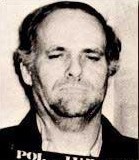 Ervil LeBaron
Murderer · USA · 1972
Ervil Morrell LeBaron (1925 to August 16, 1981) was the leader of a polygamous…
35 victims
Ervil LeBaron
Murderer · USA · 1972
Ervil Morrell LeBaron (1925 to August 16, 1981) was the leader of a polygamous…
35 victims
 Brian Kevin Rosenfeld
Murderer · USA · 1985
Brian Kevin Rosenfeld Brian Kevin Rosenfeld was sentenced to three concurrent l…
23 victims
Brian Kevin Rosenfeld
Murderer · USA · 1985
Brian Kevin Rosenfeld Brian Kevin Rosenfeld was sentenced to three concurrent l…
23 victims
 Marvin Gray
Murderer · USA · 1975
Marvin Gray was convicted killer who claimed responsibility for 23 slayings and…
23 victims
Marvin Gray
Murderer · USA · 1975
Marvin Gray was convicted killer who claimed responsibility for 23 slayings and…
23 victims
 Yahweh ben Yahweh
Murderer · USA · 1980
Yahweh ben Yahweh was born and legally named Hulon Mitchell Jr. (October 27, 19…
23 victims
Yahweh ben Yahweh
Murderer · USA · 1980
Yahweh ben Yahweh was born and legally named Hulon Mitchell Jr. (October 27, 19…
23 victims
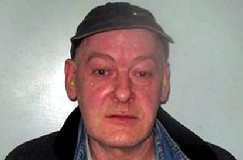 John Sweeney
Murderer · United Kingdom · 1990
John Sweeney was a jobbing carpenter. He worked under assumed names on construc…
2 victims
John Sweeney
Murderer · United Kingdom · 1990
John Sweeney was a jobbing carpenter. He worked under assumed names on construc…
2 victims
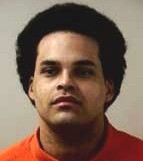 Luis Reyes
Murderer · USA · 1996
Name: Luis Reyes (Luis E. Reyes) · Date of birth: 02/08/1977 · Race: White · Ge…
2 victims
Luis Reyes
Murderer · USA · 1996
Name: Luis Reyes (Luis E. Reyes) · Date of birth: 02/08/1977 · Race: White · Ge…
2 victims
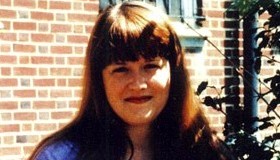 Kimberly Hricko
Murderer · USA · 1998
Kimberly Michelle Hricko — surgical technician; defendant. · Stephen Hricko — v…
1 victim
Kimberly Hricko
Murderer · USA · 1998
Kimberly Michelle Hricko — surgical technician; defendant. · Stephen Hricko — v…
1 victim
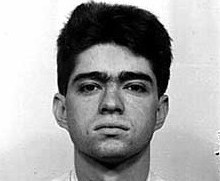 Harold Glenn Smith
Murderer · USA · 1985
August 13, 1986 — A jury convicted Harold Glenn Smith of first-degree murder an…
4 victims
Harold Glenn Smith
Murderer · USA · 1985
August 13, 1986 — A jury convicted Harold Glenn Smith of first-degree murder an…
4 victims
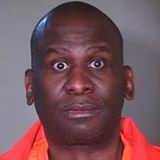 Eric John King
Murderer · USA · 1989
Eric John King was convicted of two first-degree murder counts and armed robber…
2 victims
Eric John King
Murderer · USA · 1989
Eric John King was convicted of two first-degree murder counts and armed robber…
2 victims
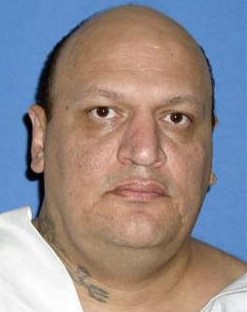 Ricardo Samaniego Ortiz
Murderer · USA · 1997
Ricardo Samaniego Ortiz was convicted of capital murder and sentenced to death…
1 victim
Ricardo Samaniego Ortiz
Murderer · USA · 1997
Ricardo Samaniego Ortiz was convicted of capital murder and sentenced to death…
1 victim
- Gender
- male
- Country
- USA
- Location
- Bleckley County, Georgia, USA
- Date of birth
- 1956
- Age at first offence
- 20
- Characteristics
- robbery, kidnapping, rape
- Victim profile
- Teresa Carol Allen, 18 (store clerk)
- Method of murder
- Shooting
- Date(s) of murder
- December 12, 1976
- Years active
- 1976
- Date of arrest
- —
- Status
-
Executed
Executed by electrocution in Georgia on January 9, 1985
Parties and case identification
Roosevelt Green was sentenced to death for his part in the kidnapping and murder of Teresa Allen.
Timeline
- December 12, 1976 — Teresa Carol Allen arrived at her part-time employment, the Majik Market in Cochran, Georgia, and shortly before 7 p.m. the store was found empty with the cash register and safe open and empty and her automobile missing.
- December 14, 1976 — Teresa Carol Allen’s body was discovered lying in a wooded grassy area just off a dirt road near Highway 41 in Monroe County, Georgia.
- 1975 — Carzell Moore stated that he met Green in an Alabama prison.
- December 11, 1976 — Moore stated he saw Green in Cochran looking for him while Green was out on escape and using the name Jerome Miller.
- Early January 1977 — Thomas Pasby accompanied Moore to check out an automobile that Moore intended to purchase; Moore told Pasby about the robbery, the abduction, and the rapes and shooting of Allen.
- Morning following the robbery — Green arrived in South Carolina in possession of the car and a large amount of change and a roll of bills; he asked a friend to burn the car and later traded the 30.06 rifle for a .25 caliber automatic.
- June 11, 1981 — Green filed for a writ of habeas corpus in the Superior Court of Butts County; it was dismissed by the court in an order also dated June 11.
- June 12, 1981 — The Georgia Supreme Court granted a stay of execution pending disposition of an application for certificate of probable cause, and subsequently remanded for an evidentiary hearing.
- 1982 — The Georgia Supreme Court denied an application for a certificate of probable cause, and the United States Supreme Court denied certiorari.
- September 19, 1983 — The United States Court of Appeals for the Eleventh Circuit issued an opinion remanding for an evidentiary hearing concerning the discharge of a juror during Green’s resentencing.
- July 30, 1984 — The United States Court of Appeals for the Eleventh Circuit issued a further opinion after a limited remand for an evidentiary hearing concerning the discharge of a juror.
- January 7, 1985 — The United States Supreme Court denied an application for a stay of execution of sentence of death; the petition for rehearing was denied.
- January 9, 1985 — Green was executed by electrocution in Georgia.
Background
Teresa Carol Allen worked part-time at the Majik Market in Cochran, Georgia. Green was indicted with Carzell Moore for the rape and murder of Teresa Carol Allen, and Moore was convicted of both crimes and sentenced to death. Green was tried separately. After the jury determined Green was guilty of murder, a second proceeding decided whether capital punishment would be imposed.
The offence
The evidence at trial tended to show that Green and Moore abducted Allen from the store where she was working alone and, acting either in concert or separately, raped and murdered her.
During the early evening of the day of the robbery, Green and Moore were let off at Moore’s house, four blocks from the location of the Majik Market. Green was wearing high-heeled shoes. Moore arranged for Green to take Allen to the meat counter to attract her attention so Moore could come in the front of the store with a rifle. Moore and Green robbed the Majik Market.
When they left the store, Moore and Green took Allen with them forcibly, left in her car with Moore driving, and Green later turned to Allen and told her: "Bitch, take off your clothes." Allen told Green she was a virgin and pleaded with him not to rape her; Green raped her anyway. Green then changed places with Moore and Green drove. Moore raped Allen.
Moore then told Green to stop the car. Allen and Moore got out of the car and Moore told Green to drive to a gas station to get gas for the car. After Green left, Allen begged Moore not to kill her and crossed her arms over her stomach to protect herself. Moore shot Allen in the abdomen with the rifle and then shot her in the face. Moore stated that he shot Allen in the face in an attempt to disfigure her so as to make it difficult to identify her.
Moore told Pasby that one of Allen’s hands was so mangled by the rifle blast that he thought it was going to fall off, and that one of her hands was almost severed from her body. After Green returned, the two of them picked up Allen and threw her into the bushes.
Investigation
After the Majik Market was found empty, the store supervisor determined that $466 was missing from the store. Allen’s body was discovered on December 14, 1976 in Monroe County, Georgia.
Near the body, footprints, two 30.06 cartridge hulls, a 30.06 metal jacket of a bullet, parts of Allen’s flesh, teeth and bone, tire tracks, and a nylon stocking were found. The cause of her death was determined to be loss of blood from bullet wounds.
Examination disclosed bruising on the inside of one thigh, a laceration of the vagina, and blood and mucous like matter in the vaginal canal. A pathologist testified that wounds in the abdomen, arms and face were caused by a high-powered missile, and that the location and nature of the wounds were consistent with a theory that Allen had her arms crossed across her stomach and was shot with a high-powered bullet which passed through both arms and the abdomen. The pathologist testified Allen was also shot by a high-powered bullet entering the left side of the neck, penetrating the lower face and exiting the right side of the head.
A plaster cast of a footprint found near Allen’s body matched the size and impression of a flat Hushpuppy shoe taken from Moore’s room. Tire tracks found near her body were similar in size and tread design to the tires found on Allen’s car. An attendant at a nearby gas station recalled selling gas for an automobile like Allen’s with a Georgia county tag showing only the letters RENS from Laurens; the tag on Allen’s car was in a similar condition.
There was other forensic evidence that circumstantially connected Moore to the crimes.
Arrest and escape-related details
Moore testified that he met Green in an Alabama prison in 1975. Moore stated that on December 11, 1976 he saw Green in Cochran looking for him while Green was out on escape and using the name Jerome Miller. Moore loaned Green some of his clothes and shoes.
Green later arrived in South Carolina in possession of Allen’s car with a large amount of change and a roll of bills. Green asked a friend to burn the car for him, and the friend refused. Green traded the 30.06 rifle for a .25 caliber automatic. A Cochran florist testified the rifle was stolen from him about the time and in the vicinity that Moore was seen with it.
When Moore was informed while in jail that Green had been arrested with the Allen car in South Carolina, Moore stated: "Damn, I told Green to get rid of that car and that rifle." Later, Moore stated to Pasby again: "You know, Green was supposed to have gotten rid of that rifle and the car."
Trial
Evidence and statements
Moore testified for himself and denied making the statement to Pasby about robbing the Majik Market, raping Teresa Allen, and killing her. He denied getting a 30.06 rifle. He denied Johnson’s testimony concerning Moore asking about a place to rob and concerning Moore’s statements about the rifle. He denied making the statement to Pasby while in jail.
Moore explained the forensic evidence by stating that he had skinned himself while having intercourse with his girl friend. He also testified that Green exchanged his high platform shoes for appellant’s Hushpuppys prior to the evening of the robbery.
In rebuttal, the state presented testimony that when Green visited South Carolina the morning following the robbery he was wearing high-heeled shoes and not Hushpuppys.
Sentencing
After the jury determined Green was guilty of murder, a second proceeding was held to decide whether capital punishment would be imposed. During this punishment phase, Green attempted to introduce testimony from Thomas Pasby, who had testified for the State at Moore’s earlier trial. Pasby’s testimony was that Moore had confided to him that Moore had killed Allen, shooting her twice after ordering Green to run an errand. The trial court refused to admit the testimony as inadmissible hearsay under Georgia law.
Green was sentenced to death. The Georgia Supreme Court upheld the conviction and sentence.
In later proceedings, Green’s death sentence was vacated and remanded for further proceedings related to the punishment phase, and then a death sentence was reimposed after resentencing. The Supreme Court of Georgia affirmed the resentencing outcome.
Juror discharge during deliberations (resentencing)
During Green’s resentencing deliberations, the jury returned to the courtroom and the foreperson asked whether a sentence could be given as "life in prison without parole?" The court responded that it could not answer the question. The jury then resumed deliberations.
At that point, one juror, Dorothy Mae Ponder Todd, fell to the floor in the hallway outside the courtroom and repeatedly cried "I can't do it." Shortly thereafter, the foreperson returned and the court conducted the following colloquy:
BY THE COURT: Let the record show that the Foreperson of this Jury, Mrs. Martha McGee, has been requested to come back into the Courtroom by the Court and the Court desires to ask a question of Mrs. McGee.
Mrs. McGee, I understand that the Juror, Dorothy Mae Ponder Todd a few moments ago upon leaving the Courtroom fainted in the corridor, is that correct?
BY FOREPERSON McGEE: Yes, sir.
BY THE COURT: And you have stated to me that upon returning to the Jury room, this Juror is in your opinion incapable of continuing deliberation in this case because of the fact that she is physically and emotionally unable to continue and participate in the deliberation of this Jury, is that true?
BY FOREPERSON McGEE: Yes, sir, it is.
BY THE COURT: And has this person requested of you that she be released from further service?
BY THE COURT: In your opinion, from having examined her, is she in this condition?
BY FOREPERSON McGEE: Yes, sir, she is.
BY THE COURT: You may go back to the Jury room.
....
BY THE COURT: Sheriff Bittick, I'm going to direct you to remove Juror Dorothy May Ponder Todd from the Jury room. This is being done at her request and upon the advice and at the request of the Jury Foreperson, Mrs. McGee, conveying this Juror to a doctor or some medical facility for the purpose of having her examined and receiving such treatment as she might require.
Todd was replaced by the first alternate.
During Green’s state habeas corpus hearing, Todd submitted an affidavit admitted into evidence. The affidavit stated:
I heard testimony as a juror for the entire sentencing trial as charged by the Court. After a lunch break on Saturday, November 10, we began deliberations. I heard all the evidence and particpated [sic] fully in the deliberations. A secret ballot was taken by the foreperson. The vote was 10-2 in favor of the death penalty. I voted against the death penalty. Just before 5:00 p.m., the jury returned to the courtroom with two questions for the Court concerning whether life imprisonment meant no parole and whether it was possible to have testimony of a witness read to us. After the judge said what he did, I felt that the other juror would be more likely to give the death sentence because he thought that Roosevelt Green would be paroled. We then went out of the courtroom. Before I got on the elevator, I collapsed. I had never collapsed before in my entire life. I had every intention of continuing as a juror. I don't remember ever making any statements to anyone asking to be taken off the jury. The judge never asked me personally whether I could continue. I was capable of continuing to serve as a juror and I'm sure that I would have standed [sic] firm with my convictions. (emphasis added).
Appeals
United States Supreme Court: evidentiary exclusion in punishment phase
The United States Supreme Court decided Green v. Georgia, 442 U.S. 95 (1979). After the jury determined Green was guilty of murder, the trial court refused to admit Pasby’s testimony about Moore’s confided statement as inadmissible hearsay under Georgia law. The United States Supreme Court held that exclusion violated the Due Process Clause of the Fourteenth Amendment and vacated the sentence. The decision read: "Certiorari granted; ... reversed and remanded."
United States Court of Appeals for the Eleventh Circuit: habeas corpus issues
In 715 F.2d 551, Roosevelt Green, Jr. v. Walter D. Zant, the court remanded for an evidentiary hearing because the record was inadequate to support resolution of the issue about discharge of a juror during resentencing deliberations.
In 738 F.2d 1529, the court stated it had considered issues after the limited remand for an evidentiary hearing and concluded that all claims were without merit and affirmed the district court’s denial of the writ.
United States Supreme Court: stay of execution
On January 7, 1985, the United States Supreme Court denied the application for stay of execution and denied the petition for rehearing.
Outcome
Green was executed by electrocution in Georgia on January 9, 1985.
Aftermath
Justice BRENNAN and Justice MARSHALL dissented from denying the stay, and Justice BLACKMUN and Justice STEVENS dissented and would have granted a stay pending the ultimate resolution of related cases before the United States Court of Appeals for the Eleventh Circuit. The dissenting material stated that Green had unsuccessfully requested evidentiary hearings to substantiate allegations of a pattern and practice of racial discrimination in Georgia’s capital sentencing system, and it referenced three cases and their procedural status in the Eleventh Circuit and related proceedings.
Other details
Thomas Pasby discussion and Moore’s statements
Moore told Pasby in early January 1977: "Well, I killed somebody, too," and then stated that he and Green went to the Majik Market in Cochran; that Moore told Green to go in and take Miss Allen to the meat counter to attract her attention; that Moore could then come in the front of the store with a rifle; that they robbed the Majik Market; that they left in her car with Moore driving; that Green told Allen: "Bitch, take off your clothes."; that Green raped Allen; that Green changed places with Moore and Moore drove; and that Moore later raped Allen.
After Allen begged Moore not to kill her, Moore shot her in the abdomen with the rifle and then shot her in the face in an attempt to disfigure her to make identification difficult.
Moore stated to Pasby that one of Allen’s hands was almost severed by the rifle blast and that he thought it was going to fall off, and that Allen was thrown into the bushes.
Green’s name and shoes
Moore stated that Green was out on escape using the name Jerome Miller. Moore also testified about Green’s shoes, including that Green exchanged his high platform shoes for Moore’s Hushpuppys prior to the evening of the robbery, and in rebuttal the state presented testimony that when Green visited South Carolina the morning following the robbery he was wearing high-heeled shoes and not Hushpuppys.
Car and evidence disposal
Green later arrived in South Carolina with the victim’s car and asked a friend to burn the car for him, which request was refused.
Forensic items found near Allen’s body
Near Allen’s body, investigators found footprints, two 30.06 cartridge hulls, a 30.06 metal jacket of a bullet, parts of Allen’s flesh, teeth and bone, tire tracks, and a nylon stocking. A pathologist testified regarding the bullet wounds in the abdomen, arms and face, and regarding a high-powered bullet entering the left side of the neck, penetrating the lower face and exiting the right side of the head. The bruising inside one thigh, laceration of the vagina, and blood and mucous like matter in the vaginal canal were also described.

Spotted an error, or have more information about this case?