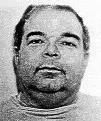
Randy Greenawalt
Serial killer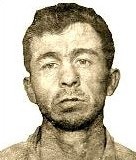 Donald Henry Gaskins
Serial killer · USA · 1969
Donald Henry Gaskins, also known as Donald “Pee Wee” Gaskins, was a serial kill…
200 victims
Donald Henry Gaskins
Serial killer · USA · 1969
Donald Henry Gaskins, also known as Donald “Pee Wee” Gaskins, was a serial kill…
200 victims
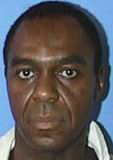 Carl Eugene Watts
Serial killer · USA · 1974
Carl Eugene Watts (born November 7, 1953; died September 21, 2007), also known…
100 victims
Carl Eugene Watts
Serial killer · USA · 1974
Carl Eugene Watts (born November 7, 1953; died September 21, 2007), also known…
100 victims
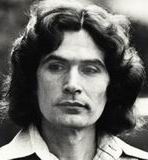 Rodney Alcala
Serial killer · USA · 1977
Rodney James Alcala (born August 23, 1943) was also known as Rodrigo Jacques Al…
100 victims
Rodney Alcala
Serial killer · USA · 1977
Rodney James Alcala (born August 23, 1943) was also known as Rodrigo Jacques Al…
100 victims
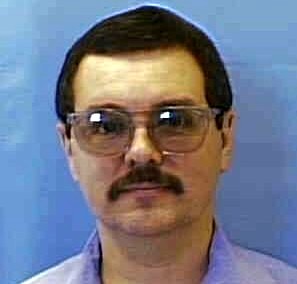 Donald Harvey
Serial killer · USA · 1970
Donald Harvey was known as an American serial killer and a self-professed “Ange…
87 victims
Donald Harvey
Serial killer · USA · 1970
Donald Harvey was known as an American serial killer and a self-professed “Ange…
87 victims
 Donald Leroy Evans
Serial killer · USA · 1975
Donald Leroy Evans (born July 5, 1957) was an American serial killer who murder…
60 victims
Donald Leroy Evans
Serial killer · USA · 1975
Donald Leroy Evans (born July 5, 1957) was an American serial killer who murder…
60 victims
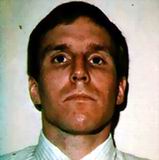 Michael Swango
Serial killer · USA · 1981
Michael Swango (Joseph Michael Swango) was a physician and American serial kill…
60 victims
Michael Swango
Serial killer · USA · 1981
Michael Swango (Joseph Michael Swango) was a physician and American serial kill…
60 victims
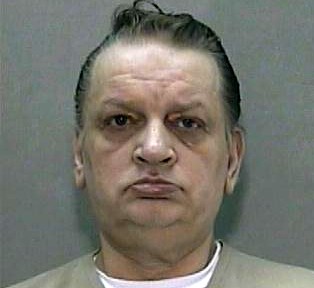 James Allen Paul
Murderer · USA · 1984
James Allen Paul was sentenced to life imprisonment in New Jersey on July 27, 1…
3 victims
James Allen Paul
Murderer · USA · 1984
James Allen Paul was sentenced to life imprisonment in New Jersey on July 27, 1…
3 victims
 Rachael Mullenix
Homicide · USA · 2006
Defendant: Rachael Scarlett Mullenix (also referred to as Rachael Mullenix), 16…
1 victim
Rachael Mullenix
Homicide · USA · 2006
Defendant: Rachael Scarlett Mullenix (also referred to as Rachael Mullenix), 16…
1 victim
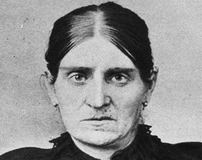 Elisabeth Wiese
Serial killer · Germany · 1902
Elisabeth Wiese (1 July 1853 – 2 February 1905) was a German serial killer from…
5 victims
Elisabeth Wiese
Serial killer · Germany · 1902
Elisabeth Wiese (1 July 1853 – 2 February 1905) was a German serial killer from…
5 victims
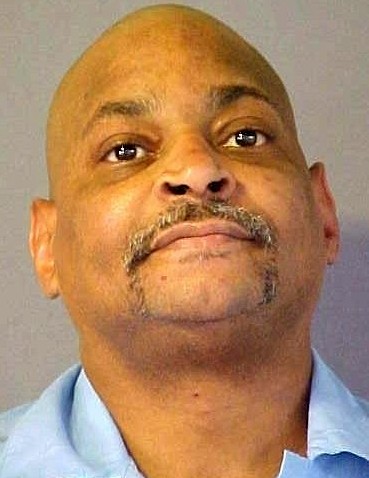 Eric Allen Patton
Murderer · USA · 1994
Eric Allen Patton — defendant; convicted killer; former handyman · Charlene Kau…
1 victim
Eric Allen Patton
Murderer · USA · 1994
Eric Allen Patton — defendant; convicted killer; former handyman · Charlene Kau…
1 victim
 Mukosi Freddy Mulaudzi
Serial killer · South Africa · 1990
Mukosi Freddy Mulaudzi (46) from Mandala Village was a convicted serial killer…
13 victims
Mukosi Freddy Mulaudzi
Serial killer · South Africa · 1990
Mukosi Freddy Mulaudzi (46) from Mandala Village was a convicted serial killer…
13 victims
- Gender
- male
- Country
- USA
- Location
- Arizona/Colorado, USA
- Date of birth
- February 24, 1949
- Age at first offence
- 25
- Characteristics
- robbery, kidnapping
- Victim profile
- 5 men, 3 women and 1 child (22-month-old boy)
- Method of murder
- Shooting
- Date(s) of murder
- 1974 - 1978
- Years active
- 1974–1978
- Date of arrest
- August 11, 1978
- Status
-
Executed
Executed by lethal injection in Arizona on January 23, 1997
Case details
Defendant: Randy Greenawalt Prison escape: July 30, 1978, from Arizona State Prison in Florence Execution: executed by lethal injection in Arizona on January 23, 1997 Age at execution: 47
Status and legal outcome
Randy Greenawalt was sentenced to death following his conviction on four counts of murder in the first degree. His death sentence was later litigated in multiple state and federal proceedings, including litigation about statements made after he requested counsel. Greenawalt lived through 19 years of litigation before his execution.
The offence
Greenawalt was serving a life sentence for a 1974 murder when he escaped from prison on July 30, 1978. After the escape, Greenawalt and Gary Tison kidnapped and killed a family of four and also killed an additional victim in connection with the killings. The killings were described as involving four victims: John Lyons, Donnelda Lyons, their son Christopher, and Theresa Tyson.
The killings were linked to evidence including Greenawalt’s palm print on the outside of a car, Raymond Tison’s fingerprint inside the car, and gun shells that matched guns recovered when the escapees were captured. The forensic evidence determined that the victims died at some time between July 31 and August 2, 1978.
Greenawalt also confessed to killing other people after his escape, including a trucker in Arkansas and a man in Colorado. He had previously been sentenced to life after the 1974 slaying of a trucker sleeping in his cab at an Interstate 40 rest stop near Winslow.
Investigation
After the escape, searchers discovered bodies and related evidence in the period following the killings. State employees discovered the bodies of John and Donnelda Lyons and their son Christopher near the abandoned Lincoln Continental in the area around Quartzsite, in Yuma County, Arizona. Searchers later found the body of Theresa Tyson.
Theresa Tyson’s body was found on August 11, 1978. Around 3:00 A.M. on August 11, officers placed Greenawalt and the two surviving Tisons into custody and then subjected them to searches and transfers between locations.
A pat-down search was conducted with handcuffing, and the men were placed in a pickup truck. They were later strip-searched with their clothes retained as evidence, and they were left naked in the truck. Later, they received wool blankets.
Arrest and custody
On August 11, 1978, Greenawalt and the surviving Tisons attempted to drive a stolen van through police roadblocks. When the van went off the road during a high-speed chase, police captured Greenawalt, Ricky Tison, and Raymond Tison. Donald Tison died during the chase. Gary Tison escaped capture at the roadblock site and died of exposure in the desert.
At approximately 5:00 A.M., the escapees were taken to separate vehicles.
Warden Caldwell read Greenawalt the Miranda warning and asked if he had statements to make. Greenawalt refused to make statements and requested an attorney. Cardwell did not ask further questions at that time.
Two Pinal County detectives, Tom Solis and Ed Harwell, arrived to question Greenawalt later that day. Harwell read the Miranda warning again and asked whether he needed medical attention. When Harwell began to ask Greenawalt about Theresa Tyson, Greenawalt again requested a lawyer.
Detective Solis asked whether Greenawalt already had a lawyer and if he would like to talk. Greenawalt responded that while he did not want to talk at that time, he would talk to Solis later. The conversation with Solis ended around 7:00 A.M.
Sometime between 7:30 and 8:00 A.M., Corrections Director Ellis McDougall met with Greenawalt, indicating that he did not want to talk about crimes but was wondering about the location of Theresa Tyson. Greenawalt answered some questions but then requested a lawyer.
At approximately 8:30 A.M., McDougall asked Assistant Warden Dwight Burd to talk to the prisoner, and McDougall probably did not pass along Greenawalt’s request for an attorney. Burd testified that he did not know that Greenawalt had already refused to talk to the police. Burd questioned Greenawalt, but questioning stopped around the point when Burd asked who had owned the stolen van, and then Greenawalt repeated his request for a lawyer.
Sometime between 8:30 and 9:24 A.M., McDougall approached Greenawalt again, and Greenawalt refused to talk to him.
At 9:24 A.M., Department of Public Safety Agent David Sanchez gave the prisoner the Miranda warning again. Greenawalt refused to answer questions until he was given an attorney.
Greenawalt was taken to the Pinal County jail around 11:30 A.M. and was examined by a doctor between 12:30 and 1:00 P.M.
Statements and confessions
Earlier, around 11:00 A.M., attorney Robert Brown learned he would be Greenawalt’s counsel. Jail personnel did not permit Brown to see Greenawalt until 1:00 P.M., when the two spoke for 10 or 15 minutes through a slit in a metal door with a prison guard standing next to Greenawalt.
At 2:00 P.M., detective Tom Brawley, who had known Greenawalt since 1974, questioned him. Brawley testified that he did not know about any previous attempts at interrogation. Brawley entered the cell, and Greenawalt was sleeping. Brawley woke him, brought coffee and a cigarette, and chatted for a while. Brawley then read Greenawalt his rights from a waiver. Greenawalt refused to sign the waiver.
At that point in the interrogation process, Greenawalt made incriminating statements. His refusal to sign the waiver was coupled with the statement that he “wanted to clear up the news media stories of Teresa [sic] Tyson.” When Brawley asked him to clarify that remark, Greenawalt responded: “We didn’t kidnap the girl, nor was she sexually molested.” Brawley asked where Theresa Tyson was located, since she had not been found with the other bodies. Greenawalt responded: “Well, we left her there.... [J]ust look around because she has to be there.” Brawley asked whether she had been shot. Greenawalt answered: “You goddamn right she was shot.”
Greenawalt later confessed to killing another trucker in Arkansas and a man in Colorado.
Trial
Greenawalt was tried in Arizona for the four Yuma County killings.
Ricky and Raymond Tison agreed to testify against Greenawalt in exchange for the state’s agreement not to seek the death penalty for them. The Yuma County Attorney mentioned their proposed testimony in his opening argument. When the Tison brothers reneged on their agreement, the trial judge declared a mistrial.
At the second trial, the prosecution argued that Greenawalt committed first degree murder by violating Ariz. Rev. Stat. Ann. Sec. 13-452, which dealt with killings “committed in avoiding or preventing lawful arrest or effecting an escape from legal custody, or in perpetration of ... robbery ... [or] kidnapping.”
The jury convicted Greenawalt on four counts of first degree murder, kidnapping, robbery, and theft. At a separate capital sentencing hearing, the trial judge sentenced him to death based on the murder conviction.
Sentencing
The trial judge sentenced Greenawalt to death.
Aggravating circumstances (as listed)
Prior convictions punishable by life imprisonment Prior convictions involving violence Grave risk of death to others Pecuniary gain Especially heinous/cruel/depraved
Mitigating circumstances (as listed)
None
Trial judge quotations on sentencing findings
In the sentencing proceedings, the trial judge said:
“In the commission of the murders of John Lyons and Donnelda Lyons, [Greenawalt] knowingly created a grave risk of death to other persons in addition to those victims.... The defendant committed the offenses in an especially heinous, cruel and depraved manner.”
Appeals
State appeals and opinions
Greenawalt’s conviction and sentence were affirmed in State v. Greenawalt, 128 Ariz. 150, 624 P.2d 828 (1981). The Arizona Supreme Court later affirmed the conviction and sentence in subsequent proceedings, including later proceeding, 128 Ariz. 388, 626 P.2d 118 (1981) (en banc).
Greenawalt filed a petition for post-conviction relief in state court, which was denied. A December 21, 1981 petition for a writ of habeas corpus filed in the district court in Arizona was also denied. An amended petition for a writ of habeas corpus was filed on May 31, 1984, and the district court denied it in memoranda and amended opinions on August 6, 1984, and December 13, 1984.
Published opinions included:
- State v. Greenawalt, 128 Ariz. 150, 624 P.2d 828 (1981)
- Greenawalt v. Ricketts, 784 F.2d 1453 (9th Cir. 1986)
- Greenawalt v. Ricketts, 943 F.2d 1020 (9th Cir. 1991)
- Greenawalt v. Ricketts, 953 F.2d 1020 (9th Cir. 1991), reh’g en banc denied, 961 F.2d 1457 (9th Cir.), cert. denied, 113 S. Ct. 117 (1992)
Federal habeas litigation (high-level outcomes)
In one federal appeal, the appellate court reversed and remanded the denial of the petition for a writ of habeas corpus, holding that the case was governed by Shea v. Louisiana and required application of Edwards v. Arizona. The decision stated: “REVERSED AND REMANDED.”
Later, another federal appeal affirmed in part and reversed in part, ultimately upholding the conviction and death sentence on collateral review, stated as: “AFFIRMED IN PART; REVERSED IN PART.”
A later appeal involved denial of relief requested by Greenawalt, with a result stated as “RELIEF DENIED.”
A further United States Supreme Court decision in Ricky Wayne Tison and Raymond Curtis Tison v. Arizona resulted in vacating judgments and remanding for further proceedings not inconsistent with the opinion.
Supreme Court decision on Tison (as included in record)
The United States Supreme Court held that the Arizona Supreme Court applied an erroneous standard under Enmund v. Florida and vacated and remanded. It described that it vacated the judgments below and remanded for determination consistent with its opinion.
Other details
People involved (named in the record)
- Gary Tison (fellow inmate; escapee; convicted murderer; died of exposure)
- Ricky Tison (one of Tison’s sons)
- Raymond Tison (one of Tison’s sons)
- Donald Tison (one of Tison’s sons; died during the chase)
- Ricky Wayne Tison (named as a petitioner in a Supreme Court case)
- Raymond Curtis Tison (named as a petitioner in a Supreme Court case)
- Theresa Tyson (victim; 15 in one account)
- John Lyons (victim; 24 in one account)
- Donnelda Lyons (victim; 23 in one account)
- Christopher Lyons (victim; 2-year-old son)
- Douglas W. Keddie (Presiding Judge)
- Michael Irwin (Prosecutor)
- Tom Solis (Pinal County Detective)
- Ed Harwell (Pinal County Detective)
- Ellis McDougall (Corrections Director)
- Dwight Burd (Assistant Warden)
- David Sanchez (Department of Public Safety Agent)
- Robert Brown (attorney who learned he would be Greenawalt’s counsel)
- Tom Brawley (detective who questioned Greenawalt)
- José de la Vara (deputy county attorney of Yuma County; quoted as saying the father had been “released to a higher authority.”)
- Warden Caldwell (warden who read Miranda warning at 5:00 A.M. time period)
- President Clinton (signed the Antiterrorism and Effective Death Penalty Act of 1996)
- Denise Young (attorney in Federal Public Defender’s Office; described in litigation)
- Stephen M. McNamee (district judge in the January 17, 1997 appeal)
- Terry L. Stewart (respondent in 105 F.3d 1268 case listing)
- Walter Berry (journalist for an Associated Press account included in the record)
- Bob Corbin (named in an included quotation about the execution)
Additional factual details about earlier and related crimes (as included)
Greenawalt previously drew an “X” on a trucker’s door near his head and then fired a round through it at an Interstate 40 rest stop near Winslow.
Greenawalt’s confessions after the escape included killing a trucker in Arkansas and a man in Colorado.
Last meal and execution information
Greenawalt’s last meal was listed as: Cheeseburger, Fries, Coffee with milk.
Greenawalt was executed by injection early on January 23, 1997.
Prison break and broader manhunt (as included)
The escape was described as including help from Tison’s sons. The manhunt was described as the largest in Arizona history. The escape was described as leading to criticism of the Arizona prison system and to a Hollywood, made-for-TV movie starring Robert Mitchum as Gary Tison.
Murder of four victims and related events (as included)
John Lyons, Donnelda Lyons, their son Christopher, and Theresa Tyson were killed. Police killed Donnie Tison during a roadblock confrontation, and Gary Tison was found dead in the desert several days later. Ricky and Raymond Tison were under 20 at the time of the shootings and were also sentenced to death; their sentences were later reduced to life in prison. The record states that the Tisons’ death sentences were overturned by the state Supreme Court in 1992, and they were resentenced to life in prison.
Certificate and habeas procedural outcomes (as included)
In the January 17, 1997 appeal, the appellate court denied all requested relief, including requested authorization to file successive habeas corpus petitions and a motion for a stay of execution, with the result stated as “RELIEF DENIED.”
Greenawalt’s requests included a certificate of probable cause (CPC) to appeal the district court’s final order denying his motions under Federal Rule of Civil Procedure 60(b)(6) and Federal Rule of Appellate Procedure 4(a)(6). The court denied the CPC and denied the motion for a stay of execution.
Explicit quotation included about “higher authority”
José de la Vara, deputy county attorney of Yuma County, said: “released to a higher authority.”
Spotted an error, or have more information about this case?