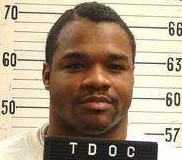
G'dongalay Berry
Murderer Brian Kevin Rosenfeld
Murderer · USA · 1985
Brian Kevin Rosenfeld Brian Kevin Rosenfeld was sentenced to three concurrent l…
23 victims
Brian Kevin Rosenfeld
Murderer · USA · 1985
Brian Kevin Rosenfeld Brian Kevin Rosenfeld was sentenced to three concurrent l…
23 victims
 Russell Ellwood
Murderer · USA · 1991
Russell Ellwood was a former taxi driver. Authorities suspected him of killing…
20 victims
Russell Ellwood
Murderer · USA · 1991
Russell Ellwood was a former taxi driver. Authorities suspected him of killing…
20 victims
 Robert Martines Perez
Murderer · USA · 1994
Name: Robert Martines Perez · Other name used in proceedings: Robert Martinez P…
15 victims
Robert Martines Perez
Murderer · USA · 1994
Name: Robert Martines Perez · Other name used in proceedings: Robert Martinez P…
15 victims
 Billy Frank Vickers
Murderer · USA · 1993
Billy Frank Vickers Vickers was executed by lethal injection in Texas on Januar…
14 victims
Billy Frank Vickers
Murderer · USA · 1993
Billy Frank Vickers Vickers was executed by lethal injection in Texas on Januar…
14 victims
 Deanna Laney
Homicide · USA · 2003
Deanna Laney A jury acquitted Deanna Laney of all charges by reason of insanity…
1 victim
Deanna Laney
Homicide · USA · 2003
Deanna Laney A jury acquitted Deanna Laney of all charges by reason of insanity…
1 victim
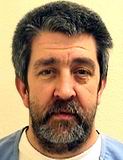 Mitchell Carlton Sims
Murderer · USA · 1985
Name: Mitchell Carlton Sims Also known as: “a human ashtray”; “Jeff Richardson”…
3 victims
Mitchell Carlton Sims
Murderer · USA · 1985
Name: Mitchell Carlton Sims Also known as: “a human ashtray”; “Jeff Richardson”…
3 victims
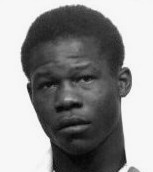 Anthony Leroy Pierce
Murderer · USA · 1977
Anthony Leroy Pierce (also known as Yatombi Ikei), TDCJ-ID Polunsky Unit 3872,…
2 victims
Anthony Leroy Pierce
Murderer · USA · 1977
Anthony Leroy Pierce (also known as Yatombi Ikei), TDCJ-ID Polunsky Unit 3872,…
2 victims
 Vincent Stopher
Murderer · USA · 1997
Name: Vincent Stopher · Date of birth: 7-11-72 · Place: Jefferson County · Marc…
1 victim
Vincent Stopher
Murderer · USA · 1997
Name: Vincent Stopher · Date of birth: 7-11-72 · Place: Jefferson County · Marc…
1 victim
- Gender
- male
- Country
- USA
- Location
- Davidson County, Tennessee, USA
- Date of birth
- September 5, 1976
- Age at first offence
- 19
- Characteristics
- kidnapping, armed robbery, mentally ill
- Victim profile
- Adriane Dickerson, 12 / Gregory Ewing, 18, and D'Angelo Lee, 19
- Method of murder
- Shooting
- Date(s) of murder
- 1995 / February 27, 1996
- Years active
- 1995–1996
- Date of arrest
- March 6, 1996
- Status
-
Sentenced to death
Sentenced to death on May 25, 2000
Case identification
G'dongalay Parlo Berry (also referred to as Gdongalay P. Berry) and Christopher Davis were convicted in Tennessee and put on death row for the 1996 execution-style slayings of Gregory Ewing and DeAngelo Lee.
Timeline
- February 27, 1996 (evening) — G'dongalay Parlo Berry and Christopher Davis, members of the Gangster Disciples, arranged to buy weapons for $1,200.00 from Gregory Ewing and DeAngelo Lee. Berry discussed a robbery of guns and an automobile, and said, "If we rob
em, we gotta killem. . . . Because they know us." - February 27, 1996 (after leaving the apartment) — Berry and Davis returned to the victims’ apartment with "at least six assault rifles," pagers, and clothes including green and yellow tennis shoes; they placed the rifles under Davis' bed.
- February 27, 1996 (evening/after the killings) — Berry and Davis left, burned a Cadillac, and went to a Nashville motel where they spent the evening.
- February 28, 1996 (following morning) — Two bodies were found on a construction site in the Berry Hill area of Nashville.
- March 6, 1996 (early morning) — Berry was arrested at 886 Carter Avenue in Nashville and subsequently gave a statement to Detectives Roland and Shelley Kendall.
- May 10, 1996 — A Davidson County Grand Jury returned an eight-count indictment against Berry: counts for first degree premeditated and felony murder of DeAngelo Lee and Greg Ewing; especially aggravated kidnapping of DeAngelo Lee and Greg Ewing; and especially aggravated robbery of DeAngelo Lee and Greg Ewing.
- November 23, 1998 — The State filed a notice to seek the death penalty, relying on prior violent felony convictions; murder committed for the purpose of avoiding prosecution; and murder committed in conjunction with a robbery or kidnapping.
- April 25, 2000 — Berry filed a motion for hybrid representation and a motion to suppress his statement.
- April 28, 2000 — The trial court conducted a hearing on both motions; it took the hybrid-representation request under advisement and proceeded with the suppression hearing.
- May 22, 2000 — Berry’s trial began.
- May 25, 2000 — Berry was sentenced to death.
- April 10, 2003 — The Court of Criminal Appeals of Tennessee affirmed Berry’s convictions and imposition of death sentences.
Background
Berry was nineteen years old at the time of the murders. Berry and co-defendant Christopher Davis were members of the Gangster Disciples.
Berry and Davis arranged to buy weapons for $1,200.00 from Gregory Ewing and DeAngelo Lee. Antonio Cartwright, then fourteen years old, Ronald Benedict, and Andre Kirby were also present at co-defendant Christopher Davis' apartment at 2716-B Herman Street in Nashville.
Berry and Davis discussed robbery of guns and an automobile from the victims. Cartwright testified that Berry said, "If we rob em, we gotta kill em. . . . Because they know us."
The offence
Execution-style slayings (1996)
The victims were Gregory Ewing, 18, and DeAngelo Lee, 19. The killings were described as execution-style slayings.
Cartwright testified that Berry said, "Chris couldn't kill Greg, so I had to," and that Berry stated he shot Ewing multiple times in the head. Berry then said, "We gotta burn it" referring to the Cadillac.
Burns and motel
Berry and Davis left the apartment driving the Cadillac and another vehicle. They burned the Cadillac and proceeded to a Nashville motel where they spent the evening.
Bodies found at construction site
Two bodies were found on a construction site in the Berry Hill area of Nashville the following morning.
Detective Mike Roland described the scene:
At the scene, there were - well, to kind of describe the scene, you have the street. There's an elbow in the street right here (indicating). Interstate I-40 runs to the left of that. There's a little dirt gravel road that kind of goes off into the grass. To the right of that was a hillside. At the bottom, in the gravel/dirt/driver area was a pair of tennis shoes. There was a small, gold cross, or at least gold in color. Just to the bottom of the hill was a pair of khaki pants. There was a white rope that was kind of bunched up and then extended up the hillside towards the bottom of the first victim you came to, as you're coming up the hill. That victim was later identified as Greg Ewing. He was lying face up, partially clothed, gunshot wounds, just up to - it would have been his right, but to my left, looking up the hill was the second - the second victim, who was identified as DeAngelo Lee, also, partially clothed, but he was laying face down with his hand on his head. We located some shell casings there and projectile.
Investigation
Events at Davis’ apartment
Detective Alfred Gray went to the scene to assist in identification of the bodies. Unable to identify the bodies, Gray and Detectives Pat Postiglione and Bill Pridemore proceeded to Davis' apartment to investigate an unrelated crime.
The three detectives arrived at the apartment around 9:00 a.m. Ronald Benedict, Davis' roommate, answered the door. Antonio Cartwright was also present. While questioning the two individuals, the detectives observed some automatic rifles in Davis' bedroom.
Berry, Davis, Dimitrice Martin, and Brad Benedict came rushing through the door quickly. Davis was talking on a cell phone and had a handgun in his waistband; Berry was carrying a loaded automatic rifle. Berry, Davis, and Brad Benedict ran out of the apartment and the detectives pursued them. While being pursued, Berry dropped the rifle he was carrying on the sidewalk. Davis was the only individual apprehended.
A search of the apartment followed. A High-Point brand 9-millimeter pistol was discovered underneath a cushion where Ronald Benedict had been previously sitting on the couch.
Officer Earl D. Hunter testified to items discovered, including:
- a Rossi gun box
- a pair of Smith and Wesson handcuffs with a key
- a pager
- a Motorola cell phone
- a purple Crown Royal bag
- a lock puller/dent puller
- a large knife
- a set of car keys
- a rifle cleaning rod
- a green ammo belt
- a black backpack type bag
- "$1400 in cash" and additional ammunition and clothing items described in detail.
Detective Postiglione returned to the apartment to retrieve the tennis shoes and jacket, which had been determined to belong to victim Ewing; the jacket was located on Davis' bed while the tennis shoes were not found.
Berry was developed as a suspect based on statements from individuals at the apartment.
Police interviews and Berry’s statement
In the early morning hours of March 6, 1996, Berry was arrested at 886 Carter Avenue in Nashville and subsequently gave a statement to Detectives Roland and Shelley Kendall.
In his statement, Berry admitted that he accompanied Davis to Ewing's residence. After an apparent robbery attempt, Berry ran. Davis later pulled up in a white Cadillac that belonged to Lee's mother; Ewing was tied up in the front seat and Lee handcuffed in the backseat. Berry accompanied Davis to a remote location in Nashville where the victims were shot.
Berry stated that he was not involved in the murders and thought Davis was going to release the victims unharmed.
Autopsy and forensic findings
According to the autopsy report, Ewing suffered three gunshot wounds to the head. One bullet lodged at the base of the brain was recovered. Ewing was also shot at the base of the neck, front right shoulder, right side of the abdomen, and back of the right shoulder. Bullets were recovered in the upper portion of Ewing's arm, the left side of his back, and within the chest wall. The bullet recovered from Ewing's skull was a 9-millimeter caliber bullet; the other three bullets were .45 caliber bullets.
Lee’s autopsy report reflected that Lee was shot three times in the head and once in the hand. One bullet was recovered from Lee's hand and determined to be a 9-millimeter caliber bullet. No bullets were retrieved from the head wounds.
Forensic testing revealed that the 9-millimeter caliber bullets were fired from the gun found underneath the couch cushion at the Herman Street apartment. The .45 caliber bullets were not connected to any weapon found in Berry's possession.
Arrest
Berry was arrested in the early morning hours of March 6, 1996 at 886 Carter Avenue in Nashville.
Prosecution and charges
Indictment
On May 10, 1996, a Davidson County Grand Jury returned an eight-count indictment against Berry:
- Count I — first degree premeditated murder of DeAngelo Lee
- Count II — first degree felony murder of DeAngelo Lee
- Count III — first degree premeditated murder of Greg Ewing
- Count IV — first degree felony murder of Greg Ewing
- Count V — especially aggravated kidnapping of DeAngelo Lee
- Count VI — especially aggravated kidnapping of Greg Ewing
- Count VII — especially aggravated robbery of DeAngelo Lee
- Count VIII — especially aggravated robbery of Greg Ewing
Death-penalty notice and aggravating factors
Pursuant to Tennessee Rule of Criminal Procedure 12.3(b), the State filed a notice to seek the death penalty on November 23, 1998, relying on aggravating factors:
- prior violent felony convictions
- murder committed for the purpose of avoiding prosecution
- murder committed in conjunction with a robbery or kidnapping
Trial
Verdict
After trial by jury, Berry was found guilty as charged on all counts.
The jury returned a sentence of death for each murder conviction based upon its finding of three aggravating factors: prior violent felonies; murder committed for the purpose of avoiding prosecution; and murder committed during commission of a robbery or kidnapping.
Berry’s convictions stemmed from the execution-style murder of the two individuals involved in the illicit sale of weapons.
Trial proceedings and contested issues (as addressed on appeal)
Berry appealed and presented issues including whether Tennessee’s death penalty procedures were constitutional; whether he was denied his right to a speedy trial; denial of hybrid representation; allowing him to represent himself at the suppression hearing; denial of his motion to suppress his statement; jury selection issues involving death penalty views; admission of gang affiliation evidence; admission of a co-defendant hearsay statement; an alleged inappropriate religious comment during closing argument; and whether jury instructions on flight were warranted; as well as the sufficiency of the evidence and admission of victim-impact testimony.
Sentencing
Death sentences and additional terms
The Davidson County Criminal Court subsequently imposed concurrent twenty-five-year sentences for the especially aggravated robbery convictions and concurrent twenty-five-year sentences for the especially aggravated kidnapping convictions.
The robbery and kidnapping sentences were ordered to run consecutive to one another and consecutive to the sentences of death, resulting in an effective sentence of death plus fifty years.
Berry’s motion for new trial was denied, and the appeal followed.
Victim impact testimony (Brenda Ewing Sanders)
During sentencing, Brenda Ewing Sanders, the mother of victim Ewing, testified.
Her testimony included:
Q: Until you were sitting in the courtroom the other day and heard the testimony of Dr. Levy, did you have any idea of how many times your son had been shot?
A: No, I had no idea that my son was shot seven times.
Q: The police didn't tell you that?
A: No.
Q: And until you heard Mr. Berry's statement played for you, did you realize that your son was screaming for his life before he was killed?
A: I didn't, but that was something that I've always wanted to find closure of, of what he was saying when this was happening to him, if he was even asking, just tell my mother something.
The trial court concluded that Sanders’ testimony did not exceed the scope of appropriate victim impact testimony. The appellate court addressed the victim impact evidence issue and found it without merit.
Appeals
Direct appeal to the Court of Criminal Appeals of Tennessee
The Court of Criminal Appeals affirmed Berry’s convictions and the imposition of the sentences of death.
The opinion discussed multiple appellate issues, including:
- constitutionality of Tennessee’s death penalty procedures under arguments based on Apprendi and Ring, and the confrontation and cross-examination argument relying on Fell
- speedy trial analysis using the Barker v. Wingo factors, with arrest dated March 6, 1996 and trial begun May 22, 2000
- denial of hybrid representation and the allowance of self-representation at the suppression hearing
- denial of the motion to suppress Berry’s statement based on Miranda and voluntariness findings
- jury voir dire and rehabilitation of prospective jurors
- admission of evidence regarding Berry’s association and membership in the Gangster Disciples
- admission of Antonio Cartwright testimony about a conversation between Berry and co-defendant Davis, including a quoted statement by Berry
- waiver and evaluation of the alleged inappropriate religious comment during closing argument
- jury instruction on flight
- sufficiency of evidence for first degree murder, especially aggravated robbery, and especially aggravated kidnapping, including criminal responsibility theories
- proportionality review for the death sentence
Co-conspirator hearsay testimony and Berry’s stated remarks
In connection with the hearsay assignment of error, Antonio Cartwright testified regarding a planned robbery conversation.
Cartwright testified, including:
If we rob
em, we gotta killem.
Because they know us.
Other details
Prior convictions and related murder conviction for a 1995 killing of a child
The Supreme Court of Tennessee opinion summary included that Berry and Christopher Davis were also convicted in the 1995 murder of 12-year-old Adriane Dickerson and were serving a life sentence for that killing; that conviction was overturned after prosecutors learned a witness lied on the stand.
In the proportionality review section, the appellate discussion also referenced that Berry had been convicted of aggravated assault, two aggravated robberies, and had been convicted of the murder of twelve-year-old Adrian Dickerson in a Megamarket parking lot in Nashville.
Additional mitigation evidence described
Mitigation evidence included that as a young child Berry was present in his home when his mother discovered the body of his step-father, who had committed suicide. Berry’s mother suffered from paranoid schizophrenia and had been institutionalized. After the suicide of Berry’s step-father and the resulting nervous breakdown of Berry’s mother, Berry and his siblings went to live with their grandmother, who was granted full custody of the children. Berry did not have frequent contact with his biological father, who spent Berry’s early childhood in prison. Berry had one child.
Defense expert Dr. William Burnett testified that Berry had a very strong genetic history of mental disorders, a family history of people with criminal problems, and that Berry grew up in a disturbed, chaotic, and disorganized family situation.
Place and addresses mentioned
- 2716-B Herman Street in Nashville (Davis’ apartment)
- 886 Carter Avenue in Nashville (Berry’s arrest address)
- Berry Hill area of Nashville (construction site where bodies were found)
- Nashville motel (where Berry and Davis spent the evening after burning the Cadillac)

Spotted an error, or have more information about this case?