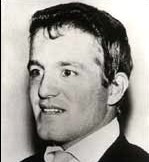
James Hanratty
Murderer Harry Maurice Roberts
Murderer · United Kingdom · 1966
Name: Harry Maurice Roberts Birth year: 1936 Birthplace: Kennington, London, En…
3 victims
Harry Maurice Roberts
Murderer · United Kingdom · 1966
Name: Harry Maurice Roberts Birth year: 1936 Birthplace: Kennington, London, En…
3 victims
 Ronald Jebson
Murderer · United Kingdom · 1970
Ronald Jebson (born 1939) was a convicted pedophile who was also known as Ronal…
3 victims
Ronald Jebson
Murderer · United Kingdom · 1970
Ronald Jebson (born 1939) was a convicted pedophile who was also known as Ronal…
3 victims
 Albert Goozee
Murderer · United Kingdom · 1956
Albert William Goozee was a British murderer and paedophile. His crimes inspire…
2 victims
Albert Goozee
Murderer · United Kingdom · 1956
Albert William Goozee was a British murderer and paedophile. His crimes inspire…
2 victims
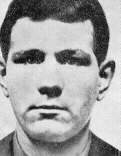 Alfred Charles Whiteway
Murderer · United Kingdom · 1953
Alfred Charles Whiteway was a serial rapist. Both girls had very deep stab woun…
2 victims
Alfred Charles Whiteway
Murderer · United Kingdom · 1953
Alfred Charles Whiteway was a serial rapist. Both girls had very deep stab woun…
2 victims
 Kevin Malone
Murderer · USA · 1981
Kelvin Shelby Malone was a White man with the sex listed as male. His alias was…
3 victims
Kevin Malone
Murderer · USA · 1981
Kelvin Shelby Malone was a White man with the sex listed as male. His alias was…
3 victims
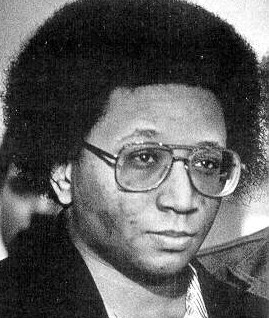 Wayne Williams
Serial killer? · USA · 1979
Wayne Bertram Williams was sentenced to two consecutive terms of life imprisonm…
24 victims
Wayne Williams
Serial killer? · USA · 1979
Wayne Bertram Williams was sentenced to two consecutive terms of life imprisonm…
24 victims
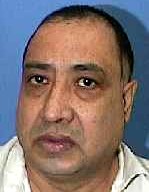 Ramiro Rubi Ibarra
Murderer · USA · 1987
Ramiro Rubi Ibarra was a Hispanic male. His hair color was black, and he weighe…
1 victim
Ramiro Rubi Ibarra
Murderer · USA · 1987
Ramiro Rubi Ibarra was a Hispanic male. His hair color was black, and he weighe…
1 victim
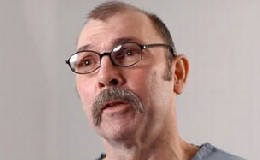 Michael Selsor
Murderer · USA · 1975
Michael Bascum Selsor was held as an Oklahoma death row inmate with inmate ID O…
1 victim
Michael Selsor
Murderer · USA · 1975
Michael Bascum Selsor was held as an Oklahoma death row inmate with inmate ID O…
1 victim
 Sylvia Seegrist
Murderer · USA · 1985
Sylvia Wynanda Seegrist (born July 31, 1960) was an American woman diagnosed wi…
3 victims
Sylvia Seegrist
Murderer · USA · 1985
Sylvia Wynanda Seegrist (born July 31, 1960) was an American woman diagnosed wi…
3 victims
- Gender
- male
- Country
- United Kingdom
- Location
- Deadman's Hill, Bedfordshire, England, United Kingdom
- Date of birth
- October 4, 1936
- Age at first offence
- 25
- Characteristics
- rape
- Victim profile
- Michael John Gregsten, 36
- Method of murder
- Shooting
- Date(s) of murder
- August 22, 1961
- Years active
- 1961
- Date of arrest
- October 11, 1961
- Status
-
Executed
Executed by hanging at Bedford Gaol on April 4, 1962
Case record: James Hanratty
Status / outcome
James Hanratty was convicted of murder and rape and was executed by hanging at Bedford Gaol on April 4, 1962.
Timeline
- August 22, 1961 — James Hanratty was convicted of carrying out the 1961 “A6 murder” and of raping Valerie Storie at Deadman’s Hill on the A6 near the village of Ampthill, Bedfordshire, England.
- August 23, 1961 — Michael Gregsten was found dead at about 6:30 on the A6 at Deadman’s Hill near the Bedfordshire village of Clophill.
- August 24, 1961 — The gun was recovered under the back seat of a 36A London bus fully loaded and wiped clean of fingerprints.
- August 29, 1961 — Valerie Storie and another witness, Edward Blackall, compiled an Identikit picture which was then released.
- September 7, 1961 — Meik Dalal was attacked in her home in Richmond by a man claiming to be the A6 murderer.
- September 11, 1961 — The owner of the Vienna Hotel, Maida Vale found two cartridge cases in the guest basement bedroom matched to the bullets that killed Gregsten and matched the ones in the gun found on the bus.
- September 13, 1961 — Hanratty’s appeal was dismissed.
- October 11, 1961 — James Hanratty was caught in Blackpool.
- October 14, 1961 — Valerie Storie picked Hanratty out of an Identity Parade.
- January 22, 1962 — Hanratty’s trial started at Bedfordshire Assizes.
- March 9, 1962 — Hanratty’s appeal was dismissed.
- April 4, 1962 — Hanratty was hanged at Bedford, still protesting his innocence.
Background
James Hanratty (October 4, 1936 – April 4, 1962) was the eighth last person in Britain to be hanged for murder (the last two being Peter Anthony Allen and Gwynne Owen Evans in 1964). He was a professional car thief. His guilt was later pursued as a matter of public controversy, including claims by opponents of the death penalty that he was innocent and sought to cast doubt on the validity of his conviction.
The offence
Victims and relationships
Michael Gregsten was a scientist at the Road Research Laboratory at Slough. Valerie Storie was an assistant at the same laboratory and was having an affair with Gregsten. Michael Gregsten’s grey 1956 Morris Minor was found abandoned that evening behind Redbridge Tube Station in London. Valerie Storie was later found surviving but paralysed by her injuries, and she was having an affair with Gregsten.
Events at Deadman’s Hill on the A6
On Tuesday, 22 August 1961, Gregsten and Storie were in his car in a cornfield at Dorney Reach when someone tapped on the car window. A large black revolver was shoved into Gregsten’s face, and a cockney voice said: “This is a hold-up, I am a desperate man, I have been on the run for four months. If you do as I tell you, you will be all right.”
The man got into the car and told Gregsten to drive further into the field, then stop. He kept them there for two hours with a constant stream of chatter. At 23:30, the man said he wanted food and told Gregsten to start driving. They drove around the suburbs of North London.
The journey continued along the A5 through St Albans, which the gunman mistakenly insisted was Watford, before joining the A6. At about 01:30 on the A6, the man said he wanted a “kip” (sleep). Twice he told Gregsten to turn off the road and then changed his mind, and the car returned to the A6.
At Deadman’s Hill, the man ordered Gregsten to pull into a layby. Gregsten refused at first, but the man became aggressive and threatened them with the gun. The man said he wanted to sleep, but said he would have to tie them up. Storie and Gregsten pleaded with him not to shoot them. The man tied Storie’s hands behind her back with Gregsten’s tie. He saw a bag in the rear of the car with some rope and told Gregsten to pass the bag; as Gregsten did so, the gun went off, killing Gregsten.
After a short while, the man ordered Storie into the back, over Gregsten’s body, and raped her, then forced her to drag Gregsten’s body out of the car. The man told Storie to show him how to drive the car. He was described as either not driven before or being unfamiliar with the car model because he did not know how to start it or use the pedals or gears properly. He then ordered Storie out of the car and next to Gregsten’s body.
Storie pleaded for her life. She took a pound note from her pocket and screamed, “Here, take this, take the car and go.” The man emptied the gun at her in the darkness. Of approximately seven bullets fired, five hit her body, causing injuries that were to paralyse her permanently from the waist down. Storie slumped down next to Gregsten and pretended to be dead. She then heard the man drive off with much crashing of gears. She passed out three hours later. She was discovered by a farm labourer at 06:45 next morning and he summoned a student occupied with taking a road census.
Additional details about harm and discovery
Valerie Storie reported that when she asked the gunman why he had shot Gregsten he replied that Gregsten had frightened him by turning too quickly. Valerie Storie was discovered by a farm labourer at 06:45 next morning. John Kerr flagged down two cars shouting at them to get an ambulance.
Investigation
Early evidence at the scene
The first policeman on the scene was handed a piece of paper: a census form. Kerr had written down Storie’s gasped account of what she recalled at that moment. The document was never seen again. Storie gave another statement to the police later that morning, just before she underwent surgery in Bedford Hospital.
Oddities and lack of motive
Storie recalled what the man had said about being on the run for four months, yet he was described as immaculately dressed in a dark three-piece suit and with well-shone shoes. There appeared to be a complete lack of motive.
Gun recovery and policing response
The gun was recovered on the evening of 24 August under the back seat of a 36A London bus fully loaded and wiped clean of fingerprints. A handkerchief was found with the gun. Police put out an appeal to boarding-house keepers to report any strange or suspicious guests.
Suspect in hotel lodging: Peter Alphon / James Ryan / Frederick Durrant
A hotel owner reported a man who had locked himself in his room for five days after the murder. Police picked him up and he said his name was Frederick Durrant, but this turned out to be false; he was actually called Peter Alphon. He claimed he had spent the evening of 22 August with his mother and the next night in a scruffy hotel in Maida Vale called the “Vienna.” This checked out and he was released.
On 11 September, the owner of the Vienna Hotel found two cartridge cases in the guest basement bedroom, matched to the bullets that killed Gregsten and matched the ones in the gun found on the bus. The owner, William Nudds, made a statement naming the last occupant of the room as James Ryan. At trial Nudds also stated that the man, upon leaving, had asked the way to a bus stop for a 36A bus, though his statement to police had merely mentioned the 36 bus.
Nudds said that Alphon stayed in the hotel as he claimed, but stayed in his room, room 6, all night. Police raided the hotel and requisitioned Nudds, who later changed his story, claiming Alphon had been in the basement and Ryan had been in room 6, but that the two had swapped rooms during the night. Nudds also said that Alphon had left “calm and composed.” Police publicly named Alphon as the murder suspect. Alphon turned himself in and was subjected to intensive interrogation.
Valerie Storie failed to pick Alphon out of an identity parade and Alphon was released four days later. During those four days, held on the charge of assaulting Meik Dalal, the record notes that PC Ian Thomson recorded Alphon as saying: “there can’t have been any fingerprints in the car otherwise mine would have given me away”.
After police went back to Nudds, he said the second statement was a lie and that his first statement implicating Ryan was true. His reason for lying was that he had seen Alphon was the police’s prime suspect and wanted to assist the police case.
Identification and charge: James Hanratty
After some investigation, Ryan was said to be James Hanratty, a petty car thief and robber facing a six year jail sentence for robbery. He phoned Scotland Yard saying he ran because he had no credible alibi for the time in question, but repeated several times that he had nothing to do with it. He was eventually caught in Blackpool on October 11. On October 14, Valerie Storie picked him out of an Identity Parade, after each man repeated the phrase used by the murderer: “Be quiet, will you, I’m thinking.”
Hanratty was charged with the murder of Gregsten.
Other attacks used in the investigation
On 23 August Audrey Willis was threatened in her home in Knebworth by a gunman described as having a long thin face and sallow complexion aged about 30. The gunman repeated this on 2 April 1962 claiming to be the A6 murderer.
Meik Dalal was attacked in her home in Richmond on 7 September by a man claiming to be the A6 murderer and she identified him as Alphon in an identity parade on 23 September.
Witness and identification materials
On 29 August, Valerie Storie and Edward Blackall compiled and released an Identikit picture. Two days later, Storie gave a different description to police.
At the trial, multiple witnesses were said to have identified Hanratty as driving the Morris Minor and as involved in the car at key points, including identifications associated with the line-ups and the car’s movements along Eastern Avenue and into Redbridge Lane.
Arrest
James Hanratty was caught in Blackpool on October 11. He was picked out in an identity parade on October 14 by Valerie Storie after the parade men repeated the phrase used by the murderer.
Trial
Venue and prosecution team
Hanratty’s trial started at Bedfordshire Assizes on 22 January 1962. The trial venue was originally planned for the Old Bailey, and the material described strong prejudice against the defendant in Bedfordshire. Among the prosecution team was Geoffrey Lane, who would later be appointed Lord Chief Justice.
Defence and alibis
Hanratty initially put up a defence that he was in Liverpool on the day of the murder, but halfway through the trial changed part of his story, claiming he was in Rhyl in North Wales. The material described that there was no conclusive forensic evidence at the time, but that DNA testing later proved DNA found on the exhibits from the scene was that of Hanratty.
First defence: Liverpool alibi
Hanratty claimed he was staying with friends in Liverpool and never identified those people. He claimed his suitcase had been handed in to Lime Street Station to “a man with a withered or turned hand”. The prosecution called Peter Stringer, who had an artificial arm, and he denied ever having seen the suitcase or Hanratty.
William Usher, who had two fingers missing from one hand, was also described as “turned”, and he admitted remembering Hanratty and the suitcase and remembering the name of the man as “Ratty”; he had been located by private detectives working for the defence but was never called as a witness. Hanratty said he called into a sweet shop on Scotland Road and asked directions to “Carleton” or “Tarleton” Road. The police tracked down Mrs Dinwoodie who recalled a man like Hanratty asking for directions, but she was unsure whether it was Monday 21st or Tuesday 22nd.
Evidence was described as indicating Hanratty had been in London all day Monday 21st, including collecting a suit from a dry cleaners in Swiss Cottage in the morning, being at Charles France’s house on the Monday afternoon, and being at the Vienna Hotel in the evening.
Second defence: Rhyl alibi
Hanratty told his defence barrister he had invented part of the Liverpool story as he was unsure he could prove where he was. He then stated he had been in Rhyl. The defence assembled an alibi that Hanratty went to Rhyl to sell a stolen watch to a “fence.” He arrived late in the evening of Tuesday 22nd and stayed in a boarding house near the railway station, in the attic room with a green bath. Private detectives tracked down Mrs Grace Jones, a landlady whose guest house layout matched the described green bath. She remembered a man resembling Hanratty and was sure it was during the week of 19-26 August.
The defence material described prosecution accounts and witnesses as creating chaos in the hotel registers and accounts and showed that rooms were fully occupied, leading to accusations that Mrs Jones lied for publicity. The defence counsel managed to salvage something by showing the attic was empty on the night of 22nd and a bedroom described by Hanratty was free on 23rd, allowing that he could have stayed as claimed.
Jury question on “reasonable doubt” and verdict
After the jury retired and after six hours returned to ask the judge for the definition of “reasonable doubt,” the jury returned to court and entered a unanimous verdict of guilty, after nine hours.
Sentencing
Hanratty was sentenced to death and was hanged at Bedford on April 4, 1962.
Appeals
Hanratty’s appeal was dismissed on March 9, and separately the material described the appeal being dismissed on 13 March. Despite a petition signed by more than 90,000 people, he was hanged at Bedford on April 4, 1962, still protesting his innocence.
Outcome
The Court of Appeal judges in 2002 concluded that Hanratty’s guilt was proved “beyond doubt” following modern DNA testing of his exhumed corpse, family members, and evidence from the case.
Aftermath / post-execution material
A6 Defence Committee
A group called the “A6 Defence Committee” was set up to assist Hanratty’s defence and was instrumental in deriving new evidence, albeit too late. Twelve years after the execution, the Committee found the original statement made by Valerie Storie, which had not been referred to or available during the trial or the appeal.
By 1968, the A6 Committee had found six substantial witnesses to show Hanratty had been to Rhyl. The committee also found a fairground worker called Terry Evans who admitted letting Hanratty stay at his house early in 1961 and fencing a stolen watch for Hanratty. The committee also referenced Trevor Dutton whose bank account book was stamped with the correct date, 23 August, and minutes later a cockney-accented man in a smart suit was said to have approached him trying to sell a gold watch.
Jean Justice’s interest and Peter Alphon’s confessions
During 1962, the case caught the interest of a businessman called Jean Justice. Justice tracked down Peter Alphon in February 1962 and began a long friendship for the purposes of establishing the truth. Justice attended the trial every day being driven there by his chauffeur, and Alphon accompanied him from time to time. Over months, Alphon began to confess to Justice, including drawing diagrams of the murder scene and knowing precise details of events on Deadman’s Hill. Justice took precautions by making thorough notes and recording telephone conversations.
As the execution approached, the record describes Alphon’s behaviour as more bizarre, including threatening phone calls and letters to his own solicitor and to Charles France with the message: “If Hanratty dies, you die.” Charles France committed suicide about two weeks before the execution, pouring spite and venom in a suicide letter to Hanratty, while not accusing him of committing the murder. France left behind several letters for his family, with contents described as never made public.
Alphon’s account included a claim that a man paid him £5,000 to end the affair between Gregsten and Storie. Another man obtained a gun for Alphon and Alphon set off and hijacked the pair. Alphon claimed he gave Gregsten two chances to get away but “each time the bloody man kept coming back”. He claimed the gun went off by accident. Alphon said that he travelled to Southend and gave the gun to France, and that France planted the gun under the bus seat and two cartridges in the hotel. Alphon said that on 22 August 1962 he visited the Hanratty family and offered to compensate them; they threw him out and, in a fracas the following day, Alphon assaulted Mary Hanratty. The BBC Panorama programme in 1966 included extracts from the Jean Justice tapes. In May 1967, Alphon gave a press conference confessing to the world media and relating the full story of the gun, the £5,000, and France’s involvement. Alphon stuck with the confession and continued to repeat it up to approximately 1971 and later withdrew his claims.
Official inquiries
Three Home Office inquiries were set up. Detective Superintendent Douglas Nimmo reported on 22 March 1967. Lewis Hawser QC reported on 10 April 1975. Detective Chief Superintendent Roger Matthews reported on 29 May 1996. The Home Secretary Roy Jenkins received the first two and Michael Howard received the third. On 19 March 1997, the Home Office referred the case to the Criminal Cases Review Commission, where Baden Skitt chaired the investigation.
DNA evidence and appeal in 2002
In 1991, Bedfordshire Police allowed Bob Woffinden access to previously undisclosed files. The Criminal Cases Review Commission report revealed mileage on the Morris Minor that invalidated a sighting in Brentwood and a sighting in Redbridge Lane. DNA from Hanratty’s relatives was compared with surviving evidence. Results from testing in June 1999 were said to be equivocal.
In 2001, Hanratty’s body was exhumed to extract DNA. This was compared with mucus preserved in the handkerchief where the murder weapon had been wrapped and with semen preserved in the panties worn by Storie when she was raped. No forensic evidence from the crime had previously been linked to Hanratty, yet DNA from both sources matched Hanratty’s DNA.
At the subsequent appeal hearing, Michael Mansfield QC admitted that if contamination could be excluded the DNA evidence demonstrated that Hanratty had committed the murder and rape. He argued the evidence may have been contaminated because of lax handling procedures. Among surviving evidential items, a vial had been broken which could account for contamination. The judges dismissed the argument as “fanciful” and concluded that “DNA evidence, standing alone, is certain proof of guilt”. Hanratty’s family and their supporters continued to contest this conclusion.
Peter Alphon later death and press coverage
Peter Alphon died in January 2009 following a fall at his home. In the following month, Richard Ingrams, a close friend and colleague of Paul Foot, wrote a brief article about Alphon’s part in the case in The Independent. Ingrams said that Alphon spoke obsessively about the case and frequently incriminated himself, and that Foot continued to believe in Hanratty’s alibi until his own death despite the DNA tests of 2002.
Spotted an error, or have more information about this case?