John Selby Watson
Murderer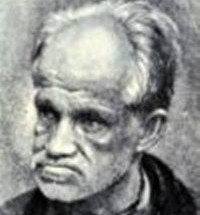 Charles Peace
Murderer · United Kingdom · 1876
Charles Peace was executed by hanging in Leeds on February 25, 1879. Charles Pe…
2 victims
Charles Peace
Murderer · United Kingdom · 1876
Charles Peace was executed by hanging in Leeds on February 25, 1879. Charles Pe…
2 victims
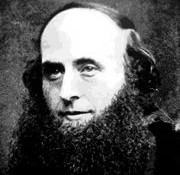 Edward Pritchard
Murderer · United Kingdom · 1865
Edward Pritchard was a Scottish doctor who was convicted of poisoning his wife…
2 victims
Edward Pritchard
Murderer · United Kingdom · 1865
Edward Pritchard was a Scottish doctor who was convicted of poisoning his wife…
2 victims
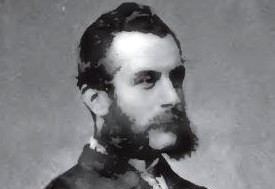 Eugéne-Marie Chantrelle
Murderer · United Kingdom · 1878
Eugéne-Marie Chantrelle was a French-born school teacher who lived in Edinburgh…
1 victim
Eugéne-Marie Chantrelle
Murderer · United Kingdom · 1878
Eugéne-Marie Chantrelle was a French-born school teacher who lived in Edinburgh…
1 victim
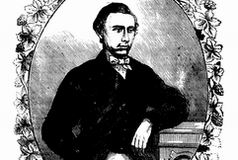 Frederick Baker
Murderer · United Kingdom · 1867
Frederick Baker was a solicitor’s clerk in Alton, Hampshire, England. On Saturd…
1 victim
Frederick Baker
Murderer · United Kingdom · 1867
Frederick Baker was a solicitor’s clerk in Alton, Hampshire, England. On Saturd…
1 victim
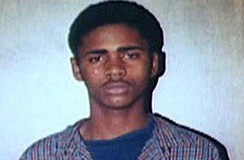 Aaron Hardin
Homicide · USA · 1999
Aaron Hardin was 15 years old when he was tried as an adult for the killing of…
1 victim
Aaron Hardin
Homicide · USA · 1999
Aaron Hardin was 15 years old when he was tried as an adult for the killing of…
1 victim
 Mahin Qadiri
Serial killer · Iran · 2008
Mahin Qadiri was an Iranian woman convicted as a serial killer. A Guardian repo…
5 victims
Mahin Qadiri
Serial killer · Iran · 2008
Mahin Qadiri was an Iranian woman convicted as a serial killer. A Guardian repo…
5 victims
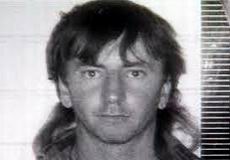 William Patrick Mitchell
Mass murderer · Australia · 1993
William Patrick Mitchell, also known as “Bill Mitchell,” committed the Greenoug…
4 victims
William Patrick Mitchell
Mass murderer · Australia · 1993
William Patrick Mitchell, also known as “Bill Mitchell,” committed the Greenoug…
4 victims
- Gender
- male
- Country
- United Kingdom
- Location
- London, England, United Kingdom
- Date of birth
- 1804
- Age at first offence
- 67
- Characteristics
- parricide
- Victim profile
- His wife, Anne Armstrong
- Method of murder
- B attered to death with the butt of a pistol
- Date(s) of murder
- October 8, 1871
- Years active
- 1871
- Date of arrest
- —
- Status
-
Died in custody
Commuted to life imprisonment; died in prison on 6 July 1884
Case record: John Selby Watson
Background
John Selby Watson (1804 – 6 July 1884) was a British classical translator and murderer. He was a headmaster of a London grammar school and a clergyman who had been ordained in 1839.
Watson studied classics and was ordained Deacon to the Bishop of Ely in 1839. He married Anne Armstrong in 1845, at St. Marks, Dublin. Due to his poverty Watson had been engaged to Anne for a number of years before they could marry. He took a curacy in Somerset before moving to his post in London in 1844.
Watson became the headmaster of Stockwell Grammar School. The school was successful, but by 1870 the number of pupils had fallen and the governors were forced to give the 66-year-old master notice. After being laid off in 1870, the Board of the Stockwell School fired him and refused to give him any pension.
During his career as a headmaster, Watson made a reputation for himself as a scholar and translator, publishing translations of the classics for Bohm’s Classical Library. Those translations subsequently became volumes in the Everyman’s Library series. He also wrote biographies and religious books, and a volume titled Reasoning Power in Animals.
The offence
On 8 October 1871, Watson called his servant, Ellen Pyne, to him and said that his wife had “gone out of town.” He added that she was to call for a doctor if she found anything wrong with him the following morning. The servant thought this was strange but he was getting on a bit.
A little later, Ellen Pyne found Watson unconscious and immediately sent for the doctor. Watson had tried to commit suicide by taking prussic acid. Watson left two notes: one addressed to Ellen Pyne that contained her wages, and another addressed to the doctor.
The note addressed to the doctor said: “I have killed my wife in a fit of rage to which she provoked me”.
Anne Watson’s body was found upstairs in a locked bedroom. She was battered to death with the butt of Watson’s pistol. The pistol was found on Watson’s dressing table. The body had been found in a bedroom and was found to have been battered to death with the butt of his pistol two days earlier.
Investigation
After Watson was revived, the doctor was called based on Watson’s instructions. Two notes were found after the incident involving prussic acid: one addressed to Pyne containing her wages, and one addressed to his doctor containing Watson’s statement about killing his wife.
After the trial, medical evidence was presented through affidavits from doctors and Home Office consideration followed. The Home Office later decided that some “imprecise mental unsoundness” had been present.
Trial
Watson recovered and stood trial at the Old Bailey in January 1872.
His defence was insanity, but this was not accepted. He was found guilty of murder. The jury deliberated for an hour and a half and found him guilty of murder but with a recommendation that mercy be shown because of his age and previous character.
Mr Justice Byles opposed the insanity excuse strongly in his summing-up. Watson’s counsel argued:
“an antecedent improbability in the deed which would lead everyone in the first instance to seek an explanation in insanity.”
After deliberation, Watson was sentenced to death. Although the jury recommended mercy, Byles sentenced him to death.
After the trial many affidavits from doctors were presented testifying to Watson’s insanity at the time of the murder.
Sentencing
Byles sentenced Watson to death after the trial.
After further consideration, Byles changed his mind and told the Home Secretary that:
“this is not a case in which the sentence should be carried out.”
The Home Office decided that some “imprecise mental unsoundness” had been present and commuted the sentence to life imprisonment. Watson was not sent to Broadmoor Hospital because there were no obvious signs of madness. Instead he served his time in Parkhurst prison.
Outcome
Watson was sentenced to death in January 1872. His sentence was commuted to life imprisonment. He served his sentence in Parkhurst prison and died there on 6 July 1884 at age 80.
Watson’s death was due to falling out of his hammock at the prison.
Other details
The case involved Watson’s use of a plea of insanity as his defence, which brought “the insanity defense into perhaps its greatest prominence since M’Naghten.”
The death of Anne Watson followed the assault in the locked bedroom. Watson had instructed Ellen Pyne to call for a doctor if she found anything wrong with him the following morning, and that instruction led to him being revived.
After the trial, the case was described as being driven by “the incongruity of the offense and the lack of any lesser defense” leading to a controversial finding of “temporary” insanity to prevent “the unedifying spectacle of the hanging of a clergyman of the Church of England.” It was also described as reconceiving provocation as temporary insanity.
The crime became the basis for the 1984 speculative historical book Watson’s Apology by Beryl Bainbridge.
Timeline
- 8 October 1871 — Watson told Ellen Pyne that his wife had “gone out of town” and that she should call a doctor the following morning if she found anything wrong with him; Watson was later found unconscious after taking prussic acid.
- January 1872 — Watson was tried at the Old Bailey, found guilty of murder, and sentenced to death.
- 6 July 1884 — Watson died in Parkhurst prison at age 80.
Spotted an error, or have more information about this case?