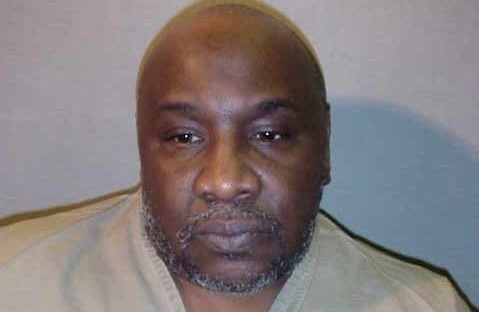
Nathaniel Harvey
Murderer Brian Kevin Rosenfeld
Murderer · USA · 1985
Brian Kevin Rosenfeld Brian Kevin Rosenfeld was sentenced to three concurrent l…
23 victims
Brian Kevin Rosenfeld
Murderer · USA · 1985
Brian Kevin Rosenfeld Brian Kevin Rosenfeld was sentenced to three concurrent l…
23 victims
 Marvin Gray
Murderer · USA · 1975
Marvin Gray was convicted killer who claimed responsibility for 23 slayings and…
23 victims
Marvin Gray
Murderer · USA · 1975
Marvin Gray was convicted killer who claimed responsibility for 23 slayings and…
23 victims
 Yahweh ben Yahweh
Murderer · USA · 1980
Yahweh ben Yahweh was born and legally named Hulon Mitchell Jr. (October 27, 19…
23 victims
Yahweh ben Yahweh
Murderer · USA · 1980
Yahweh ben Yahweh was born and legally named Hulon Mitchell Jr. (October 27, 19…
23 victims
 Russell Ellwood
Murderer · USA · 1991
Russell Ellwood was a former taxi driver. Authorities suspected him of killing…
20 victims
Russell Ellwood
Murderer · USA · 1991
Russell Ellwood was a former taxi driver. Authorities suspected him of killing…
20 victims
 Michael Eugene Thompson
Murderer · USA · 1984
Michael Eugene Thompson was convicted of capital murder arising from the robber…
1 victim
Michael Eugene Thompson
Murderer · USA · 1984
Michael Eugene Thompson was convicted of capital murder arising from the robber…
1 victim
 Mary Bell
Homicide · United Kingdom · 1968
Mary Flora Bell was convicted of manslaughter on the grounds of diminished resp…
2 victims
Mary Bell
Homicide · United Kingdom · 1968
Mary Flora Bell was convicted of manslaughter on the grounds of diminished resp…
2 victims
 Timothy Stuart Ring
Murderer · USA · 1994
Timothy Stuart Ring was a former Department of Corrections officer who particip…
1 victim
Timothy Stuart Ring
Murderer · USA · 1994
Timothy Stuart Ring was a former Department of Corrections officer who particip…
1 victim
- Gender
- male
- Country
- USA
- Location
- Middlesex County, New Jersey, USA
- Date of birth
- March 21, 1950
- Age at first offence
- 35
- Characteristics
- rape, robbery, kidnapping, abuse
- Victim profile
- Irene Schnaps, 37
- Method of murder
- Beating with a "hammer like" weapon
- Date(s) of murder
- June 17, 1985
- Years active
- 1985
- Date of arrest
- October 1985
- Status
-
Sentenced to death
Sentenced to death in 1986; death sentence overturned by the New Jersey Supreme Court in 1990; Harvey remained on death row after the Supreme Court upheld his conviction in 1997
Parties and identities
- Nathaniel Harvey was convicted of armed robbery, kidnapping, and the sexual assault of Irene Schnaps in 1985.
- Irene Schnaps was a 37-year-old widow and was found dead in 1985.
The offence
On June 16, 1985, Nathaniel Harvey entered a garden apartment in Plainsboro through an unlocked patio door. In taking a watch and jewelry from a bedroom dresser, he woke the tenant Irene Schnaps. Irene Schnaps hit him in the nose, and a scuffle ensued.
Harvey beat and choked Irene Schnaps to death for as long as an hour. She sustained severe head and facial wounds, including fifteen blows to the head, with the largest blow about six inches in length, likely made by a hammer or a tire iron. Some blows fractured her skull and caused direct injury to the brain. Her teeth were knocked out, her jaw was broken, and there were deep pressure marks on both sides of the neck.
There was evidence that someone attempted to wipe the body clean. A pillowcase on the floor bore part of a bloody footprint. Investigators found an empty cassette recorder near the body. Boxes for a camera and a Seiko watch were found, and the crime did not appear to be an aborted burglary.
Investigation
June 17, 1985: discovery and early investigation
On June 17, 1985, Irene Schnaps’s lifeless body was found in the blood-splashed bedroom of her garden apartment in Plainsboro, New Jersey. The autopsy findings included severe head and facial wounds and the injuries described above. A pillowcase bore part of a bloody footprint, and there was evidence of an attempt to wipe the body clean.
A co-worker found the body after Irene Schnaps, who was widowed for 10 weeks and living alone, did not show up for work at the nearby RCA offices. Neighbors had heard nothing unusual, but her bedroom was bloodied. A “blunt metallic instrument” was described as having battered her head.
Interviewing Peter Stohwasser and polygraph
A man from the next building, Peter Stohwasser, volunteered that he saw Irene Schnaps often and had asked her out. Stohwasser said he was not interested in a sexual relationship so soon after her husband’s death, and he would wait. Stohwasser told police they went out for Chinese food the week before she died.
From Irene Schnaps’s friends, police learned that a neighbor named “Pete” appeared often and that “Pete” appeared on her calendar. Police also learned that Stohwasser had served time in jail for stalking and threatening a girlfriend. Stohwasser told police he was home Saturday night and did laundry Sunday morning, and that he talked to Irene Schnaps on the phone. After investigators asked him to take a polygraph due to a discrepancy about when he said he talked to her, he failed many questions, including “Did you murder Irene?”
Investigators then got a search warrant and took a quilt that appeared to contain bloodstains from Stohwasser’s apartment. From Stohwasser’s car, police took a pair of white work gloves and a metal strip with small reddish spots. Five days after the murder, police took sheets and clothes that appeared washed but contained reddish stains from the common laundry room.
Tests on Stohwasser’s quilt found human blood, and hairs retrieved from his quilt were examined along with hairs collected from Irene Schnaps’s bedroom. The lab concluded that all hairs appeared to match the victim’s.
Laboratory issues and mismatches
In some ways, the evidence did not add up. A shoeprint was described as too small for Stohwasser’s size-12 foot. Lab reports on the gloves and metal strip from his car said blood was “not detected.” The account also described that an expert later told prosecutors the shoeprint was probably made by a Pony sneaker, and that while all hair collected from the murder scene was originally designated Caucasian, a lab worker added the line: “and one negroid hair.” The date for that lab-worker line was not noted.
Arrest
October 1985 arrest of Nathaniel Harvey
The police found Nathaniel Harvey on Oct. 28, fleeing from a series of burglaries. During one of them, there was an attempted kidnapping of a 13-year-old girl from her West Windsor home. Harvey was 34 at the time.
Harvey was described as the answer to a string of unsolved break-ins described by homeowners. He quickly admitted these. He was also wearing Pony sneakers in a small size. His criminal record included a sexual assault, and after more questioning he admitted to a recent unsolved rape.
Harvey insisted that he had nothing to do with the Schnaps murder, saying: “I been thinking a little while here, in all my life I never killed anytime,” as he twisted in his chair against tight handcuffs.
A search of Harvey’s car turned up a Seiko Lasalle watch, minus the band, like the one apparently missing from Irene Schnaps’s apartment. After almost three days of questioning, the police reported that Harvey confessed. The confession was described as not being recorded or put in writing. Two detectives who interrogated him said Harvey told them he entered Irene Schnaps’s apartment and killed her after she awakened and punched him in the nose.
Earlier history used in the case narrative
At the time, Nathaniel Harvey was on parole after serving time for raping and violently beating a woman in Monroe Township, in Middlesex County in 1979.
Trial
First conviction and death sentence (1986)
Nathaniel Harvey was convicted of Irene Schnaps’s murder and was sentenced to death by a jury. Harvey’s conviction and sentence are described as occurring after a trial in 1986.
The narrative described that during the second trial the confession and related trial issues were contested, including Miranda warnings, and that the second trial involved a battle of experts over the blood evidence, by that time tested for DNA.
When Harvey stood trial in 1986, the defense had very little; if he had an alibi for the night of June 15, it never came to light. His lawyer did not call any expert witnesses, and Peter Stohwasser’s name never came up.
Confession admissibility and new trial
The State Supreme Court granted Harvey a new trial, holding among other things that the confession was inadmissible because the detectives did not give adequate Miranda warnings.
Second conviction and death sentence (again)
At the second trial, Harvey was again convicted and sentenced to death.
The Supreme Court upheld the conviction in 1997.
Sentencing and legal outcomes
- Harvey received a death sentence by a jury following the 1986 trial.
- Harvey’s death sentence was overturned by the New Jersey Supreme Court in 1990. The court said the jury should have been asked to decide whether Harvey intended to kill Irene Schnaps or only to cause serious injury.
- The Supreme Court upheld Harvey’s conviction in 1997.
- Harvey remained on death row at the time of later discussion.
Appeals
1990 New Jersey Supreme Court decision
The New Jersey Supreme Court overturned Harvey’s death sentence in 1990, stating that the jury should have been asked to decide whether Harvey intended to kill Irene Schnaps or only to cause serious injury.
A public statement was attributed to Attorney General Robert J. Del Tufo, who said: “If the court's underlying message is that it philosophically objects to the death penalty, then it is time to eliminate the charade and to reassess directly and expressly the continued death penalty in the state.”
Commentary about intent rulings and other cases
Discussion included that New Jersey’s highest court overturned a death sentence many times, prompting criticism focused on intent determinations. It described:
- In a case overturned for judge error involving an armed robber who shot a convenience-store cashier three times, the court said the intent was obvious.
- In another case involving a man who chased his victim, dropped him with a shot in the leg, then fired two more shots into his head and back, the court said intent was unclear and required a jury determination of whether the gunman meant to kill.
The discussion also included:
- The issue of intent was first raised in 1987 when the high court upheld the death-penalty law.
- The sole dissenter, Justice Alan B. Handler, complained about the “extraordinary” range of defendants subject to the death penalty because state law defined murder both as “purposely and knowingly causing death” and “purposely and knowingly causing serious bodily injury that leads to death.”
- The following year, in reviewing the case of Walter Gerald, the court ruled the New Jersey Constitution allowed execution only of people who had intended to kill, not those who meant to inflict serious injury, and the discussion noted the court departed from the United States Supreme Court’s approach regarding “reckless indifference to human life.”
The narrative included further examples of reversals and split decisions:
- Decisions overturning death sentences in cases of Frank Pennington and Ronald Long came on 4-to-3 votes.
- Public defender Dale Jones said: “It’s not hard for anyone to be troubled by the Gerald decision, and I understand the frustration of prosecutors, but I believe the Supreme Court made the right call, and it was very difficult call to make.”
- Jones also said: “That's the situation in many of these cases. That and the fact that some of the defendants suffer from diminished mental capacity. These are the people who wind up on death row, not your average Joe on the street.”
- Jones said the pace of death-penalty litigation takes an average of 12 years, including federal appeals, from indictment to execution.
- Senator John F. Russo said: “People forget t took 8 to 14 years for an execution under our old law,” and also: “I've read the decision and the court didn't say Harvey didn't intend to kill his victim, it said the question of intent was one for the jury,” and: “I have no problem with that.”
- Carl Golden, the court’s spokesman, said: “The court, as always, will let its opinions speak for themselves.”
- Assistant public defender Dale Jones said: “We traveled around the country to states that already had the death penalty, and learned how trials are conducted,” and: “There was no similar preparation by the prosecutors or the courts.”
- A deputy attorney general, Boris Moczula, said prosecutors were becoming cynical and that the Supreme Court turned to intent to find grounds for a new sentencing hearing.
Outcome
Nathaniel Harvey remained on death row. His death sentence had been overturned in 1990, and his conviction had been upheld by the Supreme Court in 1997.
Aftermath and later developments
Later claims and habeas proceedings
Later discussion described a habeas petition challenge and claims of evidentiary problems, including challenges to DNA evidence and investigation issues. It described that when Judge John F. Malone of Superior Court in Elizabeth ruled against Harvey last month, he said a habeas petition “is not a device for investigating possible claims nor an opportunity to second-guess trial counsel's tactical decisions.”
Assistant Prosecutor Nancy Hulett said in an e-mail message: “This case never was, and never will be, one about innocence,” and she later said: “This is a case where the defendant confessed,” and: “He's been convicted twice. He was convicted on two bodies of evidence.”
A former State Supreme Court justice, Alan B. Handler, dissented emphatically when the justices upheld Harvey’s conviction in 1997, including a 64-page analysis of DNA testing. Handler wrote: “I have little doubt that when the time comes, this case will eventually be reversed by this court or a federal court.”
Harvey, through his lawyer Eric V. Kleiner, sought preservation of remaining evidence and asserted that it would show he did not kill Irene Schnaps. Harvey was described as having said: “I have never murdered anyone.” The narrative also stated that Harvey had regretted his crimes.
A statement attributed to Kleiner included: “This stuff is so egregious,” and: “If they knew then what we have now, everything would be different.” Kleiner also said: “It would be nice if we knew we were right,” before execution.
Disputed evidence issues described in the later narrative
The later narrative described that:
- Harvey insisted that he never confessed.
- The confession described earlier had not been recorded or put in writing.
- DNA testing and hair evidence were described as problematic, including claims about degradation, missing lab materials, and potential contamination.
- It described that polygraph results for a prior suspect were said to have been misrepresented to the jury.
- It described the defense’s request to test items from a common laundry room and stated that the request was unsuccessful at the time.
Quotes attributed to Kleiner included: “I have no justifiable explanation for wanting to put somebody to death without looking at it,” and: “It is not seeking answers to questions that are unresolved. It's the best evidence we have left, and there's no justifiable explanation for wanting to put somebody to death without looking at it.” (The narrative also included the quoted phrase “It is absolutely indefensible,” in relation to Kleiner’s statements.)
Julia McClure, described as the first assistant prosecutor, declined to be interviewed but sent an e-mail message stating testing old evidence “would not yield material results.”
The narrative included quoted statements from polygraph experts Richard Arther and Catherine Arther: “no doubt,” and it quoted Arther as saying: “appalled,” and: “We don't know why they shifted their attention over to Harvey. We feel strongly about this case.” It also included a quote attributed to the prosecutor Michael R. Corbin: he said he “could not remember the testimony or the polygraph results,” and that some other allegations “did not jibe.” The prosecutor Kapsak said: “Why O'Brien made that mistake I don't know. I guess because they excluded him, they assumed that he passed the test.”
Related murder victim mention
The later narrative also mentioned another murder in East Windsor involving Donna Macho, 19, and described that Nathaniel Harvey was a suspect at one point, with Peter Stohwasser also to be considered. The murder occurred in the early morning of Feb. 26, 1984, in Donna Macho’s apartment in the basement of her mother’s and stepfather’s house. Donna Macho’s body was not discovered until 1995 in a field less than a mile from Hunter’s Glen.
The narrative included that:
- Donna Macho and Peter Stohwasser had taken evening classes at Mercer County Community College in the fall of 1983.
- After Donna Macho’s disappearance, Stohwasser did not report for spring classes he had signed up for.
- A psychic named John Monti, hired by East Windsor police, interviewed Donna Macho’s mother before she died in 1990, and Monti’s notes contained recollection fragments: “Peter Stow? Show?” and “Peter - college - crazy over Donna, jealous over her. If I don't get her, nobody will, mother said.”
- Stohwasser said he never met Donna Macho and never heard of the case until a reporter asked him.
- Donna Macho’s sister, Jeana Macho Savage, said she had no knowledge of Stohwasser and believed Donna’s killer knew her and the basement apartment, and Savage said: “An intruder 'wouldn't normally go down there looking unless you knew there was somebody there.'”
- East Windsor Police Chief William Spain declined to comment except to say the Macho case was “an active, continuing investigation.”
- Jeana Macho Savage said the police did not even interview any family members when her sister’s body was found: “I don't feel that they've done my sister any justice whatsoever.”
Other details
Harvey’s additional crimes described in the later narrative
Nathaniel Harvey was described as presently on death row while also serving time for another kidnapping, rape and robbery that occurred in Mercer County.
Harvey’s intelligence and statements attributed in the later narrative
Harvey declined to be interviewed for the later article. The narrative said that when last tested in 1979, his I.Q. was 66.
In a statement conveyed by Eric V. Kleiner, Harvey said: “I have never murdered anyone.”
During the later discussion of events, the narrative also described that during the second trial he was offered a plea deal for 30 years without eligibility for parole, but he turned it down.
Peter Stohwasser’s later accounts attributed in the later narrative
Stohwasser later recalled that within days of Harvey’s arrest, prosecutor Thomas Kapsak authorized the return of his quilt, and Stohwasser said: “I was the A-number-one suspect,” and: “And then one day I heard they arrested this guy, and it was over.”
Stohwasser described different recollections, including saying he and Schnaps never went out to dinner, but he also said: “The only reason they came after me - and I don't know why I failed the polygraph, probably because I was nervous - was that I said I was probably the last person who saw her alive.” He also denied talking to her on the phone that weekend, and then acknowledged he might have.
Stohwasser said: “I'm surprised they're still going after this,” and he described being “questioned and questioned and questioned,” until he heard on the radio another suspect had been found with items linking him to the Schnaps murder.
Victim-related details and background described in the later narrative
Irene Schnaps kept a diary on tapes, which related to the empty cassette recorder clue. The narrative described that Irene Schnaps was a stenographer and that neighbors had gathered as the police investigated. It also described that Stohwasser said he saw her often and was getting nowhere in asking her out, and that her personal calendar had the name “Pete” appearing often, including a reference on May 18: “Turned Pete down,” and a week later note: “Party w/Pete.”
Spotted an error, or have more information about this case?