
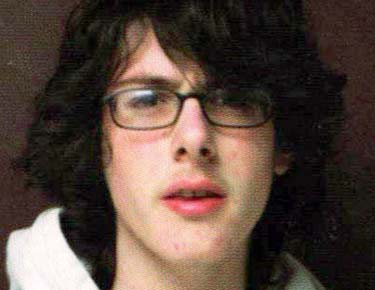
Jeffrey Havard
Murderer Robert Martines Perez
Murderer · USA · 1994
Name: Robert Martines Perez · Other name used in proceedings: Robert Martinez P…
15 victims
Robert Martines Perez
Murderer · USA · 1994
Name: Robert Martines Perez · Other name used in proceedings: Robert Martinez P…
15 victims
 Billy Frank Vickers
Murderer · USA · 1993
Billy Frank Vickers Vickers was executed by lethal injection in Texas on Januar…
14 victims
Billy Frank Vickers
Murderer · USA · 1993
Billy Frank Vickers Vickers was executed by lethal injection in Texas on Januar…
14 victims
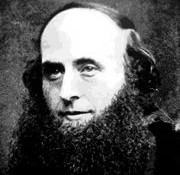 Edward Pritchard
Murderer · United Kingdom · 1865
Edward Pritchard was a Scottish doctor who was convicted of poisoning his wife…
2 victims
Edward Pritchard
Murderer · United Kingdom · 1865
Edward Pritchard was a Scottish doctor who was convicted of poisoning his wife…
2 victims
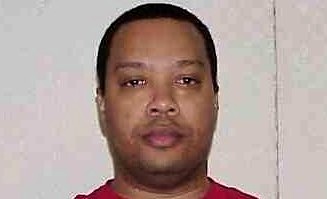 Kevin Stanford
Homicide · USA · 1981
Kevin Stanford was sentenced to death in 1982. The death sentence was commuted…
1 victim
Kevin Stanford
Homicide · USA · 1981
Kevin Stanford was sentenced to death in 1982. The death sentence was commuted…
1 victim
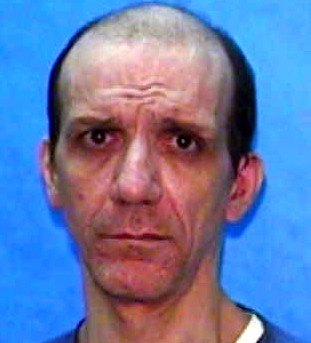 Francisco del Junco
Serial killer · USA · 1995
Francisco del Junco came to Miami in the 1980 Mariel boat lift. He was describe…
4 victims
Francisco del Junco
Serial killer · USA · 1995
Francisco del Junco came to Miami in the 1980 Mariel boat lift. He was describe…
4 victims
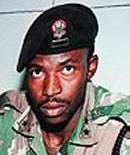 Sibusiso Madubela
Mass murderer · South Africa · 1999
Sibusiso Madubela was a black army lieutenant serving with the 1st South Africa…
8 victims
Sibusiso Madubela
Mass murderer · South Africa · 1999
Sibusiso Madubela was a black army lieutenant serving with the 1st South Africa…
8 victims
 Will Purvis
Murderer? · USA · 1883
Will Purvis was a member of the White Caps, a group described as having foundat…
1 victim
Will Purvis
Murderer? · USA · 1883
Will Purvis was a member of the White Caps, a group described as having foundat…
1 victim
- Gender
- male
- Country
- USA
- Location
- Adams County, Mississippi, USA
- Date of birth
- November 11, 1978
- Age at first offence
- 24
- Characteristics
- child abuse, sexual abuse
- Victim profile
- His girlfriend's daughter, 6-month-old Chloe Britt
- Method of murder
- Beating
- Date(s) of murder
- February 21, 2002
- Years active
- 2002
- Date of arrest
- 2 days after
- Status
-
Sentenced to death
Sentenced to death on December 19, 2002
Case information
Defendant: Jeffrey Havard Victim: Chloe Britt, six-month-old
Timeline
- February 21, 2002, at approximately 8:00 p.m. — Havard gave Britt money and asked her to get supper from the grocery store.
- After Britt returned home — Britt found Chloe had been bathed and was asleep. Havard told Britt he had given Chloe her bath and put her to bed, and that he had stripped the sheets off the bed and was washing them.
- When Britt returned from the video store — Britt discovered Havard in the bathroom with the door shut. Britt went to check on Chloe and discovered that Chloe was blue and no longer breathing; Britt attempted resuscitation by CPR before Britt and Havard drove Chloe to Natchez Community Hospital.
- Later that night at Natchez Community Hospital — The child was pronounced dead at the hospital.
- Two days after Chloe’s death — Havard gave a videotaped statement denying committing sexual battery on Chloe.
- December 19, 2002 — Havard was sentenced to death in Mississippi.
Background
Jeffrey Havard lived in Adams County with his girlfriend, Rebecca Britt, the mother of the victim, six-month-old Chloe Britt. Havard was not Chloe’s father. Havard and Britt had been dating for a few months when Britt and Chloe moved in with Havard.
The offence
Havard was convicted of capital murder (murder during the commission of sexual battery) of six-month-old Chloe Britt. The jury also found that Havard should suffer the penalty of death. The Adams County Circuit Court imposed the death sentence upon Havard.
Investigation
Chloe’s autopsy showed injuries that included internal bleeding inside her skull that was consistent with shaken baby syndrome. Some of Chloe’s injuries were consistent with penetration of the rectum with an object. Chloe also had abrasions and bruises inside her mouth. Chloe had anal injuries that were observed by both the hospital staff and the sheriff.
No one at Chloe’s daycare center had noticed bruises or marks on Chloe. No anal injuries or anything unusual about the child’s rectum was noticed by daycare staff earlier on the day of Chloe’s death.
Arrest
Havard was later charged with capital murder with sexual battery being the underlying felony.
Trial
Defence theory and statements
Two days after Chloe’s death, Havard gave a videotaped statement in which he denied committing sexual battery on Chloe. Havard claimed that he accidentally dropped Chloe against the commode after giving her a bath, shook her in a panic, and then rubbed her down with lavender lotion before putting her to bed.
Evidence
DNA evidence collected from the bed sheets matched the DNA of both Havard and Chloe.
A sexual assault kit testing for any of Havard’s DNA in Chloe’s rectum or vagina produced negative results.
The only explanation offered by Havard regarding Chloe’s injuries was that he possibly wiped her down too vigorously when preparing her for bed. Havard was indigent and had appointed counsel at trial and on direct appeal.
Testimony about injuries and sexual battery
At trial, pathologist Dr. Steven Hayne testified that the death was a homicide consistent with shaken baby syndrome, and that an anal contusion was “consistent with penetration of the rectum with an object.” Hayne testified that he did not see anal tears and that he did not exclude the possibility of tears.
Multiple emergency-room providers described Chloe’s anus and rectum as unusual or not normal and testified to findings they related to sexual penetration:
- Angel Godbold, a registered nurse, testified about Chloe’s anus and later sought counseling based on trauma she observed; she described seeing tears.
- Patricia Murphy, a registered nurse, testified that Chloe’s rectum was “not normal by any means,” that she had seen sexual trauma before, that she was of the opinion that the injuries sustained by Chloe were the result of sexual trauma, and that it was the worst she had ever seen.
- Dr. Laurie Patterson, an emergency-room physician who treated Chloe, testified that what she saw was not normal and indicative of sexual penetration; she also testified that she observed a tear of the anus.
- Dr. Ayesha Dar, Chloe’s pediatrician, testified that she tried to save Chloe in the emergency room and that the injury to Chloe’s rectum was from sexual abuse consistent with a foreign object being forcibly inserted; she testified that Chloe was bleeding from the anus and that she observed a tear.
- Reverend James E. Lee, the duly elected Adams County coroner, testified that it appeared that something had penetrated the baby’s anus.
A rape kit conducted at the time found no evidence of semen.
Jury and sentencing phase matters
During the sentencing phase, the jury sent a note to the trial judge asking the court to define life without parole and whether the law could be changed to allow parole for Havard in the future. With the agreement of defense counsel and the prosecution, the court responded:
“Life without parole means life in prison without eligibility for parole or early release. It would be up to the legislature to make any future changes of the law.”
During closing argument of the penalty phase, defense counsel stated:
“I mean, it's been obviously documented here that this young child died a tragic death at a very young age of six months. That is an aggravating circumstance, and Mr. Rosenblatt explained that to you.”
Victim-impact testimony
During the sentencing phase, the state called Lillian Watson, Chloe’s maternal grandmother. Watson testified:
I am not a vengeful person. My father was a minister and I was always taught an eye for an eye as I know most of you were. I am not here for revenge for [Chloe], but I am here for Justice for [Chloe]. Justice means her life was taken, and there is only one way that we can find justice for [Chloe]. A life for a life.
Sentencing
The Adams County Circuit Court imposed the death sentence upon Havard after the jury found he should suffer the penalty of death. Havard was sentenced to death in Mississippi on December 19, 2002.
Appeals
Direct appeal and rehearing
Havard’s conviction and sentence were affirmed by the Mississippi Supreme Court on direct appeal in 2006. Havard’s motion for rehearing was denied.
Post-conviction proceedings (Application for Leave to Proceed in the Trial Court and Motion for Other Relief)
Havard filed an Application For Leave to Proceed in the Trial Court and Motion for Other Relief pursuant to the Mississippi Uniform Post-Conviction Collateral Relief Act, specifically Mississippi Code Annotated Section 99-39-27 (Rev. 2007). The Mississippi Supreme Court denied the petition and denied post-conviction relief.
The decision is identified as: Havard v. State, No. 2006-DR-01161-SCT (May 22, 2008, EN BANC).
Robert M. Ryan, Thomas C. Levidiotis, and Louwlynn Vanzetta Williams represented the Mississippi Office of Capital Post-Conviction Counsel. Pat McNamara and Marvin L. White, Jr. represented the Office of the Attorney General.
Issues raised in post-conviction
Havard raised the following ineffective-assistance issues and other issues:
- Ineffective assistance of counsel for failure to adopt defence strategy during guilt phase, including:
- Failure to obtain DNA evidence.
- Failure to secure a pathologist.
- Failure to include a lesser-offense instruction.
- Ineffective assistance of counsel for failure to investigate, develop and present mitigation evidence during penalty phase.
- Ineffective assistance of counsel for failing to develop and present compelling evidence of Havard’s childhood and family life in mitigation of punishment.
- Ineffective assistance of counsel for failing to develop and introduce Havard’s successful adaptation at Camp Shelby as mitigating evidence during the penalty phase.
- Ineffective assistance of counsel for failing to ask potential jurors “reverse-Witherspoon” questions during voir dire.
- Ineffective assistance of counsel during closing argument at the penalty phase.
- Prosecutorial misconduct during closing argument at the guilt phase.
- Victim impact testimony.
- Whether the trial court improperly responded to a question from the jury during the sentencing phase.
- Limiting instruction of especially heinous, atrocious, or cruel aggravating circumstance.
- Failure of the indictment to charge a death-penalty-eligible offense.
- Jury consideration of aggravating circumstances.
- Competency of trial counsel.
- Cumulative error.
Outcome of post-conviction appeal
The Mississippi Supreme Court found no merit in Havard’s claims and denied his request for post-conviction relief.
Outcome
Havard’s petition for post-conviction relief was denied.
Other details
Household and daycare observations
Britt testified that before the night Chloe died, Havard had never bathed Chloe or changed her diaper. Britt checked on Chloe and she appeared fine after Havard had told her he bathed and put Chloe to bed. Britt insisted Havard go back out to the video store to rent some movies; when Britt returned, Chloe was blue and no longer breathing.
No anal injuries or unusual rectal conditions were noticed by daycare staff earlier on the day of Chloe’s death.
Cross-examination and DNA testing
At trial, Mississippi Crime Laboratory Forensic Biologist Amy Winters testified that she conducted serological analysis of an oral swab, vaginal swab, vulvar swab, and rectal swab each taken from Chloe Britt, and that the results were negative. Winters explained the tests were for the presence of semen rather than for DNA.
Defense counsel argued DNA testing could have been done, and the state’s failure to test for DNA was evidence that there was no sexual battery.
Lauridson, outside-the-record reports, and state’s arguments
Dr. James Lauridson, a former Alabama State Medical Examiner, reviewed Hayne’s autopsy work. Lauridson’s affidavits and reports stated that “there is a possibility that Chloe Madison Britt was not sexually assaulted.” Lauridson’s opinions also addressed that dilated anal sphincters could occur in infants postmortem and that postmortem anal dilation in infants was a commonly recognized artifact that did not signify sexual abuse.
The Mississippi Supreme Court described procedural and evidentiary treatment of outside-the-record affidavits and reports, including its handling of such materials in direct appeal and in post-conviction proceedings.
Additional statements attributed to juror affidavit and evidentiary rules
Willie Thomas’s affidavit included statements reflecting his support for the death penalty:
I believe that the death penalty is the appropriate punishment for Mr. Havard. I think a person should be prepared to give what they take. If you take a life, a life is required. I think the same punishment should be given to everyone who kills. I felt this way before I served on the jury and I still feel this way today. I would feel this way even if it were my own son on trial. If people knew they would pay with their lives, there would be less killing.
The Mississippi Supreme Court stated it excluded the affidavit from consideration under Mississippi Rules of Evidence, Rule 606(b), and also concluded it did not add merit to Havard’s claim.
Information about counsel and alleged drug use
Havard asserted that one of his defence attorneys, Robert E. Clark, was incompetent and that Clark was intoxicated during Havard’s trial based on a newspaper clipping describing Clark’s arrest. Havard stated in his affidavit that he saw Clark use marijuana, ecstasy, and crack-cocaine when he met Clark in November 2001 and that he used drugs during that time and thereafter. Havard said the last time he went to Clark’s home was two weeks before Havard was arrested. The court addressed this as procedurally barred and also addressed the intoxication claim as speculation.
Ineffective assistance standards discussed by the court
The Mississippi Supreme Court discussed the Strickland v. Washington standard, including that Havard needed to show deficient performance and prejudice, and discussed the presumption that defense counsel was competent.
Findings on res judicata and procedural bars
The Mississippi Supreme Court described that several issues were procedurally barred by res judicata pursuant to Mississippi Code Annotated Section 99-39-21(3) (Rev. 2007) because they were decided at trial and/or on direct appeal or because they were issues that were raised and fully addressed on direct appeal. The court denied relief accordingly.
Post-conviction denial conclusion
The Mississippi Supreme Court concluded that Havard’s petition for post-conviction relief was denied and that there was no prejudicial cumulative effect on Havard’s constitutional right to fair trial.

Spotted an error, or have more information about this case?