
Will Purvis
Murderer?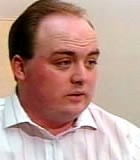 Richard Allen Williams
Murderer? · USA · 1992
Boone County Prosecutor Kevin Crane dismissed the charges in August 2003 after…
10 victims
Richard Allen Williams
Murderer? · USA · 1992
Boone County Prosecutor Kevin Crane dismissed the charges in August 2003 after…
10 victims
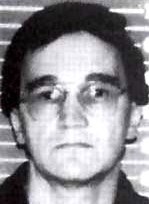 James DeBardeleben
Murderer? · USA · 1965
James DeBardeleben (James Mitchell “Mike” DeBardeleben), born March 20, 1940, w…
8 victims
James DeBardeleben
Murderer? · USA · 1965
James DeBardeleben (James Mitchell “Mike” DeBardeleben), born March 20, 1940, w…
8 victims
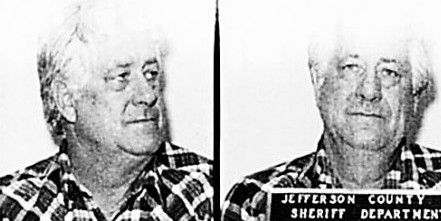 Thomas McCormick
Murderer? · USA · 1975
Thomas McCormick recruited homeless men from a Denver church mission to work on…
8 victims
Thomas McCormick
Murderer? · USA · 1975
Thomas McCormick recruited homeless men from a Denver church mission to work on…
8 victims
 Todd Warzecha
Murderer? · USA · 1972
Todd Warzecha was a prime suspect in two unsolved Mid-Michigan murders. Michiga…
6 victims
Todd Warzecha
Murderer? · USA · 1972
Todd Warzecha was a prime suspect in two unsolved Mid-Michigan murders. Michiga…
6 victims
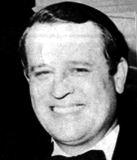 Dr. John Robert Hill
Murderer? · USA · 1950
Dr. John Robert Hill was a prominent Houston surgeon. His wife was Joan Robinso…
5 victims
Dr. John Robert Hill
Murderer? · USA · 1950
Dr. John Robert Hill was a prominent Houston surgeon. His wife was Joan Robinso…
5 victims
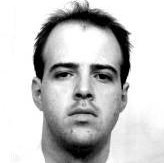 Jonathan Nobles
Murderer · USA · 1986
Jonathan Nobles was a death row inmate. He was executed by lethal injection in…
2 victims
Jonathan Nobles
Murderer · USA · 1986
Jonathan Nobles was a death row inmate. He was executed by lethal injection in…
2 victims
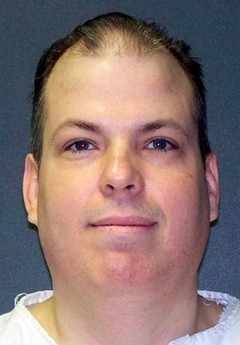 Karl Eugene Chamberlain
Murderer · USA · 1991
Karl Eugene Chamberlain was a white male from Oklahoma who was executed in Texa…
1 victim
Karl Eugene Chamberlain
Murderer · USA · 1991
Karl Eugene Chamberlain was a white male from Oklahoma who was executed in Texa…
1 victim
 Martha Grinder
Murderer · USA · 1864
Martha Grinder was convicted of murder in the first degree for poisoning Mary C…
2 victims
Martha Grinder
Murderer · USA · 1864
Martha Grinder was convicted of murder in the first degree for poisoning Mary C…
2 victims
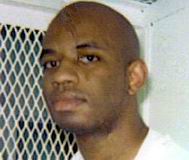 Ray Jasper
Murderer · USA · 1998
Ray Jasper was a Black male born on 08/25/1980. His hair color was Black, his h…
1 victim
Ray Jasper
Murderer · USA · 1998
Ray Jasper was a Black male born on 08/25/1980. His hair color was Black, his h…
1 victim
 Lee Van Glahn
Murderer · USA · 2001
Lee Van Glahn was 46 when he was tried. He was described as a white former tire…
2 victims
Lee Van Glahn
Murderer · USA · 2001
Lee Van Glahn was 46 when he was tried. He was described as a white former tire…
2 victims
 Jesus Aguilera
Serial killer · USA · 1981
Jesus Aguilera was a convict serving time for two murders that occurred in New…
3 victims
Jesus Aguilera
Serial killer · USA · 1981
Jesus Aguilera was a convict serving time for two murders that occurred in New…
3 victims
- Gender
- male
- Country
- USA
- Location
- Marion County, Mississippi, USA
- Date of birth
- 1864
- Age at first offence
- 19
- Characteristics
- member of the "texas seven, white supremacist, revenge
- Victim profile
- Will Buckley
- Method of murder
- Shooting
- Date(s) of murder
- June 21, 1883
- Years active
- 1883
- Date of arrest
- Next day
- Status
-
Died in custody
Sentence to death by hanging was commuted to life imprisonment on March 12, 1896; full and unconditional pardon was granted in Dec. 1898; Purvis died in 1938
Case record
Other details
Will Purvis was a member of the White Caps, a group described as having foundations similar to the Ku Klux Klan. Purvis was convicted of the murder of Will Buckley in 1894 and always maintained his innocence. After sentencing, Purvis told the jury that he would "live longer than the lot of them". Purvis survived a hanging because the noose untied around his neck. He was imprisoned, later pardoned, and eventually released. Nineteen years later another man confessed to the crime. Purvis died in 1938, three days after the last juror had died.
Background
Will Buckley was described as a member of the Whitecaps, described as a tight-knit organization similar to the Ku Klux Klan. Its members swore in blood never to reveal its secrets.
In early 1892, the Whitecaps unmercifully flogged a black servant of Buckley. Buckley was absent and had known nothing of the Whitecaps' intentions. Enraged at the violence and the secrecy with which it was carried out, Buckley decided to submit the affair and expose the secrets of the Whitecaps to the next meeting of the Grand Jury. At the Grand Jury meeting, Buckley's evidence was presented, and indictments were brought against the three Whitecaps who were known to be most brutal in the attack.
The Whitecaps were held responsible for many acts of violence and disorder, and Purvis was described as sometimes being innocent of some acts attributed to the group. The law was said to be very much opposed to the White Capping, and the Governor of the State determined to destroy their power.
Soon after Purvis became a member, some of the White Caps called on a Negro, Sam Waller, who was a farm hand on the Buckley Place nearby. Sam Waller worked for an aged widow in the community who could pay only a very poor wage. The Buckleys obtained Sam's service on their farm at a higher wage. The White Caps determined this act an injustice to the poor widow and marked the Negro for vengeance. They called at the Buckley farm that night and took Sam out and gave him a flogging. Will Purvis was said to have had nothing to do with the whipping but was present when it took place.
The Buckleys denied that they were members of the White Caps but declared that they would report this to the sheriff. All members of the White Caps were said to become wary, lest Sam had recognized some of their members.
The Grand Jury was in session in Marion County at the time. The White Caps called a meeting at Red Bluff on Pearl River and the death lot was cast for the murder of Will and Jim Buckley. The narrative also states that while the Buckleys were reporting the misdemeanors of the Clan to the Grand Jury, their neighbors were planning their murder, with meetings held after dark to plan for the murder.
Purvis had attended only two meetings of the clan prior to the planning for the murder. Purvis was described as arising and stating that as long as the Clan stuck to the colored line he was with them, but when it came to killing members of the white race they could count him out. He resigned that night and knew nothing more of the activities of the Clan.
The offence
Late one afternoon, Will and Jim Buckley returned from Columbia, where they reported the whipping of Sam. They were fired upon from an ambush and Will Buckley was killed from his saddle.
The gunman who shot Buckley was described as jumping onto the path, reloading his gun, and shooting at Buckley's companions, but they escaped safely on horseback.
Investigation
Suspicion fell on 19-year-old Will Purvis, as bloodhounds indicated the killer escaped in the direction of the Purvis family home. Jim Buckley claimed that he saw Will Purvis near the scene of the murder and pinned the crime on him.
Arrest
On his way home from the Grand Jury meeting, Buckley traveled through a forest path with his brother Jim and the flogged servant on horseback. The narrative then described the ambush and shooting, followed by the return of the sheriff, Jim Buckley, the coroner, and others to prepare Will's body for burial.
The narrative stated that Purvis admitted that three months previous he had joined the Whitecaps but repeatedly professed his innocence.
Will Purvis was summoned to appear before the county Grand Jury on the next day after the June 22, 1893 summoning.
About midnight that same night, Sheriff I. G. Magee and several deputies called at the home of Will Purvis' father to arrest Will and carry him to jail. The following day, Purvis's father engaged two lawyers, Watkins and Travis of Hattiesburg, Mississippi, to defend Will. Purvis was taken to Meridian and placed in jail, remained there thirty days, and then was returned to Columbia for trial. The narrative described it as a special term of court, with public sentiment running high and the judge feeling justified in calling a special term.
Trial
After hours and hours of debating the Grand Jury, the verdict was given:
"We, the Jury, find the defendant guilty as charged in the indictment and recommend him to the mercy of the court."
Then the judge's sentence was given:
"I sentence you (Will Purvis) to hang by the neck until you are dead, dead, dead, on the 5th day of September, 1893, between the hours of 11 A. M. and 3 P. M. at the jail, Marion County. This was to be a lesson to the White Caps."
It was stated that September 6, 1893 was the date of the execution attempt and subsequent events. The Reverend Sibley read a short passage of scripture. The sheriff asked Will if he had anything to say. Purvis stated:
"I didn't do this. There are men out there among you who could save me if they would."
The black cap was placed over his face and the trap sprung, but the knot slipped, and he was escorted to the scaffold a second time. The Reverend Sibley cried out:
"We have seen a miracle from God and the hand of Providence slipped the noose."
After the vote was cast, it was stated that it was unanimous that the act should not be repeated. Purvis was taken back to jail and a new trial was ordered.
The State Supreme Court confirmed the sentence and set the date for him to be hanged a second time on December 12, 1895. Purvis was brought back and stayed five months. One Sunday night, friends broke jail and set him free. He hid out with friends until February, 1897, when he gave up.
At two points in the narrative, it was said that Jim Buckley identified Purvis as the shooter, and later that the state's star witness Jim Buckley stated that he might have made a mistake and that possibly it was not Purvis whom he had seen.
Sentencing
Purvis was sentenced to hang by the neck until dead, with the initial scheduled date described as the 5th day of September, 1893 between 11 A. M. and 3 P. M. at the jail, Marion County. The narrative described a failed hanging attempt in which the knot untwisted and Purvis fell to the ground unhurt.
A question arose about whether Purvis should be hung a second time. The narrative said this began with an individual, Dr. Ford, who despised the Whitecaps but believed Purvis was innocent. Shouts from those nearby seemed to be evenly divided, but when a vote was taken by a show of hands, no one voted to resume the execution and almost all voted for a stay.
After consulting an attorney, officials were prepared to resume the execution, but when Dr. Ford threatened to call 300 men from the crowd to stop the execution, officials relented and brought Purvis back to jail.
The question of whether Purvis should be hanged again was brought to the state Supreme Court. The court ruled that the fact that officials had been careless in securing the knot was no reason that the law should be thwarted, and ordered Purvis be hanged again. Purvis was scheduled for a second hanging.
The narrative stated that on March 12, 1896, Governor McLaurin commuted the sentence to life imprisonment. The governor was said to have made the decision in accordance with his promise to the people.
Appeals
The narrative stated that the question of whether Purvis should be hanged again was brought to the state Supreme Court, which ruled that officials' carelessness was no reason the law should be thwarted and ordered Purvis be hanged again.
The narrative also stated that the court ruled regarding the knot and the legality of resuming the execution.
Outcome
Purvis survived an execution attempt due to the knot slipping and the noose not tightening. Purvis was not executed at that time, and he was brought back to jail. He was later removed and hidden for a period before surrendering.
Purvis was eventually commuted to life imprisonment and later received a full and unconditional pardon. The narrative stated that Purvis was consequently given a full and unconditional pardon in Dec. 1898.
In 1917, Joe Beard became seriously ill and confessed to participating in the murder of Will Buckley. Beard named his accomplice who shot Buckley. Beard was supposed to shoot Buckley's two companions but lost his nerve, allowing them to escape. Beard's accomplice could not be prosecuted because Beard died before he could sign a written confession.
The narrative added that Buckley's killer lived alone in the woods and was never again seen in town.
Timeline
- June 22, 1893 — Will Purvis was summoned to appear before the county Grand Jury.
- February 4, 1898 — The Pearl River News reported " $10,000 for Will Purvis."
- March 12, 1896 — The sentence was commuted to life imprisonment.
- Dec. 1898 — Will Purvis received a full and unconditional pardon.
- 1917 — Joe Beard became seriously ill and confessed to participating in the murder of Will Buckley.
- 1920 — The Mississippi legislature awarded Purvis $5000 as compensation for his 4 years of wrongful imprisonment, 3 of which were at hard labor.
- 1920 — The Mississippi legislature appropriated $3,000 compensation for the services performed in the penitentiary through an erroneous conviction.
- 1938 — Will Purvis died.
Other details
The narrative described the manner in which the hanging attempt was prepared. On Feb. 7, 1894, the rope was adjusted around Purvis's neck and tested. A deputy sheriff, seeing an ungainly length of rope dangling from the knot, cut the rope flush with the knot. When everything was ready, the executioner used his hatchet to cut the stay rope holding the trap and Purvis dropped with a sharp jerk. The knot, instead of tightening around its victim, untwisted, and Purvis fell to the ground, unhurt.
The narrative described dissension and a vote about resuming the execution. It also stated that when Dr.
It also described his removal to Okley Farm between Natchez and Jackson after surrender. Upon surrender, Governor McLaurin sent him to Okley Farm between Natchez and Jackson, and he remained there until on December 20, 1898 he was pardoned.
The narrative said that after coming home, Purvis married and reared a large family.
It further stated that in 1920, Joe Beard went before Toxey Hall, then District Attorney and confessed to the murder of Will Buckley.
The narrative stated that after Purvis' innocence was established the Mississippi Legislature on March 15, 1920 appropriated $3,000 compensation for the services performed in the penitentiary through an erroneous conviction.
The narrative included additional material about a petition for a pardon that received over 100 signatures among members of the legislature, signed by all officers in Marion County with some 1700 citizens. It stated that Representative Hathorne of Marion County would present these petitions to the governor in a day or two.
The narrative included a report headline and statement:
"$10,000 for Will Purvis"
It also stated that Representative John A. Yeager of Lamar County introduced a bill in the house. The bill appropriated $10,000 and read that it was given as a measure of recompense for the erroneous prosecution, conviction and punishment of Will Purvis of the state of Mississippi, relative to the assassination of Will Buckley in Marion County, Mississippi, in the year of 1893. It also stated that a little over a year ago the real murderer of Buckley confessed on his deathbed the crime, finally clearing the name of Purvis, whom many have believed innocent. It stated that The Columbian was the first paper to announce the confession and that leading Metropolitan Papers played the news up afterward.
The narrative stated that Purvis was known as the "Miracle Man".
Spotted an error, or have more information about this case?