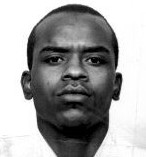
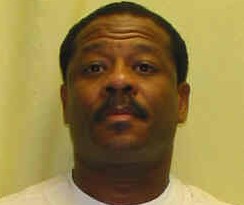
James Lee Henderson
Murderer Brian Kevin Rosenfeld
Murderer · USA · 1985
Brian Kevin Rosenfeld Brian Kevin Rosenfeld was sentenced to three concurrent l…
23 victims
Brian Kevin Rosenfeld
Murderer · USA · 1985
Brian Kevin Rosenfeld Brian Kevin Rosenfeld was sentenced to three concurrent l…
23 victims
 Russell Ellwood
Murderer · USA · 1991
Russell Ellwood was a former taxi driver. Authorities suspected him of killing…
20 victims
Russell Ellwood
Murderer · USA · 1991
Russell Ellwood was a former taxi driver. Authorities suspected him of killing…
20 victims
 Robert Martines Perez
Murderer · USA · 1994
Name: Robert Martines Perez · Other name used in proceedings: Robert Martinez P…
15 victims
Robert Martines Perez
Murderer · USA · 1994
Name: Robert Martines Perez · Other name used in proceedings: Robert Martinez P…
15 victims
 Billy Frank Vickers
Murderer · USA · 1993
Billy Frank Vickers Vickers was executed by lethal injection in Texas on Januar…
14 victims
Billy Frank Vickers
Murderer · USA · 1993
Billy Frank Vickers Vickers was executed by lethal injection in Texas on Januar…
14 victims
 Rachel Capra Craig
Homicide · Canada · 2001
Rachel Capra Craig was a Canadian woman accused of the murder of her fourteen-y…
1 victim
Rachel Capra Craig
Homicide · Canada · 2001
Rachel Capra Craig was a Canadian woman accused of the murder of her fourteen-y…
1 victim
 Warren Lee Hill
Homicide · USA · 1985
Warren Lee Hill was 36 when he was sentenced to death in September 1991 in Lee…
2 victims
Warren Lee Hill
Homicide · USA · 1985
Warren Lee Hill was 36 when he was sentenced to death in September 1991 in Lee…
2 victims
 Clarence Nesbit
Murderer · USA · 1993
Clarence C. Nesbit was convicted of premeditated first degree murder in the Cri…
1 victim
Clarence Nesbit
Murderer · USA · 1993
Clarence C. Nesbit was convicted of premeditated first degree murder in the Cri…
1 victim
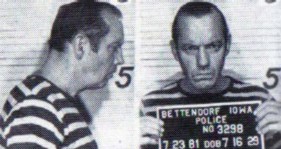 Charles Ray Hatcher
Serial killer · USA · 1969
Charles Ray Hatcher (July 16, 1929 – December 7, 1984) was an American serial k…
16 victims
Charles Ray Hatcher
Serial killer · USA · 1969
Charles Ray Hatcher (July 16, 1929 – December 7, 1984) was an American serial k…
16 victims
 John Errol Ferguson
Murderer · USA · 1977
John Errol Ferguson was sentenced to death and was executed by lethal injection…
8 victims
John Errol Ferguson
Murderer · USA · 1977
John Errol Ferguson was sentenced to death and was executed by lethal injection…
8 victims
- Gender
- male
- Country
- USA
- Location
- Red River County, Texas, USA
- Date of birth
- March 12, 1973
- Age at first offence
- 20
- Characteristics
- robbery, mentally ill
- Victim profile
- Martha Lennox, 85
- Method of murder
- Shooting
- Date(s) of murder
- October 29, 1993
- Years active
- 1993
- Date of arrest
- —
- Status
-
Sentenced to death
Sentenced to death on June 8, 1994
Case details
James Lee Henderson was a Texas death row inmate.
Timeline
- October 28, 1993 — Henderson, Willie Pondexter, Deon Williams, and Ricky Bell decided to break into the home of 85-year-old Martha Lennox in Palestine, Texas, planning to rob her, steal her car, and go to Dallas. They kicked the door open and went upstairs. Henderson fired a shot through Lennox's bedroom door. After Williams took seven dollars from Lennox's wallet, Henderson shot Lennox in the head. Pondexter took the gun from Henderson and shot Lennox in the head. The medical examiner testified that both wounds were fatal and that either wound could have caused Lennox's death. After robbing and murdering Lennox, the group drove her Cadillac to the home of Pondexter's cousin, where they celebrated the theft and murder. They then took Lennox's car to Dallas, where Williams and Henderson robbed some young Mexican men. The police arrested Pondexter and Bell, who were in Lennox's car. Henderson and Williams fled on foot. The police subsequently apprehended Williams.
- After the car theft and before Henderson’s arrest — Henderson saw Lennox's car being towed away and called "911" to report that it had been stolen.
- During the arrest after the "911" call — Henderson was arrested by the Dallas police officer to whom he made the report about the stolen car. When he was arrested, Henderson was in possession of a gun that was later determined to be the murder weapon.
- 1994 — Henderson was convicted of capital murder and sentenced to death.
- June 8, 1994 — Henderson was sentenced to death.
- 1997 — Henderson filed an application for state habeas relief.
- July 1998 — The Texas Court of Criminal Appeals denied Henderson's state habeas relief application.
- December 31, 1998 — Henderson filed a second state habeas application.
- After December 31, 1998 — The second state habeas application was dismissed as an abuse of the writ.
- January 1999 — Henderson filed a petition for federal habeas relief.
- March 2001 — The district court conducted an evidentiary hearing.
- September 2001 — The district court denied relief.
- June 20, 2002 — The Supreme Court decided Atkins.
- June 2003 — This court denied a certificate of appealability and affirmed the district court's denial of habeas relief.
- January 26, 2004 — The Supreme Court denied certiorari.
- January 16, 2004 — Before the petition was denied, Henderson was evaluated by a psychologist, Dr. Susana Rosin.
- March 19, 2004 — Dr. Rosin did not complete her report until this date.
- March 24, 2004 — Five days later, Henderson filed another successive state habeas application, raising his claim under Atkins.
- April 21, 2004 — The Texas Court of Criminal Appeals issued an order remanding the case to the trial court.
- On remand — The trial court conducted a hearing and entered findings of fact and conclusions of law, recommending that Henderson's Atkins claim be denied.
- January 25, 2006 — The Texas Court of Criminal Appeals denied relief.
- March 6, 2006 — Henderson filed with this court his motion for authorization to file a successive federal habeas petition.
- August 23, 2006 — The United States Court of Appeals for the Fifth Circuit issued its opinion (01-41279) granting Henderson’s motion for authorization to file a successive federal habeas petition.
Background
On the night of October 28, 1993, Henderson, Willie Pondexter, Deon Williams, and Ricky Bell decided to break into the home of 85-year-old Martha Lennox in Palestine, Texas. They planned to rob her, steal her car, and go to Dallas.
The offence
Henderson and the group went to Martha Lennox's home, kicked the door open, and went upstairs. Pondexter then took the gun from Henderson and shot Lennox in the head.
Then they took Lennox's car to Dallas, where Williams and Henderson robbed some young Mexican men.
Investigation and arrest
Henderson saw Lennox's car being towed away and called "911" to report that it had been stolen. Henderson was arrested by the Dallas police officer to whom he made the report about the stolen car.
Trial and sentence
Henderson was convicted of capital murder. He was sentenced to death in 1994, with sentencing stated as June 8, 1994. His conviction and sentence were affirmed on direct appeal.
Appeals
Henderson challenged his death sentence through state and federal habeas proceedings and related filings.
In July 1998, the Texas Court of Criminal Appeals denied Henderson's 1997 application for state habeas relief.
Henderson filed a second state habeas application on December 31, 1998, and it was dismissed as an abuse of the writ.
Henderson filed a petition for federal habeas relief in January 1999. The district court conducted an evidentiary hearing in March 2001 and denied relief in September 2001.
On June 20, 2002, the Supreme Court decided Atkins. In June 2003, this court denied a certificate of appealability and affirmed the district court's denial of habeas relief. Henderson filed a petition for a writ of certiorari, and the Supreme Court denied certiorari on January 26, 2004.
Before the petition was denied, Henderson was evaluated by Dr. Susana Rosin on January 16, 2004. Dr. Rosin did not complete her report until March 19, 2004, and five days later Henderson filed another successive state habeas application raising his Atkins claim.
On April 21, 2004, the Texas Court of Criminal Appeals remanded the case to the trial court. The appeals court stated it had reviewed the application and found that Henderson had presented facts which, if true, might entitle him to relief.
On remand, the trial court held a hearing and entered findings of fact and conclusions of law, recommending that Henderson's Atkins claim be denied. On January 25, 2006, the Texas Court of Criminal Appeals denied relief. In a concurring statement, four judges observed that the case presented a close question on the ultimate factual issue of mental retardation, and noted that the court had remanded for an evidentiary hearing because Henderson had made a prima facie showing of mental retardation.
On March 6, 2006, Henderson filed a motion for authorization to file a successive federal habeas petition.
Outcome
The United States Court of Appeals for the Fifth Circuit granted Henderson's motion for authorization to file a successive federal habeas petition.
The Fifth Circuit considered whether the successive application made a prima facie showing that Henderson satisfied the requirements under 28 U.S.C. 2244(b)(3)(C). The disputed issue was whether Henderson made a prima facie showing that he was mentally retarded.
The Fifth Circuit concluded that, based on the limited materials available, Henderson made a prima facie showing of mental retardation, and therefore granted authorization to file a successive habeas petition.
The Fifth Circuit also noted that, unless equitable tolling applied, the successive petition would be time-barred under 28 U.S.C. 2244(d)(1), but it left the question for the district court to decide whether Henderson's case presented rare and exceptional circumstances that would entitle him to equitable tolling.
Other details
- The Fifth Circuit opinion was in Re: James Lee Henderson, Movant, docket number 06-40320.
- The opinion was authored as PER CURIAM and involved Circuit Judges JOLLY, WIENER, and GARZA.
- Henderson sought to challenge his death sentence pursuant to Atkins v. Virginia, which prohibits the execution of mentally retarded criminals.
- The opinion referred to Henderson's IQ testing and adaptive functioning evidence.
Mental retardation evidence discussed in the Fifth Circuit ruling
Henderson argued he showed:
- intellectual testing fixing his IQ at 66, demonstrating subaverage intellectual functioning,
- significant limitations in several adaptive skills,
- onset before age 18.
Henderson presented Dr. Rosin's affidavit and excerpts from the transcript of the state court's evidentiary hearing on his Atkins claim. Dr. Rosin testified that Henderson's Full Scale IQ score was 66, within the Mild Mentally Retarded range, and that it was consistent with results from tests she administered: the Trail Making Test indicated he was in the mildly impaired range, and the Wide Range Achievement Test-3 showed a seventh grade equivalent in reading and spelling and a fifth grade equivalent for arithmetic.
Dr. Rosin testified that records dating to April 1992, when Henderson was 19 years old, showed a grade equivalent reading level of 4.9 and a mathematics grade equivalent of 4.4.
Three lay witnesses testified for Henderson at the state hearing:
- Reverend Milton Glass, who taught at Henderson's elementary school, testified that Henderson was in special education, that his grooming and dress were not age-appropriate, and that he had difficulty with social interaction, had low self-esteem, and was very gullible.
- Two of Henderson's classmates testified that Henderson's hygiene was not age-appropriate, that he often came to school smelling like urine, that his verbal skills were delayed, and that he had low self-esteem and was very gullible.
Based on Henderson's scores on the Vineland Adaptive Behavior Scales, Dr. Rosin concluded Henderson exhibited a "low" adaptive level of functioning, with age equivalent scores ranging between seven years-six months and eleven years.
Dr. Rosin’s expert opinion was that Henderson had adaptive behavior deficits in self-direction, work skills, safety and academic skills.
Dr. Rosin testified that because there was no evidence Henderson suffered from any accident or illness after age 18 that would account for a recent drop in his IQ scores, she believed he had functioned within the mildly mentally retarded range since he was very young, and that his adaptive behavior deficits existed before he was 18 years old.
Evidence offered by the State and credibility disputes discussed in the Fifth Circuit ruling
The State argued Henderson failed to make a prima facie case of subaverage intellectual functioning. It pointed to testimony from Steve Gilliland, a licensed professional counselor for the Texas Department of Criminal Justice, who testified at the state evidentiary hearing that he did an intake assessment of Henderson in 1994 and that Henderson scored an 83 on the short form of the Wechsler Adult Intelligence Scale-Revised ("WAIS-R").
The State also cited testimony from Dr. Michael Gillhausen, a licensed psychologist, who testified that the reliability of the short form WAIS-R was 94%, which would allow a reliable conclusion that Henderson's IQ would fall within the range from 76-90.
The State argued that Dr. Gillhausen noted Henderson scored at the seventh grade level on achievement tests given by Dr. Rosin, but in his experience mildly mentally retarded individuals usually cannot score above the sixth grade level.
The State argued the state trial court found Dr. Rosin's assessment less credible than those of Dr. Gillhausen and Gilliland because Dr. Rosin's tests were administered after Henderson knew his life would be spared if he was mentally retarded.
The State also argued Henderson failed to make a prima facie showing of significant deficits in adaptive functioning. It stated Dr. Gillhausen testified that based on a review of grievance forms Henderson prepared while he was in prison, Henderson had a very good vocabulary and an ability to form concepts and comprehend procedures and rules.
The State also introduced prison records reflecting that Henderson ordered paperback and hardcover books and had copies of Tom Clancy and Stephen King novels in his cell.
The State asserted Creea Impson, Henderson's juvenile intake probation and parole officer, testified that during the time she supervised him prior to the capital murder, Henderson was not a follower, was always aware of what he was doing and why he did it, and wrote rational letters of restitution to his crime victims.
The State also asserted Henderson failed to make a prima facie showing that onset of alleged mental retardation occurred before age 18.
Note about transcripts and quotations
The opinion stated neither party provided a complete transcript of the state evidentiary hearing; Henderson offered selected excerpts, and the State response described testimony without excerpts from the transcript.
The opinion contained notes that:
- Henderson's motion for appointment of counsel was granted,
- Dr. Rosin stated a diagnosis of mental retardation required demonstration of adaptive deficits in at least two of the listed areas: communication, self-care, home living, social/interpersonal, use of community resources, self-direction, work skills, functional academic skills, health and safety,
- the state hearing transcript was not complete as provided to the Fifth Circuit.

Spotted an error, or have more information about this case?