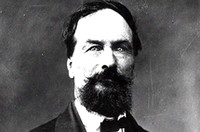
William Adams Hickman
Homicide Edward Brian Capetillo
Homicide · USA
Edward Brian Capetillo was a Latino male who was 17 years of age at the time of…
1995 victims
Edward Brian Capetillo
Homicide · USA
Edward Brian Capetillo was a Latino male who was 17 years of age at the time of…
1995 victims
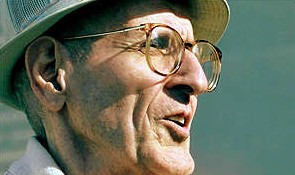 Jack Kevorkian
Homicide · USA · 1990
Jack Kevorkian (born May 26, 1928) was a controversial American pathologist. He…
130 victims
Jack Kevorkian
Homicide · USA · 1990
Jack Kevorkian (born May 26, 1928) was a controversial American pathologist. He…
130 victims
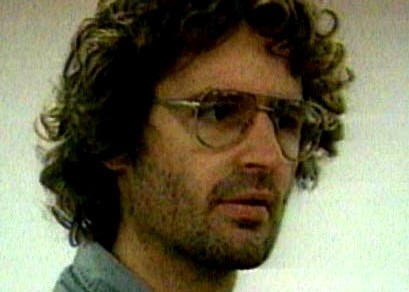 David Koresh
Homicide · USA · 1993
David Koresh (born Vernon Wayne Howell; August 17, 1959 – April 19, 1993) led t…
79 victims
David Koresh
Homicide · USA · 1993
David Koresh (born Vernon Wayne Howell; August 17, 1959 – April 19, 1993) led t…
79 victims
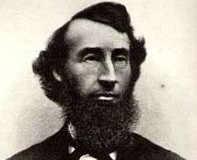 Nathaniel Gordon
Homicide · USA · 1860
Nathaniel Gordon (c.1834 – February 21, 1862) was the first and only American s…
29 victims
Nathaniel Gordon
Homicide · USA · 1860
Nathaniel Gordon (c.1834 – February 21, 1862) was the first and only American s…
29 victims
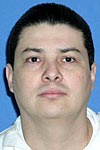 Jaime Elizalde
Murderer · USA · 1994
Name: Jaime Elizalde Also known as: Jaime Elizalde, Jr. Current status: Execute…
2 victims
Jaime Elizalde
Murderer · USA · 1994
Name: Jaime Elizalde Also known as: Jaime Elizalde, Jr. Current status: Execute…
2 victims
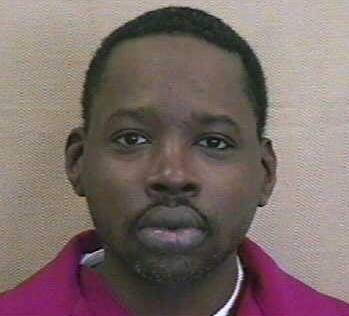 Kenneth Bernard Rouse
Murderer · USA · 1991
Kenneth Bernard Rouse was convicted by a North Carolina jury of first-degree mu…
1 victim
Kenneth Bernard Rouse
Murderer · USA · 1991
Kenneth Bernard Rouse was convicted by a North Carolina jury of first-degree mu…
1 victim
- Gender
- male
- Country
- USA
- Location
- Several States, USA
- Date of birth
- April 16, 1815
- Age at first offence
- 30
- Characteristics
- history of mental illness
- Victim profile
- Men
- Method of murder
- Shooting
- Date(s) of murder
- 1845 - 1870
- Years active
- 1845–1870
- Date of arrest
- —
- Status
-
Died in custody
Never convicted of the crimes to which he confessed; died on August 21, 1883
Case record: William Adams Hickman
William Adams Hickman, also known as “Wild Bill” Hickman (April 16, 1815 - August 21, 1883), was a frontiersman. He served as a representative to the Utah Territorial Legislature.
Background
Hickman was baptized into Church of Jesus Christ of Latter Day Saints in 1839 by John D. Lee. He later served as a personal bodyguard for Joseph Smith, Jr. and Brigham Young. He was reputedly a member of the Danites.
Early life and frontier life
Hickman was born 16 April 1815 in Warren County, Kentucky. He moved with his parents to the Missouri Territory when he was four years old, two years before Missouri statehood. His boyhood included daily life on the frontier where Indians and wild animals were present, and where disputes were settled with guns and fists. This influenced Hickman throughout his lifetime of sixty-eight years.
Hickman died in August 1883 in a dugout on America’s last frontier near Lander, Wyoming. He died in Wyoming in 1883.
Mormon service and appointments
Hickman first married in Missouri in 1832 when he was barely seventeen years of age. After his first marriage, he met Mormons from Ohio as they passed by his farm on their way to Jackson County, Missouri. He talked to them, fed many, and ended up a convert to Mormonism in 1838. After the expulsion of the Mormons from Missouri, he moved to Illinois.
At the close of the Nauvoo period in September 1846, Hickman was one of the last 100 defenders of the beleaguered city, using only a home-made cannon for defense until the city’s residents could be evacuated. At Winter Quarters, Brigham Young appointed Hickman as a lawman. His assignment included a charge to protect Orson Hyde, a church apostle and the political and civic leader of what became a large 20,000-member community.
Green River County, organized by the Utah legislature in 1852, was staffed in 1854 by Brigham Young’s appointees. During that period, Hickman was sheriff, tax collector, tax assessor, assistant federal marshal, and the first legislator to represent the county.
Hickman negotiated, perhaps by force, the sale of Fort Bridger to the Mormons in August 1855 for $8,000.
In February 1857 Hickman carried the mail east to Independence, Missouri, for the B.Y. Express Company. He made the round trip and returned in haste to the territory to report to Brigham Young on 24 June 1857 that the U.S. Army was coming to Utah to take over the local government. Brigham Young kept this report confidential until a month later when it was dramatically confirmed by the arrival of Orrin Porter Rockwell at the 24 July picnic.
Utah War and actions in 1857-1858
The Utah War of 1857-58 resulted in all able-bodied Mormon men taking part in the defense of the territory. Hickman served in Green River County where he helped destroy army wagon trains.
On the night of 7 October, he burned Fort Bridger. Ten days later he executed an enemy spy named Richard Yates.
With the establishment of Camp Floyd, Hickman and his gang—later called “the Hickman Hounds”—found a livelihood as well as excitement in pillaging the army’s livestock. His actions were defended by church leader Orson Hyde, and Hickman felt justified because of an earlier oath to defend the Mormons against all enemies.
Shot in Salt Lake City and aftermath
A gunfight on Christmas Day 1859 in downtown Salt Lake City nearly ended Hickman’s life. He was shot in the hip by his long-time friend and protégé, Lott Huntington, in an argument over stolen horses. The effects of this wound plagued Hickman throughout the last 22 years of his life and caused him to walk with “a shuffling gait.”
Work for the U.S. government, 1863-1865
From 1863 to 1865 Hickman was an “Army guide and Indian Spy” for the U.S. government, serving under the direction of General Patrick Connor. Hickman’s friendship with General Connor led to involvement in the first mining venture in the territory in Bingham Canyon and later in other ventures in Wyoming. His friendship with Connor also helped cause estrangement from Brigham Young.
Excommunication and polygamy-related departure
On 12 June 1868, while Hickman was on a visit to California, he was excommunicated from the Mormon Church by his Taylorsville bishop. Shortly thereafter, nine of his ten wives left him. All but his first wife left him when his practice of polygamy no longer came under the protection of the church.
Election to the Utah Territorial Legislature
In 1854 Hickman was elected to the Utah Territorial Legislature.
Autobiography/confession and federal handling of it
Around Sept 1871, while under arrest for the murder of Richard Yates years earlier, Hickman wrote an autobiography/confession in which he confessed to numerous murders.
Years later, his confession was given to J.H. Beadle, who published it under the sensational title Brigham’s Destroying Angel. It was unclear how much of the account was factual and how much was exaggerated. In the confession, Hickman implicated Brigham Young as the one who ordered Yates’ murder, as well as most of the other murders to which Hickman confessed.
Federal law enforcement authorities at the time gave Hickman enough credence to hold off charging him with the murders so that he could be a material witness in a case they were attempting to build against Brigham Young. During this time, Hickman was held at Fort Douglas, guarded by the military, rather than in a local jail cell because federal authorities believed Hickman needed witness protection from a perceived threat by the Danites.
Nothing became of the case against Brigham Young. Hickman, who had struck a deal with federal law enforcement to testify against Young if he were ever brought to trial over ordering these and other murders, was never convicted of the crimes to which he confessed, although he lived the remainder of his life as somewhat of a pariah.
During this period, Hickman was encouraged by anti-Mormons to write his autobiography, Brigham’s Destroying Angel, published in New York City in January 1872. For decades, people believed this was Hickman’s true story, when it exaggerated the bad he did and eliminated the good he had done for the territory.
Murder allegation involving Richard Yates, grand jury, and resulting charges
In September 1870, while no longer a lawman, Hickman shot and killed a man in Tooele County who had threatened his family. He was indicted for murder, which charge was dismissed by an arrangement proposed by Third District Court Judge James B. McKean, a well known anti-Mormon.
The conditions of Hickman’s exoneration included an appearance before a grand jury where he would tell all he knew about the death of Richard Yates during the Utah War. Hickman’s testimony before the grand jury brought indictments for murder against Brigham Young and several other prominent church leaders. All were jailed at Fort Douglas except Brigham Young, who was placed under “house arrest”.
Personal life and family
By 1858 he had married nine more wives in polygamy; all but the first marriage were performed by or sanctioned by Brigham Young.
Hickman was father to thirty-five children; few Mormon men had a larger family. LDS online records showed he fathered 36 children. He had 10 wives. His wives included a first wife and additional wives in polygamy. He fathered 36 children and was the grandfather of Mormon metaphysical and inspirational author Annalee Skarin.
Lynn M. Hilton and Hope A. Hilton are mentioned in association with works about him.
Later life and death
In June 1880, sick and persecuted, Hickman left Utah with a few family members to live in the wilderness of the Wind River Mountains in western Wyoming, where he died in August 1883.
Outcome
Hickman was never convicted of the crimes to which he confessed.
Other details
Hickman did not consider himself an outlaw; he considered himself an appointed lawman or soldier in the Mormon militia. He was known as the “Notorious” or the “Danite Chief” of Utah.
He helped protect Orson Hyde. Orrin Porter Rockwell arrived at the 24 July picnic. Patrick Connor directed his work as an “Army guide and Indian Spy.” James B. McKean proposed the arrangement that led to dismissal of the September 1870 murder indictment.
See also: William A. Hickman, Brigham’s Destroying Angel (1904); and Hope A. Hilton, “Wild Bill” Hickman and the Mormon Frontier (1988).

Spotted an error, or have more information about this case?