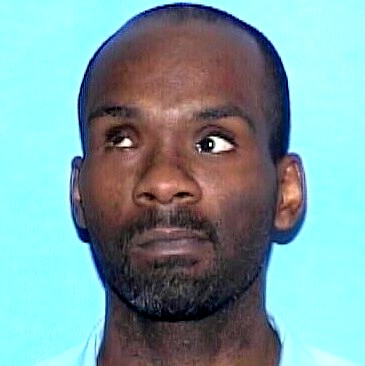
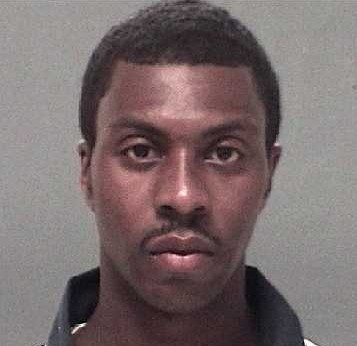
Ernest Jamison
Spree killer Mark Barton
Spree killer · USA · 1999
Mark Orrin Barton (1955 – July 29, 1999) committed a spree killing in Stockbrid…
12 victims
Mark Barton
Spree killer · USA · 1999
Mark Orrin Barton (1955 – July 29, 1999) committed a spree killing in Stockbrid…
12 victims
 John Allen Muhammad
Spree killer · USA · 2002
John Allen Muhammad carried out the 2002 D.C. sniper attacks with his 17-year-o…
10 victims
John Allen Muhammad
Spree killer · USA · 2002
John Allen Muhammad carried out the 2002 D.C. sniper attacks with his 17-year-o…
10 victims
 Jeffrey Weise
Spree killer · USA · 2005
Jeffrey Weise, a 16-year-old student at Red Lake High School in Red Lake, an un…
9 victims
Jeffrey Weise
Spree killer · USA · 2005
Jeffrey Weise, a 16-year-old student at Red Lake High School in Red Lake, an un…
9 victims
 Manuel Pardo
Spree killer · USA · 1986
Manuel Pardo, Jr. was a former police officer who was convicted of nine counts…
9 victims
Manuel Pardo
Spree killer · USA · 1986
Manuel Pardo, Jr. was a former police officer who was convicted of nine counts…
9 victims
 Misty Stoddard
Murderer · USA · 2012
Misty Stoddard was a 37-year-old resident of Sarasota County. She was the stepm…
1 victim
Misty Stoddard
Murderer · USA · 2012
Misty Stoddard was a 37-year-old resident of Sarasota County. She was the stepm…
1 victim
 Aino Nykopp-Koski
Serial killer · Finland · 2004
Aino Nykopp-Koski Aino Nykopp-Koski was a Finnish nurse. She worked at a range…
5 victims
Aino Nykopp-Koski
Serial killer · Finland · 2004
Aino Nykopp-Koski Aino Nykopp-Koski was a Finnish nurse. She worked at a range…
5 victims
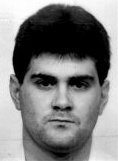 Cameron Willingham
Murderer · USA · 1991
Cameron Willingham was convicted of capital murder for murdering his three chil…
3 victims
Cameron Willingham
Murderer · USA · 1991
Cameron Willingham was convicted of capital murder for murdering his three chil…
3 victims
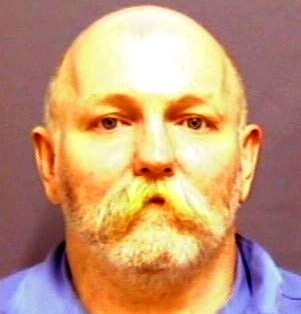 Glen Burton Ake
Homicide · USA · 1979
Glen Burton Ake was sentenced to death and later had that death sentence overtu…
2 victims
Glen Burton Ake
Homicide · USA · 1979
Glen Burton Ake was sentenced to death and later had that death sentence overtu…
2 victims
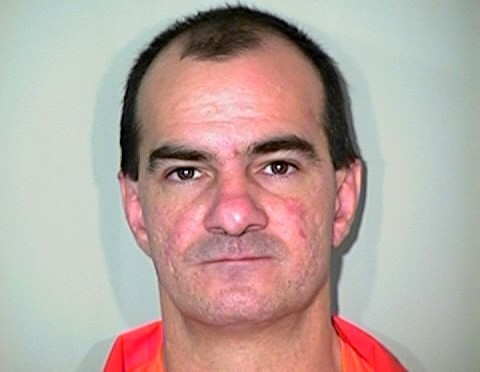 Phillip Bocharski
Murderer · USA · 1995
Phillip Bocharski was convicted in Yavapai County of burglary in the first degr…
1 victim
Phillip Bocharski
Murderer · USA · 1995
Phillip Bocharski was convicted in Yavapai County of burglary in the first degr…
1 victim
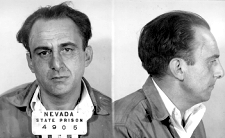 Albert Everette Sala
Murderer · USA · 1945
Albert Everette Sala was a native of Oakland, California, and he was 38 years o…
1 victim
Albert Everette Sala
Murderer · USA · 1945
Albert Everette Sala was a native of Oakland, California, and he was 38 years o…
1 victim
- Gender
- male
- Country
- USA
- Location
- Illinois/Missouri/Tennessee, USA
- Date of birth
- March 8, 1961
- Age at first offence
- 34
- Characteristics
- rape?, armed robbery, drug addict
- Victim profile
- Arthur Kirkwood, 24 (his friend) / James Klug, 67 (gas station attendant) / Sue Gilmore, 52
- Method of murder
- Shooting
- Date(s) of murder
- June 19, 1995
- Years active
- 1995
- Date of arrest
- Same day (suicide attempt)
- Status
-
Sentenced to death
Sentenced to death in Illinois on February 21, 1996
Case record: Ernest Jamison
Defendant: Ernest Jamison
Background
Ernest Jamison was convicted on a plea of guilty to first degree murder (720 ILCS 5/9-1(a)(1) (West 1994)) and armed robbery (720 ILCS 5/18-2 (West 1994)) in connection with the June 19, 1995, shooting death of Susan K. Gilmore. He was found eligible for the death penalty and sentenced to death.
The offence
In the early morning hours of June 19, 1995, Jamison shot and killed a man in Memphis, Tennessee. Using that man’s automobile, Jamison fled the state and headed toward Minnesota. While driving through Missouri, Jamison shot and killed a gas station attendant.
After the stolen vehicle broke down in Illinois, Jamison abandoned that vehicle near a Quick Pic store in McLean, Illinois. He then approached the gas pumps at the front of that store, where Susan Gilmore had just filled her car with gasoline. Jamison walked to within three feet of Gilmore, pulled out a gun, shot Gilmore in the head, and pulled her body out of the car. He then drove away in Gilmore’s car.
Investigation
A McLean County sheriff spotted Jamison and pursued him in a high-speed car chase. Jamison’s vehicle swerved into a ditch. When the sheriff approached Jamison’s car, Jamison apparently attempted suicide by shooting himself in the head. Audio tapes, plants, and other items were found inside the car Jamison was driving when he was arrested.
The clerk at the Quick Pic store testified to the events leading up to the shooting of Susan Gilmore on June 19, 1995, and Jamison’s departure in Gilmore’s car.
Arrest
After Jamison’s capture during the high-speed chase, audio tapes, plants, and other items were found inside the car.
Trial
Plea and pre-sentencing proceedings
On July 13, 1995, Jamison was indicted in the State of Illinois on three counts of first degree murder in relation to the shooting of Susan Gilmore and one count of aggravated vehicular hijacking.
On July 21, 1995, Jamison was arraigned and entered a plea of not guilty.
On July 25, 1995, while being held in the McLean County detention facility, Jamison was seen for the first time by Dr. Bhaskar Damera, a psychiatrist. Dr. Damera determined that Jamison was experiencing feelings of boredom and loneliness because he had been rendered blind by a self-inflicted gunshot wound in a failed apparent suicide attempt. Dr. Damera diagnosed Jamison as having “Major depression, single episode” and prescribed Sinequan, (1) a psychotropic medication.
In August 1995, Jamison advised his attorney he wished to change his plea to guilty. A hearing was scheduled for September 1, 1995.
On September 1, 1995, the State notified the court that, by information, it was adding a charge of armed robbery to the pending charges against Jamison. In this new fifth count (count V), it was alleged that Jamison “knowingly took the contents of a motor vehicle, said contents belonging to Susan K. Gilmore, and including clothing and personal effects and plants and tapes, from the immediate presence of Susan Gilmore by the use of force when he was armed with a dangerous weapon, a handgun.”
The court advised Jamison he was entitled to have a grand jury return an indictment on count V or he could have a preliminary hearing to determine probable cause for the filing of count V. Jamison waived these rights. On the same day the information was filed, he entered a plea of guilty to count I, intentional murder, and to count V, the newly filed armed robbery count.
Before the court accepted Jamison’s plea, defense counsel advised the court that Jamison was taking “an anti-depressant, Sinequan,” which was prescribed for him by Dr. Damera. Defense counsel stated that she had spoken with Dr. Damera “with regard to the effects of Sinequan as far as Mr. Jamison's judgment, his ability to understand and communicate with regard to his case, and any other effects that the medication might have on him, and was informed that in fact [defendant] should react in a normal fashion. That the only obvious effect would be to deal with his depression, to some extent help him sleep.”
Defense counsel then added: “And I believe from communicating with my client on a regular basis, that in fact there is no negative influence insofar as his judgment is concerned and that he is alert.”
The trial court admonished Jamison in accord with Supreme Court Rule 402, found his plea was knowingly and voluntarily made, and accepted his plea of guilty to first degree murder and armed robbery after hearing the State’s factual basis.
The State advised the court that it intended to seek the death penalty and defense counsel acknowledged awareness of the State’s intention. Jamison waived his right to a jury.
Death penalty eligibility and stages of the hearing
On December 4, 1995, a bench trial was held to determine Jamison’s eligibility for the death penalty. Three witnesses testified at this first-stage hearing:
- A McLean County sheriff testified to the events leading up to Jamison’s capture and to Jamison’s oral confession to the shooting. The sheriff also testified that audio tapes, plants, and other items were found inside the car Jamison was driving when he was arrested.
- Gilmore’s son testified that on June 19, 1995, he had been living with his mother in Rockford. At about 8 a.m. that day, he saw his mother loading up her car, a blue Honda Accord, with plants and other items, in anticipation of a planned visit to his aunt’s home in Kansas City. That was the last time he saw her alive.
After hearing the evidence, the trial court found Jamison eligible for the death penalty pursuant to section 9-1(b)(6)(c) of the Criminal Code of 1961 (720 ILCS 5/9-1(b)(6)(c) (West 1994)).
After determining eligibility, the court proceeded to the second stage and began to receive evidence in aggravation and mitigation. Evidence was presented on December 5 and 7, 1995, and on February 9, 13, 14, 15, 16, and 21, 1996.
Fitness related proceedings during sentencing
On the morning of February 15, 1996, defense counsel informed the court she would be asking her next witness, Dr. Arthur R. Traugott, “some basic questions with regard to fitness.”
Defense counsel explained that at the time of the plea hearing on September 1, 1995, no one was aware that Jamison had been taking medication classified as psychotropic. Upon learning the psychotropic nature, she contacted Dr. Damera and Dr. Traugott, who would be called as a mitigation witness.
The trial court noted that based on the statutory provision in effect at the time Jamison entered his plea, his use of psychotropic medication entitled him to a fitness hearing; however, the statute had been recently amended, requiring a fitness hearing only if a bona fide doubt of fitness existed. The court and the parties had consensus that evidence regarding fitness should be placed on the record.
Defense counsel stated: “And while I don't believe at any point in these proceedings, including the time of the defendant's arrest, that there was any bona fide doubt with regard to his fitness, and certainly there hasn't been as far as I'm concerned with my communications with him throughout the proceeding, I feel more comfortable having some testimony with regard to that.”
Dr. Traugott testified that he performed a psychiatric evaluation of Jamison on November 15, 1995. He testified that at that time Jamison was taking Sinequan as prescribed by Dr. Damera. Dr. Traugott testified that he saw no evidence that the medication affected Jamison’s ability to understand the charges or cooperate with his defense. Dr. Traugott stated he was impressed by the clarity with which Jamison was able to recall and articulate events, including events of the plea hearing on September 1, 1995.
Dr. Traugott testified he reviewed numerous documents, including psychiatric reports prepared by Dr. Damera both before and after the plea hearing. Dr. Traugott believed the medication had no negative effect on Jamison’s intellectual functioning. Dr. Traugott testified: “I think, if anything, that the Sinequan may have enhanced [defendant's] ability to cooperate and assist in those proceedings.”
Dr. Traugott explained that Sinequan ameliorates symptoms of depression, such as sleep and appetite disturbance, and helps the person become more focused and better able to concentrate. He concluded Jamison was fit for sentencing and had been fit at the time he entered his plea. Dr. Traugott also stated his primary diagnosis was antisocial personality disorder, affective aggressor type, and that affective aggressors tend to react impulsively when threatened or under stress.
Dr. Alvin House, a clinical psychologist, also testified in mitigation. He met with Jamison on November 1 and 8, 1995, and on January 5, 1996, performing tests to assess intellect and mental functioning. Because of Jamison’s blindness, only the verbal portion of the Wechsler Intelligence Test could be administered, and Jamison’s IQ was determined to be 80. Dr. House administered the Wechsler Memory test and produced an index number of 102 within the average range.
Dr. House testified: “In terms of cognitive abilities, on each of the occasions I met with [defendant], [he] performed elements of a mental status assessment looking at his tempo orientation, his attention, different less comprehensive types of short-term recall task[s] like the Wechsler's. Each time [defendant] showed a clear mental status. He was consistently oriented within the normal range. He showed some lapses of attention, but in general was able to focus on me and my questions for the periods I met with him, and appeared to be alert and competent.”
Dr. House was aware Jamison was taking Sinequan for depression and testified Sinequan can affect short-time reading and recall but does not typically affect the performances measured on an intelligence test. Dr. House noted depression can interfere with mental performance. In Dr. House’s opinion, because Jamison scored within the normal range on Wechsler Memory tests, “what was likely going on was that the benefits that [defendant] was deriving from the medication were outweighing any effects it was having on his cognitive functioning.”
Dr. House noted that on January 8, 1996, Jamison reported feeling better and acknowledged medication seemed to be helping him. Jamison became sad when he spoke about the future and maintained he would rather die than go to prison because he was afraid of being victimized due to blindness.
Based on examination and testing and using DSM-IV classification, Dr. House diagnosed antisocial personality disorder, impulsive type.
Melinda Meyer Felner, an officer at the McLean County detention facility, testified that Jamison was placed in a holding cell across from the control room. Initially he was placed there because he was considered a suicide risk, but he remained there due to blindness. Felner testified Jamison adjusted well and was provided audio and music tapes and books on tape to alleviate boredom. Felner testified Jamison began writing rap songs.
Casey Kruse Goldberg, a social worker at the detention facility, testified she visited Jamison 16 times beginning July 25, 1995. She referred Jamison to Dr. Damera because she recognized he seemed depressed. After Dr. Damera placed Jamison on medication, Jamison’s depression seemed to decrease. Goldberg testified Jamison enjoyed “witnessing” his faith to other cellmates and wrote rap songs to help “him think out what was in his head.”
Dr. Damera testified on February 16, 1996. He explained the drug is “supposed to uplift your spirits, and it has other affects [ sic ] such as calming down, anti-anxiety, and also helps you to sleep.” Dr. Damera testified the drug typically increases self-esteem and brings about greater clarity of thought. He testified the dosage was relatively small-25 milligrams twice during the day and 50 milligrams at night to aid sleep. He testified that on September 19, 1995, dosage increased to 100 milligrams at night because Jamison was still having difficulty sleeping. When asked about fitness, Dr. Damera replied: “Well, I did not examine him specifically with that intent, but in my experience with the patient I never got the impression that he was unfit in any way. He understood everything, our conversation, the treatment, the charges.”
The prosecutor entered stipulations:
- On September 1, 1995, and continuing through early December 1995, neither the State nor defense counsel was aware that the medication taken was classified as psychotropic, and the psychotropic nature was not realized until late December 1995 or early January 1996.
- The amendment to the statute effective in December 1995 required a fitness hearing only if there was a bona fide doubt of fitness, and therefore no fitness hearing was required.
- If a higher court found the amended statute inapplicable and a fitness hearing required, the evidence and testimony already received “is in substance a fitness hearing” and “substantially complies with the statute.”
The prosecutor also advised the court that even before the psychotropic nature was known, fitness had been a consideration due to Jamison’s suicide attempt. The prosecutor stated defense counsel’s consistent position that Jamison was able to understand what was going on, what he was charged with, and cooperate with his counsel was why no fitness hearing had been requested.
The trial court ruled: “The court would note, based on stipulation of counsel, that in accordance with the statute as amended, which is effective in mid-December, 1995, and I refer to Ch. 725, �5/104-21, the court in reviewing the record in this case finds that there is no bona fide doubt of the defendant's fitness that would require the court to conduct a fitness hearing in accordance with the amended statute. The court further finds in light of the testimony of both Doctor [ sic ] Traugott and Damera that the defendant is fit and has been fit throughout all proceedings in this case.”
Sentencing
On February 21, 1996, after ruling that mitigating factors were insufficient to preclude the imposition of the death penalty, the trial court sentenced Jamison to death on the murder conviction and imposed a consecutive term sentence of 30 years’ imprisonment for the armed robbery conviction.
Jamison filed a motion for reconsideration of his sentence, and the trial court denied it on April 1, 1996.
Appeals
Jamison appealed after sentencing.
On direct appeal, the court determined Jamison had not been properly admonished in accord with Supreme Court Rule 605(b), and remanded the matter to the circuit court of McLean County so Jamison could file a motion to withdraw his guilty plea under Supreme Court Rule 604(d). The remand referenced People v. Jamison, 181 Ill. 2d 24 (1998).
On remand, Jamison filed a motion to withdraw his guilty plea. He claimed:
- It was mandatory the trial court conduct a hearing to determine fitness prior to accepting his guilty plea because he was taking psychotropic medication.
- The factual basis proffered by the State was insufficient to support his guilty plea as to armed robbery.
- His plea of guilty as to armed robbery was not knowingly made.
On August 28, 1998, the circuit court conducted an evidentiary hearing on the motion. At that hearing, Jamison testified he had been taking Sinequan continuously from July 1995 through August 1997. He testified that in August 1997 he asked to be taken off the medicine because it was causing him to hallucinate. He testified that when he took Sinequan in 1995 it caused his thinking processes to become “clogged up” and made it difficult for him to remember things. He also testified that when he entered his plea he was “depressed a lot, [and had] no will to live.” He testified he wanted to withdraw his guilty plea because he was off medication and was thinking clearer.
Jamison also claimed his plea was not knowingly and voluntarily made because he was misinformed about the State’s purpose in charging him with armed robbery. Jamison testified his trial attorney never told him that, under the laws in effect at the time, commission of murder in conjunction with armed robbery made him eligible for the death penalty, but commission of murder in conjunction with aggravated vehicular hijacking did not.
Jamison testified he spoke with his attorney one or two days before the plea hearing and asked her about the change in the charges and for an explanation of the difference. He recalled his attorney told him: “it really don't make a difference, it's just that aggravated carjacking wasn't in effect and I took it as she meant it wasn't a charge.”
Jamison’s trial counsel, Amy Davis, testified. She testified she told Jamison the State was charging him with armed robbery because it was one of the predicate offenses which made him death-eligible. She testified she did not have a specific recollection of the conversation but believed she explained everything. She testified she anticipated the State would charge Jamison with armed robbery due to the “problem” with the aggravated hijacking charge and had spoken with Jamison before the charges were amended.
On fitness, Davis conceded Jamison insisted on pleading guilty against her advice. Davis testified she always believed Jamison was mentally fit and understood what he was doing. When asked about failure to request a fitness hearing, she responded a fitness hearing was held; while not “conventional,” two doctors testified and attested to Jamison’s fitness. She stated: “comported with the statute.”
Jamison called Dr. Lee, a licensed psychiatrist and medical director of psychiatry at Silver Cross Hospital. Dr. Lee testified about “potentially could be the affects [ sic ] of doxepin on an individual such as [defendant].” Dr. Lee testified he never examined Jamison or reviewed his medical records. He testified that, based on his understanding of the clinical effects of Sinequan (doxepin), “especially in a person with brain trauma, could impair the person's higher cognitive function to a degree that would make it difficult to be legally fit to be able to assist in their defense.”
Defense counsel resubmitted written reports of two mitigation witnesses, Casey Kruse Goldberg and Dr. Damera.
The circuit court denied Jamison’s motion to withdraw his guilty plea in an order dated October 9, 1998, and Jamison filed a motion for reconsideration. The motion argued the guilty plea was the product of depression and not voluntarily made and that trial counsel was ineffective, assuming the role of prosecutor on the subject of fitness to plead guilty. The motion to reconsider was denied in an order dated February 17, 1999.
Outcome
The decision of the circuit court was affirmed. The clerk of the appellate court was directed to enter an order setting Tuesday, September 11, 2001, as the date on which the sentence of death, entered by the circuit court of McLean County, would be carried out. The appellate court directed that Jamison be executed in the manner provided by law (725 ILCS 5/119-5 (West 1996)). The clerk was directed to send a certified copy of the mandate to the Director of Corrections and to the warden of Tamms Correctional Center and the warden of the institution where Jamison was confined.
Chief Justice Harrison concurred in part and dissented in part, agreeing convictions should be affirmed but dissenting that Jamison’s death sentence should not be allowed to stand. Harrison stated Jamison’s sentence of death “should therefore be vacated, and he should be sentenced to a term of imprisonment.”
Other details
The opinion referenced Illinois Supreme Court docket: 80967.
The record included: “The drug, Sinequan, also is known by the names Adepin and doxepin.”
Spotted an error, or have more information about this case?