Anthony Casellas
Mass murderer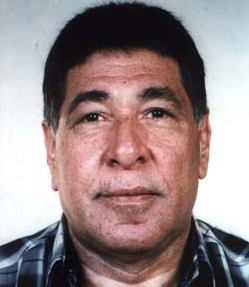 Gameel Al-Batouti
Mass murderer · USA · 1999
Gameel Al-Batouti (also rendered “Gamil ElBatouty” or “El Batouty” in U.S. offi…
216 victims
Gameel Al-Batouti
Mass murderer · USA · 1999
Gameel Al-Batouti (also rendered “Gamil ElBatouty” or “El Batouty” in U.S. offi…
216 victims
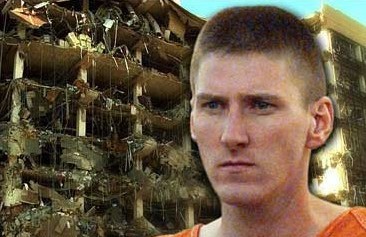 Timothy McVeigh
Mass murderer · USA · 1995
Timothy James McVeigh (April 23, 1968 – June 11, 2001) was a United States Army…
168 victims
Timothy McVeigh
Mass murderer · USA · 1995
Timothy James McVeigh (April 23, 1968 – June 11, 2001) was a United States Army…
168 victims
 Julio Gonzalez
Mass murderer · USA · 1990
Julio Gonzalez was sentenced to 174 twenty-five-year sentences (a total of 4,35…
87 victims
Julio Gonzalez
Mass murderer · USA · 1990
Julio Gonzalez was sentenced to 174 twenty-five-year sentences (a total of 4,35…
87 victims
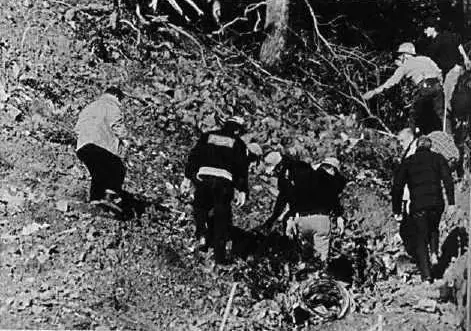 David Burke
Mass murderer · USA · 1987
David Augustus Burke (May 18, 1952–December 7, 1987) was an employee of USAir,…
43 victims
David Burke
Mass murderer · USA · 1987
David Augustus Burke (May 18, 1952–December 7, 1987) was an employee of USAir,…
43 victims
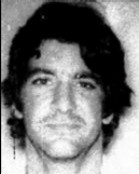 George Jo Hennard
Mass murderer · USA · 1991
George Jo Hennard carried out a mass killing at a Luby’s Cafeteria in Killeen,…
23 victims
George Jo Hennard
Mass murderer · USA · 1991
George Jo Hennard carried out a mass killing at a Luby’s Cafeteria in Killeen,…
23 victims
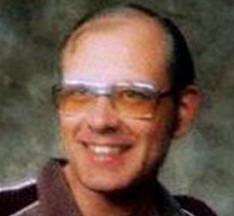 James Huberty
Mass murderer · USA · 1984
James Oliver Huberty was a 41-year-old unemployed security guard. He was born i…
21 victims
James Huberty
Mass murderer · USA · 1984
James Oliver Huberty was a 41-year-old unemployed security guard. He was born i…
21 victims
 Elain Kay Young
Murderer · USA · 2006
Defendant: Elain Kay Young, 57, of Novinger, MO · Co-defendant: Katherine A. Mo…
1 victim
Elain Kay Young
Murderer · USA · 2006
Defendant: Elain Kay Young, 57, of Novinger, MO · Co-defendant: Katherine A. Mo…
1 victim
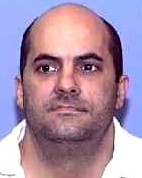 Daniel Clate Acker
Murderer · USA · 2000
Daniel Clate Acker; TDCJ Number 999381. Daniel Clate Acker was convicted of cap…
1 victim
Daniel Clate Acker
Murderer · USA · 2000
Daniel Clate Acker; TDCJ Number 999381. Daniel Clate Acker was convicted of cap…
1 victim
 Darryl Elroy Stewart
Murderer · USA · 1980
Darryl Elroy Stewart was 38 at the time of his execution and had an education l…
1 victim
Darryl Elroy Stewart
Murderer · USA · 1980
Darryl Elroy Stewart was 38 at the time of his execution and had an education l…
1 victim
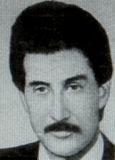 Scott Robin Roston
Murderer · USA · 1988
Scott Robin Roston was convicted of second-degree murder on the high seas after…
1 victim
Scott Robin Roston
Murderer · USA · 1988
Scott Robin Roston was convicted of second-degree murder on the high seas after…
1 victim
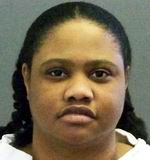 Erica Sheppard
Murderer · USA · 1993
Erica Sheppard was named as the defendant in a capital murder and robbery case.…
1 victim
Erica Sheppard
Murderer · USA · 1993
Erica Sheppard was named as the defendant in a capital murder and robbery case.…
1 victim
- Gender
- male
- Country
- USA
- Location
- Bronx County, New York, USA
- Date of birth
- 1971
- Age at first offence
- 22
- Characteristics
- crime spree, rape, drug dealer
- Victim profile
- Miguel Rivera, 22, Christopher Hernandez, 15, Edwin Santiago, 17, Julia Santana, 40, Maria Santana, 26, and Annette Medina, 17 Método de matar: Arma de fuego
- Method of murder
- —
- Date(s) of murder
- February 14, 1993
- Years active
- 1993
- Date of arrest
- 11 days after
- Status
-
Life imprisonment
Sentenced to 162 years to life in 1994
Case overview
Anthony Casellas was convicted in a New York case connected to the 1993 St. Valentine's Day massacre in which six people were shot execution-style in a Mott Haven apartment on Prospect Ave in the Bronx. He was later sentenced to 162 years to life in 1994.
Background
The police said the motive for the killings was revenge against Anthony Casellas after his wife had been beaten up last summer in a fight stemming from a long-running feud. Ten days later, a friend of the victims shot and killed Lourdes Casellas.
A Bronx jury later began deliberating on a civil lawsuit filed by families of five victims. The civil lawsuit sought $20 million in compensation for their loss and was brought against the landlord of a Mott Haven apartment building on Prospect Ave where six people were murdered execution-style.
The offence
On St. Valentine's eve in 1993, the police discovered the bodies of six individuals who had been shot to death. Four victims—Miguel Rivera (22), Christopher Hernandez (15), Edwin Santiago (17), and Annette Medina (17)—had been shot in the back of the head. Julia Santana (40) was shot in the eye. Maria Santana (26) was shot twice in the head while wearing a coat and holding her keys to the apartment. It was later learned that Maria Santana had been forced to open the apartment for the perpetrators.
Prosecutors described the killing as “a crime of unspeakable horror.”
During the trial period, Anthony Casellas was found guilty of murder and conspiracy in the deaths of three adults and three children whom the police said were lined up on the living room floor of a Mott Haven apartment and each shot through the head.
Investigation
A Bronx Supreme Court Justice imposed a gag order on attorneys until the verdict was delivered, after a Bronx cable TV news reporter tried to interview one of the jurors.
Witnesses who testified during the two-week civil trial said the lock at the front door of the building was “weak” and there was no guard on duty the day of the murders. The civil lawsuit arguments included that the murders could have been prevented had the landlord provided better security.
In the separate criminal proceedings, although some initial leads pointed to Anthony Casellas as the mastermind behind the Valentine's Day execution-style murders, the police said it was not until some ten days later—after Casellas’s wife was killed and his friend shot and wounded in the Bronx County Courthouse—that the police interviewed him.
The courthouse incident involved a court officer discharging a weapon during the incident, and the authorities treated the investigation as a shooting in which a police officer had used his or her weapon.
During the precinct interviews, defendant and every other witness to the shooting incident were carefully interviewed, and none were first given Miranda warnings.
While being interviewed about the courthouse shooting, Casellas was informed that his wife had died.
Arrest
No arrest event with a distinct date was stated in the provided material for Anthony Casellas in the cleaned case record.
Trial
Anthony Casellas (22) was convicted in a Bronx court in June 1994 in the murder of six people on Valentine’s Day 1993. The conviction included a finding of guilt for murder and conspiracy in the deaths of three adults and three children.
The material also described that four other defendants facing charges related to the killings were awaiting trial.
Civil lawsuit to the jury
In December 2002, a Bronx jury began deliberating whether the families of five victims should be compensated in the $20 million civil lawsuit against the landlord of a Mott Haven apartment building on Prospect Ave.
Attorney Thomas Nolan, representing Maria Flores (Hernandez’s mother), argued that: “The landlord had a legal obligation,” said attorney Thomas Nolan, representing Maria Flores, Hernandez's mother. “The landlord was required to have a lock to keep intruders out. There was no lock and there was no security guard . . . the killers just walked right in.”
Attorney Denise Dunleavey, representing Olga Santana (who lost her mother, Julia; her sister, Maria; and her brother, Edwin), said: “Responsibility doesn't stop with the bad guys in jail,” Dunleavey said. “The building is also responsible for these deaths.”
Defense attorneys Frank Randazzo and Devereaux Cannick presented evidence that building security was found satisfactory during an inspection months before the shooting. They said a new $3,000 security system had been installed, and argued it would not have prevented the murders. Cannick said: “If Auturo was there, it would have been seven deaths instead of six,” Cannick said. “Auturo could not have stopped it; they were going to do these murders come hell or high water.”
A convicted killer testified in the civil matter that Casellas and the other masked men would not have carried out the executions had the guard been on duty. Guard Auturo Rosa was described as being two hours late for work that night, and the civil witnesses testified about the front door lock being “weak” and about the absence of a guard on duty.
Sentencing
After trial, Anthony Casellas was sentenced to 162 years to life in 1994.
In the appellate judgment, the court described that Casellas was convicted after a jury trial of twelve counts of murder in the second degree (six counts of intentional murder [Penal Law ? 125.25 (1)] and six counts of felony murder [Penal Law ? 125.25 (3)]), and conspiracy in the second degree. The appellate decision stated that he was sentenced, as a second felony offender, to indeterminate terms of 25 years to life imprisonment for each count of intentional and felony murder, to run concurrently as to each victim, but consecutively with respect to the convictions pertaining to each of the other five victims, and all to run consecutively to an indeterminate term of 12 1/2 to 25 years for the conspiracy conviction, and the judgment was affirmed.
Appeals
The appellate decision was dated May 30, 1996. It was captioned: “THE PEOPLE OF THE STATE OF NEW YORK, RESPONDENT, v. ANTHONY CASELLAS, APPELLANT.”
The appellate decision included:
- Concur—Milonas, J. P., Wallach and Mazzarelli, JJ.
- Ross, J., Concurs in the result only.
The appellate decision affirmed the conviction and the sentence.
The appeal also addressed the denial of a motion to suppress statements and physical evidence. The appellate decision described that the central question for review was whether the hearing court erred in finding that defendant was not in custody for Miranda purposes when he made the first brief oral admission regarding the murder of Edwin Santiago to the detective who was interviewing him about the courthouse shooting.
The appellate decision stated that the hearing court found that a reasonable person in Casellas’s position would have felt free to leave before making the oral admission, and therefore he was not in custody. The hearing court found that courthouse shootouts were unusual, that the length and frequency of interviews were not indicative of custody, that the change in venue did not necessarily signal that the police no longer wished to inquire, and that Casellas was not handcuffed or physically restrained and was left unattended in an unlocked interview room while detectives conferred. The hearing court also found he was never told he could not leave at the conclusion of the interview about his wife’s murder.
The appellate decision stated that it examined factual findings reached by both the hearing court and the jury after trial, and concluded those findings were proper and should not be disturbed on appeal. It also stated that even if there was error as to the first statement, it was harmless error, and the defense had placed the statement before the jury when it elicited it during cross-examination of the detective.
Aftermath
Days after the murders, Casellas’s wife, Lourdes, was gunned down on the steps of the Bronx Supreme Court in retribution for the executions.
Ten days after the killings, a friend of the victims shot and killed Lourdes Casellas.
Based on Casellas’s statements, the police recovered physical evidence including a silencer and ammunition found hidden in a television set in a room where he had been staying.
The appellate decision recorded that the jury’s verdict implied the jurors found the defendant’s statements to have been voluntarily made, and that the court’s instructions on this issue were not challenged.
Other details
Four other convicted killers besides Anthony Casellas were sentenced in connection with the St. Valentine’s Day massacre:
- Luis Ramos, 52 years to life
- Eliot Lopez, 30 years to life
- Luis Romero, 15 to life
- Edgardo Rosado, 15 to life

Spotted an error, or have more information about this case?