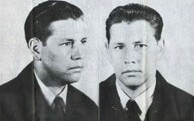
Leslie Irvin
Serial killer Richard Kuklinski
Serial killer · USA · 1949
Richard “Iceman” Kuklinski was sentenced to life in prison in 1988. He died in…
100 victims
Richard Kuklinski
Serial killer · USA · 1949
Richard “Iceman” Kuklinski was sentenced to life in prison in 1988. He died in…
100 victims
 Ottis Toole
Serial killer · USA · 1961
Ottis Elwood Toole (sometimes misspelled as “Otis”) was an American serial kill…
65 victims
Ottis Toole
Serial killer · USA · 1961
Ottis Elwood Toole (sometimes misspelled as “Otis”) was an American serial kill…
65 victims
 Juan Vallejo Corona
Serial killer · USA · 1960
Juan Vallejo Corona was a native of Mexico, born in 1934. He moved to Yuba City…
25 victims
Juan Vallejo Corona
Serial killer · USA · 1960
Juan Vallejo Corona was a native of Mexico, born in 1934. He moved to Yuba City…
25 victims
 Raymond Fernandez
Serial killer · USA · 1947
Raymond Martinez Fernandez was executed by electrocution at Sing Sing prison in…
17 victims
Raymond Fernandez
Serial killer · USA · 1947
Raymond Martinez Fernandez was executed by electrocution at Sing Sing prison in…
17 victims
 Carroll Edward Cole
Serial killer · USA · 1948
Carroll Edward Cole, also known as “Eddie,” was born in Sioux City, Iowa on May…
15 victims
Carroll Edward Cole
Serial killer · USA · 1948
Carroll Edward Cole, also known as “Eddie,” was born in Sioux City, Iowa on May…
15 victims
 Johannes Kana
Murderer · South Africa · 2013
Johannes Kana was convicted for the rape and murder of Anene Booysen. Anene Boo…
1 victim
Johannes Kana
Murderer · South Africa · 2013
Johannes Kana was convicted for the rape and murder of Anene Booysen. Anene Boo…
1 victim
 Mack Oran Hill
Murderer · USA · 1978
Mack Oran Hill was executed by lethal injection in Texas on August 8, 2001. Hil…
2 victims
Mack Oran Hill
Murderer · USA · 1978
Mack Oran Hill was executed by lethal injection in Texas on August 8, 2001. Hil…
2 victims
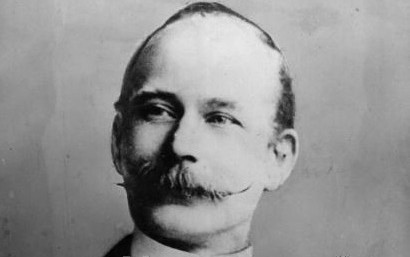 Frederick Seddon
Murderer · United Kingdom · 1911
Frederick Henry Seddon (sometimes called Sedden; 1870 – 18 April 1912) was a Br…
1 victim
Frederick Seddon
Murderer · United Kingdom · 1911
Frederick Henry Seddon (sometimes called Sedden; 1870 – 18 April 1912) was a Br…
1 victim
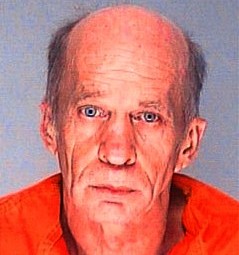 John Couey
Murderer · USA · 2005
Name: John Evander Couey · Lifespan: September 19, 1958 – September 30, 2009 ·…
1 victim
John Couey
Murderer · USA · 2005
Name: John Evander Couey · Lifespan: September 19, 1958 – September 30, 2009 ·…
1 victim
 Kenneth Dunn
Murderer · USA · 1980
Kenneth Dwayne Dunn, a Texas death row inmate, was executed by lethal injection…
1 victim
Kenneth Dunn
Murderer · USA · 1980
Kenneth Dwayne Dunn, a Texas death row inmate, was executed by lethal injection…
1 victim
 James William Hamblen
Murderer · USA · 1984
James William Hamblen was a state prisoner in Florida who was condemned to die.…
2 victims
James William Hamblen
Murderer · USA · 1984
James William Hamblen was a state prisoner in Florida who was condemned to die.…
2 victims
- Gender
- male
- Country
- USA
- Location
- Indiana/Kentucky, USA
- Date of birth
- 1924
- Age at first offence
- 30
- Characteristics
- robbery, murder for hire
- Victim profile
- Mary Holland, 33 / Wesley Kerr, 29 / Wilhelmina Sailer, 47 / Farmer Goebel Duncan, their son, Raymond, and daughter-in-law, Elizabeth
- Method of murder
- Shooting
- Date(s) of murder
- December 2, 1954 - March 28, 1955
- Years active
- 1954–1955
- Date of arrest
- April 8, 1955
- Status
-
Died in custody
Sentenced to death; commuted to life; died in prison on November 9, 1983
Case information
Name: Leslie Irvin (also known as “Mad Dog” Irvin) Lifespan: 1924–1983 Status: Sentenced to death; commuted to life; died in prison on November 9, 1983
The offence
Leslie “Mad Dog” Irvin was an American serial killer whose killing spree in the early 1950s terrorized residents of southwestern Indiana. Six murders were committed in the vicinity of Evansville, Indiana: two in December 1954 and four in March 1955. Police later attributed those murders to him as a pattern of execution-style killings committed with “single shots through their heads,” with multiple victims found with their bodies arranged in different locations.
Before the rampage ran its course, Irvin shot and killed six people and left an intended seventh victim blind and crippled.
Murder of Whitney Wesley Kerr
Irvin was indicted for the murder of Whitney Wesley Kerr, allegedly committed in Vanderburgh County on December 23, 1954. The trial record described that Kerr, 29, was found shot to death in a U.S. 41 North gasoline station where he worked alone during the early morning hours. The body was in the restroom with hands tied behind his back and a single bullet wound in his head. Police found a spent slug believed to be from a .38-caliber revolver. The station’s cash register was open and empty; the night’s receipts showed $68.11. Police surmised that the same gunman had killed Mrs. Mary Holland.
A wallet found on Irvin was believed to be that of slain victim Wesley Kerr and contained $18.
Murder of Mrs. Mary Holland
Irvin’s first victim was identified as Mrs. Mary Holland, a 33-year-old expectant mother. She and her husband, Charles “Doc” Holland, owned and operated a liquor store on Bellemeade Avenue. Mrs. Holland was found dead in the store’s restroom the night of December 2, 1954, from a single shot in the head. Her hands were tied behind her back.
Murder of Mrs. Wilhelmina Sailer
On March 21, 1955, Wilhelmina Sailer, a 47-year-old housewife, was shot to death in her Posey County farm home near Mount Vernon, Indiana. Her 7-year-old son, John Ray, discovered her when he returned by bus from school shortly after noon. Her husband arrived a few minutes later. Mrs. Sailer’s hands were bound behind her, and she died from a single shot to the head.
Murder of the Goebel Duncan family
On March 28, 1955, Goebel Duncan, a Henderson County, Kentucky farmer, and two other family members were killed, with each death described as a single shot through the head. His wife, Mamie Duncan, survived a similar wound but was blinded and in critical condition. Mamie awoke two days later; the trauma had erased her memory of the incident.
The source described that the Duncan’s 2-year-old granddaughter Shirley Faye was spared. Irvin later told police: “I like kids.”
Irvin killed Duncan’s son, Raymond, and also killed a daughter-in-law, Elizabeth, who was married to another son. The bodies of the men were found in a muddy swamp four miles away, while the women were discovered in adjoining rooms of the farmhouse.
A neighbor of the Duncans, John Ralph Gaines, told detectives he noticed Raymond and Goebel Duncan standing in Raymond’s front yard talking with “one or two men” around 10 a.m. on March 28, 1955, the day of their deaths. He said he saw nothing suspicious and drove on. Gaines said he noticed a dark vehicle with a battered left side and an Indiana license plate parked nearby.
The multiple murders of the Goebel Duncan family in Henderson County, Kentucky, provided police with their first solid clues in their efforts to discover Irvin’s identity. A heart-breaking scene at the house was found by sheriff’s deputies and Gleaner reporter Cecil Williams, who found Elizabeth Duncan’s two-year-old daughter sitting on the bed with her mother’s corpse, and the child was quoted saying: “Mommy is sleeping.”
The Gleaner account also described that the family had been headed to the hospital to visit Raymond’s wife, Mary Alice, who had given birth only 15 hours earlier. The victims were described as Goebel and Mamie Duncan, plus Raymond and daughter-in-law Elizabeth. All were shot in the head. The last three were the Duncan family at Geneva.
Investigation
Police linked the killings through shared methods and physical evidence. For the Kerr killing, police found a spent slug believed to be from a .38-caliber revolver. For the Holland and Sailer killings, both victims were found with hands tied behind their backs and shot in the head. For the Duncan killings, the bodies were described as shot through their heads and found in different locations, with the women in the farmhouse and the men later found in a muddy swamp.
Rewards for the capture of the criminal began cropping up, with local newspapers offering $1,000.
Police efforts received leads from multiple individuals around the time of the Duncan killings:
- Three Sturgis, Kentucky residents—Mrs. Dan Griffin, her grandson Thomas Griffin, and Mrs. Virginia Watson—were on their way to Evansville and were involved in a minor accident around 9:40 a.m. on the day of the Duncan deaths. They said that they gave the driver $5 for repairs and drove on. Mrs. Griffin said the man turned around and followed them for about a mile and a half before turning off into the Duncan driveway.
- T. Walters of Corydon, Kentucky told police officers he passed the Duncan men near the spot on the Trigg-Turner Road where their bodies were found, around 10 a.m.
- John Ralph Gaines reported the Indiana license plate and the dark vehicle with a battered left side.
Apprehension and arrest leads
The arrest was connected to a group of youths and the identification of an Indiana license plate:
- On March 30, two days after the Duncan murders, eight youths in the Vienna Road area decided to go out and look over the drilling of a new oil well. As they packed into the car of Bill Williams, 18, they noticed another car parked near some woods about 150 yards away. The youths joked about it “being the murderer,” one said later. They pulled near the car and one leaned out a window and shouted: “Hey, we’re investigators.” The black vehicle sped away. One youth jotted down the license number, EL 351, from the Indiana plate.
- On April 1, 1955, two youngsters were reading a story in an area paper mentioning a vehicle similar to the one the group had seen in northwestern Vanderburgh County. Allen Peerman brought the clipping home and showed it to his mother. She contacted the sheriff’s office promptly. A check of the license plate number turned up under the name of Leslie Irvin.
Prior burglaries and alleged robbery-for-motive context
On April 15, police said Irvin confessed to 24 burglaries in four Southern Indiana counties, stealing guns believed to have been used in area killings. Irvin was charged with four murders and police stated he admitted to two more.
The motion for a change of venue described that newspapers reported that Irvin offered to plead guilty if promised a 99-year sentence, and that the prosecutor sought the death penalty, and that Irvin had confessed to 24 burglaries; the modus operandi of those robberies was compared to that of the murders.
Arrest and detention
Irvin was arrested on April 8 at the F.B. Culley power plant near Yankeetown in Warrick County. He was working there as a steam-pipe insulator, earning $1.90 per hour. The source stated that Irvin offered no resistance.
Police questioned Irvin, and it was stated that he did not reveal his identity until Monday, though the news media believed a suspect had been apprehended.
Irvin was confined in an escape-proof jail in Princeton, Indiana, 25 miles north of Evansville, awaiting transfer to the Indiana State Prison in Michigan City.
Escape and flight
On January 21, Irvin shocked captors and the public by making his way through three locked doors and disappearing into a snowy night. His escape and subsequent activities dominated the newspaper front page for days.
Irvin later told Courier reporter Joe Aaron, who covered his crime spree and trial, that he used a trial-and-error method of making 50 keys to finally find two that would open his way to freedom. Irvin said the keys were made from paperback novel covers, tin foil and glue.
Police posted 24-hour guards around the homes of Prosecutor Paul Wever, his assistant Howard Sandusky, as well as Evansville Chief of Detectives Dan Hudson and Irvin’s mother Alice.
It was stated that Irvin was making his way to Las Vegas, Los Angeles, and finally San Francisco, when the chase ended on February 9.
Arrest in San Francisco
On February 9, 1956, Irvin was arrested in a downtown San Francisco pawnshop while wearing a snappy sport shirt and new suit. Two officers who made the arrest said they had no idea who he was.
At the time of arrest, it was reported that Irvin told San Francisco police: “I’m Leslie Irvin and I’m wanted in Indiana for six murders. I’ve been convicted of one and I’m not guilty of any.”
On February 11, Gibson County Sheriff Earl Hollen and Indiana State Police Lt. Willard Walls and Detective Sgt. W.W. Cornett arrived in San Francisco to return Irvin to Indiana, unaware Irvin planned to fight extradition.
Irvin was arraigned in San Francisco Municipal Court on a fugitive charge and was awarded a continuance until the following Tuesday, giving him time to talk to attorneys Ted Lockyear Jr. and James Lopp Sr.
Two attempts to fly Irvin to Indiana were aborted when newsmen and women discovered the flight times and swarmed the San Francisco airport to cover his departure. Plans for an air return were canceled, and Irvin was scheduled to leave by train to Chicago on February 15. The source said Joe Aaron made the 2,000-mile ride home with Irvin and that Irvin received an ego boost when learning newsmen had nicknamed the conveyance the “Mad Dog Train.”
Irvin was handcuffed with Hollen holding a chain leash attached to the cuffs, even during meals. After a three-hour layover in Ogden, Utah, the entourage boarded the City of Los Angeles for their final leg to Chicago, where a three-car police convoy awaited him and quickly whisked him away to the Indiana State Prison in Michigan City.
Trial
Venue changes and jury selection
After indictment in Vanderburgh County, counsel sought a change of venue, which was granted but to adjoining Gibson County.
It was alleged that widespread and inflammatory publicity also prejudiced Gibson County. On October 29, 1955, counsel sought another change of venue from Gibson County to a county sufficiently removed from the Evansville locality to permit a fair trial. The motion was denied, apparently because the Indiana statute allowed only a single change of venue. During the course of voir dire examination, which lasted some four weeks, Irvin filed two more motions for a change of venue and eight motions for continuances; all were denied.
At the outset, the U.S. Supreme Court summary described an Indiana statute providing that only one change of venue shall be granted “from the county” wherein the offense was committed, and described that the state courts upheld the statute’s validity. The Supreme Court decision treated failure to grant a second venue as a due process issue in the circumstances.
The source described voir dire as requiring three weeks with more than 355 prospects being interviewed. Court reporter Lucille Ford estimated she filled 33 stenographic pads with 247,000 words in shorthand, including mumbles and nods of heads.
On December 7, an all-male jury of 12 was selected.
The trial court handled these aspects:
- The state opened the trial announcing they would seek the death penalty.
- On December 20, 1955, the jury after 90 minutes of deliberations decided Irvin was guilty and recommended execution in the electric chair; Irvin’s date with death was scheduled for June 12.
People involved in the prosecution and defense
The state case was handled by Vanderburgh County Prosecutor Paul Wever, assisted by Howard Sandusky and Gibson County Prosecutor Loren McGregor.
Defense counsel included:
- Public defender Robert Hayes, who sought a change of venue on account of local prejudice.
- Ted Lockyear Jr., appointed by Judge A. Dale Eby on May 18, and later excused in the second trial.
- James D. Lopp Sr., appointed a day after Lockyear Jr.
- In the second trial after the Supreme Court decision, Marion Rice agreed to defend Irvin, assisted by his law partner Jack VanStone, and George Taylor of Sullivan.
Judges identified in the proceedings:
- Vanderburgh Circuit Judge Ollie C. Reeves granted a change of venue on May 10.
- Gibson Circuit Judge A. Dale Eby overruled a motion to move the case back to Evansville on May 11.
- Sullivan Circuit Judge Joe Lowdermilk presided over the second trial.
First conviction and sentencing
After proceedings resumed on November 15 for jury selection, and after the jury selection and trial, the source stated that on December 20, 1955 the jury found Irvin guilty and recommended that he be executed in the electric chair. It also stated that after the trial, the electric chair was recommended for Irvin.
Irvin was scheduled for execution on June 12.
A statement attributed to Gibson County prosecuting attorney Loren McGregor in his closing statement described Irvin as a “mad dog killer.”
The source stated: “Leslie Irvin, a 30-year-old burglar-murderer branded a ‘mad dog killer’ by Gibson county prosecuting attorney Loren McGregor in his closing statement.”
Appeals
U.S. Supreme Court proceedings (pretrial publicity)
The U.S. Supreme Court case was identified as Irvin v. Dowd, 366 U.S. 717. The procedural dates included:
- Argued November 9, 1960
- Decided June 5, 1961
The Supreme Court accepted the case and heard oral arguments on November 9, 1960.
The U.S. Supreme Court issued an opinion on June 5, 1961 and ordered a new trial. The source described that it was the first time the high court had overturned a conviction because of pretrial publicity, and that it altered how newspapers, radio and television covered criminal cases, and how authorities released information.
The Supreme Court Justice Tom Clark wrote in the opinion:
"With his life at stake, it is not requiring too much that petitioner (Irvin) be tried in an atmosphere undisturbed by so huge a wave of public passion and by a jury in which two-thirds of the members admit, before hearing any testimony, to possessing a belief in his guilt."
The Supreme Court syllabus described the holding that Irvin was not accorded a fair and impartial trial and that the conviction was void:
- It stated that the petitioner was not accorded a fair and impartial trial to which he was entitled under the Due Process Clause of the Fourteenth Amendment, that his conviction was void, that the judgment denying habeas corpus was vacated, and that the case was remanded for further proceedings to afford the state a reasonable time to retry petitioner.
- It described that the duty could include granting a second change of venue to obtain an impartial jury even if a state statute purported to allow only one change of venue.
The source also reproduced a concurring opinion by MR. JUSTICE FRANKFURTER.
Frankfurter’s concurring opinion included these statements:
“Of course, I agree with the Court's opinion. But this is, unfortunately, not an isolated case that happened in Evansville, Indiana, nor an atypical miscarriage of justice due to anticipatory trial by newspapers, instead of trial in court before a jury.”
Frankfurter continued:
“More than one student of society has expressed the view that not the least significant test of the quality of a civilization is its treatment of those charged with crime, particularly with offenses which arouse the passions of a community.”
Frankfurter wrote further:
“One of the rightful boasts of Western civilization is that the State has the burden of establishing guilt solely on the basis of evidence produced in court and under circumstances assuring an accused all the safeguards of a fair procedure.”
He also stated:
“These rudimentary conditions for determining guilt are inevitably wanting if the jury which is to sit in judgment on a fellow human being comes to its task with its mind ineradicably poisoned against him.”
He added:
“How can fallible men and women reach a disinterested verdict based exclusively on what they heard in court when, before they entered the jury box, their minds were saturated by press and radio for months preceding by matter designed to establish the guilt of the accused.”
He continued:
“A conviction so secured obviously constitutes a denial of due process of law in its most rudimentary conception.”
Finally he wrote:
“This Court has not yet decided that the fair administration of criminal justice must be subordinated to another safeguard of our constitutional system -- freedom of the press, properly conceived.”
and:
“The Court has not yet decided that, while convictions must be reversed and miscarriages of justice result because the minds of jurors or potential jurors were poisoned, the poisoner is constitutionally protected in plying his trade.”
Procedural details within the U.S. Supreme Court case
The Supreme Court case described the procedural history as including:
- The Indiana Supreme Court affirmed the conviction in Irvin v. State, 236 Ind. 384, 139 N.E.2d 898.
- The Supreme Court had denied direct review by certiorari “without prejudice to filing for federal habeas corpus after exhausting state remedies.”
- The U.S. Supreme Court described habeas corpus proceedings under 28 U.S.C. § 2241.
- The U.S. District Court dismissed on the ground that Irvin failed to exhaust state remedies.
- The Court of Appeals for the Seventh Circuit affirmed the dismissal.
- The U.S. Supreme Court then granted certiorari, remanded for merits or reconsideration, and later held that the conviction was not accorded due process and vacated and remanded.
The Supreme Court syllabus also stated: “271 F.2d 552, judgment vacated and cause remanded.”
Stays and extensions of execution before the new trial
Before the U.S. Supreme Court decision, the source described that attorneys took the case through courts, and in mid-August 1956 the Indiana Supreme Court granted Leslie Irvin a stay of execution until December 1, 1956. It also described that Irvin’s execution was extended to March 29, 1957, and then to July 9, 1957.
On July 9, 1957, the U.S. Circuit Court of Appeals granted an indefinite stay of execution five hours before his scheduled trip to the death chamber.
Second trial and outcome
After the Supreme Court ordered a new trial, a second trial was conducted in Sullivan, Indiana. In the second trial, Lockyear and Lopp were excused from further duties, and Marion Rice agreed to defend Irvin, assisted by Jack VanStone and George Taylor.
The state case in the second trial was handled by Vanderburgh County Prosecutor O.H. Roberts Jr.; Deputy Attorney General Richard Givan (who later became chief justice of the Indiana Supreme Court); and Sullivan County Prosecutor Paul R. Whitlock.
The second trial used a more subdued atmosphere. On June 13, 1962, after deliberating for five hours and 15 minutes, the seven-man, five-woman jury convicted Irvin of first-degree murder in the slaying of Wesley Kerr.
Irvin received a life sentence, which he served as a model prisoner in the Indiana State Prison in Michigan City. During his time in prison he became a talented leather craftsman, fashioning billfolds, purses, belts and other items sold in the prison store. He remained an avid sports fan until his death.
Sentencing
At the first trial, the jury recommended execution in the electric chair and the electric chair was recommended for Irvin. Irvin’s date with death was scheduled for June 12.
After the Supreme Court ordered a new trial, the second trial resulted in a life sentence for first-degree murder in the slaying of Wesley Kerr.
Aftermath
Irvin remained confined in the Indiana State Prison in Michigan City and died on November 9, 1983 at the age of 59 from lung cancer.
A note in the source included that the second triple homicide in Henderson County occurred March 28, 1955 when Irvin murdered three members of the Goebel Duncan family near Geneva. It stated that Mamie Duncan survived being shot through the temple but lost her sight along with all memory of the incident. It said Irvin shot and killed six people in four separate incidents between Dec. 2, 1954, and March 28, 1955, and that the last three were the Duncan family at Geneva. It said Irvin was captured 11 days later near Evansville and confessed to the killings, as well as three murders in Indiana, but was never tried there.
Spotted an error, or have more information about this case?