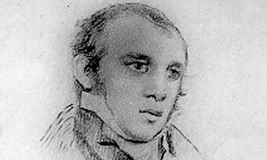
Mark Jefferies
Murderer Alexander Pearce
Murderer · Australia · 1822
1819 — Alexander Pearce was sentenced at Armagh in 1819 to penal transportation…
6 victims
Alexander Pearce
Murderer · Australia · 1822
1819 — Alexander Pearce was sentenced at Armagh in 1819 to penal transportation…
6 victims
 Christopher Flannery
Murderer · Australia · 1979
Christopher Dale Flannery (1949 - missing and believed murdered ca. May 9, 1985…
12 victims
Christopher Flannery
Murderer · Australia · 1979
Christopher Dale Flannery (1949 - missing and believed murdered ca. May 9, 1985…
12 victims
 John Makin
Murderer · Australia · 1892
John Makin (14 February 1845 – 15 August 1893) was an Australian baby farmer wh…
12 victims
John Makin
Murderer · Australia · 1892
John Makin (14 February 1845 – 15 August 1893) was an Australian baby farmer wh…
12 victims
 Ned Kelly
Murderer · Australia · 1878
Edward “Ned” Kelly (June 1854 or 1855 – 11 November 1880) was an Irish Australi…
6 victims
Ned Kelly
Murderer · Australia · 1878
Edward “Ned” Kelly (June 1854 or 1855 – 11 November 1880) was an Irish Australi…
6 victims
 Bevan Von Einem
Murderer · Australia · 1979
Bevan Spencer von Einem (born c.1945), also known as Bevan von Einem (with the…
5 victims
Bevan Von Einem
Murderer · Australia · 1979
Bevan Spencer von Einem (born c.1945), also known as Bevan von Einem (with the…
5 victims
 Joseph Schwab
Murderer · Australia · 1987
Joseph Schwab was a German man who murdered five tourists in the Northern Terri…
5 victims
Joseph Schwab
Murderer · Australia · 1987
Joseph Schwab was a German man who murdered five tourists in the Northern Terri…
5 victims
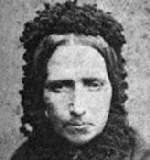 Maria Swanenburg
Serial killer · Netherlands · 1880
Maria Catherina Swanenburg (Leiden 9 September 1839 - Gorinchem 11 April 1915)…
27 victims
Maria Swanenburg
Serial killer · Netherlands · 1880
Maria Catherina Swanenburg (Leiden 9 September 1839 - Gorinchem 11 April 1915)…
27 victims
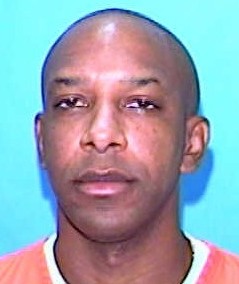 Anthony Mungin
Murderer · USA · 1990
Name: Anthony Mungin · Date of birth: 07/22/66 · Case citation: Florida Supreme…
1 victim
Anthony Mungin
Murderer · USA · 1990
Name: Anthony Mungin · Date of birth: 07/22/66 · Case citation: Florida Supreme…
1 victim
 David Stephen Middleton
Murderer · USA · 1994
David Stephen Middleton was a one-time Miami police officer who was sentenced t…
2 victims
David Stephen Middleton
Murderer · USA · 1994
David Stephen Middleton was a one-time Miami police officer who was sentenced t…
2 victims
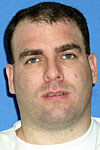 Larry Swearingen
Murderer · USA · 1998
Larry Ray Swearingen was convicted of capital murder for murdering Melissa Trot…
1 victim
Larry Swearingen
Murderer · USA · 1998
Larry Ray Swearingen was convicted of capital murder for murdering Melissa Trot…
1 victim
 John Michael Lamb
Murderer · USA · 1982
John Michael Lamb was convicted of capital murder in Texas and sentenced to dea…
1 victim
John Michael Lamb
Murderer · USA · 1982
John Michael Lamb was convicted of capital murder in Texas and sentenced to dea…
1 victim
- Gender
- male
- Country
- Australia
- Location
- Tasmania, Australia
- Date of birth
- ???
- Characteristics
- fugitive, escape, cannibal, rapist, drunken rage, alcohol, torture
- Victim profile
- Four male adults and a five-month-old baby
- Method of murder
- ???
- Date(s) of murder
- 1820's
- Years active
- 1820
- Date of arrest
- 1825
- Status
-
Executed
Executed by hanging at the Hobart Town Gaol on May 4, 1826
Overview
Mark Jefferies was an escaped convict who was described as a rapist and a cannibal in Van Diemen’s Land (now Tasmania, Australia). He was associated with bushranging activities in 1826 and was captured in 1825 without a fight. He was executed by hanging at the Hobart Town Gaol on May 4, 1826.
Background
Mark Jefferies was transported as a convict from Scotland. After arriving in Van Diemen’s Land, he was described as having trained in acts of cruelty and taking to the bush.
Jefferies was among six convicts known to have successfully escaped from Macquarie Harbour by land. During his escape, he took some accomplices with him, and at least one of those accomplices was later eaten.
Jefferies was described as a notorious bushranger, serial killer and cannibal in the early 19th century in Van Diemen’s Land (now Tasmania, Australia). He was ranked alongside Alexander Pierce and Mad Dog Morgan as one of the most infamous criminals in Australia’s colonial history.
The offence
Jefferies was known to have murdered and eaten at least four adults during a “bolt.” He kidnapped the widow of one of his victims.
Jefferies killed the five-month-old baby of the widow by bashing its head against a tree. The baby’s remains were later discovered about a week afterwards in a decayed state and mangled by carnivorous animals in the woods.
A report described an assault at the residence of a respectable settler named Tibbs about 5 miles from Launceston. The report stated that Mark Jefferies and two accomplices proceeded to the residence of Mr. Tibbs. They arrived about noon. Mr. Tibbs and his wife, a young and respectable woman married about two years, with their child and a servant of a neighbouring settler named Basham, were in the house. The ruffians attempted to bind them, but upon resistance shot them both. The man fell dead; Mr. Tibbs was dangerously wounded but escaped with his life and contrived to give an alarm.
The report also stated that the “unhappy female and her child were gone.” About 3 o’clock on Sunday, she returned to her forlorn residence in a state of distraction. The report stated that “The dæmons had murdered her infant.” It further stated that it could not relate the rest.
Investigation
Jefferies was captured in 1825 without a fight. He willingly told the Corps all he knew of the locations, movements and habits of other bushrangers.
Arrest
Mark Jefferies was captured in 1825 without a fight.
Trial
Conviction for stealing a gun and meat; and postponement
On Saturday, Jeffries the murderer, Perry, and Hopkins were found guilty of stealing a gun, meat, and other articles from the dwelling-house of Joseph Railton near Launceston. They had been brought up on the Thursday previous, but owing to the absence of a witness on the part of Hopkins, the trial was postponed.
Trial and guilty findings for the murder of Mr. Tibbs’s child
Jefferies and Perry were afterwards arraigned for the murder of Mr. Tibbs’s child, an infant only five months old. When Mrs. Tibbs came into court, her eye glanced on the “insatiate murderers of her babe,” and she was said to have been unable to stand. The report described her agitation and stated that the recital of the “dreadful journey which the monster had compelled her to take with him in the woods” added to her suffering.
The report stated that it was necessary for her to look at the prisoners to prove their persons. It described her sudden withdrawal of her eyes and the tears that accompanied the effort, presenting it as an instance of detestation.
The report stated that the child was proved to have been taken away from the arms of the mother, and killed by Jefferies and Russel. It stated that the remains were discovered about a week afterwards in a decayed state and mangled by carnivorous animals in the woods.
The report stated that when Mrs. Tibbs asked Jefferies, who called himself Captain, and was dressed in “a long black coat, red waistcoat, and kangaroo skin cap,” to point out the place where she might find the body, he said:
"it was no odds it had not suffered a moment's pain in leaving the world,"
The report stated that both Jefferies and Russel, who was afterwards shot and partly eaten by “the monster,” expressed themselves as regarding the life of a child as nothing. Both Jefferies and Perry were found guilty, and the trial lasted till 11 at night.
Trials for other defendants during the same period
On Tuesday morning, the bushrangers Brady, Bryant, Tilley, McKenney, Brown, Gregory, and Hodgetts were put upon trial for making an assault on William Andrews, a private of the 40th, at Bagdad on the 26th December last, and stealing his gun. The jury returned a verdict of guilty against Brady, Bryant, Gregory, Tilley, and Brown, and acquitted McKenney and Hodgetts, stating there was no evidence to prove that they were present at the time.
Brady, Bryant, Tilley, and Goodwin were then tried for having committed the crimes of felony and arson at Mr. Lawrence’s, on the Lake River, on the 26th February. Brady and Bryant pleaded guilty to the charge; the former declared that he should plead guilty to every other information that might be filed against him.
On Thursday, Brady and Bryant pleaded guilty to the murder of Thomas Kenton, with malice aforethought, and at the instigation of the devil, on the 5th ultimo. The same two also pleaded guilty of stealing four horses from Mr. Lawrence, in which charge Tilley and Goodwin were included, and upon trial, found guilty.
Jefferies and Perry were then tried for the murder of Magnus Bakie or Baker, the constable from George Town, who was deliberately shot through the head by Jefferies while travelling through the woods on the 11th of January last. The report stated that the circumstances were exactly as stated in a journal of that date.
The report also stated that in gaol, most of the men convicted of robbery and murder continued with hardened and untouched consciences, apparently insensible of their approaching fate. It stated that Jefferies was said to have been brought at last to a sense of his unhappy state, while Brady, Bryant, McKenney, and Perry excited both disgust and compassion due to insensibility. It further stated that various criminals now convicted in gaol would be brought up to receive the sentence of the law from His Honor the Chief Justice this day.
Sentencing
Sentence of death for multiple offenders
A report stated that the late bushrangers and others received sentence of death. It listed Matthew Brady, Patrick Bryant, James Goodwin, James McKenny, John Gregrory, William Tilly, William Brown, and Samuel Hodgetts (stated as the residue of the gang of bush-rangers, of which Dunne only remained at large), Thomas Jeffries, John Perry, and James Hopkins, and John Thompson for the murder of Margaret Smith in the watch-house. It stated that Chief Justice Pedder addressed the unhappy men.
The report stated that Chief Justice Pedder told them the law had awarded the punishment of death to the crimes of the least magnitude among them, and that the greatest were attended with circumstances of such atrocity that he should only shock the feelings of the auditory by repeating them.
The report stated that Pedder passed the “awful sentence of death upon the whole,” and that the judge himself was most seriously affected during the course of the sentencing.
Execution
Jefferies’s execution was described as occurring after the death warrant arrived on Tuesday. It stated that the death warrant ordered execution as follows: Jeffries, Perry, Thompson, Brady, and Bryant yesterday; and this morning the whole of the remainder. It described the ministers of religion being with the unhappy men at an early hour and rendering them consolation.
The report stated that at a few minutes after eight o’clock the sheriff, D. Fereday, Esq., attended by the usual cortege, arrived. It stated that the criminals were brought out into the lodge to undergo the usual preparations. Mr. Bedford led out Jeffries first. The report stated that Jefferies appeared firm and composed. It stated that while the executioner pinioned his arms, Mr. Bedford exhorted him to let his repentance be sincere and from his heart so that he might trust safely to the Divine mercy for forgiveness.
The report stated that Jefferies prayed fervently and seemed really penitent. It then described Perry and Thompson as being attended similarly.
When the executioner adjusted the ropes, the report stated that the men retired to a bench where they knelt down in prayer while the same awful ceremony was undergone by Brady and Bryant. It stated that Brady and Bryant were attended by Rev. Mr. Conolly.
The report described the procession beginning, with Mr. Bedford reading aloud a scripture passage:
"whosoever sheddeth man's blood, by man also shall his blood be shed."
It stated that Jefferies first ascended the fatal scaffold and was firm and composed, and that Mr. Bedford occupied his attention with devotional consolation while the executioner affixed the rope. It stated that during the interval Messrs. Conolly and Carvosso administered consolation to the unhappy men at the foot of the ladder.
After all had ascended and preparations were concluded, the report stated that Mr. Bedford addressed the people outside the gaol nearly as follows:
"The unhappy man, Jeffries, now before you, on the verge of eternity, desires me to state, that he attributes all the crimes which he has committed, and which have brought him to his present awful state, to the abhorrent vice of drunkenness. He acknowledges the whole of the crimes with which he has been charged, and he implores of you all to take warning by him, and to avoid the commission of the sin of drunkenness, which infallibly leads on to all other crimes."
The report stated that during this, Brady and the rest preserved the composed deportment they had exhibited from the first, wholly without levity, but firm and resigned. It stated that when Mr. Bedford commenced reading certain portions of the funeral service, and when he came to a particular passage, “the drop fell,” and “this world closed upon the wretched men for ever!”
Outcome
Mark Jefferies was executed by hanging at the Hobart Town Gaol on May 4, 1826. The report also described other offenders who underwent the awful sentence passed upon them that morning, including James Goodwin, James McKenney, John Gregory, William Tilley, William Brown, and Samuel Hodgetts.
Aftermath and associated details
The report stated that throughout the week, the Rev. Messrs. Bedford, Conolly, and Carvosso had been unremittingly attentive in endeavouring to bring the criminals to a due sense of their awful situation. It described Jeffries as penitent and fully sensible of his approaching fate.
The report stated that on the return of the men to the gaol, Tilly offered to shake hands with Brady, who refused with much contempt. It also stated that McKenny refused to speak to him, because of their supposing that Jefferies had given information. It described Brady, McKenny, and Bryant as Roman Catholics, and that they were conveyed to the cell adjoining the debtor’s side, which they had hitherto occupied. It described the two former as serious though cheerful, and the remainder (except Perry, who was alone) as confined in one cell.
The report stated that Jefferies became penitent and fully sensible of his approaching fate and that Rev. clericmen were unremitting in their assiduities, by which the unhappy men were brought to a state of sincere penitence, trusting to the Divine mercy for forgiveness.
Other details
Jefferies was described as having been expelled from Matthew Brady’s gang for molesting women and being “a de-humanised monster” for a brief period.
A report described his prison behaviour: it stated that most men convicted of robbery and murder in gaol continued with hardened and untouched consciences, apparently insensible of their approaching fate, and said Jefferies was said to have been brought at last to a sense of his unhappy state.
The legal context included references to “R. v. Jeffries and others” and to decisions of the Nineteenth Century Tasmanian Superior Courts.
The narrative also included the following names and roles as part of the events described:
- Mr. Barnard (his hut was robbed)
- Tibbs (settler whose residence was attacked)
- Basham (servant of a neighbouring settler)
- William Andrews (private of the 40th, assaulted)
- Joseph Railton (dwelling-house owner)
- Magnus Bakie or Baker (constable from George Town, shot through the head)
- Matthew Brady (bushranger, associated gang leader)
- Patrick Bryant, James Goodwin, James McKenny, John Gregrory [sic], William Tilly, William Brown, Samuel Hodgetts (other defendants listed)
- Perry, Hopkins, Russel (names appearing in the trial narrative)
- Thomas Kenton (murder guilty plea by Brady and Bryant)
- Margaret Smith (murder victim in the watch-house, for which John Thompson was named)
- Dunne (noted as remaining at large)
Spotted an error, or have more information about this case?