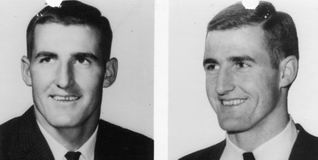
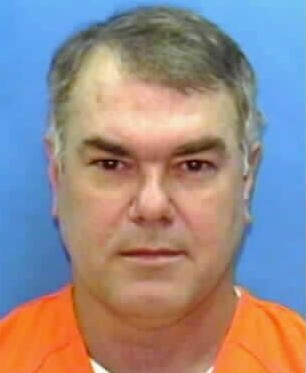
Duane Earl Pope
Murderer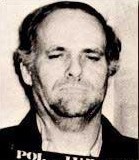 Ervil LeBaron
Murderer · USA · 1972
Ervil Morrell LeBaron (1925 to August 16, 1981) was the leader of a polygamous…
35 victims
Ervil LeBaron
Murderer · USA · 1972
Ervil Morrell LeBaron (1925 to August 16, 1981) was the leader of a polygamous…
35 victims
 Marvin Gray
Murderer · USA · 1975
Marvin Gray was convicted killer who claimed responsibility for 23 slayings and…
23 victims
Marvin Gray
Murderer · USA · 1975
Marvin Gray was convicted killer who claimed responsibility for 23 slayings and…
23 victims
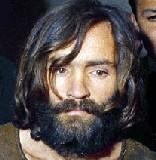 Charles Manson
Murderer · USA · 1969
Charles Milles Manson (born November 12, 1934) was an American criminal and mus…
9 victims
Charles Manson
Murderer · USA · 1969
Charles Milles Manson (born November 12, 1934) was an American criminal and mus…
9 victims
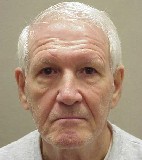 Robert Reldan
Murderer · USA · 1974
Name: Robert Reldan Robert Reldan was sentenced to life in prison on two counts…
8 victims
Robert Reldan
Murderer · USA · 1974
Name: Robert Reldan Robert Reldan was sentenced to life in prison on two counts…
8 victims
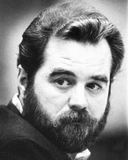 Dennis Duane Webb
Murderer · USA · 1973
Defendant: Dennis Duane Webb · Victims: John Rainwater and Lori Rainwater · Cou…
7 victims
Dennis Duane Webb
Murderer · USA · 1973
Defendant: Dennis Duane Webb · Victims: John Rainwater and Lori Rainwater · Cou…
7 victims
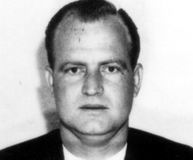 Gary Gene Tison
Murderer · USA · 1967
Gary Gene Tison was serving life sentences at the Arizona state prison. He had…
7 victims
Gary Gene Tison
Murderer · USA · 1967
Gary Gene Tison was serving life sentences at the Arizona state prison. He had…
7 victims
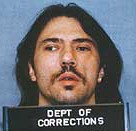 Eric Adam Schneider
Murderer · USA · 1985
Eric Adam Schneider was executed by lethal injection in Missouri on January 29,…
2 victims
Eric Adam Schneider
Murderer · USA · 1985
Eric Adam Schneider was executed by lethal injection in Missouri on January 29,…
2 victims
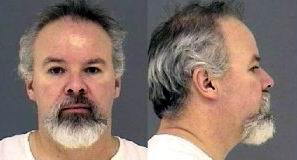 Scott Lee Kimball
Serial killer · USA · 2003
Scott Lee Kimball was a convicted serial killer. He pleaded guilty to two count…
4 victims
Scott Lee Kimball
Serial killer · USA · 2003
Scott Lee Kimball was a convicted serial killer. He pleaded guilty to two count…
4 victims
 James Duquette
Murderer · USA · 1980
James Duquette Jr. was convicted of murder and was also sentenced in connection…
2 victims
James Duquette
Murderer · USA · 1980
James Duquette Jr. was convicted of murder and was also sentenced in connection…
2 victims
 Alex Wiens
Murderer · Germany · 2009
Alex Wiens (also known as Alexander Weins) was tried in Dresden, Germany, for t…
1 victim
Alex Wiens
Murderer · Germany · 2009
Alex Wiens (also known as Alexander Weins) was tried in Dresden, Germany, for t…
1 victim
 J. W. Ledford
Murderer · USA · 1992
J. W. Ledford Jr. was convicted of the malice murder of Dr. Harry Buchanan John…
1 victim
J. W. Ledford
Murderer · USA · 1992
J. W. Ledford Jr. was convicted of the malice murder of Dr. Harry Buchanan John…
1 victim
 Sean Mercer
Homicide · United Kingdom · 2007
Sean Mercer was convicted of murdering Rhys Milford Jones. Mercer was described…
1 victim
Sean Mercer
Homicide · United Kingdom · 2007
Sean Mercer was convicted of murdering Rhys Milford Jones. Mercer was described…
1 victim
- Gender
- male
- Country
- USA
- Location
- Big Springs, Nebraska , USA
- Date of birth
- 1943
- Age at first offence
- 22
- Characteristics
- bank robbery
- Victim profile
- Bank president Andreas (Andy) Kjeldgaard, 77; cashier Glenn Hendrickson, 59, and bookkeeper Lois Ann Holthan, 35
- Method of murder
- Shooting ( Ruger .38 semiautomatic pistol)
- Date(s) of murder
- June 4, 1965
- Years active
- 1965
- Date of arrest
- 7 days after (surrenders)
- Status
-
Life imprisonment
Sentenced to death in 1965 and 1970; commuted to life in prison by the U.S. Supreme Court in 1972
Case details
Duane Earl Pope (born 1943) was convicted in connection with a bank robbery at the Farmers State Bank in Big Springs, Nebraska. He was sentenced to death in 1965 and again in 1970, and the death sentence was later commuted to life in prison by the U.S. Supreme Court in 1972.
Background
Pope was one of eight children born to farm parents. He grew up in Roxbury, Kansas and attended elementary and high school in Roxbury. He led the normal life of a farm boy. As a child, he was shy, quiet, and athletic.
Pope attended McPherson College in McPherson, Kansas and graduated in 1965 with a degree in industrial education. He excelled in football but was a mediocre student. He was placed on scholastic probation at times but was able to emerge from it. In his last year, he was co-captain of the football team and was named all-conference defensive end by members of opposing teams. He participated in band, glee club, chorus and dramatice, and he was president of his senior class and a member of the student council for two years. He was captain of the basketball team and co-captain of the football team in his senior year. He engaged in football and basketball for four years and in track and baseball for three.
Pope worked in a farm and at a college work program. His father’s workshop and the college laboratory were locations where he worked on silencers for guns. He designed and constructed at least two devices. Pope also worked on or studied criminology while in college.
In his family and college setting, he built handmade silencers for his pistols in the machine shops at his college and experimented with them in his family’s barn. He also fashioned a breastplate out of a piece of a bulldozer blade.
The offence
On June 4, 1965, after circling the bank and watching for morning customers to clear out, Pope robbed the Farmers State Bank, a federally insured institution, at Big Springs, Nebraska.
He approached the bank after approximately eleven a.m. and inquired of bank president Andreas (Andy) Kjeldgaard, 77, about a land development loan. Andreas Kjeldgaard told him the bank did not make that kind of loan and went to get a telephone book to find another area bank that might make such a loan.
Pope came around the end of the counter into the employees’ area, drew a Ruger .38 semiautomatic pistol, and ordered the bank employees to fill his briefcase with cash. Employee Franklin Kjeldgaard, 25, came to assist his uncle. Money was removed from the cash drawer under the counter and placed in Pope’s briefcase. Pope then ordered employee Lois Ann Hothan to get money out of the vault. She brought out some one-dollar bills and placed them in the briefcase.
A fourth employee, Glen Hendrickson, was sitting at a table while these actions occurred. Pope then ordered all four persons to lie on the floor face down. All complied. Pope shot the elder Kjeldgaard in the back and at the rear of the head. The gun jammed. After unjamming it, Pope shot each of the other three in the back and again in the neck or head.
Andreas Kjeldgaard, 77; cashier Glenn Hendrickson, 59; and bookkeeper Lois Ann Holthan, 35, died instantly. Franklin Kjeldgaard, 25, survived his wounds but was paralyzed for life. Franklin did not lose consciousness and was able to see and hear what took place. After Pope left the building, Franklin sounded a burglar alarm.
According to the appellate court discussion, the defense’s judicial admission conceded that Pope, armed with a gun, robbed the Farmers State Bank at Big Springs, Nebraska, of $1,598, and that during the robbery he shot and killed three employees and seriously wounded a fourth.
Investigation
The appellate discussion stated that Pope’s confessions and evidence were in dispute as to certain issues raised by defense contentions, including the confessions’ admission and the psychiatric examination.
Pope made a circuitous exit from Big Springs. Witnesses spotted him. He tossed his gun and breastplate along the road, and they were recovered by the FBI.
Pope dropped some of the money at his family home and then returned the car to Hertz in Salina. He traveled by bus and plane to Tijuana, Mexico by way of Fort Worth and El Paso, Texas. While holed up in San Diego, Pope discovered authorities had deduced he was the killer. He then went to Las Vegas, Nevada, where he gambled.
Pope appeared on the FBI 10 Most Wanted List for one day. He later received an appeal to surrender issued by the president of his college. Pope flew to Kansas City, Missouri, and turned himself in.
Arrest and surrender
Pope telephoned Kansas City police from his hotel room in that city in mid-afternoon on Friday, June 11, saying he understood he was wanted for the robbery at Big Springs and that he wished to give himself up. He gave the name of his hotel and the number of his room. When officers arrived, the door to his room was open. The officers entered, found Pope seated, identified themselves, told Pope he was under arrest, and asked him to stand. He stood and “immediately turned around and put his hands up on the wall of the room”.
Pope was searched and handcuffed. The officers advised him he did not have to make any statement, he had a right to counsel, and if he did say anything it could be used against him. Pope replied: “I know about that stuff”.
Pope was taken to the Kansas City police station to be turned over to the FBI. He was never booked by the police.
Two agents of the FBI came immediately to headquarters and identified themselves. Special Agent Harman testified that Pope said he surrendered because he had read he was wanted for the robbery of the Big Springs bank; Pope asked whether he understood that three persons had been killed and Pope acknowledged it; he asked whether Pope realized that the person responsible could be given the death penalty; Pope said he did; he asked whether Pope was willing to make a statement, and Pope said he was.
During the interview, two FBI agents and two Kansas City detectives were present. Agent Harman reduced the interview to writing. The room was not locked and the door was opened during the interview. Pope was offered cigarettes and coffee and his request for water was honored. At one time, Pope put his face in his hands. One correction was ordered by Pope; he initialed it and each page. He wrote a final paragraph in his own hand reciting: “I have read the above six page statement and it is true to the best of my knowledge and belief”. He signed the statement.
The statement acknowledged it was made voluntarily to identified FBI agents and that he had been advised he would not have to make a statement, any statement could be used against him in court, and he could consult a friend or an attorney before making a statement, and if he could not afford an attorney one would be provided by the court free of charge.
Pope was then taken before a United States commissioner who testified that the defendant appeared to be “alert and calm”. The commissioner advised Pope of his right to a preliminary hearing and to counsel, but made no reference to providing counsel free of charge. The commissioner told Pope he could not be compelled to testify and that if he did it could be used against him. When the commissioner asked the United States attorney for a bond recommendation, the prosecutor, in Pope’s presence, was told that three people were killed during the robbery. Bond was set at $100,000, and the matter was continued pending the arrival of a certified copy of the complaint and warrant.
On Saturday, June 12, Harman and another agent again interviewed Pope in the sheriff’s office at the county jail. Pope was again advised that he did not have to make any statement; that if he did it could be used against him; and he could see a friend, relative, or attorney before talking. This interview was reduced to writing by Agent Harman and described identification of the agents, possible use against him, his right to consult an attorney free of charge, and that there were no threats or promises.
Pope requested corrections, initialed them, added a closing paragraph, and signed. During the interview, the agent brought back a gun that Pope identified. The interview was interrupted so lunch could be served.
Confessions
Two written confessions were taken from Pope at Kansas City and were offered by the prosecution and received in evidence.
The first confession was described as six pages and contained narrative matter about driving to Big Springs, the robbery, the shootings, and disposal of the weapon. The second confession was described as nineteen pages and was “much more detailed” and included recitals about purpose and motive. It stated he made the silencer “to reduce the noise when I fired” the gun. It said Pope “had been thinking about using this gun in a robbery of the bank at Big Springs, Nebraska”. It stated: “My plan was to rob the bank and then kill everyone in the bank so they would not be alive to identify me as the robber”. It also stated that he arrived at Big Springs late in the afternoon of June 3 after the bank was closed “so I did not rob the bank that day as I had planned to do”. It recited that he shot the four employees “as I had planned to do to be sure they were killed so that they would not be alive to identify me as the bank robber”.
The appellate court discussion noted Pope took the stand and defense psychiatrists testified, and that Pope and his psychiatrists explained to the jury what they felt about motivation.
Trial
Federal trial and verdict (1965)
Pope was tried in 1965 in U.S. District Court in Lincoln, Nebraska in front of a jury.
A 6-count indictment was returned on June 22 charging Pope with violations of the bank robbery statute, 18 U.S.C. 2113(a), (b), (d), and (e). Pope entered a plea of not guilty.
The trial consumed most of November 1965, and after deliberating for two days the jury convicted Pope on all six counts. The verdict on the last three counts charged the killing of the respective bank employees and directed, as 2113(e) permits, that the defendant be punished by death.
Judge Van Pelt imposed concurrent sentences of 20, 10 and 25 years, respectively, on the first three counts, and imposed death on each of the last three counts. The appellate discussion stated that the court stayed execution of the death sentences pending appeal.
State trial and verdict (1970)
The appellate summary stated that Pope was tried in 1970 in state court by a judge in Deuel County, Nebraska. Both times he was found guilty and sentenced to death.
Evidence about motive and psychiatric examination
The defense appeal discussed confessions, a court-ordered psychiatric examination, jury selection, mitigation and rehabilitation evidence, jury instructions, and criminal responsibility instructions.
The appellate discussion stated there was no conflict as to basic facts and that many were conceded by the defense’s judicial admission.
It also recorded that Pope was 22 years of age at the time of the offence.
Evidence presented concerning motives and debts
Kansas City police detective Harlow testified that during interrogation on June 11 Pope said: “I done it because I was in debt” and that the debt was “around $1300”.
Police detective Smith testified about a photograph described as that of Pope’s fiancee among Pope’s personal effects. FBI agent Harman testified Pope stated he needed money because of substantial debts, his desire to go into farming, and his desire to get married.
In rebuttal, the government presented Gerald Johnson. Johnson testified that he knew Pope while Pope worked during the 1964 harvest season in the Big Springs, Nebraska area. Johnson said he had a conversation with Pope and another person while they were sitting on a curb one day in Big Springs, about the details of a bank robbery there six or seven years before, in which robbers stole about $15,000. Johnson testified that Pope started the conversation by asking if the bank had ever been robbed.
The appellate discussion stated the defense introduced evidence that total indebtedness was about $900 and that Pope was prompt in settling his debts, and it described arguments about absence of pressing need prompting him to rob a bank.
Court-ordered psychiatric examination
The appellate discussion described motions for issuance of subpoenas to two psychiatrists and a psychologist. The defense affidavit recited that these witnesses would be expected to testify that Pope on June 4, 1965 “did not have the capacity to control his behavior and to choose between alternate courses of action”.
The insanity defense was indicated. The government sought an order permitting psychiatrists and psychologists selected by the plaintiff to conduct examinations of Pope as to his mental condition at all times material to the action. The trial court denied it at present, but later granted it during the trial after Pope testified and the defense offered expert testimony as to Pope’s mental condition.
Defense motions to obtain a transcript or recording of the government examination were denied.
After a recess, the government examiners were called as witnesses. One of them, Dr. Groves Blake Smith, testified with a quoted explanation of what he believed Pope’s motivation was. The testimony included: “As this developed on the 27th of May when he got this interest in guns there were periods apparently that he had had and these had been raised during the period that he had been studying criminology as to shooting people. This shooting people, however, was usually associated with the fact that this was a part of robbery, and that the robbery was the means to an end by which a person who committed a robbery would gain financial benefits from it. This was one of the things that I think was the means by which subconsciously he felt that this was the means of getting money that he could not get-- borrow from his father, that he could not get from loans, or that he didn't have the ability to do sufficient work to build it up, but he did want to when Melinda came back have the possession of money that would allow him to feel that he could provide for her in the way that he wanted to. Now, this was, I think, a definite mechanism with the fact that he still feels the depth of love for Melinda was the motivating factor for his desire to get money together.”
The appellate court addressed defense claims of error related to the requirement that Pope submit to the examination and the refusal to provide a transcript, and it concluded the trial court did not commit reversible error in that respect.
Jury selection
On appeal, the defense attacked jury selection on Sixth Amendment “impartial jury” grounds with respect to: the Nebraska key man system of petit jury selection; exclusion of persons with conscientious objections to capital punishment; and refusal to inquire into political and religious beliefs.
The appellate discussion described that a general objection had been orally made only at the very end of the day of voir dire after 49 jurors and 4 alternates had been selected, and that the court considered the objection too late and in an improper manner. The appellate court nevertheless discussed the issues.
The appellate court described documentary materials submitted by the defense, including an order for jury selection at Lincoln from eleven area counties, a form letter to suggesters containing a paragraph about selecting people “without regard to race, color, sex, creed, or politics,” and a letter dated April 25, 1966 from the clerk to defense counsel.
The appellate court addressed the scruples against capital punishment issue, stating that the trial judge excused persons who confessed having scruples against capital punishment and answered affirmatively when asked whether this would prevent them from imposing the death penalty if they felt such a verdict was proper under the law and evidence. The appellate court described the number of persons excused for cause and addressed arguments about a jury biased in favor of capital punishment or against it.
For political and religious beliefs, the defense had requested the court to ask questions relating to church affiliation, the John Birch Society, and public question attitudes. The appellate discussion quoted the defense’s position that peremptory challenges would be constrained if such information was not obtained and included the court’s response to one motion. The court said: “Overruled, and I don't believe the statement that is made about psychiatric evidence, and it is my personal opinion that young people would be more likely to order the death penalty than older people, so that you will have my notions about it. I shall overrule the motion.”
The appellate court also included specific voir dire question excerpts. One portion quoted the questions:
- “12. Do you have a religious or church affiliation? ”
- “13. If so, what is it? ”
- “25. Have you heard of the John Birch Society? ”
- “26. Do you feel that the John Birch Society is a good influence in this country? ”
- “27. In your opinions on public affairs would you classify yourself as a conservative, a liberal, or a middle-of-the-road person?”
Instructions and mitigation evidence
Mitigation and rehabilitation evidence
The appellate discussion stated that Dr. J. M. McDonald, a government expert witness, testified that Pope had a schizoid personality and that he could benefit from psychiatric treatment. When asked what type of sickness was involved, and what kind of treatment and what it would accomplish, the court sustained the government’s objection.
The defense also asked whether Pope needed medical treatment, and Dr. Modlin answered: “Yes, I would say so, very definitely”. Attempts to continue this line were objected to and sustained. The defense offered to prove by its witness that Pope required institutional commitment and medical treatment probably for at least seven years before there could be any reasonable hope of security against another schizophrenic reaction. Permission was refused, along with refusal to subpoena and produce a letter written in July 1965 by the Deputy Attorney General of the United States to the Chairman of the House Committee on the District of Columbia stating: “We favor the abolition of the death penalty” and recommending a comprehensive study.
The appellate court discussed allocution under Rule 32(a) and the application of 18 U.S.C. 2113(e) and concluded that the trial court’s refusal did not amount to reversible error, and that the jury was not deprived of information on rehabilitation and mitigation to an extent requiring reversal.
Refused instruction on jury’s authority not to impose death
The defense requested an instruction about the jury’s authority not to impose death. The appellate discussion stated the trial court did instruct the jury that its authority to impose death or not impose death was unlimited and that the discretion about whether the defendant should be punished by death had been committed by law to the jury.
The appellate discussion quoted the trial court instruction: “You are instructed that your authority to punish or to not punish the defendant by imposing a sentence of death, is unlimited. I have tried to make it clear to you that the question of whether the defendant should or should not be punished by death has been committed by law solely to your discretion.”
The appellate court concluded that omission of the requested expanded instruction was not error and that the jury was adequately advised.
Refused instruction on hospitalization after not guilty
The defense requested instructions that if Pope were found not guilty he would be certified to the Secretary of Health, Education and Welfare who may order him confined to Saint Elizabeths Hospital in the District of Columbia, or to the custody of the Attorney General until his health was restored or suitable state arrangements made.
Instead, the trial court instructed the jury: “You have no right to take into consideration, in event you should find him not guilty, whether defendant would be kept in custody and if so for how long such custody would continue, or whether he would be entitled to early or immediate freedom. As a matter of fact, the matter should not even be discussed by you in determining the issue of sanity or insanity. You are to determine only whether the defendant is guilty or not guilty as charged. Speculation as to the possibility of his being in custody, its place, or its duration, or the possibility of his walking out of the courtroom a free man, if either or both of such possibilities exist, should not enter into your determination of guilt or innocence under the plea submitted.”
The appellate court concluded that the refusal was not error.
The appellate discussion also described the defense’s closing argument collateral reference to Pope’s possible custody if acquitted: “I wonder if you might in your deliberations feel or think about some concern about his custody if you find him not guilty. * * * I think you can assume that if you do your duty as jurors * * * others will do their duty in connection with Duane.”
It also described the trial court’s instructions: “Just as you will discharge your duty under the law and the evidence you can assume that others will do the same as to any matters for their consideration”.
Instructions as to criminal responsibility and insanity
On the final point on appeal, the defense urged that the trial court’s instructions on criminal responsibility were not understandable, partially inapplicable, and partially useless.
The appellate court stated it reviewed the charge and concluded there was no error. It discussed federal standards for criminal responsibility, including historical references to M’Naghten and the elements of cognition, volition, and capacity to control. It held that where a trial court admits all relevant evidence and the charge emphasizes the jury’s positive findings about cognition, volition, and capacity to control, the charge was legally sufficient.
The appellate court included a verbatim portion of the jury instruction on insanity. That portion began: “In order for a person to be criminally responsible for the doing of a criminal act, he must have been sane at the time he committed it. If he was not sane at the time he committed the criminal act, then under the law he is held to be not guilty by reason of insanity of any criminal charge based on such act. This is because the law does not hold a person criminally accountable for his conduct while insane, since an insane person is not capable of forming the intent essential to the commission of a crime”.
It continued: “In the present case, in order to convict the defendant of the offenses charged, the burden of proof is upon the government to establish beyond a reasonable doubt that the defendant was sane at the time he committed the offenses charged. The defendant is not called upon to prove that he was insane at that time. ‘As heretofore stated, defendant has admitted committing the offenses charged. The sole issue in connection with the charge in each of Counts I through VI, inclusive, is therefore whether or not the defendant was sane at the time of the commission of the acts and offenses charged.’”
The instruction stated: “Under the law a person who commits a criminal act is sane if (a) at the time he had sufficient mental capacity and reason to distinguish right from wrong as to the particular act and if (b) he had the mental capacity and reason to understand the nature and character of the act and its consequences and if (c) his doing of the act was not occasioned by an uncontrollable or irresistible impulse.”
It described uncontrollable or irresistible impulse and included the definition: “A person acts from an uncontrollable or irresistible impulse when he does an act not because of a desire and intention to commit the same but is moved to do so because of an impulse which he is not able to control or resist, or in other words, that he was unable to prevent himself from committing it.”
The instruction then stated: “In referring to the mental capacity and reason of the defendant to distinguish between right and wrong, I charge you, as I indicated during the examination of one of the psychiatrists, that you are not interested in his knowledge or moral judgments as such or the rightfulness or wrongfulness of things in general. You must make a determination as to the defendant's knowledge of wrongfulness so far as the acts charged are concerned. This could be stated as his capacity to conform his conduct to society's standards or, in more commonplace language, whether the defendant was aware when he committed the acts charged that his acts were a violation of law.”
It defined “Insane”: “‘Insane,' as used in this charge, means such a perverted and deranged condition of mental and moral faculties as to render a person either incapable of distinguishing between right and wrong, or incapable of knowing the nature of the act he is committing; or, even where a person is conscious of the nature of the act he is committing, and is able to distinguish between right and wrong, and knows that the act is wrong, yet his will-- the governing power of his mind-- has been so completely destroyed that his actions are not subject to it, but are beyond his control.”
The instruction stated the prosecution’s burden and the jury’s finding: “If the government has established each and all of the foregoing propositions numbered (1), (2) and (3) beyond a reasonable doubt, then it has established beyond a reasonable doubt that the defendant was sane at the time he committed the offenses charged. If the government has failed to establish beyond a reasonable doubt any or all of the foregoing propositions numbered (1), (2) and (3), then you should find the defendant not guilty by reason of insanity.”
The instruction added: “The burden cast upon the government in this case does not require that the government prove that the defendant was not mentally ill in any degree at the time of the commission of the offenses charged. It does require that the evidence adduced be sufficient to convince and satisfy you beyond a reasonable doubt that the defendant was sane and was not insane at the time of the commission of the offenses within the meaning of the test which I have previously outlined to you.”
Appellate process and decisions
Pope appealed his federal conviction. The appellate court opinion discussed issues including confessions, psychiatric examination, jury selection, mitigation and rehabilitation, instructions about the death penalty, hospitalization instructions after acquittal, and insanity instructions.
The appellate discussion concluded “Affirmed.”
It included case metadata: “372 F.2d 710 United States Court of Appeals Eighth Circuit” and identified the appeal as “Duane Earl Pope, Appellant, v. United States of America, Appellee”.
The appellate chronology included: “Feb. 13, 1967, Rehearing Denied March 14, 1967”.
The opinion stated the Eighth Circuit upheld Pope’s federal sentence, with Judge Harry Blackmun writing the court opinion.
Sentencing outcome and current status
Pope was sentenced to death in 1965 and again in 1970, and his federal sentence was upheld by the Eighth Circuit in 1967.
His sentence was commuted to life in prison by the U.S. Supreme Court in 1972 as part of the Furman v. Georgia package of cases that determined that the death penalty, as then practiced, was unconstitutional.
As of 2011, Pope remained in federal prison in El Reno, Oklahoma. If Pope were ever granted federal parole, he would begin serving three life sentences in Nebraska.
Other details
Pope was 22 years old at the time of the offence.
Pope tossed his gun and breastplate along the road; they were recovered by the FBI.
The appellate discussion included trial background testimony about Pope’s high school and college behavior, including testimony that his Roxbury employer considered him “the best man I ever hired”, his college football coach described him as cooperative and “the least trouble of anybody that I had”, his harvest employer said he did his work “better than anyone else”, and his home town banker described his attention to credit responsibilities. The McPherson buildings and grounds superintendent said he was “the best of any of them”.
From 1978 to 1983, while incarcerated, Pope was married to a college girlfriend, Ramona Lowe.
Spotted an error, or have more information about this case?