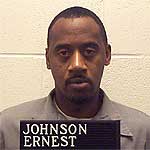
Ernest Lee Johnson
Murderer Brian Kevin Rosenfeld
Murderer · USA · 1985
Brian Kevin Rosenfeld Brian Kevin Rosenfeld was sentenced to three concurrent l…
23 victims
Brian Kevin Rosenfeld
Murderer · USA · 1985
Brian Kevin Rosenfeld Brian Kevin Rosenfeld was sentenced to three concurrent l…
23 victims
 Russell Ellwood
Murderer · USA · 1991
Russell Ellwood was a former taxi driver. Authorities suspected him of killing…
20 victims
Russell Ellwood
Murderer · USA · 1991
Russell Ellwood was a former taxi driver. Authorities suspected him of killing…
20 victims
 Robert Martines Perez
Murderer · USA · 1994
Name: Robert Martines Perez · Other name used in proceedings: Robert Martinez P…
15 victims
Robert Martines Perez
Murderer · USA · 1994
Name: Robert Martines Perez · Other name used in proceedings: Robert Martinez P…
15 victims
 Billy Frank Vickers
Murderer · USA · 1993
Billy Frank Vickers Vickers was executed by lethal injection in Texas on Januar…
14 victims
Billy Frank Vickers
Murderer · USA · 1993
Billy Frank Vickers Vickers was executed by lethal injection in Texas on Januar…
14 victims
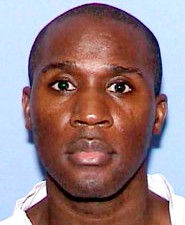 Curtis Moore
Murderer · USA · 1995
Curtis Moore was convicted of capital murder in Texas and was sentenced to deat…
3 victims
Curtis Moore
Murderer · USA · 1995
Curtis Moore was convicted of capital murder in Texas and was sentenced to deat…
3 victims
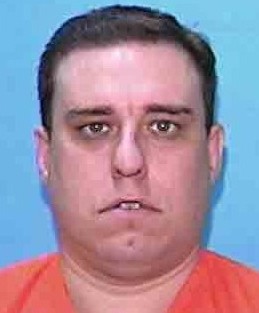 Frank Athen Walls
Serial killer · USA · 1985
Frank Athen Walls was convicted in connection with the murders of Edward Alger…
5 victims
Frank Athen Walls
Serial killer · USA · 1985
Frank Athen Walls was convicted in connection with the murders of Edward Alger…
5 victims
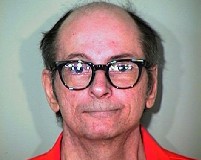 Richard Michael Rossi
Murderer · USA · 1983
Richard Michael Rossi was convicted in Superior Court (Maricopa) of first-degre…
1 victim
Richard Michael Rossi
Murderer · USA · 1983
Richard Michael Rossi was convicted in Superior Court (Maricopa) of first-degre…
1 victim
 Richard Barry Randolph
Murderer · USA · 1988
Richard Barry Randolph was sentenced to death on April 5, 1989. He was identifi…
1 victim
Richard Barry Randolph
Murderer · USA · 1988
Richard Barry Randolph was sentenced to death on April 5, 1989. He was identifi…
1 victim
 Billie Wayne Coble
Murderer · USA · 1989
Billie Wayne Coble · August 1989 — Coble committed the August 1989 shooting dea…
3 victims
Billie Wayne Coble
Murderer · USA · 1989
Billie Wayne Coble · August 1989 — Coble committed the August 1989 shooting dea…
3 victims
 James Granvil Wallace
Murderer · USA · 1984
James Granvil Wallace lived with Susan Insalaco and her two children, 16-year-o…
3 victims
James Granvil Wallace
Murderer · USA · 1984
James Granvil Wallace lived with Susan Insalaco and her two children, 16-year-o…
3 victims
- Gender
- male
- Country
- USA
- Location
- Boone County, Missouri, USA
- Date of birth
- August 20, 1960
- Age at first offence
- 34
- Characteristics
- robbery, drugs, crack addict
- Victim profile
- Mary Bratcher, 46; Fred Jones, 58; and Mabel Scruggs, 57 (convenience store employees)
- Method of murder
- Hitting with a hammer
- Date(s) of murder
- February 12, 1994
- Years active
- 1994
- Date of arrest
- —
- Status
-
Sentenced to death
Sentenced to death on June 20, 1995
Case information
Name: Ernest Lee Johnson Case style: State of Missouri v. Earnest Lee Johnson Citation: 968 S.W. 2d 686 (Mo. banc 1998) Case number: 78282 Handdown date: 05/26/1998 Court: Missouri Supreme Court, en banc Appeal from: Circuit Court of Boone County, Hon. Gene Hamilton Parties: State of Missouri (Respondent) v. Ernest Lee Johnson (Appellant)
Timeline
- Saturday, February 12, 1994 (11:00 a.m.) — Johnson bought a bottle of beer and a package of cigarettes at a Columbia, Missouri convenience store where he was a frequent customer.
- Saturday, February 12, 1994 (before 5:00 p.m.) — Johnson returned later that day but did not purchase; he questioned the cashier about who would be working the next shift.
- Saturday, February 12, 1994 (5:00 p.m.) — Store shift change described; Johnson went to the store just before 5:00 p.m. carrying a book bag.
- Saturday, February 12, 1994 (after contacting Rodriguez Grant) — Johnson purchased crack cocaine from Rodriguez Grant and obtained the .25 caliber pistol after asking for it in exchange for crack cocaine.
- Saturday, February 12, 1994 (later, including around 11:45 p.m.) — Johnson returned wearing a mask and layers of clothing; his face and clothes were spattered with blood; the murders were discovered after this return.
- Saturday, February 12, 1994 (1:12 a.m.) — A deputy sheriff responded to a call to check the convenience store for a possible weapons disturbance.
- Later the same morning the bodies were discovered — Johnson went to a shopping mall and made over $200 in cash purchases.
- Sentencing date stated: June 20, 1995 — Johnson was sentenced to death.
- Handdown date: 05/26/1998 — The Missouri Supreme Court issued its decision in the consolidated appeal.
Background
Johnson bought a bottle of beer and a package of cigarettes at a Columbia, Missouri convenience store at eleven o’clock in the morning of Saturday, February 12, 1994. He returned to the store later that day but did not make a purchase, and during one of those trips he questioned the cashier about who would be working the next shift. The cashier told Johnson she would be relieved at 5:00 p.m. by Mabel Scruggs and that the store would close at 11:00 p.m. Johnson left and returned briefly, staying only a few minutes before leaving again.
Just before the shift change at 5:00 p.m., Johnson went to the store carrying a book bag over his shoulder. The cashier noticed Johnson staring at her while she deposited money from her shift into the store safe.
The offence
Johnson went to his girlfriend’s house and purchased a twenty-dollar rock of crack cocaine from his girlfriend’s eighteen-year-old son, Rodriguez Grant. Johnson left and then later returned to buy two more rocks. Johnson asked Rodriguez to lend him the .25 caliber pistol Johnson had given to him a couple of weeks earlier in exchange for crack cocaine.
Rodriguez agreed, and Johnson and Rodriguez test-fired the pistol in the back yard. Johnson returned the gun, claiming that it did not work. Johnson later retrieved the gun again, leaving while wearing layers of clothing, a mask over his face, and black tennis shoes.
Since January of 1994, Johnson had confided to Rodriguez his plans to hold up the convenience store by locking all but one employee in the back room and having the remaining employee open the safe.
The next time Johnson returned from the direction of the convenience store, around 11:45 p.m., his face and clothes were spattered with blood. He came in through the back door and went downstairs to Rodriguez’s room. Johnson gave the pistol back to Rodriguez. Johnson cleaned his tennis shoes, took off his clothes, put the clothes into a trash bag, and told his girlfriend’s sixteen-year-old son, Antwane Grant, to get rid of the bag. Johnson had a large amount of money sorted by denomination. Johnson and Rodriguez counted the money. Johnson hid the money in an air vent. Rodriguez went back upstairs and soon smelled something burning. When Rodriguez returned downstairs, he found Johnson burning paper.
At 1:12 a.m. the following morning, a deputy sheriff responded to a call to check the convenience store for the possibility of a disturbance involving weapons. The store lights were still on. Through the windows, the officer saw that the cash register was open and the money vault was out and in the middle of the floor. The officer observed blood smears on the front door lock. City police officers arrived with keys. Upon entering, they discovered two dead bodies and a .25 caliber shell casing in the bathroom. Another body and another .25 caliber shell casing were found inside the walk-in cooler. The safe was empty.
All three victims were store employees: Mary Bratcher (age 46), Fred Jones (age 58), and Mabel Scruggs (age 57). Each victim died from head injuries consistent with a bloody hammer found at the scene. Mary Bratcher suffered at least ten stab wounds to her left hand consistent with a bloody flat-head screwdriver found in a field near the store. Fred Jones suffered a nonfatal, facial gunshot wound.
Police officers found a bloody Phillips screwdriver, a pair of gloves, a pair of jeans, and a brown jacket in the field next to the store. Hair on the gloves was consistent with that of Mabel Scruggs. Blood on the gloves was consistent with that of Mabel Scruggs or Fred Jones. Hair on the jacket was consistent with that of Fred Jones. Blood on the jacket was consistent with a mixture of the blood of all three victims.
Later the same morning that the bodies were discovered, Johnson went to a shopping mall and made over $200 in cash purchases.
Investigation and arrest
After he returned to his girlfriend’s house, police officers arrived asking for any information about the murders. Johnson initially refused to speak with the officers but eventually agreed to accompany them to the police station. The interviewing officer did not believe Johnson’s alibi, read him his Miranda rights, and Johnson gave conflicting versions of his alibi. Johnson became depressed whenever the convenience store was mentioned. He stated that he did not care if the officers shot him.
At one point Johnson said, "It took more than one man to do that job."
A search warrant was obtained for Johnson’s girlfriend’s house. Police found a bag containing $443; coin wrappers; partially burned checks, coupons, and a cash register receipt—all bearing the convenience store’s name; a live .25 caliber bullet; and a black pair of tennis shoes with the same company logo as the bloody shoeprints found inside the store.
Johnson was placed under arrest and taken to the booking room. Upon seeing Rodriguez Grant in a holding cell, Johnson stated, "That boy didn't have anything to do with this. None of those boys did." When asked how he knew this information, he responded, "I know they weren't there."
Antwane Grant led police to the park where Antwane had hidden, at Johnson’s direction, a .25 caliber semi-automatic pistol, 17 live rounds of .25 caliber ammunition, a sweat shirt, a pair of sweat pants, a hooded jacket, two stocking caps, and two pairs of socks. Antwane identified the clothes and the black tennis shoes found at the house as those Johnson had been wearing the evening of the murders.
Blood found on the sweat shirt was consistent with that of Fred Jones. Blood on the hooded jacket was consistent with that of Fred Jones or Mabel Scruggs. Some hair on one of the stocking caps was consistent with Fred Jones’s hair and some was consistent with Johnson’s hair.
Trial
Charges and verdict
The jury convicted Johnson of three counts of murder in the first degree. The jury recommended the sentence of death for each of the three convictions. The trial court sentenced Johnson in accordance with the jury’s recommendation.
Voir dire: plea agreements of codefendants
Johnson argued that the trial court erred in allowing the State to question veniremembers about feelings regarding the credibility of State witnesses who testified pursuant to plea agreements. During general voir dire, the State made the following remarks: “Ladies and gentlemen, two of the State's witnesses in this case, Antwane Grant and Rodriguez Grant, were charged with different but related offenses due to activities they engaged in before and after the murders for which the defendant is charged. In exchange for Rodriguez Grant's truthful testimony in this case, the State has agreed to recommend a sentence of 10 years in prison for aiding and abetting Ernest Johnson before the defendant allegedly committed a robbery . . . . And in exchange for Antwane Grant's truthful testimony in this case, the State has agreed not to prosecute him for two charges of tampering with evidence committed after the defendant allegedly perpetrated the offenses . . . . [Is] there any member of this panel, just based on that, [who] would refuse to listen to and consider the testimony of these two witnesses because of feelings that the State should never make such agreements in return for testimony?”
The court’s ruling on voir dire questions was not disturbed absent a showing of abuse of discretion. Johnson conceded that review was restricted to plain error due to the lack of a timely objection.
The Supreme Court held that no miscarriage of justice occurred in allowing the State to question the veniremembers about feelings regarding credibility of State witnesses who testified pursuant to plea agreements, noting that Johnson’s codefendants gave eyewitness testimony and the State had the right to discern prejudice against testimony procured by plea agreements. The Court also noted that Johnson could cross-examine the witnesses at trial.
Death qualification
Johnson argued regarding death qualification of the jury, including questions that were sustained or limited by the trial court during death-qualification voir dire. The Supreme Court denied Johnson’s arguments.
The Supreme Court noted that it was within the court’s discretion to reject open-ended questions, particularly those about "feelings," and to limit vague questions concerning beliefs and thoughts not directly related to a juror’s ability to follow the law. The Court also stated that the trial court allowed Johnson to rephrase questions when they strayed too far.
The Supreme Court further held that Johnson was not foreclosed from inquiring into a veniremember’s ability to follow the law, and it denied Johnson’s related contentions.
Challenges for cause
Johnson argued that the trial court erred in granting five of the State’s challenges for cause. The Supreme Court denied the argument.
The Supreme Court discussed individual veniremembers and their responses during voir dire:
- Peggy Edwards: The Court described stress about having to say someone else would not live, uncertainty about signing a death verdict as foreperson, and statements indicating possible higher burden of proof. The Court concluded these responses, viewed in context, did not establish abuse of discretion.
- Angela Leap: The Court described her mixed emotions about the death penalty, potential difficulty in sentencing someone to death, and the court’s observation of emphatic answers about impairment; the Court found no evidence of abuse of discretion.
- Philip Moore: The Court described him stating he could not sign a verdict recommending death; the Supreme Court concluded it was reasonable for the trial court to conclude his inability substantially impaired performance of juror duties, including serious consideration of the full range of punishment.
- Debra Tapp: The Court described difficulty imposing death and statements about views substantially impairing serious consideration.
- Valerie Twenter: The Court described changing responses and concluded no single answer was dispositive and no abuse of discretion was shown.
Jury instructions: voluntary intoxication
The trial court instructed the jury with MAI-3d 310.50: “The state must prove every element of the crime beyond a reasonable doubt. However, in determining the defendant's guilt or innocence, you are instructed that an intoxicated or a drugged condition whether from alcohol or drugs will not relieve a person of responsibility for his conduct.”
Johnson objected, challenging the constitutionality of the instruction. The Supreme Court held that the rewritten instruction was constitutional.
Jury instructions: reasonable doubt
Johnson objected to the following language of the instruction submitted to the jury on reasonable doubt: “Proof beyond a reasonable doubt is proof that leaves you firmly convinced of the defendant's guilt. The law does not require proof that overcomes every possible doubt. “
The Supreme Court stated it had consistently upheld this instruction and denied Johnson’s request for reexamination.
Sentencing
The jury recommended the sentence of death for each of the three murder-in-the-first-degree convictions. The trial court imposed death sentences in accordance with the jury’s recommendation.
During the penalty phase, the Supreme Court described the jury’s statutory aggravating circumstances as follows for each murder:
- that the murder was committed while Johnson was engaged in the commission of two other unlawful homicides;
- that the murder was committed for the purpose of receiving money or any other thing of monetary value from the victim or another;
- that the murder was committed while Johnson was engaged in the perpetration of the felony of robbery;
- that the murder was outrageously or wantonly vile, horrible, or inhuman in that it involved depravity of mind.
The penalty-phase instruction described the jury’s role in assessing and declaring punishment and the discretion not to assess death. The Supreme Court described that if the trier found evidence in mitigation sufficient to outweigh evidence in aggravation, the statutory scheme provided for life imprisonment without eligibility for probation, parole, or release except by act of the governor, and it also described the jury’s discretion not to assess death under the circumstances.
The Supreme Court’s later discussion addressed whether postconviction relief should be granted for the penalty phase due to counsel performance regarding expert testimony.
Postconviction proceedings (Rule 29.15)
Johnson sought postconviction relief under Rule 29.15. His pro se motion and amended motion were overruled after an evidentiary hearing. He appealed the conviction and sentence and the overruling of his postconviction motion.
The Supreme Court described Johnson’s trial counsel as:
- Nancy McKerrow and Janice Zembles represented Johnson at trial.
- McKerrow made the ultimate decisions with respect to the guilt phase.
The Supreme Court summarized standards for ineffective assistance of counsel and reviewed findings and conclusions for clear error.
Evidentiary and procedural issues
The Supreme Court held that certain claims were procedurally defaulted due to Johnson raising them for the first time on appeal or failing to raise them in timely pleadings.
Ineffective assistance: opening statement
Johnson argued his counsel’s representation was deficient due to statements during opening argument, but the Supreme Court held the claims procedurally defaulted.
Ineffective assistance: failure to call Dr. Sam Parwatikar (guilt phase)
Johnson alleged deprivation of effective counsel because McKerrow failed to call Dr. Sam Parwatikar, a licensed psychiatrist with an emphasis in forensic psychiatry.
McKerrow arranged for a paralegal to contact Dr. Parwatikar to examine Johnson for any sign of mental disease, defect, or disorder. Dr. Parwatikar concluded Johnson did not suffer from mental disease or defect, and he reported his findings back to the paralegal.
At the motion hearing, McKerrow testified that she did not call Dr. Parwatikar because he found no mental disease or defect. The Supreme Court held the motion court did not clearly err in denying relief.
Johnson also faulted McKerrow for not providing Dr. Parwatikar with Johnson’s complete social history; Dr. Parwatikar testified at the motion hearing that it would not have changed his diagnosis. The Supreme Court denied this point.
Ineffective assistance: failure to call Dr. Carol Bernard (guilt phase)
Johnson contended counsel performed below an objectively reasonable standard by not calling Dr. Carol Bernard, a psychologist.
Dr. Bernard was instructed to conduct a personality assessment and assess Johnson’s intellectual and cognitive functioning. She interviewed Johnson for eight hours, and reported to McKerrow after the tests had been administered but before they were scored. McKerrow did not contact Dr. Bernard again for the test results.
Dr. Bernard testified at the motion hearing that she did not complete all test results; she completed some and received invalid results for another test. She concluded from IQ testing that Johnson was in the borderline mentally retarded range and suspected his reading ability was below the sixth-grade level, with indicators of a learning disability. She concluded Johnson was suffering from cocaine intoxication on the night of the crime. She testified that she underwent surgery after the initial diagnosis and would have been available to testify at trial.
The Supreme Court held that even if Dr. Bernard’s testimony were followed up and presented, it would not provide a defense to first-degree murder because voluntary cocaine intoxication was not a defense. The Court also held the absence of her testimony did not prejudice Johnson in light of the overwhelming evidence against him.
Ineffective assistance: failure to call other witnesses / attack credibility / hair analysis
Johnson argued counsel was ineffective for failing to call witnesses to support lack of deliberation, attack credibility of codefendants’ testimony, and attack State’s hair analysis expert testimony. The Supreme Court held Johnson waived these claims by failing to include them in pro se Rule 29.15 motion or the amended motion.
Neurological testing
Johnson contended McKerrow failed to arrange neurological testing. The Supreme Court described testimony from Dr. Dennis Cowan, a neuropsychologist who examined Johnson posttrial and opined about mild brain functioning impairment attributed to congenital abnormalities, multiple head injuries, and polysubstance abuse.
The Supreme Court held there was no clear error, noting Johnson failed to present evidence about expert availability at the time of trial or whether testimony would have benefited the defense, and it pointed to Dr. Parwatikar’s testimony that he found no evidence to warrant neuropsychological testing.
Closing argument in guilt phase
Johnson alleged counsel did not adequately present the defense of lack of deliberation in closing argument. The Supreme Court held the claim was waived due to Johnson’s tardiness.
Appeals
The Supreme Court:
- AFFIRMED CONVICTIONS
- REVERSED SENTENCES AND REMANDED FOR NEW PENALTY PHASE PROCEEDINGS
The Court held that no miscarriage of justice occurred during guilt-phase proceedings in allowing voir dire about plea agreements, and it denied death-qualification arguments. It upheld rulings allowing proper jury instructions on voluntary intoxication and reasonable doubt. It also affirmed denial of postconviction relief as to convictions.
However, the Supreme Court reversed the denial of postconviction relief as to the penalty phase, vacated all three sentences of death, and remanded for new penalty phase proceedings.
Penalty phase: ineffective assistance
Counsel roles and central issue
The Supreme Court stated that Janice Zembles made the ultimate decisions throughout the penalty phase. Johnson argued Zembles’s failure to present testimony of any medical expert who personally examined him, specifically Dr. Parwatikar, fell below the skill and diligence expected of a reasonably competent attorney, and that but for this error there existed a reasonable probability of life imprisonment instead of death.
Dr. Parwatikar and attempts to secure testimony
The Supreme Court described that Dr. Parwatikar had been hired to examine Johnson, reviewed police reports, and conducted a two-and-a-half hour interview. Dr. Parwatikar concluded that at the time of the crime Johnson did not suffer from mental disease or defect but did suffer from "cocaine intoxication delirium."
Dr. Parwatikar attempted several times unsuccessfully to speak with Johnson’s attorneys, reported findings to a paralegal, and offered to testify if the case reached the penalty phase. Zembles scheduled Dr. Parwatikar as a defense witness and intended to introduce evidence supporting the statutory mitigating factor about substantial impairment of capacity to appreciate criminality or conform conduct to legal requirements.
The Supreme Court described Zembles’s testimony that she intended to call Dr. Parwatikar so the jury could hear from Ernest without Ernest having to take the stand, and that communication problems contributed to the lack of testimony. The Court described the sequence of teleconferences and messages, including a message on Zembles’s answering machine that did not include a phone number and that Dr. Parwatikar insisted he did call. The Court described Zembles not moving for a continuance after being notified that Dr. Parwatikar would not make a two-hour drive until he talked to Zembles personally. Zembles instead proceeded without his expert testimony.
The only medical expert called during the penalty phase was Dr. William Watson, a doctor of pharmacy who had never examined Johnson and was not licensed in psychiatry; the Court described limitations on his testimony.
In-court statements and quoted material
The Supreme Court included verbatim testimony excerpts from Zembles at the motion hearing:
- “absolutely”
- “absolutely” intended to call Dr. Parwatikar to give the jury “insight into Ernest's state of mind . . . who Ernest was psychologically and intellectually and what kind of difficulties he had, and most importantly, he would have provided foundation”
- “jury could hear from Ernest without Ernest having to take the stand”
- Zembles described her communication with Dr. Parwatikar’s office impression as “down right hostile”
- “throw up my hands and say 'I'm going without him.'”
- “that's when I should have asked for a continuance”
- “I cannot imagine why I didn't just ask for a brief continuance or a recess or something to try and get a hold of the man, but I didn't.”
- When asked if she had a strategic reason for not contacting Dr. Parwatikar: “No.”
- When asked: “So was it a strategic reason that you did not want Dr. Parwatikar to testify?” she answered: “No. No. Not at all.”
The Supreme Court also described verbatim statements in the trial record presented during the penalty phase:
- The prosecutor’s closing comment: “What evidence has there really been that cocaine made this man do it? There hasn't been, ladies and gentlemen.”
Dr. Parwatikar’s proposed testimony quoted at length
At the motion hearing, Dr. Parwatikar testified about what he would have said. His testimony included the following verbatim account:
“Cocaine . . . is a stimulant drug which [Johnson] has been using since the teen age. And particularly he has been using crack cocaine, which is a short-acting cocaine. This particular stimulant affects the brain in two different ways. One is it actually changes the neurochemical pattern in the brain. There are three type of chemicals that are involved. One is called dopamine, the other serotonin . . . and the third one is norepinephrine . . . These three neurochemicals are extremely essential for a person to function when they are in the balance. However, when a person uses cocaine in excess, these three chemicals are thrown out of kilt. That means that there are some excesses of all these neurochemicals in the brain that causes the person to have first of all, what is known as a, quote unquote, high. And then what happens is that the person becomes very agitated, irritable, and even though there is a superficial feeling of euphoria or happiness, eventually that euphoria, which is really neurochemically based, the person starts to become very irritable and sometimes become very paranoid that people are after them. . . . And that can end up in psychosis. The second way the cocaine affects is that when it is used in long term, it makes . . . the brain cells, very sensitive to any type of excitation because they become fragile. It has a sort of a seizure effect in the sense that any kind of excitation can throw a person into anxiety . . . . . Intoxication delirium is a condition when a person is intoxicated with cocaine to the extent that he has changes in moods, changes in personality, and changes in judgment. And these are all related to the changes in perception that the person has. . . . [Changes in] personality basically means inability to delay gratification, having difficulty in relating to stressful situations, having inappropriate judgments . . . . And in terms of perceptions of reality and judgment would be impulsive acting out, perceiving that he is in trouble when he might not be, wanting to use more and more cocaine . . .”
Supreme Court’s determination of prejudice
The Supreme Court held it was clear error to deny postconviction relief as to the penalty phase and remanded for new penalty phase proceedings. It concluded that Dr. Parwatikar’s testimony would have altered jurors’ deliberations with a reasonable probability that jurors would have unanimously recommended life imprisonment without eligibility of probation or parole. The Court discussed statutory aggravating circumstances, mitigating evidence, and the jury’s required consideration of mitigation.
The Court also described that the trial court refused to submit an instruction on substantial impairment, referenced by the statutory mitigating circumstance, and it discussed that the jury could have considered Dr. Parwatikar’s testimony as mitigating evidence even if that specific instruction was not submitted.
Separate opinion
Limbaugh, Jr., Judge (concurring in part and dissenting in part)
Stephen N. Limbaugh, Jr., Judge dissented from the majority’s decision reversing the penalty of death. He stated that the proposition that defense counsel’s failure to call Dr. Parwatikar “falls short of the skill and diligence a reasonably competent attorney would exercise under similar circumstances” was tenuous, and he argued there was no showing of prejudice.
The separate opinion included quotations from the penalty phase record and from witness testimony, including the following verbatim excerpt from Beverly Johnson, Johnson’s sister:
“I've been a three-time loser with crack cocaine. . . . I would go to the stores and steal stuff for crack . . . I pushed everybody away from me that I cared about and everything, and I just wanted to do away with myself because I didn't know what to do. And I hurted so bad, so I started selling everything in my house, stealing from my kids and my grandbabies, and stealing from people for crack cocaine. But I took and started lying to my bosses at work . . . I told lies to anybody I could to get what I wanted. And when that started wearing thin, I started hanging in the streets all the time . . . Doing whatever I had to do to get, to get high again. . . . I didn't care what I did to myself, so I didn't care what happens to me, so I was willing to go any length I had to.”
The separate opinion also quoted a portion of defense counsel’s closing argument:
“Mr. Crane [the prosecutor] apparently wants you to believe, and it may be he'll speak about this again, but he apparently wants you to believe that crack cocaine played no part in the events of February 12th of 1994, that Ernest was, perhaps, just a casual user of crack cocaine. But that position is really indefensible because we know that Ernest was trying on that very night to pawn his boots to Rod Grant, to pawn a CD player and other articles of clothing to Rod Grant to get more crack cocaine because Ernest didn't have any more money. And he was already in debt to Rod for crack. These are not the acts of a casual user . It's [sic] the acts of somebody who was desperate to get more drug . (Emphasis added.)”
The separate opinion further quoted a statement by defense counsel tying mitigation to statutory instruction:
“And the other mitigating circumstance that you can consider is whether Ernest Johnson was under the influence of extreme mental or emotional disturbance. And I think certainly you recognize that somebody who is desperate for drugs is under such mental condition. Beverly Johnson talked to you about that. Dr. Parwatikar's proposed addition would have added very little to the evidence and argument reviewed above.”
The separate opinion concluded it would have affirmed both the conviction and death sentence.
Other details
Jury findings at penalty phase (mitigation and aggravation)
The Supreme Court referenced that the jurors heard from each victim’s family and that the jury found five statutory aggravating circumstances for each murder. It also stated that the court found evidence supporting two statutory mitigating circumstances to be considered for each of the three sentences: whether the murder was committed while Johnson was under the influence of extreme mental or emotional disturbance, and whether Johnson acted under extreme duress or under substantial domination of another person.
Evidence presented at penalty phase
The Supreme Court described mitigation evidence presented, including testimony of Johnson’s mother, brother, sister, parole officer, and a treatment coordinator from a halfway house where Johnson had lived, and it referenced long-term substance abuse by Johnson and Johnson’s mother and siblings. It also described that Johnson had been abandoned by his mother as a child, had grown up in destitute conditions, and was physically abused by the man his father left him with for long periods during his childhood. The Court described a head injury around the age of eight that went untreated, special education classes at school, and that Johnson never finished the ninth grade. It also described that jurors heard Johnson was generally soft-spoken, nonviolent, dedicated to his family and friends, and planning to enter a treatment program when the murders occurred.
Watson could tell the jury general effects of cocaine, including that cocaine addicts experience: “Everything else becomes irrelevant, other than getting more drug and continually trying to recapture that first high.”
Defendant and related persons named
- Ernest Lee Johnson
- Mary Bratcher (age 46), convenience store employee and victim
- Fred Jones (age 58), convenience store employee and victim
- Mabel Scruggs (age 57), convenience store employee and victim; also identified as scheduled to relieve the cashier at 5:00 p.m.
- Rodriguez Grant (18-year-old), Johnson’s girlfriend’s son; codefendant witness
- Antwane Grant (16-year-old), Johnson’s girlfriend’s son; led police to the hidden pistol and ammunition and disposed items at Johnson’s direction
- Beverly Johnson, Johnson’s sister (quoted in separate opinion)
- Nancy McKerrow, counsel who made ultimate decisions for guilt phase
- Janice Zembles, counsel who made ultimate decisions for penalty phase
- Dr. Sam Parwatikar, psychiatrist with an emphasis in forensic psychiatry
- Dr. Carol Bernard, psychologist
- Dr. Dennis Cowan, neuropsychologist
- Dr. William Watson, doctor of pharmacy
- Gene Hamilton, judge of the Circuit Court of Boone County
- Ronnie L. White, Judge; wrote the principal opinion
- Benton, C.J., Price and Robertson, JJ., concurring in principal opinion
- Limbaugh, J., concurrence in part and dissent in part with separate opinion
- Covington and Holstein, JJ., concur in Limbaugh’s opinion
Spotted an error, or have more information about this case?