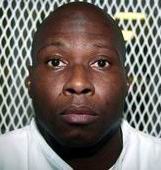
Derrick Leon Jackson
Murderer Brian Kevin Rosenfeld
Murderer · USA · 1985
Brian Kevin Rosenfeld Brian Kevin Rosenfeld was sentenced to three concurrent l…
23 victims
Brian Kevin Rosenfeld
Murderer · USA · 1985
Brian Kevin Rosenfeld Brian Kevin Rosenfeld was sentenced to three concurrent l…
23 victims
 Yahweh ben Yahweh
Murderer · USA · 1980
Yahweh ben Yahweh was born and legally named Hulon Mitchell Jr. (October 27, 19…
23 victims
Yahweh ben Yahweh
Murderer · USA · 1980
Yahweh ben Yahweh was born and legally named Hulon Mitchell Jr. (October 27, 19…
23 victims
 Russell Ellwood
Murderer · USA · 1991
Russell Ellwood was a former taxi driver. Authorities suspected him of killing…
20 victims
Russell Ellwood
Murderer · USA · 1991
Russell Ellwood was a former taxi driver. Authorities suspected him of killing…
20 victims
 Robert Martines Perez
Murderer · USA · 1994
Name: Robert Martines Perez · Other name used in proceedings: Robert Martinez P…
15 victims
Robert Martines Perez
Murderer · USA · 1994
Name: Robert Martines Perez · Other name used in proceedings: Robert Martinez P…
15 victims
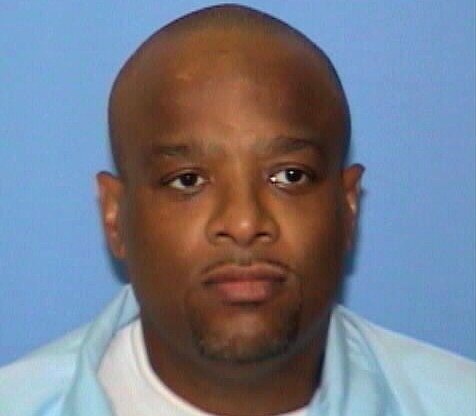 Ronald Macon
Serial killer · USA · 1999
Ronald Macon was convicted of three murders and one criminal sexual assault in…
3 victims
Ronald Macon
Serial killer · USA · 1999
Ronald Macon was convicted of three murders and one criminal sexual assault in…
3 victims
 Leroy White
Murderer · USA · 1988
Leroy White was convicted of the capital murder of his estranged wife, Ruby Whi…
1 victim
Leroy White
Murderer · USA · 1988
Leroy White was convicted of the capital murder of his estranged wife, Ruby Whi…
1 victim
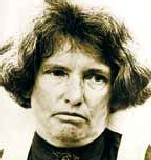 Daisy De Melker
Serial killer · South Africa · 1923
Daisy Louisa De Melker (née Hancorn-Smith) was born on 1 June 1886 and was exec…
3 victims
Daisy De Melker
Serial killer · South Africa · 1923
Daisy Louisa De Melker (née Hancorn-Smith) was born on 1 June 1886 and was exec…
3 victims
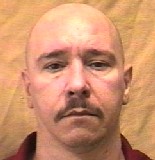 James Adolph Campbell
Murderer · USA · 1992
James Adolph Campbell was convicted by a North Carolina jury of first-degree mu…
1 victim
James Adolph Campbell
Murderer · USA · 1992
James Adolph Campbell was convicted by a North Carolina jury of first-degree mu…
1 victim
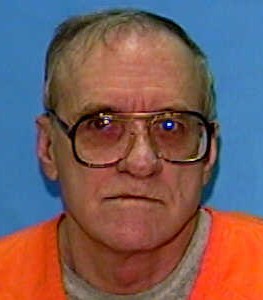 Lloyd Chase Allen
Murderer · USA · 1991
Lloyd Chase Allen was convicted and sentenced to death for the November 13, 199…
1 victim
Lloyd Chase Allen
Murderer · USA · 1991
Lloyd Chase Allen was convicted and sentenced to death for the November 13, 199…
1 victim
 Debra Lynn Baker
Murderer · USA · 1990
Debra Lynn Baker was convicted of Jerry Sternadel’s murder. She received 10 yea…
1 victim
Debra Lynn Baker
Murderer · USA · 1990
Debra Lynn Baker was convicted of Jerry Sternadel’s murder. She received 10 yea…
1 victim
- Gender
- male
- Country
- USA
- Location
- Harris County, Texas, USA
- Date of birth
- J une 13, 1968
- Age at first offence
- 20
- Characteristics
- robbery
- Victim profile
- Forrest Henderson, 31, and Alan Wrotenberry, 31
- Method of murder
- St abbing with knife
- Date(s) of murder
- September 11, 1988
- Years active
- 1988
- Date of arrest
- April 1995
- Status
-
Executed
Executed by lethal injection in Texas on July 20, 2010
Case overview
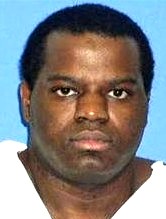
Derrick Leon Jackson was executed by lethal injection in Texas on July 20, 2010. He was convicted of capital murder for the killings of Forrest Henderson and Alan Wrotenberry and was sentenced to death following a separate penalty hearing.
Timeline
- 9:00 a.m., Monday, September 12, 1988 — The school principal contacted Henderson’s apartment manager to check on Wrotenberry; the manager unlocked Henderson’s apartment door and found a body covered with blood.
- 9:00 a.m., Monday, September 12, 1988 — Police arrived at the apartment, detected no signs of forced entry, and found Henderson’s and Wrotenberry’s bodies in their respective bedrooms at opposite ends of the apartment.
- Monday, September 12, 1988 — Police officers detected no signs of forced entry at the apartment.
- Two or three days later — Henderson’s car was recovered after a chase following a burglary at a mall; the driver was not apprehended, and the police recovered no other evidence from the car.
- around 10:30 p.m., September 10, 1988 — David Trujillo heard music and Henderson’s voice through the common wall separating their apartments.
- around 2:00 a.m., September 11, 1988 — Trujillo went to sleep.
- 4:45 a.m., September 11, 1988 — Trujillo was awakened by Wrotenberry screaming “Oh my God. No. No,” several times.
- 1995 — Harris County/Sheriff’s deputies using a new fingerprint system with an expanded database matched Jackson with prints lifted from a beer can and a glass tumbler in Henderson’s bedroom; a bloody print found on Henderson’s bedroom door also matched Jackson.
- 6/19/97 — Jackson was indicted for capital murder by a Harris County grand jury.
- 3/12/98 — A jury found Jackson guilty of capital murder.
- 3/17/98 — After a separate penalty hearing, Jackson was sentenced to death.
- 5/17/00 — The Texas Court of Criminal Appeals affirmed Jackson’s verdict and sentence.
- 1/6/00 — Jackson filed a state application for a writ of habeas corpus.
- 12/1/04 — The Texas Court of Criminal Appeals affirmed the denial of habeas relief.
- 11/30/05 — Jackson filed a petition for writ of habeas corpus in U.S. district court.
- 2/12/07 — The district court granted the state’s motion for summary judgment and denied relief.
- 3/9/07 — Jackson appealed to the United States Court of Appeals for the Fifth Circuit.
- 2/14/08 — The U.S. Fifth Circuit Court of Appeals affirmed.
- 5/23/08 — Jackson filed a petition for a writ of certiorari in the U.S. Supreme Court.
- 10/6/08 — The Supreme Court denied Jackson’s petition for a writ of certiorari.
- 10/28/08 — Jackson filed a Rule 60(b) motion in the federal district court.
- 3/31/09 — The federal district court denied Jackson’s Rule 60(b) motion.
- 4/13/09 — Jackson appealed the denial of his Rule 60(b) motion.
- 10/9/09 — The Fifth Circuit affirmed the denial of Jackson’s Rule 60(b) motion.
- 7/20/10 — Jackson was set to be executed.
Background
Forrest Henderson and Alan Wrotenberry were Houston Grand Opera singers. Shortly before his death, Henderson toured with the opera in Scotland.
Wrotenberry moved into Henderson’s Houston apartment to house-sit while Henderson was out of the country and continued to live in the apartment after Henderson returned. Wrotenberry also worked as a music teacher at Deer Park Elementary School.
David Trujillo and Roger Lindgroff lived next door to Henderson and Wrotenberry.
The offence
On Monday, September 12, 1988, a school principal contacted Henderson’s apartment manager after Wrotenberry failed to appear for work at Deer Park Elementary School. The apartment manager unlocked Henderson’s apartment door and found nothing disturbed in the living room and kitchen, then proceeded to one of the bedrooms and saw a body covered with blood. The manager left and called 911.
Police officers arrived soon thereafter and detected no signs of forced entry. Police found Henderson’s and Wrotenberry’s bodies in their respective bedrooms at opposite ends of the apartment.
Henderson’s nude body was lying face-down in his bed. Wrotenberry’s body was lying on the floor of his bedroom, clad only in a pair of swimming trunks.
A bloody metal bar was found in the hallway and a bloody knife was found in the kitchen sink. Blood was all over the bedroom walls, doors, and curtains.
Both victims’ wallets were missing, and Henderson’s car was gone.
A forensic pathologist testified that Wrotenberry suffered a severed carotid artery, cuts to the vertebrae, and at least three blows to the back of the head with a narrow blunt instrument consistent with a pipe. The force of one of the blows knocked out a tooth.
The forensic pathologist testified that Henderson received a shallow, non-fatal cut to the neck, defensive wounds on both arms, a six-inch fracture of the skull from blunt force, and multiple stab wounds to the torso.
Fixed lividity in both bodies signified that both victims were dead for more than eight hours before they were found.
Tests performed on both victims revealed no signs of drugs, alcohol, or semen.
Absence of significant blood in the hallway connecting the two bedrooms indicated that neither victim left his room during or after the attacks.
Investigation
Blood samples and 20 identifiable fingerprints were collected from the crime scene. The Houston Police Department (HPD) was initially unable to develop a suspect.
In 1995, HPD upgraded to a new fingerprint system with an expanded database. The new system matched Jackson with prints lifted from a beer can and a glass tumbler in Henderson’s bedroom. A bloody print found on Henderson’s bedroom door also matched Jackson.
An expert in blood-spatter interpretation testified that the bloody fingerprint could have been formed only by touching a blood drop while the blood was still wet, rather than by a blood drop landing on an old fingerprint.
An HPD serologist testified that type-B blood was found on a bedroom door. Jackson’s blood type was B, while both victims’ blood types were A. Only these blood types were detected at the crime scene.
A DNA expert testified that Jackson’s DNA profile matched DNA from stains on a red towel and a beige towel located in Henderson’s bathroom.
The direct appeal opinion referenced odds calculations and additional DNA testing:
- Mary Childs Henry testified that Jackson’s DNA type for a specific test would occur once out of every 224 people in the black population.
- Joseph Chu testified that he identified an antigen matching Jackson’s DNA from a mixture on a metal bar, and that Jackson could not be excluded as a source of DNA found on the bar.
- Chu also calculated that the odds another black person would possess the DNA profile found on the beige towel were one out of 7.2 million, and later referenced a method endorsed by the DNA forensic community at the time of trial that produced an odds of one out of 1.6 billion.
Chu testified that he conducted DNA tests on blood on the metal bar and that he could not determine an exact match because of the mixture and could not provide a mathematical calculation as to the probability of each individual’s DNA being in the mixture. The tests concluded the mixture was consistent with all three individuals’ DNA, and parental DNA could not be determined from Allen Wrotenberry’s sample and could not be used to eliminate any of their DNA from the mixture.
Arrest
Jackson was arrested in 1992 for three robberies and took a plea bargain that sent him to prison.
By 1995, Jackson was in prison serving time for aggravated robbery when the updated fingerprint database matched him to prints from Henderson’s apartment.
Trial
Jackson was indicted for capital murder by a Harris County grand jury on 6/19/97. A jury found Jackson guilty of capital murder on 3/12/98.
The Texas Court of Criminal Appeals decision stated that the trial court sentenced Jackson to death pursuant to the jury’s answers to the special issues under Texas Code of Criminal Procedure article 37.0711 §§3(b) and (e). The separate penalty hearing ended with a death sentence on 3/17/98.
Evidence presented at trial
A neighbor, David Trujillo, testified about sounds he heard through the common wall separating the apartments:
- Trujillo went to sleep around 2:00 a.m.
- He was awakened at 4:45 a.m. by the sound of Wrotenberry screaming “Oh my God. No. No,” several times.
- Trujillo also heard what sounded like someone being hit numerous times with a pipe or a baseball bat.
- After 30 minutes of silence, he heard water running for about 45 minutes.
- Trujillo never heard Henderson’s front door open or anyone leave.
- Trujillo explained that, before Wrotenberry moved in, he would see “street trash” going in and out of Henderson’s apartment and that screaming and fighting were common there, while the rowdiness subsided after Wrotenberry moved in.
Roger Lindgroff did not testify because he was deceased at the time of trial.
Penalty phase evidence
The State presented evidence during the penalty phase that Jackson snatched a woman’s purse in 1990. The State also presented evidence that Jackson robbed two other victims of their purses at gunpoint and attempted to steal a car. For the robberies, he received a sentence of ten years imposed on May 13, 1992.
Jury deliberations on sentencing
After the punishment phase, the jury deliberated for about five hours and sent out a note indicating they were deadlocked. After the court instructed them to continue, they deliberated for another two hours before counsel moved for a mistrial.
Later, the jury recessed for the night. On the following day, after the jury deliberated for an additional four hours, they sent out a note asking: “What happens if we are 11 to 1 on special issue #3?” The jury returned a unanimous verdict 28 minutes later.
Quotes from the record
Judge Price delivered the opinion affirming the conviction and sentence. The opinion included a quoted statement attributed to the trial judge in the context of jury deadlock issues within later challenges:
“ you are here to do a job. You will do it so come back with a verdict.”
Jackson’s own writings included statements he made while on Texas death row. He wrote:
“It's hard to explain (especially here in Texas), but to behonest, I personally would have preferred to have been murdered at thetime of sentencing.”
He also wrote:
“Texas is the execution capital of the world! I'm not able to give youspecifics and statistics (for those who are interested, they are madeknown by other sources).”
And he wrote:
“I'm relieved that it's over”
(That line appeared in the narrative describing Carl Wrotenbery speaking after watching the execution.)
Jackson also included a request for correspondence with the text:
“I would very much like to correspond with a pen pal in the hopes of building a truly genuine friendship, that I am very much in need of.”
Sentencing
After the separate penalty hearing, Jackson was sentenced to death on 3/17/98.
The Court of Criminal Appeals opinion stated that, pursuant to the jury’s answers to the special issues, the trial judge sentenced appellant to death under Texas Code of Criminal Procedure article 37.071 §3(g).
Appeals
Direct appeal
The Texas Court of Criminal Appeals affirmed Jackson’s verdict and sentence on 5/17/00. The opinion was delivered on May 17, 2000.
On direct appeal, Jackson raised eight points of error, including challenges to legal sufficiency of the evidence and issues involving DNA evidence reliability hearings, discovery compliance, improper jury argument, and sentencing deliberations and constitutional issues with Texas’s death penalty scheme.
The opinion held:
- The evidence was legally sufficient to support his capital murder conviction for killing more than one person in the same criminal transaction.
- The trial court’s error in failing to hold a hearing outside the presence of the jury under Kelly/Daubert standards was harmless because the State’s DNA evidence was in fact reliable.
- Any discovery violation was not prejudicial based on the timing and the opportunity for review and cross-examination.
- Challenged prosecutor arguments were within permissible categories and not reversible error.
- The trial court did not abuse its discretion in overruling a motion for mistrial during sentencing deliberations.
- The constitutional challenge based on the “12-10” rule was overruled.
The Court’s disposition was: “we will affirm .” and it affirmed the judgment of the trial court.
State habeas
Jackson filed a state application for a writ of habeas corpus on 1/6/00. On 12/1/04, the Texas Court of Criminal Appeals affirmed the denial of habeas relief.
Federal habeas and COA
Jackson filed a petition for writ of habeas corpus in U.S. district court on 11/30/05. On 2/12/07, the district court granted the state’s motion for summary judgment and denied relief.
Jackson appealed to the U.S. Court of Appeals for the Fifth Circuit on 3/9/07. On 2/14/08, the Fifth Circuit Court of Appeals affirmed.
Jackson filed a petition for a writ of certiorari to the U.S. Supreme Court on 5/23/08. The Supreme Court denied the petition on 10/6/08.
Jackson filed a Rule 60(b) motion on 10/28/08. The district court denied it on 3/31/09. Jackson appealed on 4/13/09, and the Fifth Circuit affirmed denial on 10/9/09.
In a per curiam proceeding, Jackson requested a certificate of appealability (“COA”) and the COA was denied. The per curiam order stated:
- COA request was denied.
- The Court held that evidence was sufficient to support conviction and supported the determination that victims were killed during the course of the same transaction.
- The Court held that defense counsel was not ineffective in failing to present certain character witnesses during the sentencing phase.
Outcome
Jackson was executed by lethal injection in Texas on July 20, 2010.
At the execution, Jackson’s father and two brothers were among people watching. Carl Wrotenbery, the father of one of Jackson’s victims, was in an adjacent witness room. Jackson made no final statement when asked by the warden whether he would like to make one. Jackson was pronounced dead at 6:20 p.m. CDT.
Aftermath / related statements and reporting included in the record
Accounts of the case described:
- Jackson denied involvement in the killings and said he was being unfairly convicted.
- Carl Wrotenbery said: “I'm relieved that it's over.” and he said he felt the execution was “something that had to be done.”
- Carl Wrotenbery also said: “I did not look forward to it.”
Statements attributed to Carl Wrotenbery included:
“It's something that had to be done. I did not look forward to it.”
Statements attributed to Jackson in a death row interview included:
“It's more a reluctance that it had to come to this.”
and:
“It's like you have terminal disease for a number of years and finally they say you're not going to be able to live with it any longer so you're going to get your affairs together with your family and within yourself.”
Jackson’s death row writing included allegations and appeals for legal defense funding and included contact information and requests for pen pal correspondence addressed to him.
Other details
Additional individuals named in the record
- David Trujillo — neighbor who testified about sounds heard through the wall.
- Roger Lindgroff — neighbor who started to knock but did not testify because he was deceased at trial.
- Forrest Henderson — victim.
- Alan Wrotenbery / Richard Wrotenberry — victim (named with both variants in the record).
- Carl Wrotenbery — father of one victim.
- Rita Everline — Jackson’s mother, testified that Jackson never knew his father due to a suicide when Jackson was a baby and that her husband’s drinking problem contributed to fights where she fled the house.
- Leroy Smith — barber instructor for the TDCJ, who testified for Jackson.
- Dr. Ann Carolyn Wheeler — clinical psychologist who testified for Jackson.
- Mary Childs Henry — DNA analyst with HPD.
- Joseph Chu — serologist with the HPD crime lab who conducted DNA tests and mixture analysis.
- Ewing Werlein, Jr., J. — judge referenced in the COA procedural background (district court).
- Quarterman and Price, J. — names referenced in the appellate procedural and opinion text.
Criminal convictions and other acts referenced in the record
- The State presented evidence during punishment that Jackson snatched a woman’s purse in 1990.
- The State presented evidence that Jackson robbed two other victims of their purses at gunpoint and attempted to steal a car.
- Those robberies resulted in a sentence of ten years imposed on May 13, 1992.
- The record described that Jackson was arrested in 1992 for three robberies and took a plea bargain leading to prison time.
Prison-related writing and correspondence
Jackson included prison address and pen pal request information:
- Jackson wrote: “PLEASE DO SOMETHING TO HELP STOP THE KILLING!!! Please write me at: Derrick Jackson #999263, Polunsky Unit 3872 FM 350 South Livingston, TX 77351”
- Jackson included pen pal request text for correspondence: “I am a 31 year old black male incarcerated on Texas' death row in Huntsville.”

Spotted an error, or have more information about this case?