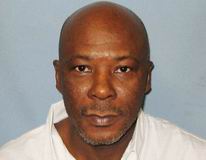
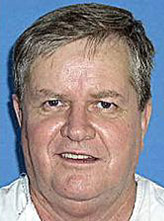
Leroy White
Murderer Brian Kevin Rosenfeld
Murderer · USA · 1985
Brian Kevin Rosenfeld Brian Kevin Rosenfeld was sentenced to three concurrent l…
23 victims
Brian Kevin Rosenfeld
Murderer · USA · 1985
Brian Kevin Rosenfeld Brian Kevin Rosenfeld was sentenced to three concurrent l…
23 victims
 Yahweh ben Yahweh
Murderer · USA · 1980
Yahweh ben Yahweh was born and legally named Hulon Mitchell Jr. (October 27, 19…
23 victims
Yahweh ben Yahweh
Murderer · USA · 1980
Yahweh ben Yahweh was born and legally named Hulon Mitchell Jr. (October 27, 19…
23 victims
 Russell Ellwood
Murderer · USA · 1991
Russell Ellwood was a former taxi driver. Authorities suspected him of killing…
20 victims
Russell Ellwood
Murderer · USA · 1991
Russell Ellwood was a former taxi driver. Authorities suspected him of killing…
20 victims
 Robert Martines Perez
Murderer · USA · 1994
Name: Robert Martines Perez · Other name used in proceedings: Robert Martinez P…
15 victims
Robert Martines Perez
Murderer · USA · 1994
Name: Robert Martines Perez · Other name used in proceedings: Robert Martinez P…
15 victims
 John Nordlund
Mass murderer · Sweden · 1900
John Filip Nordlund (also known as ”Mälarmördaren”, ”Mordlund”, ”Svarte Filip”)…
5 victims
John Nordlund
Mass murderer · Sweden · 1900
John Filip Nordlund (also known as ”Mälarmördaren”, ”Mordlund”, ”Svarte Filip”)…
5 victims
 Andrew Kehoe
Mass murderer · USA · 1927
Andrew P. Kehoe committed suicide the same day by killing himself in the explos…
44 victims
Andrew Kehoe
Mass murderer · USA · 1927
Andrew P. Kehoe committed suicide the same day by killing himself in the explos…
44 victims
 Robert Berdella
Serial killer · USA · 1984
Robert Berdella (January 31, 1949 – October 8, 1992) was an American serial kil…
6 victims
Robert Berdella
Serial killer · USA · 1984
Robert Berdella (January 31, 1949 – October 8, 1992) was an American serial kil…
6 victims
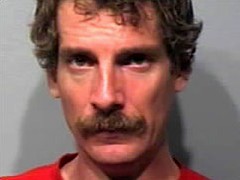 Joseph Duncan III
Serial killer · USA · 1996
Joseph Edward Duncan III (born February 25, 1963) was an American convicted ser…
7 victims
Joseph Duncan III
Serial killer · USA · 1996
Joseph Edward Duncan III (born February 25, 1963) was an American convicted ser…
7 victims
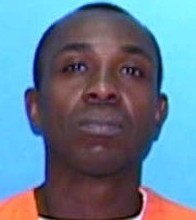 Richard Barry Randolph
Murderer · USA · 1988
Richard Barry Randolph was sentenced to death on April 5, 1989. He was identifi…
1 victim
Richard Barry Randolph
Murderer · USA · 1988
Richard Barry Randolph was sentenced to death on April 5, 1989. He was identifi…
1 victim
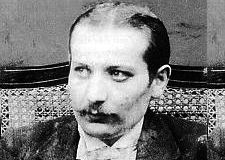 Mathias Kneibl
Murderer · Germany · 1900
Mathias Kneißl was known as Robber Kneißl (in German Räuber Kneißl , in Austro-…
2 victims
Mathias Kneibl
Murderer · Germany · 1900
Mathias Kneißl was known as Robber Kneißl (in German Räuber Kneißl , in Austro-…
2 victims
- Gender
- male
- Country
- USA
- Location
- Riley County, Alabama, USA
- Date of birth
- November 28, 1958
- Age at first offence
- 30
- Characteristics
- parricide, domestic dispute, alcohol, history of mental illness
- Victim profile
- Ruby Lanier White, 35 (his estranged wife)
- Method of murder
- Shooting (shotgun)
- Date(s) of murder
- October 17, 1988
- Years active
- 1988
- Date of arrest
- Same day
- Status
-
Executed
Executed by lethal injection in Alabama on January 13, 2011
Case overview
Leroy White was convicted of the capital murder of his estranged wife, Ruby White, and was sentenced to death. He was executed by lethal injection in Alabama on January 13, 2011.
People
- Leroy White — defendant; husband of Ruby White
- Ruby White — victim; estranged wife; a first-grade teacher at West Huntsville Elementary School
- Stella Lanier — victim’s sister; also known as Stella Lanier Walker in later descriptions; chief witness against White
- La Tonya White — the couple’s daughter; filed a written statement with the clemency petition
- Latonia White — the couple’s daughter; described as 17 months old in the trial-court factual findings
- Brian Smith — 16-year-old son of Ruby White and a former husband, John Smith; stepson of Leroy White
- John Smith — former husband of Ruby White; father of Brian Smith
- Charles White — White’s brother; received $54.74 remaining in his prison account
- G. James Benoit — former attorney who admitted withdrawing and failing to tell White about a key ruling
- Justice Clarence Thomas — issued a temporary stay shortly before the scheduled execution and later denied without giving a reason for the stay’s denial
- Brian Corbett — spokesman for the Alabama Department of Corrections
- Brian Stevenson — White’s attorney; director of the Montgomery-based Equal Justice Initiative
- Clay Crenshaw — Assistant Attorney General; heads Alabama’s Capital Litigation Division
- James Benoit Jr. — described as a tax attorney in sworn statement included in federal filings
- Gov. Bob Riley — turned down White’s plea
- Daniel Banks, Jr., J. — trial judge
- Bowen, J. — judge on the Court of Criminal Appeals
- Maddox, J. — Justice on the Alabama Supreme Court
Timeline
- August 1988 — Ruby White filed for divorce.
- September 24, 1988 — Ruby White changed the door locks on the Evans Drive residence.
- October 17, 1988 — Leroy White went to Ruby White’s home on Evans Drive, shot and injured Ruby White’s sister Stella Lanier, and killed Ruby White after shooting her multiple times.
- June 2009 — the U.S. District Court rejected White’s claims of ineffective assistance of counsel during his trial.
- Thursday night before January 13, 2011 execution — the U.S. Supreme Court ordered a last-minute delay and then denied the plea for a stay; Justice Clarence Thomas issued a temporary stay shortly before the execution was scheduled to begin.
- 9:10 p.m. — White was pronounced dead after the curtain was closed at 9:05 p.m.
- January 13, 2011 — Leroy White was executed by lethal injection in Alabama.
- January 15, 2011 — publication date for reporting on the execution delay and related issues.
Background
Ruby White filed for divorce in August 1988. White was angry about the divorce.
Following a separation during August or September, 1988, Ruby White left their home in Huntsville, Alabama, and moved into a shelter for abused spouses. Ruby White employed an attorney and filed a petition for divorce, and a hearing was scheduled at which time both parties verbally agreed that White would move out of the home and allow Ruby and her two children to return.
After Ruby returned to the house, she changed the door locks, and Stella Lanier moved in with Ruby and her two children.
The offence
On October 17, 1988, White went to the Evans Drive home where Ruby White was visiting with her sister, Stella Lanier. He shot open the home’s front door and went inside, where he shot Stella Lanier in the chest and shoulder.
White went back to his car, reloaded the shotgun, and went back into the house. He shot Ruby White with the shotgun while she was running out of the door. He then returned again to his car to reload the shotgun and fired more shots at Ruby White while she was lying in the yard.
Ruby White died at the scene from wounds to her arm, chest, neck, and leg. Stella Lanier survived and testified against White.
During trial-court factual findings, the events at the residence were described in detail, including White’s drinking alcohol during the day, his almost running over his 17-month-old daughter on his first arrival, and an argument with Stella Lanier about his driving. The findings also described White being armed with a [12 gauge] shotgun and a [.38 caliber] pistol when he returned to the Evans Drive residence at approximately 5:15 p.m., shooting out glass from the storm door and shooting the lock off the wooden front door, kicking the door open, entering the house, and scuffling with Ruby and Stella.
The factual findings further described White telling Brian Smith to hide under the bed, and later calling for Brian to come out. White told Brian to tell his daddy that “... when I get out of this, I'm going to kill him, too.” The findings also described White confronting Ruby while she was begging and pleading for her life, shoving Ruby away from the gun, firing at point blank range with double-aught buckshot, leaving Ruby moaning but not dead, then later placing the muzzle of the shotgun to Ruby’s neck and saying, “Bitch, this is the last thing you will see.” The findings also included verbatim remarks White made to Ruby earlier: “Bitch, you ain't dead yet.”
Investigation
Huntsville Police homicide investigator Mickey Lee Brantley interrogated White. Brantley testified that he informed White of his constitutional rights at 8:34 that same night.
Brantley testified about White’s consumption of alcohol as claimed in White’s first statement, which included “four to six beers, a pint of dry gin, and about three or four ounces of Old Forester liquor.” In White’s second statement, which was tape-recorded, White stated: “I've had several beers, approximately six or seven or eight. I don't know. I dranked a pint of extra dry Seagram, extra dry gin, and a few shots of Old Forester.”
Brantley testified that, in his opinion, White was not intoxicated, could not smell any alcoholic beverage, and that his observations included bloodshot eyes. Brantley also testified that White’s speech was slow but that White was precise, aware of what he was saying, and thinking about what he was saying. Stella Lanier testified that White was not “drunk” but was “under the influence of alcohol. He was drinking.”
White gave two statements to police.
Trial
Court and charge
White was indicted and convicted in the Circuit Court, Madison County, for the capital burglary-murder of his wife, Ruby White, under Ala.Code 1975, § 13A-5-40(a)(4). He was sentenced to death.
Jury findings and recommendation
The jury found White guilty after approximately 20 minutes of deliberation. The jury recommended life without parole by a vote of 9-3 (or described as 9 to 3 in later narration).
Sentencing
The trial judge rejected the jury’s recommendation and sentenced White to death. Daniel Banks, Jr., J. stated that White’s actions were especially “heinous and atrocious compared to other capital offenses.”
The trial court stated (in the sentencing order) that it weighed aggravating and mitigating circumstances and considered the jury’s advisory recommendation of life without parole, and that such were outweighed by the aggravating circumstances. The order concluded: “Accordingly, it is ORDERED, ADJUDGED AND DECREED by this Court that the defendant shall be punished by death.”
Legal issues addressed on appeal (Court of Criminal Appeals)
The Court of Criminal Appeals addressed multiple issues raised by the defendant, including:
- claims about under-representation of blacks on the jury venire and systematic exclusion, including references to Duren v. Missouri and Castaneda v. Partida
- claims under Batson v. Kentucky and Ex parte Branch
- challenges to the burglary element as a component of capital murder, including whether a spouse may burglarize an estranged spouse’s residence
- challenges to admission of confessions, including claims of intoxication
- challenges related to prosecutorial comments during closing argument
- challenges to jury instructions on lesser included offenses (manslaughter and felony-murder)
- evaluation of aggravating and mitigating circumstances, including that the aggravating circumstances warranted imposition of the death penalty even after jury recommended life without parole
- consideration of the presentence investigation report and victim impact statements
- review for errors under Rule 45A, A.R.App.P.
Trial court “finding of facts summarizing the crime”
The trial court’s “finding of facts summarizing the crime” included verbatim instructions and statements. The opinion included the trial court’s instruction on spousal separation and the law of burglary, as well as specific quoted statements attributed to White during the killing.
Quotes included the following trial-court instruction:
“Ladies and gentlemen, I am going to instruct you that where the husband and wife have in fact separated, if they have, and that's for you to decide, and where they are living separate and apart, each having their own separate dwelling, and the parties have communicated that fact to each other, then one spouse would have no right to enter the other's separate dwelling without consent solely because they were married, solely because of this marital relationship or this right of consortium. That alone would not authorize such conduct. Stated another way, when the husband and wife have separated and have established separate dwellings, neither the marital relationship nor the right of consortium would, standing alone, authorize the non-consensual entry by one spouse into the other's separate dwelling. Of course, that's for you to decide. The law of this state does not prohibit a finding by a jury that one spouse unlawfully entered the separate dwelling of another spouse when they are in fact separated and living separate and apart.”
Other quoted statements included:
“... when I get out of this, I'm going to kill him, too.”
“Bitch, you ain't dead yet.”
“Bitch, this is the last thing you will see.”
In sentencing-related quoted language, the trial judge stated:
“The Court has carefully weighed the aggravating and mitigating circumstances which it finds to exist in this case, and has given consideration to the recommendation of the jury contained in its advisory verdict. While the mitigating circumstances and the jury's recommendation of life without parole have been heavily considered by the Court, it is the judgment of this Court that such are outweighed by the aggravating circumstances of this offense. Accordingly, it is ORDERED, ADJUDGED AND DECREED by this Court that the defendant shall be punished by death.”
Appeals
Court of Criminal Appeals
White v. State, 587 So.2d 1218 (Ala.Cr.App. 1990). The Court of Criminal Appeals affirmed the conviction and sentence.
The Court of Criminal Appeals held, in substance, that:
- the defendant failed to show entitlement to a jury representing a fair cross section or a Batson violation
- there was evidence to support guilt of burglary as a component of the capital offense
- confessions were voluntary and admissible despite intoxication
- prosecutor closing argument comments did not deprive defendant of a fair trial
- evidence supported the trial court’s finding of aggravating circumstances warranting death even after jury recommended life without parole
Alabama Supreme Court
White v. State, 587 So.2d 1236 (Ala. 1991). The Alabama Supreme Court affirmed.
The opinion addressed the claim that the trial court’s “reasonable doubt” instruction was plain error, comparing it to Cage v. Louisiana, and held that there was no “plain error” affecting substantial rights. The judgment was affirmed.
Outcome
Leroy White was executed by lethal injection in Alabama on January 13, 2011.
Clemency, last-minute proceedings, and execution details
White’s plea and clemency were rejected by Gov. Bob Riley. The U.S. Supreme Court ordered a last-minute delay and then denied White’s plea for a stay of execution. Justice Clarence Thomas had issued a temporary stay shortly before the execution was scheduled to begin at 6 p.m. and later issued the temporary stay denial without giving a reason. White was executed about 2.5 hours after the temporary stay was denied.
At Holman Prison in Atmore, guards offered White a final meal but he declined. He instead bought a cheeseburger from the vending machine plus a V8 juice, pork skins, and a Yahoo drink. Reporting described that prison officials said White made no request for a last meal but instead ate a cheeseburger, a V8 drink, a Yoo-hoo drink, and coffee from vending machines. White declined the opportunity for final meal or last words.
White had no last words and was pronounced dead at 9:10 p.m. after the curtain was closed at 9:05 p.m. In one execution account, White shook his head “no” when asked if he had any last words.
Relatives of the victim Ruby White joined in the effort for a reprieve. The daughter, La Tonya White, filed a written statement with the clemency petition saying:
“I am deeply opposed to my father's execution. He is the only thing that I have left that's part of me. Taking away my only biological parent will hurt me more than I can say,” La Tonya White said in the statement.
White gave some of his belongings to his daughter, including a Bible and his legal papers. White gave his brother Charles White the $54.74 remaining in his prison account. He gave other belongings, including a 13-inch black and white television and a radio, to fellow death row inmates.
Aftermath
White was the 25th inmate executed in Alabama during Gov. Bob Riley’s eight years in office, described as the most under the supervision of any Alabama chief executive since the 1940s. Reporting described that the execution was for the 1988 shooting death of his estranged wife Ruby White. White had been held their 17-month-old daughter in one of his arms during the execution account.
Other details
Victim and location details
Ruby White was killed during a violent dispute on Oct. 17, 1988, at her Huntsville home. The trial-court factual findings described the Evans Drive residence at 2217 Evans Drive, Huntsville, Alabama.
Gun purchases and ammunition details (trial-court factual findings)
The factual findings described that on the afternoon of October 17, 1988, White purchased a shotgun from Blue Springs Pawn Shop and purchased some double-aught shotgun shells at Larry’s Pawn Shop.
Alcohol consumption testimony
Testimony and factual findings described that White drank alcoholic beverages during the day, and trial-court factual findings included that the testimony indicated White had been drinking alcohol during the day. Brantley testified to the alcohol amounts White claimed in statements, and Brantley testified that he believed White was not intoxicated based on his observations.
Final statements and witnesses
The execution reporting included that families of both Leroy and Ruby White decided not to witness the execution, and that family friends Jim and Shelley Douglass were the only two people who requested to view it.
Spotted an error, or have more information about this case?