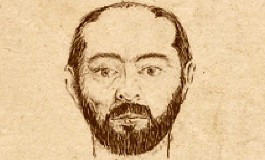
Manuel Blanco Romasanta
Murderer José María Jarabo
Murderer · Spain · 1958
José María Jarabo was a Spanish spree killer. · April 28, 1923 — José María Jar…
4 victims
José María Jarabo
Murderer · Spain · 1958
José María Jarabo was a Spanish spree killer. · April 28, 1923 — José María Jar…
4 victims
 Dr. John Baksh
Murderer · Spain · 1983
Dr. Madhu Baksh was a 42-year-old woman who was attacked at Keston Ponds, near…
1 victim
Dr. John Baksh
Murderer · Spain · 1983
Dr. Madhu Baksh was a 42-year-old woman who was attacked at Keston Ponds, near…
1 victim
 Edward Rulloff
Murderer · USA · 1845
Edward Rulloff was executed by hanging on May 18, 1871. His execution followed…
3 victims
Edward Rulloff
Murderer · USA · 1845
Edward Rulloff was executed by hanging on May 18, 1871. His execution followed…
3 victims
 Isaac Wood
Murderer · USA · 1855
Isaac L. Wood was a Livingston Republican mentioned in July 1858 execution cove…
2 victims
Isaac Wood
Murderer · USA · 1855
Isaac L. Wood was a Livingston Republican mentioned in July 1858 execution cove…
2 victims
 Lianne Smith
Murderer · Spain · 2010
Lianne Smith was convicted of murdering her children Daniel and Rebecca. Smith…
2 victims
Lianne Smith
Murderer · Spain · 2010
Lianne Smith was convicted of murdering her children Daniel and Rebecca. Smith…
2 victims
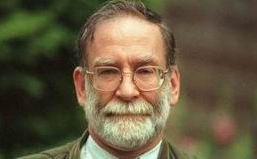 Dr. Harold Shipman
Serial killer · United Kingdom · 1974
Harold Fredrick Shipman was an English doctor who was convicted as a serial kil…
15 victims
Dr. Harold Shipman
Serial killer · United Kingdom · 1974
Harold Fredrick Shipman was an English doctor who was convicted as a serial kil…
15 victims
 James Rodgers
Murderer · USA · 1957
James W. Rodgers (August 3, 1910 – March 30, 1960) was an American who was sent…
1 victim
James Rodgers
Murderer · USA · 1957
James W. Rodgers (August 3, 1910 – March 30, 1960) was an American who was sent…
1 victim
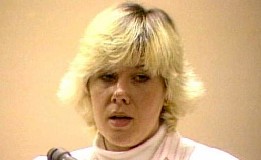 Catherine May Wood
Murderer · USA · 1987
Catherine May Wood was an American caregiver who worked at the Alpine Manor Nur…
5 victims
Catherine May Wood
Murderer · USA · 1987
Catherine May Wood was an American caregiver who worked at the Alpine Manor Nur…
5 victims
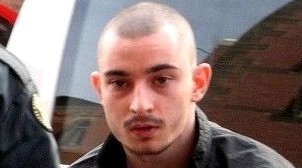 Gregory Despres
Homicide · Canada · 2005
July 1982 — Gregory Allan Despres was born in Minto, New Brunswick, Canada. · A…
2 victims
Gregory Despres
Homicide · Canada · 2005
July 1982 — Gregory Allan Despres was born in Minto, New Brunswick, Canada. · A…
2 victims
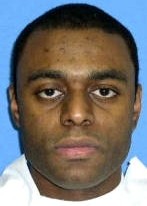 Justin Fuller
Murderer · USA · 1997
Justin Fuller was executed by lethal injection in Texas on August 24, 2006. · A…
1 victim
Justin Fuller
Murderer · USA · 1997
Justin Fuller was executed by lethal injection in Texas on August 24, 2006. · A…
1 victim
 Bruce Lee
Serial killer · United Kingdom · 1973
Bruce Lee was born Peter George Dinsdale in 1960. He later changed his name to…
26 victims
Bruce Lee
Serial killer · United Kingdom · 1973
Bruce Lee was born Peter George Dinsdale in 1960. He later changed his name to…
26 victims
- Gender
- male
- Country
- Spain
- Location
- Galicia, Spain
- Date of birth
- November 18, 1809
- Age at first offence
- 36
- Characteristics
- cannibalism, history of mental illness, torture, abuse
- Victim profile
- Manuela Garcia, 47, and her daughter Petra, 15 / Benita Garcia Blanco, 34, and her son Francisco, 10 / Antonia land, 37, and her daughter Peregrina / Josefa Garcia and her son Jose Pazos, 21 / María Dolores, 12
- Method of murder
- ????
- Date(s) of murder
- 1845 - 1852
- Years active
- 1845–1852
- Date of arrest
- September 1852
- Status
-
Died in custody
Sentenced to death on April 6, 1853; commuted to life imprisonment by Royal Order of May 13, 1854; died on December 14, 1863
Case identification
Manuel Blanco Romasanta (18 November 1809 — 14 December 1863) was Spain’s first documented serial killer.
Timeline
- 18 November 1809 — Manuel Blanco Romasanta was born in Regueiro, Ourense province.
- 1833 — His wife died.
- 1844 — Romasanta was charged with the murder of Vicente Fernández, the constable of León.
- 1844 — He was judged guilty by default and sentenced in absentia to 10 years imprisonment.
- 1852 — A complaint was lodged in the city of Escalona alleging deception of women and children, killing, and removal of fat for sale as soap.
- September 1852 — Romasanta was arrested in Nombela, in the province of Toledo.
- October 1852 — Allariz doctors presented a report to the court.
- April 6, 1853 — The court sentenced Romasanta to death by garrotte.
- May 13, 1854 — Queen Isabella II commuted the death sentence to life imprisonment by Royal Order.
- March 1854 — A new hearing upheld the original verdict from the court in Allariz: death by garrotte.
- 14 December 1863 — Romasanta died.
- 23 December 1863 — La Iberia (a liberal journal) included a short sentence reporting that Romasanta had died.
- 21 December 1863 — La Esperanza reported that he had died in Ceuta prison on 14 of that month from stomach cancer.
- 8 January 2012 — The bicentenary of Luciano Bastida’s birth was celebrated in La Rioja.
- 30 May 2009 — A TVG documentary aired investigating where he died.
- October 2011 — The “Xornadas Manuel Blanco Romasanta” symposium and exhibition was held in Allariz.
- 1885 — The Conxo asylum opened.
- 1860 — The census of 1860 described Ourense as predominantly a rural agricultural province.
Background
Romasanta was born in Regueiro, Ourense province, on 18 November 1809. He was originally named Manuela because it was initially thought that he was female. He was raised as a girl until the age of six when a doctor discovered his true sex.
He could read and write, which was very rare at the time, and it was believed his family was relatively wealthy. As a grown man he worked as a tailor. Various accounts described him as of small stature, between 1.37m (4'6") and 1.49m (4'11") in height.
After the death of his wife in 1833, Romasanta became a travelling salesman. He initially worked in Esgos and later throughout Galicia and Portugal. He also acted as a guide for travellers crossing the mountains to Castile, Asturias and Cantabria, providing opportunities for trade.
In 1844, Romasanta was charged with the murder of Vicente Fernández, the constable of León. Fernández had been found dead after attempting to collect a debt of 600 reales that Romasanta owed to a supplier in Ponferrada for the purchase of merchandise. For failing to appear, Fernández was judged guilty by default and sentenced in absentia to 10 years imprisonment.
The offence
Romasanta admitted to thirteen murders. He claimed he was not responsible because he was suffering from a curse that turned him into a wolf.
He described that when he transformed, he and other wolves attacked and ate a number of people because they were hungry. The killings were associated with the removal of human fat, which was believed to be sold locally as soap and for other purposes. Forensic evidence also indicated that the remains of victims exhibited signs of butchering.
Investigation
After several women and children who had hired Romasanta as a guide disappeared, the disappearances were not immediately noticed because Romasanta delivered letters to their families advising that they had arrived at their destinations and were settling in.
Suspicion was aroused when it was noticed that he sold their clothing locally. Rumours spread that he was selling soap made from human fat.
In 1852, a complaint was lodged in the city of Escalona alleging that Romasanta deceived women and children into travelling with him, then killed them, and removed their fat which he then sold.
Arrest and custody
Romasanta fled from the threat of imprisonment and lived in the small village of Rebordechao in the district of Vilar de Barrio for at least a year, using a false passport in the name of Antonio Gómez, a native of Nogueira in Portugal.
He was arrested in September 1852 in Nombela, in the province of Toledo, and brought to trial in Allariz in the province of Ourense.
Trial
During the trial, Galicia was in the middle of one of the worst famines of several that had plagued Galicia throughout the nineteenth century. The famine led to mass migrations and a noticeable increase in insanity.
The litigation was associated with a claim of Lycanthropy and was described as Cause Nº 1778 The Wolfman volume 36 of the courts of Allariz. It was based on a claim of Lycanthropy and the litigation was stated to have never been repeated in the history of Spanish law.
Romasanta claimed he was afflicted with Lycanthropy. In October 1852, Allariz doctors presented the court with a report on him. The report was based heavily on Phrenology and accused him of inventing his affliction. It noted that Lycanthropy can be determined from a “visceral examination” and craneoscopia, and it found no causes or motives for his behaviour. The doctors’ assessment included:
“His inclination to vice is voluntary and not forced. The subject is not insane, dim-witted or monomaniacal, nor were these [conditions] achieved while incarcerated. On the contrary, he [Romasanta] instead turns out to be a pervert, an accomplished criminal capable of anything, cool and collected and without goodness but [acts] with free will, freedom and knowledge.”
Romasanta admitted 13 murders and explained that he had been cursed and committed them after transforming into a wolf:
“The first time I transformed, was in the mountains of Couso. I came across two ferocious-looking wolves. I suddenly fell to the floor, and began to feel convulsions, I rolled over three times, and a few seconds later I myself was a wolf. I was out marauding with the other two for five days, until I returned to my own body, the one you see before you today, Your Honour. The other two wolves came with me, who I thought were also wolves, changed into human form. They were from Valencia. One was called Antonio and the other Don Genaro. They too were cursed... we attacked and ate a number of people because we were hungry.”
The prosecutor Luciano Bastida Hernáez asked Romasanta to demonstrate the transformation for the court. Romasanta replied that the curse only lasted for thirteen years and that he was now cured as that time had expired the previous week.
The court acquitted Romasanta of four of the murders he had confessed to after forensic evidence indicated those victims had died in real wolf attacks. The court found him guilty of the other nine, and the remains exhibited signs of butchering.
During the trial period, the court case lasted seven months and the transcript covered more than two thousand pages, bound in five volumes titled “Licantropia”.
Victims
The record included a list of named victims:
- Manuela Garcia, age 47, and her daughter Petra, 15, were killed in the Sierra de San Mamede while traveling to Santander.
- Benita Garcia Blanco, aged 34, and her son Francisco, 10, were killed in Corgo de Boi while traveling to Rua cantabras.
- Antonia land, 37 years old, and her daughter Peregrina were killed while traveling to Ourense.
- Josefa Garcia and her son Jose Pazos, 21 years old.
- María Dolores, 12 years old.
Sentencing
On April 6, 1853, Romasanta was sentenced to death by garrotte. The sentence included “1000 Real compensation to be paid for each victim”.
The case was sent for ratification to the Territorial Court in A Coruña. After considering the case for seven months, that court reduced the sentence to life imprisonment. The prosecution appealed against the reduction. A new hearing was set for March 1854, and it upheld the original verdict from the court in Allariz: death by garrotte.
Appeals
After the prosecution appealed the reduction, a new hearing was set for March 1854 and upheld the original verdict from the court in Allariz: death by garrotte.
Outcome and commutation
Queen Isabella II commuted the death sentence to life imprisonment by Royal Order of May 13, 1854.
A French hypnotist living in London, “Mr. Phillips”, had been following the case through reporting in French newspapers. Phillips wrote to José de Castro y Orozco, the Spanish Minister of Justice, stating that Romasanta was suffering from a monomania known as lycanthropy and was not responsible for his actions. Phillips claimed he had successfully treated the condition through hypnosis and asked that the execution be postponed so he could study the case. The Minister of Justice wrote to Queen Isabella II, who personally commuted the death sentence.
After commutation, Romasanta was transferred to a prison in Celanova.
People involved
Luciano Bastida Hernáez
Luciano Bastida Hernáez was the prosecutor. He gained considerable fame and prestige for the prosecution of Romasanta. He was made a Knight of the Royal and Distinguished Order of Charles III of Spain and was appointed to the Supreme Court. Bastida died in Ponferrada in 1872 at age 60.
His career was described as among the province of La Rioja’s “most illustrious sons” and the bicentenary of his birth was celebrated in La Rioja on 8 January 2012.
José de Castro y Orozco
José de Castro y Orozco was identified as the Spanish Minister of Justice who received a letter from “Mr. Phillips” about Romasanta.
“Mr. Phillips”
“Mr. Phillips” was described as a French hypnotist living in London who had followed reporting about the case. There was no documentary evidence for the identity of Mr. Phillips, but it was believed he was the French physician Joseph-Pierre Durand de Gros. He was described as having been exiled to Britain and later returning to France using the pseudonym “Dr. Phillips”. Durand de Gros was described as part of the movement that led to the incorporation and assimilation of “Braidism” in France, and his works on the influence of the mind were later developed by Sigmund Freud and Carl Jung.
Death and later reporting
The Celanova prison and its records no longer existed, and it was widely believed that Romasanta died within months of arriving. Locals said it was from illness. Another rumour stated that he died after being shot by a guard who wanted to see him transform.
A TVG documentary aired on May 30, 2009 investigated the possibility that he had died elsewhere, suggesting he had died in San Antón Castle in A Coruña.
In October 2011, “Xornadas Manuel Blanco Romasanta” was held in Allariz. Galician researchers Félix and Cástor Castro Vicente presented evidence that Romasanta had died in the prison of Ceuta on 14 December 1863. The evidence consisted of two newspaper articles:
- La Iberia, a liberal journal of 23 December 1863, included a short sentence reporting that Romasanta had died.
- La Esperanza newspaper dated 21 December 1863 reported on its front page:
“In Ceuta prison, the unfortunately famous Manuel Blanco Romasanta, known in all Spain as the werewolf as a consequence of his atrocities and misdeeds and who was sentenced to prison by the Court in La Coruña, died in that place on 14 of this month being the victim of a stomach cancer.”
Lycanthropy in Galicia
Galician tradition held that the seventh son of a family can be either normal or “lobishome” (a werewolf). If normal, the child would have the image of a cross or the wheel of Saint Catherine inside his mouth while a werewolf would not.
A person would become a werewolf by shedding his clothes and leaving his home at midnight each Friday. He would then visit seven villages, clothing himself in a skin at each one. He could be forced to return to his human form by making him bleed or by burning one the skins he wears.
Becoming a werewolf could be prevented by having one of his brothers sponsor the child for his Baptism and Confirmation. If none of the werewolfs brothers was eligible to be a sponsor (he must be over 16 and have taken confirmation), then baptizing the child with the name of “Bieito” would also prevent the transformation.
The text also stated that with the cultural movement associated with the Age of Enlightenment, lycanthropy became accepted as a real medical condition. It listed various causes put forward for the condition: Syphilis, Rabies, Porphyria, Epilepsy and belladonna poisoning.
It further described that by the middle of the 19th century psychiatric diagnoses of clinical Lycanthropy became the norm with psychopathological explanations for lycanthropy. It also said that according to the census of 1860, the province of Ourense was predominantly a rural agricultural province. It stated that there were no psychiatric hospitals until the opening of the Conxo asylum in 1885 and that the insane from Galicia were sent to a hospital in Valladolid. It added that there were no psychiatric doctors at all in Galicia and that the only doctors involved in the “werewolf of Allariz” case were the doctors of the town of Allariz.
Other details
Sacaúntos
The Romasanta trial was believed to be the origin of the story of “sinister” men with shoulder bags (Sacaúntos) who roamed the countryside murdering children for their fat. It was stated that the story was frequently used to scare provincial children in the 19th and early 20th centuries.
It also stated that human fat was believed to cure illness and that it was thought to be a lubricant superior to animal fats. It said the myth became more widespread in Spain with the spread of railways, and that Romasanta was the first of several people charged for selling human fat in the 19th century.
Modern conclusions
Since the early 1990s, the case had been the subject of studies by psychiatrists who saw the case as a missed opportunity to legitimize psychiatry in 19th century Spain. It stated that psychiatry at the time was generally ignored with the public and judges determining if a defendant was suffering from a mental disorder.
It also stated that Romasanta was not psychotic but suffered from a personality disorder, likely Antisocial personality disorder.
Popular culture
The entry included several works based on the case:
- “El bosque del lobo” (The Forest Wolf) was described as a 1968 Spanish drama film produced and directed by Pedro Olea and starring José Luis López Vázquez. It was stated to be based on the novel “El bosque de Ancines” (Ancines Forest) by Carlos Martínez-Barbeito, which was in turn based on the Werewolf of Allariz court case.
- “Romasanta” was described as a 2004 Spanish-English horror film produced by Fantastic Factory, directed by Paco Plaza and starring Julian Sands, Elsa Pataky and John Sharian. It was stated to be based on a script by Alfredo Conde, who was described as a descendant of one of the doctors involved in the original Werewolf of Allariz court case.
- Alfredo Conde was also said to have written the fictional novel “The Uncertain Memoirs of a Galician Wolfman: Romasanta”.

Spotted an error, or have more information about this case?