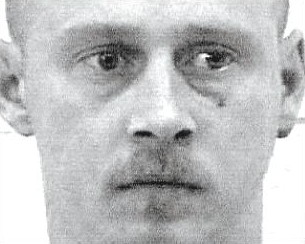
Arthur Ray Jenkins
Murderer Brian Kevin Rosenfeld
Murderer · USA · 1985
Brian Kevin Rosenfeld Brian Kevin Rosenfeld was sentenced to three concurrent l…
23 victims
Brian Kevin Rosenfeld
Murderer · USA · 1985
Brian Kevin Rosenfeld Brian Kevin Rosenfeld was sentenced to three concurrent l…
23 victims
 Russell Ellwood
Murderer · USA · 1991
Russell Ellwood was a former taxi driver. Authorities suspected him of killing…
20 victims
Russell Ellwood
Murderer · USA · 1991
Russell Ellwood was a former taxi driver. Authorities suspected him of killing…
20 victims
 Robert Martines Perez
Murderer · USA · 1994
Name: Robert Martines Perez · Other name used in proceedings: Robert Martinez P…
15 victims
Robert Martines Perez
Murderer · USA · 1994
Name: Robert Martines Perez · Other name used in proceedings: Robert Martinez P…
15 victims
 Billy Frank Vickers
Murderer · USA · 1993
Billy Frank Vickers Vickers was executed by lethal injection in Texas on Januar…
14 victims
Billy Frank Vickers
Murderer · USA · 1993
Billy Frank Vickers Vickers was executed by lethal injection in Texas on Januar…
14 victims
 Mick Philpott
Homicide · United Kingdom · 2012
Michael “Mick” Philpott was an Englishman who had gained notoriety as a crimina…
6 victims
Mick Philpott
Homicide · United Kingdom · 2012
Michael “Mick” Philpott was an Englishman who had gained notoriety as a crimina…
6 victims
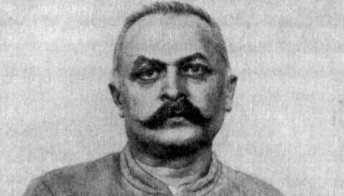 Ernst Wagner
Spree killer · Germany · 1913
Ernst August Wagner (September 22, 1874 – April 27, 1938) was a German spree ki…
14 victims
Ernst Wagner
Spree killer · Germany · 1913
Ernst August Wagner (September 22, 1874 – April 27, 1938) was a German spree ki…
14 victims
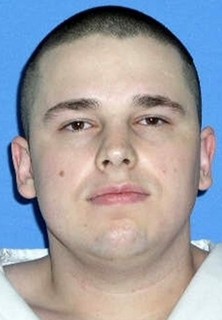 Ryan Dickson
Murderer · USA · 1994
Ryan Dickson was executed by lethal injection in Texas on April 26, 2007. Ryan…
2 victims
Ryan Dickson
Murderer · USA · 1994
Ryan Dickson was executed by lethal injection in Texas on April 26, 2007. Ryan…
2 victims
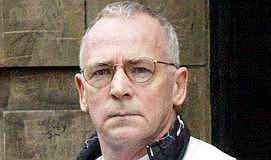 Angus Sinclair
Serial killer · United Kingdom · 1961
Angus Sinclair was sentenced to life in prison for the murders of Helen Scott a…
8 victims
Angus Sinclair
Serial killer · United Kingdom · 1961
Angus Sinclair was sentenced to life in prison for the murders of Helen Scott a…
8 victims
- Gender
- male
- Country
- USA
- Location
- Warren County, Virginia, USA
- Date of birth
- 1969
- Age at first offence
- 22
- Characteristics
- robbery
- Victim profile
- Floyd Jenkins, 72 (his uncle) and Lee Hopewell Brinklow, 69
- Method of murder
- Shooting (.22-caliber rifle)
- Date(s) of murder
- October 12, 1991
- Years active
- 1991
- Date of arrest
- —
- Status
-
Executed
Executed by lethal injection in Virginia on April 20, 1999
Case record: Arthur Ray Jenkins
Background
Arthur Ray Jenkins III was executed by lethal injection in Virginia on April 20, 1999. He was 29 at execution.
During his appeals, Jenkins’ attorneys admitted he killed the men but argued that he was mentally ill after years of physical and sexual abuse. Jenkins was judged to be mentally ill and placed on anti-psychotic medication when he was 13. When he was 16, he was returned to the custody of his parents, but he was frequently seen begging for food around Front Royal. Soon after, he was arrested for breaking into a gas station. He was sentenced to 7 years for burglary and grand larceny and was sent to adult prison at age 16. He received anti-psychotic medications while incarcerated.
In 1989, Jenkins was transferred to the Washington County jail for his own protection after he told authorities about a prison slaying. Jenkins’ appeal alleged “outrageous physical and mental abuse” at the hands of the chief jailer, Robert A. Clenenden Jr. The appeal accused Clenenden of giving inmates alcohol, marijuana and pills in exchange for sexual favors. Clenenden later served jail time on unrelated embezzlement charges, and denied the sex and drug claims.
Jenkins was released from the jail on Sept. 6, 1990 without supervision or medication, according to his lawyers, Charles F. Witthoefft and Ian J. Wilson. The lawyers said Jenkins had been out of jail 36 days when he committed the two murders.
The jury never heard of the alleged abuse suffered by Jenkins in jail. A federal appeals court ruled that evidence of the abuse could not be raised because it was not introduced earlier in the appeals process. The Virginia attorney general’s office said Jenkins’ criminal record is unchanged by the new abuse claims.
David Botkins, the attorney general’s spokesman, said: “Jenkins is a violent, predatory killer.” Botkins also said: “Jenkins admits his guilt, but continues to try and manipulate the system.”
The offence
On October 12, 1991, when Arthur Ray Jenkins was 22, Jenkins and a 16-year-old accomplice went to the home of Jenkins’ uncle, Floyd Jenkins.
Jenkins and the accomplice murdered Floyd Jenkins and Floyd Jenkins’ 69-year-old friend Lee Hopewell Brinklow. They robbed the home of wallets, cash and various other valuables. A court summary described that Jenkins and a younger brother, Kevin Frame, had been drinking when they went to a house shared by Jenkins’ uncle and Brinklow. An argument ensued. The younger Jenkins took a .22-caliber rifle from a bedroom and shot his uncle and Brinklow, then repeatedly stabbed the uncle.
Jenkins then broke into his aunt’s bedroom and stole money and other items.
Governor Jim Gilmore stated:
“Arthur Ray Jenkins III murdered Floyd Jenkins and Lee Brinklow in their home. Floyd Jenkins was 72 and Lee Brinklow was 69. The murders were excruciatingly brutal, involving use of both a firearm and a butcher knife. ”
Gilmore also stated:
“There never has been any question as to Jenkins' guilt. A jury convicted Jenkins of capital murder for the murder and robbery of Floyd Jenkins and Lee Brinklow and sentenced him to death. After reviewing all of the evidence, the judge imposed the death sentence.”
Investigation
The material does not contain investigation-specific details beyond the descriptions of the offence and appellate arguments.
Trial
A jury convicted Jenkins of capital murder for the murder and robbery of Floyd Jenkins and Lee Brinklow and sentenced him to death. The judge imposed the death sentence.
Before deciding on the death penalty, the jury and the judge heard a detailed recounting of Jenkins’ family history and record of violent behavior both in and out of institutions.
Sentencing
Jenkins was sentenced to death for capital murder for the murder and robbery of Floyd Jenkins and Lee Brinklow. The judge imposed the death sentence after reviewing the evidence.
Appeals
The convictions and death sentence were upheld on multiple appeals.
In his appeals, Jenkins’ attorneys admitted he killed the men but argued he was mentally ill after years of physical and sexual abuse, including alleged abuse in juvenile institutions and alleged “outrageous physical and mental abuse” in jail.
A federal appeals court ruled that evidence of the jail abuse could not be raised because it was not introduced earlier in the appeals process. The Virginia attorney general’s office said Jenkins’ criminal record was unchanged by the new abuse claims.
On Monday, the U.S. Supreme Court rejected Jenkins’ final appeal.
Outcome
Arthur Ray Jenkins III was executed in Virginia on April 20, 1999.
He was put to death by injection at the Greensville Correctional Center and was pronounced dead at 9:05 p.m.
When asked for a final statement, Jenkins said: “Forgive me for my sins”. He cried out several times as prison officials inserted needles that would carry the lethal chemicals into his body.
Governor Jim Gilmore stated that he declined to intervene after reviewing the Petition for Clemency, the numerous court decisions regarding the case, and the circumstances of the matter. Gilmore stated:
“Upon a thorough review of the Petition for Clemency, the numerous court decisions regarding this case, and the circumstances of this matter, I decline to intervene.”
Gilmore said the slayings of the two elderly men were “excruciatingly brutal” and that Jenkins, while on death row, had assaulted guards and was found with a razor blade fashioned into a knife. Gilmore also said Jenkins had assaulted guards and had been found with a razor blade fashioned into a knife.
Aftermath
Governor Jim Gilmore said Jenkins, even while on death row, had proved to be a threat to correctional officers and other inmates. Gilmore stated:
“Even while on death row Jenkins has proved to be a threat to correctional officers and other inmates. He was found in possession of a razor blade fashioned into a knife on one occasion. On other occasions he has assaulted prison guards, once slicing a guard's hand.”
Jenkins became the 6th condemned inmate to be put to death this year in Virginia and the 65th overall since Virginia resumed executions on August 10, 1982.
A handful of death penalty opponents lined the road with candles lit at their feet as the execution hour approached.
Spotted an error, or have more information about this case?