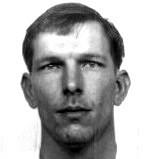
Joseph Jernigan
Murderer Ervil LeBaron
Murderer · USA · 1972
Ervil Morrell LeBaron (1925 to August 16, 1981) was the leader of a polygamous…
35 victims
Ervil LeBaron
Murderer · USA · 1972
Ervil Morrell LeBaron (1925 to August 16, 1981) was the leader of a polygamous…
35 victims
 Brian Kevin Rosenfeld
Murderer · USA · 1985
Brian Kevin Rosenfeld Brian Kevin Rosenfeld was sentenced to three concurrent l…
23 victims
Brian Kevin Rosenfeld
Murderer · USA · 1985
Brian Kevin Rosenfeld Brian Kevin Rosenfeld was sentenced to three concurrent l…
23 victims
 Marvin Gray
Murderer · USA · 1975
Marvin Gray was convicted killer who claimed responsibility for 23 slayings and…
23 victims
Marvin Gray
Murderer · USA · 1975
Marvin Gray was convicted killer who claimed responsibility for 23 slayings and…
23 victims
 Yahweh ben Yahweh
Murderer · USA · 1980
Yahweh ben Yahweh was born and legally named Hulon Mitchell Jr. (October 27, 19…
23 victims
Yahweh ben Yahweh
Murderer · USA · 1980
Yahweh ben Yahweh was born and legally named Hulon Mitchell Jr. (October 27, 19…
23 victims
 Russell Ellwood
Murderer · USA · 1991
Russell Ellwood was a former taxi driver. Authorities suspected him of killing…
20 victims
Russell Ellwood
Murderer · USA · 1991
Russell Ellwood was a former taxi driver. Authorities suspected him of killing…
20 victims
 Beverley Allitt
Serial killer · United Kingdom · 1991
Beverley Allitt was a nurse who suffered from the mental illness Munchausen’s S…
4 victims
Beverley Allitt
Serial killer · United Kingdom · 1991
Beverley Allitt was a nurse who suffered from the mental illness Munchausen’s S…
4 victims
 Will Purvis
Murderer? · USA · 1883
Will Purvis was a member of the White Caps, a group described as having foundat…
1 victim
Will Purvis
Murderer? · USA · 1883
Will Purvis was a member of the White Caps, a group described as having foundat…
1 victim
 William David Riley
Murderer · USA · 2000
William David Riley, Sr. was a 32-year-old married man with three children. His…
3 victims
William David Riley
Murderer · USA · 2000
William David Riley, Sr. was a 32-year-old married man with three children. His…
3 victims
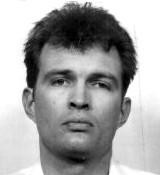 Larry Norman Anderson
Murderer · USA · 1982
Larry Norman Anderson was convicted in a Texas court in 1983 of capital murder…
1 victim
Larry Norman Anderson
Murderer · USA · 1982
Larry Norman Anderson was convicted in a Texas court in 1983 of capital murder…
1 victim
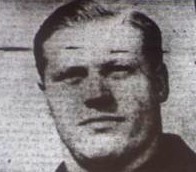 Tore Hedin
Spree killer · Sweden · 1951
September 1943 — Tore Hedin broke into a local brewery near his parental home t…
9 victims
Tore Hedin
Spree killer · Sweden · 1951
September 1943 — Tore Hedin broke into a local brewery near his parental home t…
9 victims
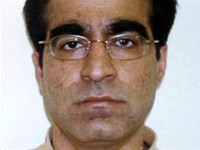 Zainulabedin Zaidi
Murderer · United Kingdom · 2000
Zainulabedin Zaidi murdered Shazia Zaidi and their children, Saba Zaidi and Zee…
3 victims
Zainulabedin Zaidi
Murderer · United Kingdom · 2000
Zainulabedin Zaidi murdered Shazia Zaidi and their children, Saba Zaidi and Zee…
3 victims
- Gender
- male
- Country
- USA
- Location
- Navarro County, Texas, USA
- Date of birth
- January 31, 1954
- Age at first offence
- 27
- Characteristics
- robbery
- Victim profile
- Edward Hale (male, 75)
- Method of murder
- Shooting (.410 gauge shotgun)
- Date(s) of murder
- July 3, 1981
- Years active
- 1981
- Date of arrest
- —
- Status
-
Executed
Executed by lethal injection in Texas on August 5, 1993
Case identity
Joseph Jernigan (January 31, 1954 – August 5, 1993) was a Texas murderer who was executed by lethal injection.
The offence
In 1981, a jury in Texas state court found Joseph Paul Jernigan guilty of the cold-blooded murder of Edward Hale.
On July 3, 1981, Joseph Paul Jernigan and an accomplice burglarized a home near the town of Dawson, Texas. When the owner, Edward Hale, returned, Jernigan attacked Hale, hitting him repeatedly in the face with an ashtray and attempting unsuccessfully to stab him with a kitchen knife. Jernigan then grabbed a nearby shotgun and shot Hale in the chest and neck. After the shooting, Jernigan continued to burglarize the house.
Jernigan admitted to murdering Hale after his arrest.
Accomplice
Roy Lamb was Jernigan’s accomplice. Lamb pleaded guilty as an accomplice and received a 30-year prison sentence. Lamb was paroled sometime in 1991.
Investigation and arrest
The sheriff arrested Jernigan several days after the burglary based on information his wife, Vicki Jernigan, provided. A few days after his arrest, Jernigan confessed to the murder of Hale.
Trial
On November 4, 1981, a jury convicted Jernigan of capital murder. The jury made the findings required by Texas law for the imposition of the death penalty, and the state trial court accordingly sentenced Jernigan to death.
Sentencing
Jernigan’s death sentence was based on the jury’s affirmative responses to these two questions:
- Was the conduct of the defendant that caused the death of the deceased committed deliberately and with the reasonable expectation that the death of the deceased would result?
- Is there a probability that the defendant would commit criminal acts of violence that would constitute a continuing threat to society?
Appeals
Direct appeal
On direct appeal, the Texas Court of Criminal Appeals affirmed the conviction and sentence. The court held that Jernigan’s confession was legally obtained, the jury was properly selected and instructed, there were no errors in the joinder of portions of the indictment, and the prosecutors’ closing argument did not deny Jernigan a fair trial.
The United States Supreme Court denied a petition for writ of certiorari.
Collateral review and federal habeas corpus
In March of 1984, Jernigan sought collateral review in the Texas state courts. After an evidentiary hearing, the state trial court found, inter alia, that Jernigan’s attorneys effectively assisted him at trial and adequately prepared for the sentencing phase of his trial. Accordingly, the state trial court denied Jernigan’s habeas petition. The Texas Court of Criminal Appeals also denied him relief.
At the time he petitioned the state court for habeas relief, Jernigan also petitioned the United States District Court, for the Northern District of Texas, for a writ of habeas corpus. Jernigan filed the petition on the docket of Judge Porter, who entered a stay of execution on March 16, 1984. Jernigan contended he was entitled to the writ on eighteen grounds. The respondent, James A. Collins, director of the Texas Department of Criminal Justice, moved for summary judgment, and both sides filed briefs with the court. After hearing oral argument, the district court adopted the findings of the state court and granted summary judgment in favor of Collins. Jernigan appealed.
United States Court of Appeals, Fifth Circuit (No. 92-1415)
Case caption:
980 F.2d 292 Joseph Paul Jernigan, Petitioner-Appellant, v. James A. Collins, Director, Texas Department of Criminal Justice, Institutional Division, Respondent-Appellee.
No. 92-1415 United States Court of Appeals, Fifth Circuit. Dec. 15, 1992. Rehearing Denied Jan. 20, 1993 Appeal from the United States District Court for the Northern District of Texas. Before JOLLY, DAVIS, and SMITH, Circuit Judges. E. GRADY JOLLY, Circuit Judge:
The court stated that in 1981, a jury in Texas state court found Jernigan guilty of the murder of Edward Hale and made the findings necessary to sentence Jernigan to death. Jernigan sought habeas corpus relief under 28 U.S.C. 2254 and contended that in the absence of certain errors by counsel and the trial judge, he would not have received the death penalty. The district court granted summary judgment for the respondent, Collins, and the Fifth Circuit affirmed the decision, finding no prejudice from alleged errors.
Mitigating evidence argument under Texas special issues
Jernigan argued that the Texas statutory scheme did not allow the jury to consider his mitigating evidence. The court described Texas’s affirmative questions used in the death sentencing scheme and discussed Graham v. Collins, Penry v. Lynaugh, and Cordova v. Collins.
The court stated that the Texas Special Issues allowed the jury to consider Jernigan’s mitigating evidence. It reasoned that Graham was the prevailing law in the circuit and that the jury could give effect to the mitigating evidence when it answered special issue number two relating to continuing threat to society. The court concluded that the jury found otherwise.
Ineffective assistance of counsel
Jernigan argued that the district court used the wrong standard when it concluded that his attorneys provided effective assistance of counsel and that the affidavits of Ms. Tullos Kozlowski and Lynn Malone created a genuine issue of material fact. The Fifth Circuit recounted the two-part standard for evaluating ineffective assistance of counsel claims under Strickland v. Washington, requiring deficient performance and prejudice leading to an unreliable result.
The court stated that the district court dismissed seven of Jernigan’s twelve ineffective assistance claims for lack of requisite specificity, and then considered the remaining five individually.
The court stated that the state habeas hearing found Jernigan’s attorneys investigated his background and prepared for the punishment phase. The Fifth Circuit held that Jernigan failed to establish prejudice. It also stated that federal law generally requires the district court to presume state factual findings are correct unless exceptions apply, and that Jernigan’s arguments did not satisfy those exceptions.
The Fifth Circuit addressed Jernigan’s contentions that the state court hearing was not full and fair and that material facts were not adequately developed, and it found those arguments frivolous or unsupported.
The court also discussed findings of fact numbers seventeen and nineteen and rejected Jernigan’s argument that the record did not support the state court’s findings. It described that Jernigan’s argument relied on an affidavit by Ms. Tullos Kozlowski and concluded that the record supported the state court’s findings. The court stated that Kozlowski had exaggerated her role in the trial and that further family testimony would not have added substantially.
Testimony from attorneys at sentencing phase (future dangerousness)
Jernigan argued that the testimony of three attorneys at the sentencing phase prejudiced his trial. The court identified the three attorneys as Mr. Lynn Malone, a district attorney in another court; Mr. Walden, an assistant attorney general for the state of Texas; and Mr. Nicholson, a former judge. They testified during the punishment phase that Jernigan was likely to commit violent criminal acts in the future.
The Fifth Circuit described the standard for reviewing state evidentiary rulings in habeas corpus and addressed the Texas precedents holding that lay opinion by a prosecutor could be relevant and admissible evidence in a capital case on future dangerousness.
The Fifth Circuit concluded that even if admission would have been error under Texas law, Jernigan had not shown that any error made the trial fundamentally unfair. The court also stated that the three attorneys’ testimony played a small role in the trial, considering other evidence including other crimes, behavior while in custody, and testimony from seven law enforcement officers that Jernigan was reputed to be a violent, dishonest person.
Allegation of bias
Jernigan also contended the state court was biased against him. The Fifth Circuit stated that the argument was waived because it was not raised before the district court and that it was without merit. The court stated that Jernigan’s bias argument was circular.
Disposition
The Fifth Circuit concluded:
III For all of the foregoing reasons, we AFFIRM the decision of the district court.
AFFIRMED.
Execution
Jernigan was executed by lethal injection on August 5, 1993, in Texas. The execution occurred at 12:31 a.m.
Final meal
Final/Special Meal: Two cheeseburgers, french fries, tossed salad with 1,000 island dressing and iced tea (refused last meal)
Aftermath and body donation
After his execution, Jernigan’s body was donated to science and became known as “The Visible Human.” His corpse was frozen, sliced into thousands of cross-sections, photographed, digitized, and put on the Internet.
The Visible Human Project processes described included:
- Jernigan was sectioned and photographed.
- The cadaver was frozen in a blue gel.
- Researchers cut Jernigan into four blocks, ground slices millimeter by millimeter, digitally photographed 1,878 cross sections, and scanned these into a computer.
- Digitized photos and CAT and MRI images from Jernigan were sent to the National Library of Medicine in Maryland and to the Scientific Computing Division at the National Center for Atmospheric Research in Boulder, Colorado.
- A headline on the World Wide Web was quoted: "The Visible Human Project: Can It Bring a Supercomputer to Its Knees?"
The described release and related activities included:
- By fall 1994, Michael Ackerman at the National Library of Medicine was ready to tell the world about the electronic Jernigan and to have his images posted on the Net.
- Early stories mentioned an anonymous thirty-nine-year-old donor from Texas who had died of a drug overdose.
- Critics argued the bandwidth use was excessive and set a precedent, and they compared the effect to cruising down a narrow country road with an overgrown tour bus.
- More than 900 companies, schools, and people wrote Ackerman about licenses in the first few months, and some 100 followed through.
- The narrative described that ordinary net users could dial up Jernigan Lite from the World Wide Web.
- It stated that slices were “seven megabytes” each in a spatial resolution of 2,048 by 1,216 pixels.
- It also described that refined versions could go anywhere in the world.
Other details
Victim
Edward Hale was 75 years old at the time of the murder.
Individuals mentioned in connection with sentencing and appeals
- James A. Collins, director of the Texas Department of Criminal Justice, Institutional Division, was the respondent in the Fifth Circuit appeal.
- Judge Porter entered a stay of execution on March 16, 1984.
- Jernigan’s last attorney was Mark Ticer.
- Jernigan’s lead attorney at the state habeas proceedings included Jimmy Morris.
- Jernigan’s brother-in-law and his sister-in-law gave mitigating evidence at the sentence phase, testifying that Jernigan was kind, gentle, and deserved a second chance.
- Jernigan’s brother-in-law testified that Jernigan had rededicated his life to God.
- The Fifth Circuit identified affidavits by Ms. Tullos Kozlowski and Lynn Malone as part of Jernigan’s arguments.
Quotes reproduced verbatim
Mark Ticer stated:
"It was like, matter of fact," his last attorney said of the donation. "It was a gift. He wasn't going to laud himself, pat himself on the back. We didn't send an embossed announcement that 'Paul Jernigan has donated his body to science and this is his ticket to redemption.'"
Mark Ticer stated:
"Paul," Ticer more or less said, "things are not going well. I guess I have to talk about your burial arrangements if they're going to execute you. I know your family doesn't have a lot of money."
Mark Ticer stated:
"There wasn't a condition attached to his gift," Ticer said.
Mark Ticer stated:
"Now he can be remembered for all the good he did rather than all the evil," Ticer said.
Mark Ticer stated:
"I think he'd be quietly delighted."
Michael Ackerman stated:
"We hold this out as an example of the future of health care,” Ackerman said.
Michael Ackerman stated:
He predicted that the study of medicine would become increasingly visual.
Michael Ackerman stated:
"These objects will have knowledge in them," Michael Ackerman said, "so they know how they relate to each other and the rest of the scheme. Say you ask for the heart. What you get of course is the not a picture of the heart but the objects that made up the heart that your software has now rendered as the heart. If you point to something on the heart, it can open up because it's made up of these objects. And if you point to something on the margin of the heart and say "What is attached here?" that object on the margin knows what its nearest neighbor is even though it's not in the picture. And it knows to go back to the database and bring up what's attached to it."
Martha Pelster stated:
"I kind of keep it on a pretty even level," she said. "I don't have too much trouble with it."
Martha Pelster stated:
"Not too much. Getting emotionally involved with something like that--you don't want to discuss it. It isn't relevant to what we're doing."
Martha Pelster stated:
"You'd think we'd have trouble sectioning bone," Pelster said, "but that's not been the case. Bone always cuts very clean. But sometimes we have a lot of trouble with the tendons. The tendons are such that they don't want to shear off cleanly, and so a lot of time we did hand scalpel work on each slice. So the slices might take ten minutes each instead of four minutes each."
Martha Pelster stated:
"Definitely. We just did the best we could."
Martha Pelster stated:
"There were definitely a few. We never were to the point where we torpedoed the whole project. It would be more a possibility of losing a slice. We never came close to botching the whole thing. You look back and you see a little dot of ice here or there, things like that. You do the best you can. But I think it turned out well."
Martha Pelster stated:
"You think computers are so precise," Martha Pelster said, "but they're not. Things are always going wrong."
Martha Pelster stated:
"When you look at this cadaver," Pelster said of the digitized Jernigan, "everything is still in its orientation. When you go in and dissect, you take a lot of stuff out. If you cut something wrong or cut through something and toss the object into the reject bin, you've lost it. But with this visible male, you can go back in again. You can see what happened before your lab partner went in there and messed up your cadaver. This cross-sectional anatomy is going to be the be-all and end-all. A book can't have this many cross sections, this good."
Stephen King and Robin Cook were mentioned in the narrative about the "whole scenario" but they were not described as participants in the case.
Spotted an error, or have more information about this case?