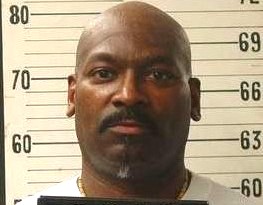
Cecil Johnson
Murderer Ervil LeBaron
Murderer · USA · 1972
Ervil Morrell LeBaron (1925 to August 16, 1981) was the leader of a polygamous…
35 victims
Ervil LeBaron
Murderer · USA · 1972
Ervil Morrell LeBaron (1925 to August 16, 1981) was the leader of a polygamous…
35 victims
 Brian Kevin Rosenfeld
Murderer · USA · 1985
Brian Kevin Rosenfeld Brian Kevin Rosenfeld was sentenced to three concurrent l…
23 victims
Brian Kevin Rosenfeld
Murderer · USA · 1985
Brian Kevin Rosenfeld Brian Kevin Rosenfeld was sentenced to three concurrent l…
23 victims
 Marvin Gray
Murderer · USA · 1975
Marvin Gray was convicted killer who claimed responsibility for 23 slayings and…
23 victims
Marvin Gray
Murderer · USA · 1975
Marvin Gray was convicted killer who claimed responsibility for 23 slayings and…
23 victims
 Yahweh ben Yahweh
Murderer · USA · 1980
Yahweh ben Yahweh was born and legally named Hulon Mitchell Jr. (October 27, 19…
23 victims
Yahweh ben Yahweh
Murderer · USA · 1980
Yahweh ben Yahweh was born and legally named Hulon Mitchell Jr. (October 27, 19…
23 victims
 Arline Lawless
Murderer · USA · 2012
Arline Lawless, also known as Arline Seavey, was a 26-year-old Waldoboro woman…
1 victim
Arline Lawless
Murderer · USA · 2012
Arline Lawless, also known as Arline Seavey, was a 26-year-old Waldoboro woman…
1 victim
 Edward Lionel Terry
Murderer · New Zealand · 1905
Edward Lionel Terry was a white supremacist and murderer. He was born at Sandwi…
1 victim
Edward Lionel Terry
Murderer · New Zealand · 1905
Edward Lionel Terry was a white supremacist and murderer. He was born at Sandwi…
1 victim
 David Hotyat
Mass murderer · France · 2003
David Hotyat was convicted of murdering the five members of the Flactif family…
5 victims
David Hotyat
Mass murderer · France · 2003
David Hotyat was convicted of murdering the five members of the Flactif family…
5 victims
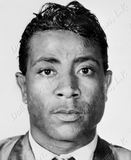 DeVernon LeGrand
Serial killer · USA · 1963
DeVernon LeGrand, who called himself a bishop and headed St. John’s Pentecostal…
12 victims
DeVernon LeGrand
Serial killer · USA · 1963
DeVernon LeGrand, who called himself a bishop and headed St. John’s Pentecostal…
12 victims
- Gender
- male
- Country
- USA
- Location
- Davidson County, Tennessee, USA
- Date of birth
- August 29, 1956
- Age at first offence
- 24
- Characteristics
- robbery, rape?, rapist
- Victim profile
- Bobby Bell Jr., 12; Charles House, 35, and James Moore, 41 / Laron Williams (fellow prisoner)
- Method of murder
- Shooting / Beating
- Date(s) of murder
- July 5, 1980 / 1985
- Years active
- 1980–1985
- Date of arrest
- July 6, 1980
- Status
-
Executed
Executed by lethal injection in Tennessee on December 2, 2009
Case identification
Cecil Johnson
STATUS and disposition
Cecil Johnson Jr. was executed by lethal injection in Tennessee on December 2, 2009.
The offence
Cecil Johnson walked into Bob Bell's Market. The owner's 12-year-old son was told to empty the cash register. Johnson then shot the boy in the head, wounded his father and a friend in the store, and gunned down James Moore and Charles House outside while they sat in a taxicab.
The victims were:
- Bobbie Bell (described as “12-year-old,” and as Bobby Bell Jr. in other parts of the material)
- James Moore (described as 41, and as James E. Moore in other parts of the material)
- Charles House (described as 35 in other parts of the material)
Investigation
Cecil Johnson was arrested on July 6, 1980, as the result of information given police officers by Bob Bell immediately after the robberies and murders.
At trial, Bell and Louis Smith identified Johnson as the perpetrator of the crimes. Debra Ann Smith, a customer who came into the market with children, also identified Johnson and placed him behind the store counter with Bell, Bell's son, and Louis Smith. Johnson was also connected to the crimes by the testimony of Victor Davis, who had spent most of July 5, 1980, in the company of Johnson.
During the police investigation, Davis made statements to the prosecution and defense that provided Johnson with an alibi. Davis said that he and Johnson were together continuously from about 3:30 p.m. on July 5 until about midnight and that at no time did they go to Bell's Market. However, four days before trial, and after Davis's arrest on unrelated charges of carrying a deadly weapon and public drunkenness, Davis gave a statement to the prosecution incriminating Johnson. At trial, Davis testified in accord with his later incriminating statement. He testified that:
- he and Johnson left Franklin, Tennessee, at approximately 9:25 p.m. on July 5 and arrived near Bell’s Market shortly before 10:00 p.m.
- Johnson left Davis’s automobile after stating he was going to rob Bob Bell and was going to “try not to leave any witnesses”
- Davis next saw Johnson some five minutes later near Johnson’s father’s house, roughly a block from Bell's Market
- Johnson was carrying a sack and pistol; when he entered Davis’s automobile, Johnson said, “I didn’t mean to shoot that boy.”
- Davis discarded the gun was discarded; Davis later retrieved it and sold it the next day for $40
- after Davis picked up Johnson, they drove directly to Johnson’s father’s house, arriving shortly after 10:00 p.m.
- in the presence of Johnson’s father, Johnson took money from the sack, counted approximately $200, and gave $40 of this money to Davis
- Johnson told his father that he and Davis had been gambling and that gambling was the source of the money
Johnson testified on his own behalf and denied being in Bell's Market on July 5, 1980. He testified that:
- he never left Davis’s automobile on the trip from Franklin to Johnson’s father’s house in Nashville
- he arrived at his father’s house shortly before 10:00 p.m.
Johnson’s father testified that Johnson arrived a few minutes before 10:00, just before the 10:00 p.m. news began.
Johnson’s girl friend fixed the time as being ten to fifteen minutes before 10:00 p.m.
The court record also described the state’s theory that Johnson planned to rob the convenience store on 12th Avenue South and leave no witnesses.
Arrest
Information Bell gave to police officers immediately after the robbery led to Johnson’s arrest on July 6, 1980.
Trial
Charges and verdicts
A Tennessee jury convicted Johnson of:
- three counts of first degree murder (for the deaths of Robert Bell III, James E. Moore, and Charles H. House as described in the direct appeal narrative)
- two counts of assault with intent to commit murder (described as the shooting of Lewis Smith and Robert Bell, Jr.)
- two counts of armed robbery
Sentencing recommendation and sentence
The jury recommended:
- death on each count of first degree murder
- consecutive life sentences on each of the remaining counts
The trial court accepted the recommendation and imposed the death penalty. In the direct appeal narrative, the sentence imposed on each murder conviction was death by electrocution, and appellant was sentenced to serve four consecutive life terms on the assault with intent to commit murder in the first degree and robbery convictions.
Key trial evidence details
The material described the robbery as occurring on July 5, 1980, at about 9:45 p.m., at about 9:55 p.m. to 10:00 p.m. based on the trial proof described in the direct appeal narrative.
Appellant pointed a gun at Mr. Bell and ordered him and Lewis Smith behind the store counter where Bobbie Bell stood. While Johnson and captives were behind the counter, a woman and two children entered. Johnson concealed his gun, told captives to act naturally and to wait on customers, and after customers left, ordered Bobbie Bell to fill a bag with money from the cash register. Johnson searched Smith and Bell, taking Smith’s billfold. Charles House stepped into the market and was ordered out by Johnson; House obeyed. Almost immediately thereafter, Johnson began shooting:
- Bobbie Bell was shot first and later died from wounds
- Smith threw himself on Bobbie to protect him; Smith was shot in the throat and hand
- Johnson walked toward Bob Bell and pointed the gun at Bell’s head and pulled the trigger; Bell survived because a shot deflected and hit Bell’s wrist, breaking it After Johnson ran from the market, Bell got a shotgun under the store counter ready to chase but heard two gunshots outside. Bell saw Johnson standing beside an automobile near the market entrance. Bell chased after Johnson but was unable to do so successfully. As Johnson fled, he shot and killed a cab driver and his passenger:
- the cab driver was identified as James E. Moore
- the passenger was identified as Charles House
Witness credibility and alleged prosecution conduct in trial context
The direct appeal narrative described Johnson’s argument about improprieties and a cumulative effect denying his right to a fair trial, focusing on the prosecution’s handling of Victor Davis, who had been an alibi witness for the defense until he changed his story shortly before trial. The direct appeal narrative also described:
- objections relating to interrogation of Davis, detention, questioning absent counsel, time of day, and Davis’s physical condition
- the grant of immunity to Davis from prosecution for crimes growing out of the Bell incident
- objections that prosecution withheld notice of the existence of Debra Ann Smith until eleven days before trial began
- objections about a five to ten minute differential between the time frame for the crime set in the motion and the time frame proven by witnesses
- objections at sentencing regarding exclusion of expert testimony about deterrence and moral/ethical standards, and youth and accountability
Sentencing
The jury unanimously found aggravating circumstances existed and fixed the sentence at death for each of the three murder convictions. In the direct appeal narrative, the jury found:
- as to each of the three murders, the aggravating circumstance that the murder was committed for the purpose of avoiding, interfering with, or preventing a lawful arrest or prosecution of the defendant or another
- as to the killing of Robert Bell, III, additional aggravating circumstances that:
- the defendant knowingly created a great risk of death to two or more persons, other than the victims murdered during his act of murder
- the murder was committed while the defendant was engaged in committing robbery The jury found that there were no mitigating circumstances sufficiently substantial to outweigh the statutory aggravating circumstances.
Appeals
Direct appeal
In State v. Johnson, 632 S.W.2d 542 (Tenn. 1982) (Direct Appeal), the Tennessee Supreme Court affirmed the several convictions and sentences. The Tennessee Supreme Court affirmed after finding no material error in the trial record, including affirming convictions for three counts of first degree murder, two counts of assault with intent to commit murder in the first degree, and two counts of robbery accomplished with the use of a deadly weapon; the death sentence was imposed for each first-degree murder conviction and four consecutive life terms were imposed on the remaining convictions.
Postconviction relief
In Johnson v. State, 797 S.W.2d 578 (Tenn. 1990) (Postconviction Relief), a petition for post-conviction relief was considered. The Criminal Court, Davidson County, denied the petition. On appeal, the Court of Criminal Appeals affirmed in part and reversed in part and set aside the death sentence as imposed and remanded for a new sentencing hearing on first degree murder sentences. The Tennessee Supreme Court reversed the Court of Criminal Appeals’ judgment remanding for new sentencing, reinstated the trial court’s sentences, and affirmed denial of relief in all other respects.
Federal habeas corpus
In Johnson v. Bell, 525 F.3d 466 (6th Cir. 2008) (Habeas), the United States Court of Appeals affirmed the district court’s denial of habeas corpus. The appellate holdings included:
- suppressed evidence was not material for Brady purposes
- the alibi witness was not coerced by prosecution to change his story
- Johnson procedurally defaulted certain improper vouching claims
- questioning did not rise to the level of reversible prosecutorial misconduct
- prosecutor's improper remarks during closing argument did not amount to reversible prosecutorial misconduct
- differential between time frame for the crime set forth in prosecution's motion and time frame presented by government witnesses did not amount to reversible prosecutorial misconduct
- defense counsel's failure to seek a continuance did not deprive petitioner of effective assistance of counsel
Outcome
Cecil Johnson was executed by lethal injection in Tennessee on December 2, 2009.
Aftermath and last moments
During the execution, Johnson refused a final meal and met with his spiritual adviser, Rev. James Thomas, of the Jefferson Street Missionary Baptist Church.
Johnson’s family witnessed the execution separately from other witnesses. Johnson was declared dead at 1:34 a.m.
Final words attributed to Johnson included verbatim statements:
“I love you,’’ repeatedly to his family
“You all stay strong, and keep trusting in the Lord,” he said
After the execution, wife Sarah Johnson said:
“You didn't put away an evil man, you put away a holy man.”
Brother David Johnson said:
“Cecil didn't want anyone to have pity,” and “He already gave himself to the Lord.”
Other details
Execution preparations and related legal filings
A federal judge temporarily barred medical examiners from performing an autopsy on Cecil Johnson Jr. until a court hearing. Johnson said he did not want the state to perform a routine autopsy on his body after his execution, saying it would violate his religious beliefs. The Davidson County medical examiner, Bruce Levy, stated that his office was bound by law to conduct autopsies on bodies of anyone who died of unnatural causes, including prisoners executed, and stated it was the only way to determine whether the execution was carried out properly. A hearing was set for 1 p.m. Thursday, Dec. 10.
Additional prison-related conviction mentioned
In 1987, Johnson was one of two death row inmates convicted in the 1985 beating death of fellow prisoner Laron Williams at the old Tennessee Penitentiary. The material states that Johnson and another inmate were involved in a fight during an exercise period that led to the death of another inmate, and that Johnson was charged with voluntary manslaughter.

Spotted an error, or have more information about this case?