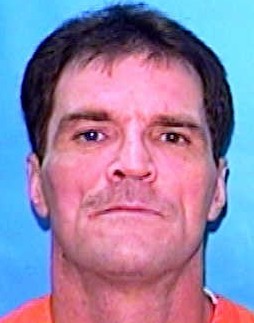
Douglas Whitton
Mass murderer Gameel Al-Batouti
Mass murderer · USA · 1999
Gameel Al-Batouti (also rendered “Gamil ElBatouty” or “El Batouty” in U.S. offi…
216 victims
Gameel Al-Batouti
Mass murderer · USA · 1999
Gameel Al-Batouti (also rendered “Gamil ElBatouty” or “El Batouty” in U.S. offi…
216 victims
 Timothy McVeigh
Mass murderer · USA · 1995
Timothy James McVeigh (April 23, 1968 – June 11, 2001) was a United States Army…
168 victims
Timothy McVeigh
Mass murderer · USA · 1995
Timothy James McVeigh (April 23, 1968 – June 11, 2001) was a United States Army…
168 victims
 Julio Gonzalez
Mass murderer · USA · 1990
Julio Gonzalez was sentenced to 174 twenty-five-year sentences (a total of 4,35…
87 victims
Julio Gonzalez
Mass murderer · USA · 1990
Julio Gonzalez was sentenced to 174 twenty-five-year sentences (a total of 4,35…
87 victims
 David Burke
Mass murderer · USA · 1987
David Augustus Burke (May 18, 1952–December 7, 1987) was an employee of USAir,…
43 victims
David Burke
Mass murderer · USA · 1987
David Augustus Burke (May 18, 1952–December 7, 1987) was an employee of USAir,…
43 victims
 Seung-Hui Cho
Mass murderer · USA · 2007
Seung-Hui Cho was a mass murderer who shot and killed 32 people and wounded man…
32 victims
Seung-Hui Cho
Mass murderer · USA · 2007
Seung-Hui Cho was a mass murderer who shot and killed 32 people and wounded man…
32 victims
 George Jo Hennard
Mass murderer · USA · 1991
George Jo Hennard carried out a mass killing at a Luby’s Cafeteria in Killeen,…
23 victims
George Jo Hennard
Mass murderer · USA · 1991
George Jo Hennard carried out a mass killing at a Luby’s Cafeteria in Killeen,…
23 victims
 Shawn Bentler
Mass murderer · USA · 2006
Shawn Bentler (born 1983 or 1984) was a convicted murderer from Bonaparte, Iowa…
5 victims
Shawn Bentler
Mass murderer · USA · 2006
Shawn Bentler (born 1983 or 1984) was a convicted murderer from Bonaparte, Iowa…
5 victims
 Timothy McKinney
Murderer · USA · 1997
Timothy McKinney was the defendant, convicted in Tennessee. · Don Williams was…
1 victim
Timothy McKinney
Murderer · USA · 1997
Timothy McKinney was the defendant, convicted in Tennessee. · Don Williams was…
1 victim
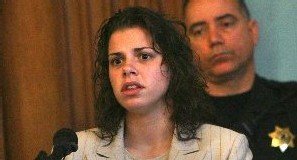 Katherine Bunnell
Murderer · USA · 2004
Defendant: Katherine Bunnell (alias Jane Doe) Victim: Thomas “T.J.” Wright (3-y…
1 victim
Katherine Bunnell
Murderer · USA · 2004
Defendant: Katherine Bunnell (alias Jane Doe) Victim: Thomas “T.J.” Wright (3-y…
1 victim
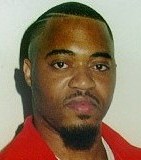 Christopher Dwayne Peterson
Spree killer · USA · 1990
Christopher Dwayne Peterson (born January 20, 1969, in Gary, Indiana, USA) was…
7 victims
Christopher Dwayne Peterson
Spree killer · USA · 1990
Christopher Dwayne Peterson (born January 20, 1969, in Gary, Indiana, USA) was…
7 victims
 Sharon Carr
Homicide · United Kingdom · 1992
Sharon Louis Carr was born 21 December 1979. She was twelve years old when she…
1 victim
Sharon Carr
Homicide · United Kingdom · 1992
Sharon Louis Carr was born 21 December 1979. She was twelve years old when she…
1 victim
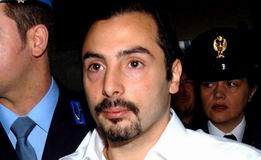 Nicola Sapone
Murderer · Italy · 2004
Nicola Sapone was one of the members of the suspected satanic cult “The Beasts…
3 victims
Nicola Sapone
Murderer · Italy · 2004
Nicola Sapone was one of the members of the suspected satanic cult “The Beasts…
3 victims
- Gender
- male
- Country
- USA
- Location
- New Orleans, Louisiana, USA
- Date of birth
- 1960
- Age at first offence
- 37
- Characteristics
- alcohol
- Victim profile
- Gail Coulon, Owen Reeves, Joseph Donovan and nine year old Joey Whitehead
- Method of murder
- St abbing with knife - Beating with a rock
- Date(s) of murder
- October 16, 1997
- Years active
- 1997
- Date of arrest
- —
- Status
-
Life imprisonment
Sentenced to life in prison without parole on February 26, 1999
Case Overview
Douglas Whitton was tried in Louisiana for the October 1997 slayings of four people in a house at 4026 Baudin. A jury convicted Whitton of four counts of first-degree murder, and he was sentenced to life imprisonment at hard labor without benefit of parole, probation, or suspension of sentence.
Whitton was described as a recovering alcoholic and as having pleaded not guilty. He was originally from Canton, Texas, and was arrested a day after the bodies were found.
Timeline
- October 10, 1997, 1:15 a.m. — A Sweet’s Inn Motel registration card was dated and was in the name of Douglas Whitton.
- October 11, 1997 — Pat Bailey last saw Reeves on the previous Saturday, October 11.
- October 13, 1997 — Two checks were cashed at Hibernia National Bank.
- October 14, 1997 — Another check was cashed at Hibernia National Bank.
- October 15, 1997 — Another check was cashed at Hibernia National Bank.
- October 16, 1997 — Jamie Rauch and her boyfriend met Whitton on the Moonwalk; later that day Whitton was carrying a duffel bag when David Smith saw him.
- October 17, 1997 — Detective Marco Demma arrived at 4026 Baudin at 10:24 a.m.; Jamie Rauch and her boyfriend met with police and helped bring Whitton out to carry a bag of dog food at which point police arrested him.
- October 17, 1997 — Joie Cutrer received a call to proceed to 4026 Baudin after a report of a missing man.
- October 18, 1997 — Detective Marco Demma was contacted by Detective Michael Eskine with information on Whitton’s whereabouts.
- February 22–26, 1999 — Whitton was tried by a twelve-member jury.
- March 5, 1999 — The trial court denied Whitton’s motion for new trial; after waiving all delays, he was sentenced.
- September 27, 2000 — The Court of Appeal of Louisiana, Fourth Circuit affirmed the convictions and sentences.
The offence
Whitton was charged with four counts of first-degree murder in the bludgeoning and stabbing deaths of four people in the house at 4026 Baudin.
The victims were:
- Gail Coulon
- Owen Reeves
- Joseph Donovan
- 9-year-old Joey Whitehead
Jamie Rauch testified that on the night of October 16, 1997, she and her boyfriend met Whitton on the Moonwalk and that Whitton told her he had done something bad.
Investigation
Joie Cutrer testified that on October 17, 1997, he received a call to proceed to 4026 Baudin because a co-worker reported a missing man who had not been seen for a week and had gone to his home in an effort to locate him. Cutrer noticed that the mail was still in the mailbox and that the door was locked. He walked down the alleyway, saw a partially open window with a fan, saw flies at the window, and encountered the smell of a decaying human body. Cutrer removed the fan, climbed into the window, and saw blood on the floor. He found the body of a white male on the floor and the body of a white female on the bed. He secured the residence and called for assistance.
Sergeant Guidry from the Crime Lab arrived; the officers reentered the house, which was in total disarray. Cutrer said there were hundreds of flies and maggots all over the bodies.
Detective John Ronquillo testified that he and Detective Marco Demma proceeded to 4026 Baudin and found four bodies. Ronquillo described a blood-stained knife wrapped in newspaper in the front room, a child’s desk, a bed, and a dresser with children’s clothing in a second room, and a frog gig in that room. In the third room, he found the bodies of Gail Coulon and Owen Reeves, with Coulon nude from the waist down, appearing to have sustained a severe head injury, and her throat cut; Ronquillo also said she had what looked like prong marks in her chest. Reeves’ body was next to the bed, and Ronquillo testified Reeves had a severe laceration to his neck and was beaten about the head. Ronquillo said the wounds on Reeves’ head looked like they were made with a rock found in the front room and that a cinder block was found in the third room.
Ronquillo testified about items in the kitchen, including a bent and bloody knife in the sink, and about a utility room with two beds, where Joseph Donovan’s body was on one of the beds with severe head trauma and a throat cut. Ronquillo also testified that the body of 9-year-old Joey Whitehead was wrapped up in a quilt, with two stab wounds to the chest and a cut throat.
Louis Schwander testified that he worked with Joseph Donovan at Orleans Sheet Metal Works and Roofing and that he last saw Donovan on a Friday; Donovan was supposed to come to work the next day but did not appear.
Julie Chen testified that she taught Joey Whitehead at A. D. Crossman Elementary and that the last time she saw him was October 10, 1997.
Stephanie Pellegrini testified that she worked at the Stone Center with Owen Reeves and that it was unusual for Reeves to miss work for an extended period. She testified that when Reeves did not show up for work and did not call, she and Mickey Reyes went to his house to obtain the address for police. They saw that the mail was still in the mailbox and walked down the alleyway. They saw flies and smelled a horrible odor and used a neighbor’s phone to call the police. Both Pellegrini and Reyes said they last saw Reeves on the previous Friday.
Pat Bailey testified that he had last seen Reeves on the previous Saturday, October 11. Records showed Reeves arrived for work at 8:05 a.m. and left at 12:18 p.m. Bailey stated Reeves was alone when he left and was on foot, and Reeves said he was going to a meeting.
Xavier Bowie testified that in October 1997 he visited Reeves’ home and that he told his boss to call the police when Reeves missed work and did not call. Bowie said he last saw Reeves the previous Saturday and that he was supposed to take Reeves home but did not because Reeves was with a customer. Bowie testified that when he went to the house to look for Reeves he saw the mail and curtains moving and the fan blowing; he did not notice any tears or bloodstains on the curtains.
Marion Legrand testified about teaching Joey Whitehead at A. D. Crossman Elementary and last seeing him on October 10, 1997.
James Brown testified that Owen Reeves, Gail Coulon, and her son Joey Whitehead had lived next door for a couple of years. Brown remembered that two people from the Stone Center were looking for Reeves; Brown granted permission to walk down his driveway to look at the back part of the house. Brown said the police were called and that he lent the officer a ladder to climb into the window. Brown testified that two men lived with Reeves, Coulon, and her son: one tall and one fat; he identified Whitton as the fat one.
Craig Peel testified that he used to walk Joey Whitehead to school and that in the days before the bodies were found he saw Whitton at the house, once with the door open watching television and once with a green duffel bag. Peel thought the day he saw Whitton with the duffel bag was the Wednesday before the Friday when the police found the bodies. Peel did not recall seeing or hearing anything unusual, but he noticed the mail had not been picked up.
Rainey Lutyhe testified she lived in one half of a shotgun double and that Reeves, Ms. Coulon, her son, and Whitton lived in the other half. Lutyhe said it was unusual because it was usually noisy with screaming and hollering; she did not recall hearing loud noises, screaming, or struggling from next door. She stated that she left around 11:00 a.m. on the Saturday before the bodies were discovered for a wedding, did not see Whitton that day or on the following days, and did not see or hear other occupants, but heard footsteps at night. Lutyhe said she began to smell a terrible smell on the Tuesday that followed and thought it was dead rats.
Detective Marco Demma testified that he arrived at 4026 Baudin at 10:24 a.m. on October 17 and found the shotgun home in disarray. Demma testified that he saw a blue blanket or quilt covering the opening between the first room and the next room, which was Joey Whitehead’s bedroom, and saw a knife on the dresser in Joey’s room. Demma testified that the mattress from Joey’s bed was in the front room. Demma said he found a gig pole on a love seat in Joey’s room and saw a blood trail that looked like a drag mark extending from the front room to the second room and then into the hallway. Demma testified that household cleaning products and personal cleaning products were found in the bathroom, and that there was a mop in the toilet and blood on the floor. He testified he found the bodies of Gail Coulon and Owen Reeves in the next room and that Coulon’s body was on the bed and Reeves’ body on the floor. Demma testified there was blood on the doorway leading from the bedroom to the kitchen and that he found a bent, bloodstained knife in the kitchen sink. Demma further testified that in the last room he found Joey Whitehead’s body wrapped in a bedspread and Joseph Donovan lying on a mattress clad only in his underwear. Demma said there was blood spattered on the wall and that a knife was found on the mattress after Donovan’s body was removed. Demma testified that a fourth knife was found in the front room underneath scattered newspapers.
Demma testified that after speaking with neighbors, Whitton was developed as a suspect. Demma stated that on October 18, 1997, he was contacted by Detective Michael Eskine with information on Whitton’s whereabouts. Demma testified he went to an abandoned warehouse at Piety and Chartres, saw Whitton leaving with a female subject, searched the warehouse, and found a green duffel bag, some cut hair, and a knife.
Arrest
Detective Marco Demma testified that Whitton was placed under arrest and informed of his rights. Demma testified that Whitton appeared to understand his rights and that he was again informed of his rights at the homicide office. Demma stated Whitton signed a waiver of rights form. Demma testified he did not suggest a statement to Whitton and did not intimidate, force, or threaten him.
Jamie Rauch testified that after reading about four murders, she was pressured to tell the police where Whitton was, went with police to the warehouse where she, her boyfriend, and Whitton were staying, and convinced Whitton to come out to help carry a bag of dog food, at which point police arrested Whitton.
David Smith testified that when he saw Whitton on October 16, 1997, Whitton was carrying a duffel bag. Smith said he had known Whitton for four months, and that on October 16 they hung out together and then stayed in an apartment on Decatur Street. Smith testified that the following afternoon Whitton said he had done something wrong and was worried and scared. Smith testified that that night Whitton went to the “squat,” a warehouse at Piety and Chartres where Smith and Rauch lived.
Confession and statements
Detective Marco Demma testified that Whitton first indicated that he did not remember much and that because the people were dead when he woke, he must have killed them. Demma testified Whitton said he had noticed Reeves was not at home and knew that because Reeves would connect him to the deaths he would have to kill Reeves. Demma testified that after Whitton was confronted with information showing he was lying, Whitton said he could visualize himself strike and kill Gail Coulon and refused to say anything about Joey or Donovan. Demma testified that Whitton agreed to give a recorded statement and that the statement was videotaped and played for the jury. Demma testified he denied prodding Whitton with information taken from Smith’s statement given to Detective Ronquillo.
In the confession, Whitton stated that he “flew off the handle.” Whitton stated he never got along with Gail Coulon and that she made fun of him and stole from him. He remembered her looking up at him and said he hit her with his hands. Whitton stated that he “sliced” the victims and poked them with a frog gig to make sure they were dead. Whitton testified he could not remember doing anything to Donovan (referred to as J. D.) or to Joey, but he recalled cutting Donovan’s throat because he heard sounds coming from Donovan. Whitton recalled Reeves walking in and asking where Gail and Joey were. Whitton recalled Reeves asking why a table was on its side; Whitton said when Reeves went to investigate after Whitton said that there was a mouse in there, Whitton hit Reeves on the head with a piece of marble. Whitton testified he dragged Reeves’ body into Gail’s room and put it beside the bed. He said Donovan’s body was in the back on the mattress and Joey’s body was by the washing machine. Whitton admitted writing and cashing checks and staying in motels on the Westbank. Whitton stated that when he ran out of money he met with his “kids” by the river. He stated that he met David Smith and others when he worked as a security guard at the Drop-in Center. He admitted he told Smith what had happened.
Jimmy Benz testified about conversations with Whitton in the context of earlier encounters near the house. Jimmy testified that on a Friday he last saw Joey and that after hearing arguing, he walked up to the kitchen window and heard Coulon and Reeves telling defendant to get out of the house. Jimmy testified he ran off after a decision to avoid trouble and that the next morning he went to Joey’s house at 11:00, knocked, and defendant answered. Jimmy testified defendant said they had gone to Mississippi and then slammed the door shut, and that similar events occurred when he later visited at 4:00. Jimmy testified that defendant came to the door and repeated that everyone was in Mississippi and shut the door again, after which Jimmy did not return until Monday afternoon. Jimmy testified that he and Jennifer went back, the door opened a little, and James looked inside and saw an Indian curtain separating the front room from Joey’s room. Jimmy testified he later returned to place a toy on the back steps and heard the same booming sounds and repeated statement that everyone was in Mississippi, after which defendant shut the door and Jimmy ran back.
Jennifer DuRousseau testified she played with Joey Whitehead and that she and Jimmy heard hollering from inside the house. Jennifer testified that on Monday she and Jimmy returned and the door flew open when Jimmy knocked. Jennifer testified she saw a blanket with “red stuff” on it and that defendant ran to the door and told them everyone was in Mississippi before slamming the door shut. Jennifer testified they returned home, and later with Jimmy’s mother they went back so that Jimmy could put a toy on the back steps and she stayed by Mr. Brown’s gate.
Marlene Maher testified that Whitton moved into 4026 Baudin in August of 1997 and that Joe Donovan moved in about three or four weeks after that. Maher testified she identified the piece of stone found inside the house as having been part of a column on the front porch. Maher testified about planning for tutoring and that her son sent Jimmy to get Joey at around 11:00 on Saturday morning; Jimmy later returned without Joey. Maher testified that on the following Tuesday she, Jimmy, and her niece went to Joey’s to return a toy and that as her son placed the toy on the back steps she heard Whitton yell at her son that he did not want him to go back down there and that everyone was in Mississippi. Maher testified she hollered back to her son to tell Whitton to shut up and that he was just putting a toy on the step. Maher testified that she saw Whitton the next day sitting on the porch with a green duffel bag and that she saw him at around 5:30 pick up the bag and walk toward Pierce Street and that this was the last time she saw Whitton.
Evidence and forensic findings
Edward Delery testified that he went to the crime scene to look at various blood print patterns on objects in the house, particularly one on the washing machine. Delery testified he took photographs and used an electrostatic dust lift and a rubber lift to get impressions of the blood prints from various places in the house.
Glen Burmaster testified that many fingerprints were not suitable for identification and that none of the suitable prints matched Whitton’s prints. Burmaster testified there were no prints from any victims for comparison due to decomposition of the bodies.
Joseph Tafaro analyzed hairs found at the scene and concluded that hairs found on two shampoo bottles were those of Whitton and had minute traces of blood. Tafaro testified that hairs on the bent steak knife and a brown-handled knife were either Gail Coulon’s or Joey Whitehead’s. Tafaro also found microscopic traces of blood on hair found in the warehouse where Whitton was arrested. Tafaro testified he could not type any of the blood.
Paula Eady, assistant vice-president of Hibernia National Bank, testified that Owen Reeves had an account with Hibernia. Eady identified four checks written on Reeves’ account and made payable to Whitton, and she testified the checks were cashed at the bank. Eady testified two checks were cashed on October 13, 1997, and the other two were cashed on October 14 and 15.
James Dupuis, a document examination expert, took a handwriting exemplar from Whitton and compared it with the signature on motel registration cards. Dupuis testified it was highly probable they were of common authorship. Dupuis compared the exemplar with handwriting, including Reeves’ signature, on the four checks and concluded all four checks were of common authorship with the exemplar.
Chester Meek testified as an expert in forensic entomology that forensic entomology involved studying insect species that appeared at the beginning of decomposition and those found in later stages. Meek testified he received containers of insects taken from the bodies of the four victims, studied them, and concluded the oldest larvae were six days old, meaning the insect eggs were laid on the Saturday before the bodies were found. Meek testified that flies do not become active before dawn and that he could not provide the exact hour of death and could not say whether the bodies were available to flies before dawn on that Saturday.
Detective Marco Demma testified about the cleaning products and blood trail and the arrangement of items found in the rooms, including knives and a gig pole.
Medical evidence (autopsies)
Dr. Richard Tracy performed autopsies on the four victims. Tracy testified that Coulon died of blunt force injuries to the head, that her body was in advanced decomposition, and that Tracy found five stab wounds in her chest. Tracy testified the wounds were inflicted after death because there was no bleeding and that Coulon had a cut across the front of her neck consistent with postmortem injury. Tracy testified Coulon’s head injuries occurred on the left side and were inconsistent with being given while she lay face up in bed.
Regarding Joseph Donovan, Tracy testified Donovan died from blunt force injuries to the head with thirteen individual blows appearing to have occurred. Tracy testified Donovan was in advanced decomposition and was struck in three patterns behind the left ear, in the forehead, face, and jaw, and in the left temple area. Tracy testified Donovan had a shallow slash across the front of the neck.
Tracy testified Joey Whitehead was stabbed four times, and that the wound to the neck was the fatal one.
Regarding Owen Reeves, Tracy testified Reeves died from blunt force injuries to the head, with one injury to the back of the head and one to the right temple, and that Reeves had a slash across the front of the neck.
Tracy testified that for all four victims he found a heavy population of maggots.
Trial
The trial court granted Whitton’s motion to suppress the confession, but the Court of Appeal of Louisiana granted the State’s writ application and reversed the trial court’s ruling. The appellate decision was State v. Whitton, 98-1587 (La.App. 4 Cir. 8/12/98), unpub., with writ denied 98-2413 (La.11/11/98), 728 So.2d 871.
The appellate court noted that on February 22–26, 1999, Whitton was tried by a twelve-member jury. The jury found him guilty as charged on all four counts and recommended life imprisonment on all four counts.
Sentencing
On March 5, 1999, the trial court denied Whitton’s motion for new trial. After waiving all delays, Whitton was sentenced in accordance with the jury’s recommendation to life imprisonment at hard labor without benefit of parole, probation, or suspension of sentence.
Appeals
Whitton appealed to the Court of Appeal of Louisiana, Fourth Circuit. The court identified the case as STATE v. WHITTON, State of Louisiana v. Douglas WHITTON, No. 99-KA-1953, and the panel included Chief Judge ROBERT J. KLEES, Judge WILLIAM H. BYRNES, III, and Judge MIRIAM G. WALTZER. The counsel for the plaintiff-appellee was Harry F. Connick, District Attorney, and Jane L. Beebe, Assistant District Attorney, New Orleans, Louisiana. Counsel for the defendant-appellant was Christopher A. Aberle, Louisiana Appellate Project, Mandeville, Louisiana.
Assignment of error no. 1
Whitton complained that the trial court erred in denying his fundamental right to present a defense. He argued that he should have been allowed to present testimony from Dr. Sarah Deland and Dr. Marc Zimmerman that he suffered from blackouts caused by substance abuse to challenge the probative value of his confession. He asserted the purpose of using this evidence was to show he was truthful when he initially told police he did not recall committing the murders of Gail Coulon, Joey Whitehead, and Joseph Donovan, and that the facts he related in his confession had been supplied to him by Marco Demma prior to and during the taping of the confession.
The trial court previously granted a motion to suppress the confession on the grounds that Whitton invoked his right to counsel, and the appellate court reversed that ruling and the Supreme Court denied writs. The appellate decision included State v. Whitton, 98-1587 (La.App. 4 Cir. 8/12/98), unpub., writ denied 98-2413 (La.11/11/98), 728 So.2d 871.
Prior to trial, Whitton filed a motion in limine to introduce certain medical evidence without entering a plea of not guilty by reason of insanity, and the trial court denied the motion with written reasoning. The trial court’s written judgment stated:
The Defendant's ex parte motion in limine to allow the introduction of certain medical evidence without the plea of not guilty by reason of insanity is hereby denied. There is no evidence to suggest the statement given to the arresting officers by the defendant is inherently unreliable. The defense is attempting to circumvent the real issue, namely, the admissibility of defendant's statement which was previously reviewed by the court. In fact, in a ruling by the Fourth Circuit, State v. Douglas Whitton, (writ 98-K-1587), to determine the admissibility of defendant's statement the court stated that “their review of the videotaped interrogation indicated that defendant's statements were clear and unambiguous.” A decision this court cannot disturb. The court considered La. C.Cr.P. art 703[sic], which establishes, that in order to preserve defendant's constitutional rights, “the State bears the burden of proving that defendant's mental defect or diminished mental capacity did not preclude defendant from giving a voluntary and knowing confession, which this court is convinced does not exist in the present case. Defendant's emergency writ application (99-K-0437) to this court was denied. Defendant filed a writ application (99-KK-0501) with the Supreme Court; and, this writ application was denied with three justices dissenting. Two of the dissenting justices stated that they would grant the writ application and issue an order allowing defendant to present psychiatric evidence of any substance induced memory blackout at the time of his interrogation and confession in accordance with La. C.Cr.P. art. 703, subject to a limiting instruction to the jury that it was not to consider this evidence as having any bearing on defendant's mental capacity at the time of the offense.
The appellate court discussed that the denial did not preclude review on appeal from the final judgment and addressed La. C.Cr.P. art. 651 and La. C.Cr.P. art. 703(G) relating to evidence concerning circumstances surrounding a confession. The appellate court referenced State v. Van Winkle, 94-0947 (La.6/30/95), 658 So.2d 198. The appellate court concluded that exclusion of Dr. Deland’s testimony was harmless error after noting that Dr. Deland testified during the penalty phase. Dr. Deland diagnosed Whitton with substance induced persisting amnestic disorder, stating there would be periods where he would not remember even when not acutely intoxicated. During cross-examination, Dr. Deland read an excerpt from Whitton’s confession about the killing of Owen Reeves. On redirect, the following exchange occurred:
Q. Now the prosecutor wanted you to read this statement or parts of this statement and you read just a few parts of it, correct?
A. Yes.
Q. Do you know whether or not before giving this statement he spent two hours, three hours, or six hours with the police rehearsing answers? Do you know that?
A. No, I don't know that.
Q. Can you say for a fact that these were answers he definitely gave with no coaching or no advice or not being shown evidence or anything? Can you say that?
A. No, I don't know anything else about the statement except the statement.
Q. Do you know what possibly could have precipitated the giving of this statement?
A. I would have no idea.
The appellate court also discussed that Dr. Marc Zimmerman’s proposed testimony was not detailed in the record, but the court found exclusion would be harmless in context, and it noted that before arrest Whitton admitted guilt to David Smith, and that that statement was very similar to the later confession. The appellate court held assignment of error no. 1 was without merit.
Assignment of error no. 2
Whitton complained that the trial court erred by denying his request to admonish the jury regarding alleged State misrepresentations of important evidence during closing rebuttal argument. The defendant objected when the prosecutor made the following argument:
And you can-the Defense may want you to believe that there was someone else running around October the 10th, 1:15 a.m. in the morning registering under the name of Douglas Whitton from Texas. It was this gentleman. It was this man right here, Douglas Whitton. And that's the crucial moment, isn't it? That's the crucial moment when Douglas Whitton had just been asked to leave this family's home for whatever reason and check into the Sweet's Inn. At that moment, at 1:15 a.m. in the morning, that's when he makes the decision.
Whitton’s immediate objection was overruled. At the conclusion of closing arguments, Whitton moved for a mistrial based on the grounds that the State intentionally, purposefully, and maliciously misrepresented to the jury that Whitton was at Sweet’s Inn on Friday night and Saturday morning so it fit the theory that Whitton had been excluded from the house. Whitton pointed out that 1:15 a.m. would have been in the predawn hours of Friday rather than Saturday. He also moved for an instruction that 1:15 a.m. on October 10 was in the predawn hours of Friday, not Saturday. The trial court denied the motion and the requested instruction.
The appellate court cited La. C.Cr.P. art. 774 and State v. Langley for the standard governing closing argument and the requirement for reversal based on influence on the jury’s recommendation. The appellate court concluded that the requested admonishment/instruction would have amounted to a factual finding by the court, which was prohibited by La. C.Cr.P. art. 772. The appellate court also held it did not appear the erroneous statement influenced the jury and contributed to the verdict in light of other evidence of guilt, especially the confession. 2 was without merit.
Outcome
The Court of Appeal of Louisiana, Fourth Circuit affirmed the convictions and sentences of Douglas Whitton. The appellate court stated: “Accordingly, for the reasons expressed above the convictions and sentences of defendant Douglas Whitton are hereby affirmed.” The court concluded: “CONVICTIONS AND SENTENCES AFFIRMED.”
Other details
Reverend Stan Helton testified that Whitton worked for him at the Church of Christ and that Whitton said he had a drinking problem. Helton testified he helped get Whitton into Bridge House where Whitton stayed until August 8, 1997 and that Helton advised against Whitton moving in with Reeves and Ms. Coulon.
Sarah Smith testified about Whitton’s working at the church starting in January 1997, working with children, and painting around the church.
On the question of Houseroom events, the trial included testimony from neighbors and friends about noises, arguing, and encounters with Whitton at and near the house, including references to “boom, boom, boom” sounds heard near Joey’s house.
Whitton’s motel registration and check evidence placed him in connection with Sweet’s Inn on October 10, 1997 and with checks cashed in October 1997 made payable to him from Owen Reeves’ account at Hibernia National Bank.
Spotted an error, or have more information about this case?