Li Wenxian
Serial killer Yang Xinhai
Serial killer · China · 2000
Yang Xinhai (simplified Chinese: 杨新海; pinyin: Yáng Xīnhǎi; 17 July 1968–14 Febr…
67 victims
Yang Xinhai
Serial killer · China · 2000
Yang Xinhai (simplified Chinese: 杨新海; pinyin: Yáng Xīnhǎi; 17 July 1968–14 Febr…
67 victims
 Yang Xinhai
Serial killer · China · 2000
Yang Xinhai (simplified Chinese: 杨新海; pinyin: Yáng Xīnhǎi; 17 July 1968–14 Febr…
67 victims
Yang Xinhai
Serial killer · China · 2000
Yang Xinhai (simplified Chinese: 杨新海; pinyin: Yáng Xīnhǎi; 17 July 1968–14 Febr…
67 victims
 Huang Yong
Serial killer · China · 2001
Huang Yong was born in 1974 in Henan, China. He was executed on December 26, 20…
17 victims
Huang Yong
Serial killer · China · 2001
Huang Yong was born in 1974 in Henan, China. He was executed on December 26, 20…
17 victims
 Bai Baoshan
Serial killer · China · 1996
Bai Baoshan was executed by shot in the head on May 6, 1998. · October 16, 1997…
14 victims
Bai Baoshan
Serial killer · China · 1996
Bai Baoshan was executed by shot in the head on May 6, 1998. · October 16, 1997…
14 victims
 Daniel Joe Hittle
Mass murderer · USA · 1973
Daniel Joe Hittle was executed by lethal injection in Texas on December 6, 2000…
7 victims
Daniel Joe Hittle
Mass murderer · USA · 1973
Daniel Joe Hittle was executed by lethal injection in Texas on December 6, 2000…
7 victims
 Raymond Lee Stewart
Spree killer · USA · 1981
Raymond Lee Stewart was a serial killer convicted and sentenced to death in two…
6 victims
Raymond Lee Stewart
Spree killer · USA · 1981
Raymond Lee Stewart was a serial killer convicted and sentenced to death in two…
6 victims
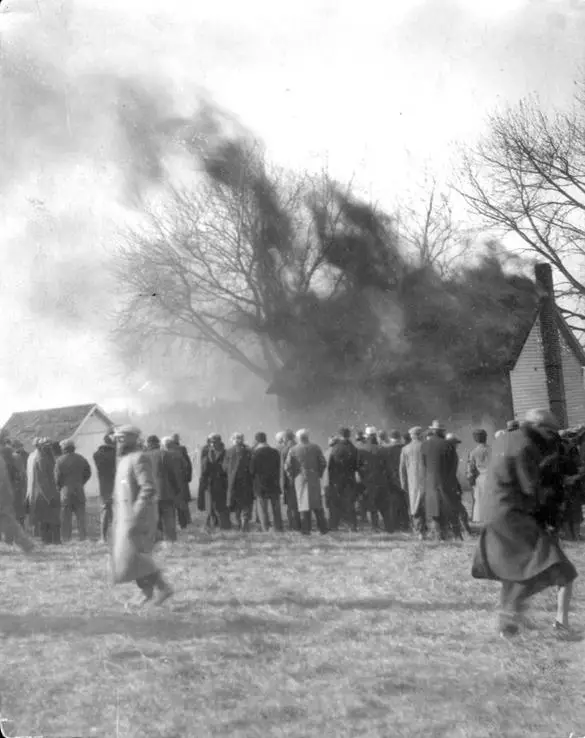 Raymond Gunn
Murderer · USA · 1930
January 11, 1904 — Raymond Gunn was born in Maryville. · September 1925 — Gunn…
1 victim
Raymond Gunn
Murderer · USA · 1930
January 11, 1904 — Raymond Gunn was born in Maryville. · September 1925 — Gunn…
1 victim
 Colin Ferguson
Mass murderer · USA · 1993
Colin Ferguson was convicted of the December 7, 1993 shooting of 25 people aboa…
6 victims
Colin Ferguson
Mass murderer · USA · 1993
Colin Ferguson was convicted of the December 7, 1993 shooting of 25 people aboa…
6 victims
 Mary Koontz
Murderer · USA · 2009
Mary Koontz was 60 years old at the time of the murder trial. She had been a fo…
1 victim
Mary Koontz
Murderer · USA · 2009
Mary Koontz was 60 years old at the time of the murder trial. She had been a fo…
1 victim
- Gender
- male
- Country
- China
- Location
- Guangzhou, Guangdong province, China
- Date of birth
- 1952
- Age at first offence
- 39
- Characteristics
- revenge, rape, mutilation, dismemberment
- Victim profile
- Women (prostitutes)
- Method of murder
- St abbing with knife - Strangulation - Hitting with a hammer
- Date(s) of murder
- 1991 - 1996
- Years active
- 1991–1996
- Date of arrest
- November 1996
- Status
-
Executed
Executed on December 18, 1996
Background
Li Wenxian was a farmer from the southern Guangdong province in China. Li migrated to Guangzhou in 1991 and found work with a construction team. He was described as one-time farmer from southern Guangdong province who had moved to Guangzhou after migrating in 1991.
The killings were referred to as a serial case in Guangzhou (formerly Canton). The women were reported to have been killed in Guangzhou and dumped in rubbish heaps in suburbs where Guangzhou’s “floating population” lived. The murdering stopped and later resumed.
The offence
Li Wenxian was sentenced to death for killing 13 women. He was reported to have strangled and stabbed 13 women and smashed their heads with a hammer out of revenge for being cheated by a prostitute when he first moved to Canton, Guangdong’s provincial capital, to work in construction. In all, Li took 17 women to an area in east Canton between April 1992 and November 1996, with 13 women murdered and one seriously hurt.
The first victim was reportedly found on February 22, 1991. She was described vaguely as a woman in her early twenties. Her genitals were carved out with a knife. The mutilation did not prevent police from finding unspecified “evidence of sexual intercourse.”
Five more slayings followed in the next six months. Each victim was reportedly subjected to sexual assault, then smothered, stabbed, or strangled. After that, the bodies were dismembered, stuffed in rice bags, and dumped on rubbish heaps in the bleak suburbs.
The murders stopped after the early slayings, then later continued for another four years. Some victims were reported to have been bludgeoned with a hammer in addition to being choked and stabbed repeatedly. By November 1996, 13 women were dead.
In custody, Li confessed to the attacks and told police he was motivated by revenge against all prostitutes because one of them had cheated him a short time after his arrival in Guangzhou.
A later victim survived an attack and identified Li Wenxian as her attacker. She was identified as Li’s latest victim left alive after his first mistake in November 1996.
Investigation
Chinese authorities were reported to have faced difficulties in dealing with serial killers, with state propaganda denying the existence of crime in a “workers’ paradise.” The case was later described as exposed after a corpse appeared in Hong Kong.
Chinese authorities learned the grim truth over a span of two decades from other serial killers, including GENNADIY MIKHASEVICH (33 victims), ANDREI CHIKATILO (55 dead), ANATOLY ONOPRIENKO (at least 52 slain), and “IVAN THE RIPPER” (never publicly identified).
The case was reportedly exposed when a seventh victim washed ashore in the nearby British colony of Hong Kong in March 1992. The killing was described in the South China Morning Post account as follows: number seven had been slit from throat to stomach, then crudely stitched shut again, and her fingers severed almost as an afterthought. Because no women were reported missing from Hong Kong, it was assumed the corpse had floated in from mainland China, and thus the “Guangzhou Ripper” was belatedly exposed.
Zhu Minjian, head of Guangzhou’s provincial Criminal Investigation Department, told reporters: “In all my thirty years with the force, I have never come across anything like this. Perhaps he copied from the West.” Zhu said there had been “progress” in the case, but he was not prepared to share details. Zhu declared: “We’re putting a lot of effort into this case”. “We’ve got to solve it”.
Arrest
Li Wenxian was identified by the woman who was left alive after Li’s attack. In custody, Li confessed to the attacks.
Trial
Li was convicted by the Intermediate People’s Court on charges of murder, rape and robbery.
Sentencing
On December 18, 1996, the Canton Intermediate People’s Court sentenced Li Wenxian to death.
Li was sentenced to death for crimes including murder, rape and robbery.
Outcome
Li Wenxian was executed on December 18, 1996.
Other details
Li was described as having migrated to Guangzhou in 1991 and having found work with a construction team.
A secondary description stated that Li, 44, reportedly strangled and stabbed 13 women and smashed their heads with a hammer out of revenge for being cheated by a prostitute. The same description stated that in total Li took 17 women to an area in east Canton between April 1992 and November 1996, with 13 women murdered and one seriously hurt.
The case was described as having had no press coverage in China at first, marking it as a “success” in terms of propaganda, even though the murderer remained at large. The deaths by November 1996 and the survival of the latest victim enabled identification of Li Wenxian.

Spotted an error, or have more information about this case?