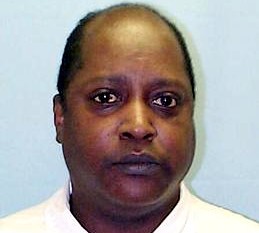
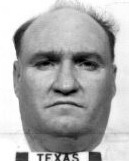
Aaron Lee Jones
Murderer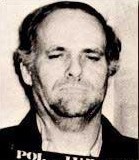 Ervil LeBaron
Murderer · USA · 1972
Ervil Morrell LeBaron (1925 to August 16, 1981) was the leader of a polygamous…
35 victims
Ervil LeBaron
Murderer · USA · 1972
Ervil Morrell LeBaron (1925 to August 16, 1981) was the leader of a polygamous…
35 victims
 Brian Kevin Rosenfeld
Murderer · USA · 1985
Brian Kevin Rosenfeld Brian Kevin Rosenfeld was sentenced to three concurrent l…
23 victims
Brian Kevin Rosenfeld
Murderer · USA · 1985
Brian Kevin Rosenfeld Brian Kevin Rosenfeld was sentenced to three concurrent l…
23 victims
 Marvin Gray
Murderer · USA · 1975
Marvin Gray was convicted killer who claimed responsibility for 23 slayings and…
23 victims
Marvin Gray
Murderer · USA · 1975
Marvin Gray was convicted killer who claimed responsibility for 23 slayings and…
23 victims
 Yahweh ben Yahweh
Murderer · USA · 1980
Yahweh ben Yahweh was born and legally named Hulon Mitchell Jr. (October 27, 19…
23 victims
Yahweh ben Yahweh
Murderer · USA · 1980
Yahweh ben Yahweh was born and legally named Hulon Mitchell Jr. (October 27, 19…
23 victims
 Jane LaMarsh
Murderer · Canada · 2009
Name: Jane LaMarsh Jane LaMarsh was a 50-year-old woman from Wallaceburg, Ontar…
2 victims
Jane LaMarsh
Murderer · Canada · 2009
Name: Jane LaMarsh Jane LaMarsh was a 50-year-old woman from Wallaceburg, Ontar…
2 victims
 Gwynne Evans
Murderer · United Kingdom · 1964
Gwynne Evans was convicted for the capital murder of John Alan West, committed…
1 victim
Gwynne Evans
Murderer · United Kingdom · 1964
Gwynne Evans was convicted for the capital murder of John Alan West, committed…
1 victim
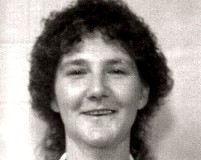 Lois Ann Thacker
Murderer · USA · 1984
Lois Ann Thacker Thacker was sentenced to death on June 27, 1985. The sentence…
1 victim
Lois Ann Thacker
Murderer · USA · 1984
Lois Ann Thacker Thacker was sentenced to death on June 27, 1985. The sentence…
1 victim
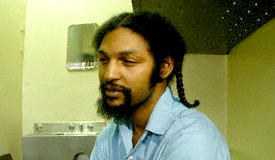 Dalton Prejean
Homicide · USA · 1974
Dalton Prejean Dalton Prejean (December 10, 1959 - May 18, 1990) was an America…
2 victims
Dalton Prejean
Homicide · USA · 1974
Dalton Prejean Dalton Prejean (December 10, 1959 - May 18, 1990) was an America…
2 victims
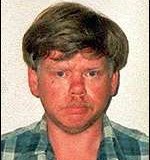 Russell Eugene Weston
Homicide · USA · 1998
Russell Eugene Weston Jr. was born December 28, 1956 and used the nickname “Rus…
2 victims
Russell Eugene Weston
Homicide · USA · 1998
Russell Eugene Weston Jr. was born December 28, 1956 and used the nickname “Rus…
2 victims
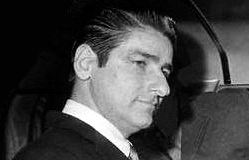 Albert DeSalvo
Serial killer · USA · 1962
Albert DeSalvo (November 3, 1931 - November 25, 1973) was a serial killer activ…
13 victims
Albert DeSalvo
Serial killer · USA · 1962
Albert DeSalvo (November 3, 1931 - November 25, 1973) was a serial killer activ…
13 victims
- Gender
- male
- Country
- USA
- Location
- Blount County, Alabama, USA
- Date of birth
- April 23, 1952
- Age at first offence
- 26
- Characteristics
- robbery
- Victim profile
- Willene and Carl Nelson
- Method of murder
- St abbing with knife / Shooting
- Date(s) of murder
- November 10, 1978
- Years active
- 1978
- Date of arrest
- —
- Status
-
Executed
Executed by lethal injection in Alabama on May 3, 2007
Case identification
- Name: Aaron Lee Jones
- Accomplice: Arthur Lee Giles
- County of conviction: Blount County
- Jurisdiction: Alabama (capital case)
STATUS / execution
Aaron Lee Jones was executed by lethal injection in Alabama on May 3, 2007. He was pronounced dead at 6:29 p.m., and Department of Corrections spokesman Brian Corbett later stated Jones died at 7:29 EDT. In the execution chamber, Prison Chaplain Chris Summers knelt to pray and placed his hand on Jones’s left hand. Jones showed no emotion and fixed his eyes on the ceiling.
Four adult children of Willene and Carl Nelson watched the execution silently in a witness room separated by a glass window. Jones’s last meal request included black-eyed peas, pepper steak, and an orange-flavored drink. Earlier he had a cheeseburger and a Pepsi from a prison vending machine. Jones left his belongings, including a Magnavox television, Timex watch, Sony radio and headphones, tobacco, a Bible, and a check for $130.85, to Johnny Wright.
Timeline
- Nov. 10, 1978 — Willene and Carl Nelson were attacked and killed, and their children and grandmother were shot and stabbed.
- Nov. 11, 1978 — Investigator Billy Irvin interviewed Jones at 8:15 a.m.; Jones confessed to his participation; the confession was tape recorded and transcribed.
- 1979 — Jones was tried and, in accordance with the jury’s recommendation, sentenced to death by electrocution.
- 1982 — After reversal and retrial, Jones was again convicted of capital murder and, following the jury’s recommendation, sentenced to death.
- Dec. 7, 1982 — The court denied a motion for private psychiatric examination and testing.
- Jan. 20, 2006 — A U.S. District Court decision is referenced in the Eleventh Circuit docket.
- May 3, 2007 — Jones was executed by lethal injection.
The offence
Jones and Arthur Lee Giles were convicted for the Nov. 10, 1978, attack in which Willene and Carl Nelson were shot and stabbed to death in the pre-dawn hours at their farm near Oneonta in Blount County. The couple’s children and grandmother were attacked as well: three children were critically wounded but survived, and the children’s 85-year-old grandmother also survived.
According to trial testimony, Giles had worked for Carl Nelson picking vegetables and hauling watermelons to a farmers market. Jones and Giles entered the Nelsons’ home intending to rob them, and the evidence included that they had been drinking beer and rum the night of the murders.
What happened during the attack (victim testimony)
- Tony Nelson testified that on the morning of Nov. 10, 1978, he was sleeping with his 10-year-old brother, Charlie, in one bedroom of the Nelsons’ home in the Rosa community in rural Blount County, Alabama.
- Tony’s 13-year-old sister, Brenda, was sleeping with their parents, Willene and Carl Nelson, in another bedroom.
- Tony’s grandmother was sleeping by herself in a third bedroom.
At 3:27 a.m., Tony was awakened by a disturbance. When the light in his bedroom was turned on, he saw Arthur Lee Giles standing in the doorway. Tony’s father asked Giles to leave; Tony followed Giles to ensure Giles left. As Tony stepped out the back door, Giles shouted “here,” and shot Tony twice, once in the neck and once in the chest. Giles then re-entered the house. Tony crawled and hid under his father’s truck. Tony later heard Giles and another man exit the parents’ home and heard someone say they needed to find Tony and that the other man should “get the money.”
Tony returned inside and found his mother, father, sister, and brother severely wounded and blood all over them. Tony stated that his parents were dead, and he rushed Brenda and Charlie to the hospital.
- Charlie Nelson testified he saw Giles when Carl asked Giles to leave. Charlie saw Tony leave and heard two gunshots. Giles then reappeared and shot Charlie’s grandmother, who was standing in the doorway to Charlie’s bedroom. Giles proceeded to the parents’ bedroom from which Charlie heard more gunshots.
- Charlie ran to the parents’ bedroom and saw Giles and another man positively identified at trial as Aaron Jones. Charlie testified he saw Jones stab his mother and father with a knife while both were moaning as Jones repeatedly stabbed them.
- Charlie testified Jones stabbed Brenda, who had already been shot above one eye. Charlie was hit in the head several times, after which Jones stabbed him twice in the back.
On cross-examination, Charlie admitted that during Jones’s first trial he had stated that Giles and Jones appeared to be drunk and that Giles “ordered the appellant around” and directed the appellant to stab his victims.
- Brenda Nelson testified that Tony’s and Charlie’s testimony was confirmed regarding what she witnessed. She identified Jones at trial as the man she saw repeatedly stabbing her mother. Brenda testified Giles was the one who shot her in the head.
Deaths and injuries (forensic testimony)
Dr. Joseph Embry of the Alabama Department of Forensic Science testified:
- Willene Nelson died from multiple stab wounds that damaged her heart, lungs, and kidneys. Her body received 29 knife wounds (17 stab wounds and 12 slash wounds), numerous lacerations and abrasions about the head from a blunt instrument, and one gunshot wound to the left shoulder.
- Carl Nelson died from a combination of gunshot wounds and stab wounds. He was shot once through the heart and once in the left arm. He was stabbed approximately eight times, including a stab wound in the neck which severed his spinal cord. Embry testified Carl Nelson was alive when he was stabbed in the neck and he also received numerous blunt instrument abrasions about the head.
Investigation and confession
Billy Irvin, an investigator with the Blount County Sheriff’s Department, testified that he interviewed Jones at 8:15 a.m. on Nov. 11, 1978. Jones confessed to his participation in the events at the Nelsons’ home the previous night.
The confession was tape recorded and transcribed. In his statement, Jones admitted participating in the activities that resulted in the deaths of Willene and Carl Nelson and stated that although they never found any money, he and Giles went to the Nelsons’ home to rob Carl Nelson.
Jones stated:
- Giles told Jones that Carl Nelson had not sufficiently paid Giles for work Giles had done for Nelson in the past.
- Jones and Giles had been drinking rum and beer prior to the trip and were both armed with .32 caliber pistols, but Jones’s pistol would not fire because he lost the firing pin.
- By the time Jones entered the back bedroom, Giles had already shot and stabbed “everyone.”
Jones used the following words in his confession:
“I goes off in the other room where he [Giles] at . . . shot and stabbed them all there, you know, the kids and . . . he looks at me and tells me, you know, that I had to do something and I told him that I didn’t have a knife so he gave me one and I cut the mother and another man and cut the boy and that’s all I did.”
Jones also stated he used a butcher knife that Giles had apparently obtained from inside the Nelsons’ home. He stated:
- The “little girl” begged him not to do it.
- The “woman” moved right before he stabbed her.
- When he stabbed the “woman” he “really was just so gone, I just closed my eyes” and stabbed wildly.
After the trial court conducted a hearing and determined Jones’s confession was voluntary, Irvin was permitted to read the confession to the jury. The appellant reviewed the transcript of the confession and signed it voluntarily.
Arrest / legal process
Jones’s confession was admitted into evidence. Jones did not testify in his own behalf at trial except during the suppression hearing on the voluntariness of his confession.
Trial
First trial and reversal
An Alabama jury found Jones guilty of murder made capital in 1979, where two or more human beings were intentionally killed by one or a series of facts. The jury recommended a death sentence, and the judge agreed with the recommendation.
Jones’s first conviction and sentence were reversed by the Alabama Court of Criminal Appeals, which ordered a new trial pursuant to Beck v. Alabama and Ritter v. State.
Retrial and sentencing
Following retrial in 1982, a jury again found Jones guilty of capital murder and recommended that he be sentenced to death. The trial court followed the jury’s recommendation and sentenced Jones to death.
On appeal, the Alabama Court of Criminal Appeals remanded Jones’s case for the trial court to clarify its sentencing order regarding mitigating and aggravating circumstances. After limited remand, the Alabama Court of Criminal Appeals affirmed Jones’s conviction and death sentence.
Malice jury instruction (procedural claim within habeas review)
Jones’s later federal habeas claims included objections related to the trial court’s jury instructions on malice. The trial court instructed the jury as follows:
Now, we have [a] statute which defines murder in the first degree. This statute says that every willful, deliberate, malicious and premeditated killing of a human being is murder in the first degree. Now I will undertake to define these four terms for you in order that you may better understand them, and in doing so, will use the language used by the Supreme Court many years ago. Willful means governed by the will without yielding to reason. Deliberate means formed with deliberation in contradistinction to a sudden and rash act. Malice means done with a fixed hate or wicked intention or a motive, not the result of a sudden passion. That is the definition of actual malice. But the word malice, as used in this statute which defines murder, has a broader meaning than that. It includes, not only actual malice, but includes what we call legal or implied malice. And in the broader sense, it means the state or condition of the mindwhich prompted a person to do an unlawful act without legal justification or extenuation. Now every intentional and unlawful killing of a human being ispresumed to be done with malice afore thought unless the circumstances that surround the killing rebut the idea of malice. Every intentional an dunlawful killing of a human being with a deadly weapon, such as a pistol or with a knife, is presumed to be done with malice unless the evidence that proved the killing rebuts the presumption of malice.
Jones’s counsel did not object to this instruction.
Sentencing
At sentencing:
- Jones was sentenced to death by electrocution in 1979, in accordance with the jury’s recommendation.
- After retrial, Jones was again sentenced to death.
Appeals and post-conviction litigation
State and federal procedural history (as reflected in the federal appellate decision)
- In March 1990, Jones filed a petition for post-conviction relief pursuant to Rule 32, Ala. R. Crim. P.
- In May 1994, Jones filed an amended Rule 32 petition.
- In November 1995, the trial court conducted an evidentiary hearing on Jones’s ineffective-assistance allegations.
- In March 1996, Jones submitted documents including affidavits or depositions from Dr. B. E. Blankenship, Dr. Richard Cooksey, and Dr. James C. Thompson.
- In June 1996, the trial court entered an order denying post-conviction relief.
- In January 1997, Jones petitioned the trial court to supplement the record on appeal with an affidavit of Dr. Dave Davis and the deposition of Dr. Scott Joseph.
- The Alabama Court of Criminal Appeals affirmed the denial of post-conviction relief in Jones v. State, 753 So. 2d 1174; the Alabama Supreme Court denied certiorari.
Federal habeas corpus and certificate of appealability
Jones filed a federal habeas corpus petition under 28 U.S.C. § 2254 after exhausting state remedies. The district court denied the habeas petition but granted a certificate of appealability on several claims of ineffective assistance of counsel.
In the U.S. Court of Appeals for the Eleventh Circuit matter:
- Case title: AARON LEE JONES, Petitioner-Appellant, versus DONAL CAMPBELL, Commissioner, Alabama Department of Corrections, Respondent-Appellee.
- Eleventh Circuit judges: ANDERSON, BIRCH, and DUBINA.
- The Eleventh Circuit affirmed the district court’s judgment denying Jones habeas relief.
Ineffective assistance claims addressed in the Eleventh Circuit opinion
The federal appellate decision addressed:
- Alleged ineffective assistance at sentencing relating to failure to investigate and present mitigation evidence including mental illness, abusive childhood, and intoxication.
- Alleged ineffective assistance for failure to object to trial court jury instructions relating to the burden of proving malice.
- Alleged ineffective assistance on appeal for failure to raise issues related to the jury instructions on proving malice.
- Alleged racial bias.
Other details
Family and other named individuals in the case narrative
- Victims: Willene Nelson and Carl Nelson
- Children: Tony Nelson, Charlie Nelson, Brenda Nelson
- Children’s grandmother: described as 85 years old
- Grandmother survived
- Brothers/witnesses referenced around the execution: David Nelson, Larry Nelson, Charlie Nelson (noted as deceased later), Brenda Albright, Tony Nelson (noted as deceased later), and Billy Irwin
- Execution visitors: Glenn Johnson, Phyllis Favors, Henry Irby, and Johnny Wright
- Chaplain: Chris Summers
- Pro-bono attorney mentioned: Heather K. McDevitt
- Alabama Attorney General mentioned in the execution stay context: Troy King
- DOC spokesman mentioned: Brian Corbett
- Witness room statement attributed to Larry Nelson: “I feel like they ought to have got the electric chair,” and “If we had a guillotine or gallows we would have a lot less crying. I hope and pray things will get better.”
- Investigator at trial period: Billy Irvin
Statement about execution-related closure
A three-judge Eleventh Circuit panel quoted in the habeas-related materials stated:
“The state and the surviving victims have waited long enough for some closure to these heinous crimes. We will not interfere with the state's strong interest in enforcing its judgment in this case.”
Quote from pro-bono attorney after execution
Heather K. McDevitt made a statement after the execution, quoted as:
“What has just happened in Atmore will be a gross injustice if Alabama's lethal injection protocol is found to be unconstitutional in less than two months, as we believe it should.”
Confession voluntariness and presentation
Jones’s confession was determined voluntary after a hearing, and the investigator read the confession to the jury after the court ruled it voluntary.
Other procedural/statutory reference
The Eleventh Circuit opinion references that the jury found Jones guilty of capital murder under Ala. Code § 13-11-2(a)(10) (1979) (repealed in 1981) during the 1979 first trial.
Outcome
- Jones was executed by lethal injection on May 3, 2007.
- In federal habeas proceedings, the Eleventh Circuit affirmed the district court’s judgment denying habeas relief.
Spotted an error, or have more information about this case?