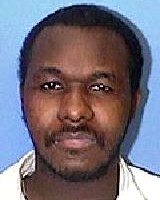
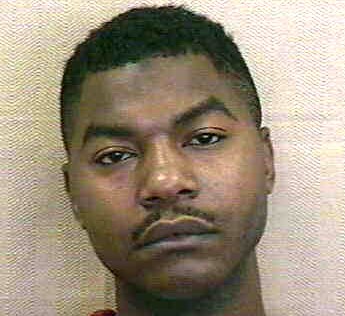
T.J. Jones
Homicide Jack Kevorkian
Homicide · USA · 1990
Jack Kevorkian (born May 26, 1928) was a controversial American pathologist. He…
130 victims
Jack Kevorkian
Homicide · USA · 1990
Jack Kevorkian (born May 26, 1928) was a controversial American pathologist. He…
130 victims
 David Koresh
Homicide · USA · 1993
David Koresh (born Vernon Wayne Howell; August 17, 1959 – April 19, 1993) led t…
79 victims
David Koresh
Homicide · USA · 1993
David Koresh (born Vernon Wayne Howell; August 17, 1959 – April 19, 1993) led t…
79 victims
 Todd Hall
Homicide · USA · 1996
Todd Hall was described by neighbors as "mentally slow" and was said to have su…
9 victims
Todd Hall
Homicide · USA · 1996
Todd Hall was described by neighbors as "mentally slow" and was said to have su…
9 victims
 Clinton Bankston
Homicide · USA · 1987
15 August 1987 — Ann Morris (63), her sister Sally Nicholson (59), and Sally’s…
5 victims
Clinton Bankston
Homicide · USA · 1987
15 August 1987 — Ann Morris (63), her sister Sally Nicholson (59), and Sally’s…
5 victims
 Joshua Jenkins
Homicide · USA · 1996
Joshua Jenkins was a 15-year-old American killer who killed five members of his…
5 victims
Joshua Jenkins
Homicide · USA · 1996
Joshua Jenkins was a 15-year-old American killer who killed five members of his…
5 victims
 Shelia Eddy
Homicide · USA · 2012
Shelia Eddy murdered her one-time best friend, Skylar Neese, after Neese disapp…
1 victim
Shelia Eddy
Homicide · USA · 2012
Shelia Eddy murdered her one-time best friend, Skylar Neese, after Neese disapp…
1 victim
 Maksim Gelman
Spree killer · USA · 2011
Maksim Gelman Maksim Gelman (born May 31, 1987) was an American. Gelman’s fathe…
4 victims
Maksim Gelman
Spree killer · USA · 2011
Maksim Gelman Maksim Gelman (born May 31, 1987) was an American. Gelman’s fathe…
4 victims
 Frances Knorr
Murderer · Australia · 1891
Frances Lydia Alice Knorr (also known as Minnie Thwaites) was born in 1868 in L…
2 victims
Frances Knorr
Murderer · Australia · 1891
Frances Lydia Alice Knorr (also known as Minnie Thwaites) was born in 1868 in L…
2 victims
 Alan Jeffrey Bannister
Murderer · USA · 1982
Alan Jeffrey Bannister was convicted of capital murder and sentenced to death f…
1 victim
Alan Jeffrey Bannister
Murderer · USA · 1982
Alan Jeffrey Bannister was convicted of capital murder and sentenced to death f…
1 victim
 Marion Hedgepeth
Murderer · USA · 1870
Name: Marion Hedgepeth · Also known as: “Handsome Bandit,” “Debonair Bandit,” “…
2 victims
Marion Hedgepeth
Murderer · USA · 1870
Name: Marion Hedgepeth · Also known as: “Handsome Bandit,” “Debonair Bandit,” “…
2 victims
- Gender
- male
- Country
- USA
- Location
- Gregg County, Texas, USA
- Date of birth
- November 1, 1976
- Age at first offence
- 18
- Characteristics
- juvenile (17), robbery
- Victim profile
- Willard Lewis Davis (male, 75)
- Method of murder
- Shooting (.357 Magnum pistol)
- Date(s) of murder
- February 2, 1994
- Years active
- 1994
- Date of arrest
- Same day
- Status
-
Executed
Executed by lethal injection in Texas on August 8, 2002
Case record: T.J. Jones
Background
T.J. Jones was a juvenile at the time of the offences and was executed by lethal injection in Texas on August 8, 2002. He was described as 17 when he was arrested in connection with the killing of Willard Davis and was later described as 25 at the time of execution.
Jones was an 8th-grade dropout. During testimony at trial and in proceedings related to sentencing and appeal, Jones was associated with illegal drug use including marijuana laced with embalming fluid, and he was described as having an IQ of 78 and borderline intelligence.
Jones’s mother testified about his childhood and family circumstances. She testified that she experienced beatings by his father, including when she was pregnant with T.J. Jones. She testified that the father left six months after Jones was born. She testified that she and Jones separated when he was a baby and that she lived with another man for about two years when Jones was about 11 to 12. She testified that her violence toward her, witnessed by Jones, caused him evident distress. She also testified that she had sought official help when Jones quit school at 15 and began to stay away from home, but to no avail. Pamela Jones testified that Jones was her only child.
Jones’s grandfather, Will Jackson, Jr., testified that Jones was a “follower.”
Jones’s 16-year-old girlfriend, Heather McLane, testified for the defence. She was described as the 16-year-old mother of Jones’ child, and testimony indicated she had lived in the gang-house with Jones and his friends. She testified that she did not consider herself to be a member of a gang. When asked if Jones considered himself a member of a gang, she replied: “Not that [she] knew of.” She also suggested that “peer pressure” lay behind the crimes.
Jones denied being a member of a gang.
Jones lived with other young people in a gang-house, described as accessible to guns and as involved in criminal violence. Testimony described Jones as the youngest male in that house, and it was stated that the gun used in both offences had been given to him by another person in the house.
Jones’s cellmate from the Gregg County Jail testified about statements made by Jones while jailed.
The offence
On Feb. 2, 1994, around 1:00 p.m., Willard Davis, age 75, was found lying in the street in front of his home in Longview. Davis had been shot once in the head and his car had been stolen.
Jones and three friends were drinking at a friend’s house around 12:15 p.m. Jones asked his friends if they were “down for a jack,” meaning did they want to steal a car. The friends agreed, and the four of them went to a known gang-house to obtain a gun to use in the carjacking/robbery.
Court records described that Jones and his partners approached Davis mid-afternoon of Feb. 2, 1994 and demanded Davis’s red Chrysler LeBaron. Davis surrendered the car but refused to go with them. Davis refused to get into the car so that he could be taken to a more secluded area to be robbed.
Jones told Davis to step outside; Jones stated that although he had the gun out, he was not pointing it at Davis at that time. Davis got out of the car; Jones’s three friends got in. Jones then told Davis to get back in the car. Davis refused, saying he would not because of his wife, or something to that effect.
Jones then pointed the gun to the side of Davis’s head and tried to get Davis into the car so they could take him somewhere and rob him. When Davis would not get into the car, Jones stated that he decided to shoot the gun in an attempt to scare him. Jones claimed that when he shot, he got scared, jumped in the car, and quickly drove off. Jones claimed he was not aware that he had hit Davis and that he did not intend to kill him, only to scare him.
The medical examiner testified that Davis died of a single gunshot wound to the head, which entered near the center of his forehead next to his left eyebrow.
A firearm expert testified that the gun did not go off accidentally and could not have been fired unless the trigger was pulled.
Forensic evidence showed Jones was two to three feet from Davis when the gun was fired.
Davis’s wife of 56 years heard the shots from inside her house and was among the first to see the body.
Jones and the other young people were arrested soon after the shooting following the theft and fleeing of Davis’s car.
The record also included evidence that Jones was associated with an earlier shooting and robbery. Three days before the Davis killing, Jones repeatedly shot the clerk of a convenience store during a robbery in nearby Tyler. The victim survived but was permanently disabled. In punishment-phase evidence, it was described that Jones was facing attempted murder charges relating to the robbery in Smith County during which a convenience store clerk was shot.
It was also stated that Jones was accused of shooting the clerk of a convenience store several times just three days before Davis’s murder. Another account described that Jones “oddly started to shoot him before indicating at all that a robbery was taking place” and described firing before a female shopper had made it out of the store and back to her car. The victim testified against Davis in the punishment phase of the capital murder trial. It was also stated that the actions taken during the robbery appeared impulsive and lacked sense or control, and that authorities determined Jones shot the clerk during a robbery in Tyler.
Investigation
After Davis was found shot on Feb. 2, 1994, police located and arrested Jones several blocks from the crime scene after he abandoned Davis’s car.
When apprehended, Jones had the murder weapon, a .357 revolver, in his sweatshirt pocket. The weapon was fully loaded except for one round; it was cocked and ready to fire. Forensic evidence indicated the gun could not have been fired unless the trigger was pulled.
Jones confessed to police. Jones told police that he and three friends had been drinking at a friend’s house around 12:15 p.m.; Jones asked if they were “down for a jack”; the friends agreed; and the four of them went to a known gang-house to obtain a gun.
A firearm/ballistics description was presented at trial. One narrative described that ballistics ruled out a close range gunshot at about 2 to 4 feet.
Arrest
Jones was arrested several blocks from the crime scene after he abandoned the victim’s car less than an hour after the shooting.
When arrested, Jones had the .357 revolver in his sweatshirt pocket. Jones was arrested with three companions, including Edgar Fletcher Jr., 19, Sanford Ray Jimerson, 18, and Latecia Howard, 17.
Trial
Procedural history described that on Oct. 24, 1994, Jones was tried in the 124th Judicial District Court of Gregg County, Texas, and found guilty of the capital murder of Willard Davis while in the course of committing robbery.
After a separate punishment phase, the court sentenced Jones to death on Oct. 28, 1994.
A firearm expert testified that the gun could not have been fired unless the trigger was pulled. The medical examiner testified Davis died of a single gunshot wound to the head.
A cellmate from the Gregg County Jail testified that Jones told him, calmly, that he then shot Davis after being told Davis would have to be killed to take his car.
Jones presented defence testimony including psychologists and relatives. Tom Allen, a clinical and forensic psychologist, testified regarding Jones’s propensity for future violence and felt Jones posed a threat to society to commit future acts of violence.
In defence, Jones called Craig Moore, a clinical psychologist. Moore concluded that Jones was competent, below average in intelligence but not retarded, profoundly immature (described as “needy,” dependent), not trustful of others, and had a conduct disorder described as a failure to acquire rule-abiding behavior. Moore also concluded Jones had “a distinct propensity for future risks to society,” but that at 17 Jones was still developing and there was no way to determine long-range behavior.
Moore stated Jones had been profoundly affected by being reared in a one-parent home and his failure to “bond” with his mother. Moore stated Jones’s use of marijuana laced with embalming fluid was addictive and could have caused brain damage, particularly in areas affecting judgment and reasoning. Moore testified Jones did not have a normal ability to show emotion, did not feel good about himself, and was preoccupied with guilt, grief, and sadness.
Moore also testified about the difficulty of predicting future dangerousness for a juvenile and described developmental considerations. He testified:
“A person at 17, particularly a person who is this immature cannot, should not be judged, I think, on the same basis that you would judge a 25 or 30-year-old. And the reason is simple. Development is still taking place in this boy. And we really don't know what's in his future in terms of final and completed development.”
Moore also testified:
“But it's the issue beyond age twenty-five that I have difficulty with. I don't think there's anyone nor any technology that can tell us how this boy will end up maturing at that point.”
Moore testified about biological maturation and preference to wait until later ages and stated:
“If they are immature, the preference in my field is to wait until they're twenty-five.”
During cross-examination, Moore emphasized:
“It isn't just a case of adult selfishness. It really is I don't understand the world out there. All I understand is when I'm hungry or when I want something.”
Moore described in part that Texas law treats a 17-year-old as an adult while psychological data suggested an earlier developmental level. Moore also testified about “discrepancy,” described in one narrative as:
“discrepancy between the seventeen year old being seen as an adult and the psychological data that suggests he functions more like a twelve or a ten year old.”
Other witness testimony included Pamela Jones, Jones’s mother; Tom Allen; relatives including Heather McLane and Will Jackson, Jr.; and testimony from Jones’s cellmate.
Sentencing
The punishment phase resulted in a death sentence. On Oct. 28, 1994, the court sentenced Jones to death after the punishment phase.
Appeals
Jones’s conviction and sentence were affirmed by the Texas Court of Criminal Appeals on Dec. 18, 1996.
Jones filed an application for post conviction writ of habeas corpus in state court on Dec. 11, 1997. On Jan. 13, 1998, the Texas Court of Criminal Appeals adopted the recommendation of the trial court and denied state habeas relief.
Jones filed a petition for writ of habeas corpus in federal district court on Aug. 30, 1999. On Jan. 11, 2001, the district court entered final judgment dismissing Jones’s federal petition and denying all relief. The district court issued a Certificate of Appealability (COA) as to two issues: Jones’s claim that a juror was influenced by out-of-court information, and Jones’s claim that the trial court improperly excused a venire person for cause.
Jones filed a motion to enlarge the COA to include nine additional issues, which both the district court and the Fifth Circuit Court of Appeals denied.
On Sept. 19, 2001, after oral arguments, the Fifth Circuit affirmed the district court’s denial of relief.
Jones’s lawyers filed no late appeals to try to halt the punishment. Attorney Don Davidson stated: “He has exhausted his remedies.”
Outcome
Jones was executed by lethal injection in Texas on August 8, 2002.
At his execution, Jones made final statements to the victim’s family and to his mother:
“I would like to say to the victim's family I regret the pain I put y'all through. I hope you can move on after this. Mom, I love y'all. Take care. I'm ready.”
Jones was pronounced dead at 6:18 p.m. after the lethal dose began.
Aftermath
Jones was described as the 19th murderer executed in the United States since 1976 for a murder committed when younger than 18, and the 11th in Texas.
Jones was described as having no prior criminal record as an adult according to TDCJ records.
Evidence during the punishment phase showed Jones was arrested for breaking into and vandalizing a middle school in Longview when he was 14 or 15. Jones was arrested and confessed to throwing a large concrete block through the front glass door of a sporting goods store, then stealing clothing. Jones was also found in possession of baseball trading cards taken from a neighbor’s home during a burglary. Jones claimed a friend gave him the cards and that the friend could not be located. The record did not indicate that Jones was ever charged with these crimes or that any of these burglaries resulted in a conviction or probation.
The record described that Jones was suspected by law enforcement as a member of a gang known to engage in criminal activities including assaults, sexual assaults, illegal weapons possession, and illegal drug possession.
Jones’s three co-defendants were described as convicted of engaging in organized criminal activity and receiving long prison terms.

Spotted an error, or have more information about this case?