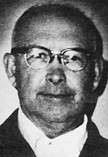
Gordon Kahl
Murderer Brian Kevin Rosenfeld
Murderer · USA · 1985
Brian Kevin Rosenfeld Brian Kevin Rosenfeld was sentenced to three concurrent l…
23 victims
Brian Kevin Rosenfeld
Murderer · USA · 1985
Brian Kevin Rosenfeld Brian Kevin Rosenfeld was sentenced to three concurrent l…
23 victims
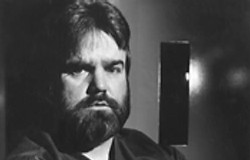 Marvin Gray
Murderer · USA · 1975
Marvin Gray was convicted killer who claimed responsibility for 23 slayings and…
23 victims
Marvin Gray
Murderer · USA · 1975
Marvin Gray was convicted killer who claimed responsibility for 23 slayings and…
23 victims
 Yahweh ben Yahweh
Murderer · USA · 1980
Yahweh ben Yahweh was born and legally named Hulon Mitchell Jr. (October 27, 19…
23 victims
Yahweh ben Yahweh
Murderer · USA · 1980
Yahweh ben Yahweh was born and legally named Hulon Mitchell Jr. (October 27, 19…
23 victims
 Russell Ellwood
Murderer · USA · 1991
Russell Ellwood was a former taxi driver. Authorities suspected him of killing…
20 victims
Russell Ellwood
Murderer · USA · 1991
Russell Ellwood was a former taxi driver. Authorities suspected him of killing…
20 victims
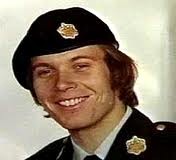 Flemming Nielsen
Murderer · Denmark · 1994
Flemming Nielsen had been a student at the university since 1986. On Tuesday, 5…
2 victims
Flemming Nielsen
Murderer · Denmark · 1994
Flemming Nielsen had been a student at the university since 1986. On Tuesday, 5…
2 victims
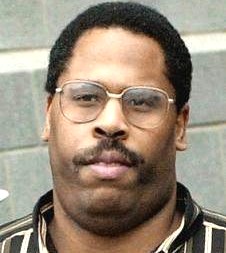 Kendall François
Serial killer · USA · 1996
Kendall François was born July 26, 1971. He lived in Poughkeepsie, New York. He…
8 victims
Kendall François
Serial killer · USA · 1996
Kendall François was born July 26, 1971. He lived in Poughkeepsie, New York. He…
8 victims
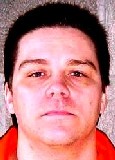 Robert Charles Towery
Murderer · USA · 1991
Robert Charles Towery was convicted in Superior Court (Maricopa) of first-degre…
1 victim
Robert Charles Towery
Murderer · USA · 1991
Robert Charles Towery was convicted in Superior Court (Maricopa) of first-degre…
1 victim
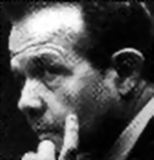 Richard Pryde Boggs
Murderer · USA · 1988
Richard Pryde Boggs (born 1933; died March 6, 2003) was a California neurologis…
1 victim
Richard Pryde Boggs
Murderer · USA · 1988
Richard Pryde Boggs (born 1933; died March 6, 2003) was a California neurologis…
1 victim
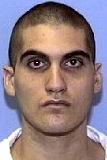 Steven Michael Woods
Murderer · USA · 2001
Steven Michael Woods was a white male. He had 10 years of education. He worked…
2 victims
Steven Michael Woods
Murderer · USA · 2001
Steven Michael Woods was a white male. He had 10 years of education. He worked…
2 victims
- Gender
- male
- Country
- USA
- Location
- North Dakota/Arkansas, USA
- Date of birth
- January 8, 1920
- Age at first offence
- 63
- Characteristics
- fugitive, shooting spree, murder-suicide
- Victim profile
- U.S. Marshal Kenneth Muir and Deputy Marshal Robert Chesire / Lawrence County Sheriff Gene Matthews
- Method of murder
- Shooting
- Date(s) of murder
- February 13/June 3, 1983
- Years active
- 1983
- Date of arrest
- —
- Status
-
Died in custody
Killed in shoot-out with police, June 3, 1984
Case details
Name: Gordon Kahl Alternative name(s): Gordon Wendell Kahl Lifespan: 1920 – June 3, 1983 Current characteristics: Tax Protestor
STATUS / legal outcome
Gordon Kahl was killed in a shoot-out with police on June 3, 1984.
Background
Gordon Kahl was best known for his involvement in two fatal shootouts with law enforcement officers in the United States in 1983. He was raised on a North Dakota farm and was a decorated turret gunner during World War II. After the war, he had a 400-acre farm near Heaton, North Dakota, and later worked in the Texas oilfields as a mechanic and general worker.
In 1967, Kahl wrote a letter to the Internal Revenue Service stating that he would no longer pay taxes to the “Synagogue of Satan under the 2nd plank of the Communist Manifesto.” During the 1970s, Kahl organized the first Texas chapter of the Posse Comitatus. He later left the group and was not a member at the time of the 1983 shootouts. In 1976, he appeared on a Texas television program stating that the income tax was illegal and encouraging others not to pay their income taxes.
A 1991 movie based on these events was called In the Line of Duty: Manhunt in the Dakotas, starring actor Rod Steiger.
Tax-related prosecution and conviction
On November 16, 1976, Kahl was charged with willful failure to file Federal income tax returns for the years 1973 and 1974 under 26 U.S.C. § 7203. He was found guilty, and he was sentenced to two years in prison and a fine of $2,000. One year of the sentence was suspended, as was the fine. The court placed Kahl on a five-year probation.
Kahl appealed his conviction. In 1978, the United States Court of Appeals for the Fifth Circuit affirmed the conviction after Kahl’s release from prison on probation. Kahl served eight months in prison in 1977.
A separate narrative in the case record described that in 1968, Kahl stopped filing IRS 1040 Income Tax Returns. It stated that for 9 years the IRS ignored him, but in 1977 after Kahl spoke on an evening radio talk show about the illicitness of the income tax, some 250 phone calls were received by the radio station, and “the IRS came down on Kahl like a ton of bricks.” It then stated that, two weeks later, there was a criminal prosecution for violating Title 26, Section 7203, and it quoted “Willful Failure to File.”
Activity after prison
After his parole from prison, Kahl became active in a “township” movement, described as an early version of “sovereign citizenship.” The movement sought to form parallel courts and governments purportedly based on English Common Law and to withdraw recognition of the U.S. federal government.
Township movement supporters, as well as the Posse Comitatus, attempted to organize among farmers in the American Midwest during the early 1980s farm crisis.
The Medina, North Dakota incident and Medina-area shoot-out (Feb. 13, 1983)
On February 13, 1983, because of an alleged parole violation, U.S. Marshals attempted to arrest Kahl as he was leaving a meeting of township supporters in Medina, North Dakota. In the car with Kahl were his wife Joan, his son Yorie (also spelled Yorie/yori in portions of the record), and three other people who had been at the meeting.
The conflict began when federal marshals created a road block and began firing at the family, wounding Kahl’s son. Everyone disembarked from the car and Kahl began to shoot back. During the ensuing shootout, Kahl shot and killed two United States marshals. The record stated that Kahl then took the vehicle of a Medina law enforcement officer and fled to Arkansas.
Multiple parts of the record identified specific personnel involved in the shoot-out:
- U.S. Marshal Ken Muir.
- Deputy Marshal Carl Wigglesworth.
- Deputy Marshal Robert Cheshire.
- Deputy Marshal James Hopson.
- Deputy Chief of Police Steve Schnabel.
- Chief Darrell Graf of the Medina Police Department.
- Deputy Bradley Kapp of Stutsman County Sheriff’s Department.
- U.S. Marshal Ken Muir was described as outside his vehicle next to Medina police officer Steve Schnabel in one narrative; in the later chronological shoot-out timeline, Schnabel was said to be ahead in his police car, and Muir and Wigglesworth were ahead of the suspect vehicles.
The chronological timeline section described the meeting and the sequence of events on the road:
- 5:45 p.m. included a standoff; Yorie Kahl ran to a utility pole and Faul ran toward the woods near the mobile home of Wayne and Susan Reardon.
- It stated that the standoff continued for nine minutes and that on the south side of the roadblock Kapp and deputy marshals Cheshire and Hopson were present.
- It stated that the marshals announced they were there to arrest Kahl and that Kahl refused to go with them.
The record also included verbatim remarks and quoted statements:
- In the narrative about the standoff, Deputy Marshal Wigglesworth was quoted: “Me and Scott had a standoff in the woods,” and it continued: “Both of us had our rifles pointed at each other. I was stuck in the ice in the bog and couldn't move. He had me in his sights, no doubt in my mind about it, but he didn't shoot.”
- In the chronological timeline, it stated that right before the ambulance left, Kahl told Kapp: “It was worth it to me.”
- In the later narrative, the record attributed to Faul: “We're going to blow your goddamn heads off.”
- Faul was also quoted: “(The shoot-out) is always going through my mind,” and “I'm innocent of the charges I was supposedly convicted of, so it's a very difficult situation. I can't come to any closing. It's like an albatross. If I was guilty I could accept that, but this was thrust upon me. I hate it.”
- A quote attributed to Joan Kahl stated: “It was a tragedy and nightmare I've lived with every day of my life for 20 years,” and continued: “If the government had left us alone that day, none of it would have happened. We didn't go out looking for trouble.”
- Mayor or police-related statements appeared in the later narrative: Graf was quoted saying: “This was a paperwork issue, not about a violent guy who was going to rob a bank or blow up a building or something like that,” and also: “Gordon Kahl made it very clear that he would leave everyone alone if they left him alone. But if they came after him, he would start World War III. We didn't want anything to do with that.”
- Lynn Crooks was quoted as saying: “Yorie and Scott said they didn't really shoot these guys,” and “Our answer was, even if that's true, it doesn't make any difference.”
The chronological timeline provided details of injuries and the shooting sequence:
- Cheshire was reported hit.
- Kapp heard the shot, saw Yorie Kahl by the utility pole, and described subsequent shooting sequence.
- The record stated that Kapp’s forehead was hit by a round that went through the Ram Charger windshield and glass lodged in Kapp’s forehead.
- It stated that Schnabel was hit by a ricocheting bullet in the thigh, and it later stated a second shot ricochet hit Schnabel in the back of the leg.
- It stated that Muir was hit in the chest and that Cheshire was killed, with Cheshire being shot at point-blank range in the timeline section.
- It stated that Hopson was critically wounded and brought to the clinic by ambulance.
After the shoot-out, the timeline described:
- Kahl took Schnabel’s police car and drove to the Reardons’ driveway where Faul was attending to Yorie.
- Faul drove Yorie to Martin’s clinic in the police car.
- Kahl and Joan Kahl drove to the clinic in their station wagon.
- Broer and Wegner turned themselves in to the Stutsman County Sheriff’s chief deputy, were questioned until 10 p.m., then were placed under arrest and charged with murder.
The record also described a state and nation response:
- After the shoot-out, Kahl fled.
- The record stated that Kahl was immediately placed on the FBI’s ten most wanted list and that it involved extensive manhunt actions, roadblocks, and numerous search efforts.
The Smithville, Arkansas killings (June 3, 1983)
A tip was received by authorities from the youngest daughter of the owner of the “Bunker” home of a man named Leonard Ginter, where Kahl was hiding in Smithville, Arkansas. Another shootout ensued on June 3, 1983, in which Kahl and Lawrence County Sheriff Gene Matthews were killed.
The record stated that Ginter was arrested and convicted of harboring a fugitive and sentenced to a federal prison.
The record also stated that Kahl’s family members received different outcomes in connection with the Medina shootout:
- Yorie Kahl and Scott Faul received prison sentences on charges in regard to the Medina shootout.
- Joan Kahl was acquitted.
Trial and sentencing related to the Medina shoot-out (May 1983)
The later narrative and timeline described the murder trial:
- Joan Kahl was acquitted.
- Yorie Kahl and Scott Faul were found guilty of second-degree murder and sentenced to life in prison.
- Wegner got a plea agreement in exchange for his testimony.
- Broer was convicted of conspiring to assault and harboring a fugitive and received 10 years.
The timeline included jury and trial scheduling:
- May 9: Jury selection started for trial of Yorie Von Kahl, J. Kahl, Faul and Broer.
- May 12: Trial began.
- May 28: Jury reached guilty verdict; it stated that Faul and Y. Kahl were convicted of second degree murder and J. Kahl was acquitted; it also stated Broer was convicted of conspiring to assault and harboring a fugitive.
Appeals and post-conviction relief
The record included an “1984 May 14” event: Yorie Kahl, Faul and Broer submitted a direct appeal. It also included later post-conviction activity:
- 1996 April: Yorie Kahl filed post conviction relief petition.
- 1997: Faul filed post conviction relief petition.
- 2001 March: Kahl petition denied.
Other named people and roles found in the record
The record named additional individuals associated with the Medina and Arkansas events:
- Leonard Ginter (owner of the “Bunker” home; also said to be arrested and convicted of harboring a fugitive).
- Norma Ginter (mentioned in narrative about the house being surrounded).
- Art Russell and his daughter Karen Russell Robertson (in narrative about the tip leading authorities to the hiding place).
- Scott Faul (charged and convicted in connection with Medina shootout).
- Vernon Wegner (associated with plea agreement and testimony).
- David Broer (charged; convicted of conspiring to assault and harboring a fugitive; stated to have fainted at some point in the timeline narrative).
- Wayne and Susan Reardon (mentioned near where Faul ran).
- Gene Matthews (Lawrence County Sheriff, killed June 3, 1983).
- Dr. Clarence Martin (clinic physician associated with meeting and ambulance arrivals).
- Dr. Fahmy Malak (coroner in Little Rock in the narrative about identification of remains and confirmation of a severed foot).
- William Webster (described in the record as the Director of the FBI at the time of the Arkansas operation; said to have supervised it).
- Richard Blay (FBI agent; described as providing manhunt updates immediately after the Medina shoot-out).
- J. Edgar Hoover (mentioned in narrative comparison about attention to capturing unknown fleeing killers).
- William French Smith and Ronald Reagan were mentioned as part of a political background narrative.
Timeline (dated events)
- 1967 — Kahl wrote a letter to the Internal Revenue Service stating he would no longer pay taxes (“Synagogue of Satan under the 2nd plank of the Communist Manifesto.”).
- 1976 — Kahl appeared on a Texas television program stating that the income tax was illegal and encouraging others not to pay their income taxes.
- 1976 Nov. 16 — Kahl was charged with willful failure to file Federal income tax returns for 1973 and 1974 under 26 U.S.C. § 7203.
- 1977 — Kahl served eight months in prison.
- 1977 April 14 — Kahl was convicted of two counts of failing to file federal income tax returns.
- 1978 — The United States Court of Appeals for the Fifth Circuit affirmed Kahl’s conviction.
- 1980 — July: Kahl was summoned to federal court for probation violation but did not show up.
- 1983 Feb. 13 — Shoot-out outside of Medina.
- 1983 Feb. 14 — Kahl dropped Scott Faul off at Arlie Roller’s farm after staying the night in a shed at G. Kahl’s farm; Joan Kahl, Vernon Wegner and David Broer were charged with murder; more than 100 law enforcement officers surrounded the G. Kahl farmstead; Faul surrendered in Fessenden and was read his rights before midnight and taken to Jamestown where he was charged with murder.
- 1983 Feb. 15 (12:45 p.m.) — Tear gas canisters were thrown into the G. Kahl home.
- 1983 Feb. 16 (morning) — Ken Muir’s funeral held in Fargo.
- 1983 Feb. 17 (morning) — Robert Cheshire’s funeral held in Bismarck; searches were conducted in Ashley for G. Kahl.
- 1983 May 9 — Jury selection started for trial of Yorie Von Kahl, J. Kahl, Faul and Broer.
- 1983 May 12 (1:45 p.m.) — Trial began.
- 1983 May 28 — Jury reached guilty verdict; Faul and Y. Kahl were convicted of second degree murder and sentenced to life in prison; J. Kahl was acquitted; Broer was convicted of conspiring to assault and harboring a fugitive (as described).
- 1983 Jun. 3 — Law enforcement officers moved in to arrest G. Kahl in Smithville, Ark.; Sheriff Gene Mathews and G. Kahl were killed in the shoot-out.
- 1984 May 14 — Y. Kahl, Faul and Broer submitted a direct appeal.
- 1996 April — Y. Kahl filed post conviction relief petition.
- 1997 — Faul filed post conviction relief petition.
- 2001 March — Kahl petition denied.
Aftermath
After the Medina shoot-out, Kahl fled and was killed in Arkansas in June 1983. The Medina murder trial occurred in May (as described), with Joan Kahl acquitted and Yorie Kahl and Scott Faul found guilty of second-degree murder and sentenced to life in prison.
The record also stated that funerals for Muir and Cheshire were held in the week after the shoot-out, and it mentioned that Muir’s wife Lois had died. It stated that Robert Cheshire’s widow Lynn moved to a Seattle suburb.
It also stated that during his life sentence, Faul said the jury went into trial biased against the defendants because of media coverage slanted toward the prosecution’s point of view, and that he maintained his innocence.
The record included statements and events about parole and incarceration:
- It stated Faul was denied parole a little more than a month before the narrative that included the quoted interview.
- It stated Yorie Kahl was a prisoner in Leavenworth, Kan. during the narrative section, with no comment attributed to him in the narrative.
- It stated Kahl’s wife Joan made a statement about tragedy and nightmare.
Finally, the record included that a report said the dispute included the question of whether Kahl was killed in the shoot-out, and it described that Joan Kahl sought a second autopsy and that findings were the same: it was Gordon Kahl.
References mentioned in the record
Corcoran, James: Bitter Harvest (1990) (ISBN 0-14-009874-7) Graf, Darrell and Steve Schnabel: It’s All About Power (1999) (ISBN 0-942323-31-9) Turner, Capstan and A.J. Lowery: There Was a Man (1986) (ISBN 0-9614465-0-1) The record also referenced: “The Uncensored Gordon Kahl Story,” and included references to Time Magazine and The New York Times article titles and page numbers as part of the narrative text.
Spotted an error, or have more information about this case?