Paul Ruiz
Spree killer Paul John Knowles
Spree killer · USA · 1974
Paul John Knowles (April 17, 1946 – November 18, 1974) was an American spree ki…
35 victims
Paul John Knowles
Spree killer · USA · 1974
Paul John Knowles (April 17, 1946 – November 18, 1974) was an American spree ki…
35 victims
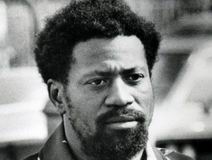 Bobby Joe Maxwell
Spree killer · USA · 1978
Name: Bobby Joe Maxwell Sex: M Race: B Type: T Motive: PC-nonspecific Method of…
11 victims
Bobby Joe Maxwell
Spree killer · USA · 1978
Name: Bobby Joe Maxwell Sex: M Race: B Type: T Motive: PC-nonspecific Method of…
11 victims
 Manuel Pardo
Spree killer · USA · 1986
Manuel Pardo, Jr. was a former police officer who was convicted of nine counts…
9 victims
Manuel Pardo
Spree killer · USA · 1986
Manuel Pardo, Jr. was a former police officer who was convicted of nine counts…
9 victims
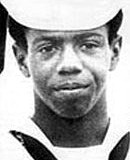 Mark Essex
Spree killer · USA · 1973
Mark James Robert Essex was a Navy veteran who engaged in a shooting and arson…
9 victims
Mark Essex
Spree killer · USA · 1973
Mark James Robert Essex was a Navy veteran who engaged in a shooting and arson…
9 victims
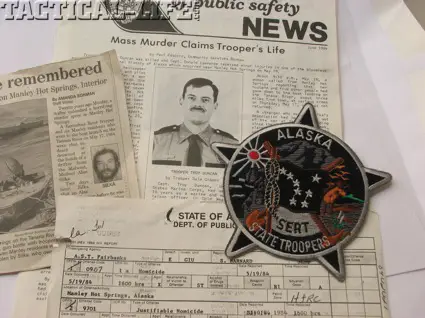 Michael Alan Silka
Spree killer · USA · 1984
Michael Alan Silka was killed during a shoot-out with the police on May 19, 198…
9 victims
Michael Alan Silka
Spree killer · USA · 1984
Michael Alan Silka was killed during a shoot-out with the police on May 19, 198…
9 victims
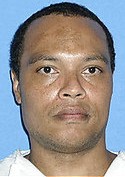 Joseph Nichols
Murderer · USA · 1980
Joseph Bernard Nichols was executed by lethal injection in Texas on March 7, 20…
1 victim
Joseph Nichols
Murderer · USA · 1980
Joseph Bernard Nichols was executed by lethal injection in Texas on March 7, 20…
1 victim
 Nikole Flagg
Murderer · USA · 2003
Nikole Flagg (defendant) Myrvinia Lowe (victim; 61-year-old; employee at Cincin…
2 victims
Nikole Flagg
Murderer · USA · 2003
Nikole Flagg (defendant) Myrvinia Lowe (victim; 61-year-old; employee at Cincin…
2 victims
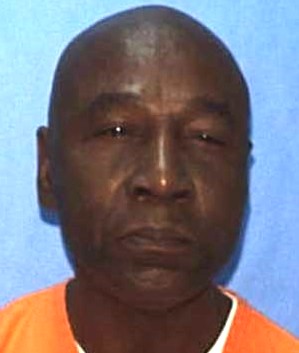 Freddie Lee Hall
Murderer · USA · 1978
Freddie Lee Hall was indicted on one count of First-Degree Murder in Sumter Cou…
2 victims
Freddie Lee Hall
Murderer · USA · 1978
Freddie Lee Hall was indicted on one count of First-Degree Murder in Sumter Cou…
2 victims
 Kenneth Dunn
Murderer · USA · 1980
Kenneth Dwayne Dunn, a Texas death row inmate, was executed by lethal injection…
1 victim
Kenneth Dunn
Murderer · USA · 1980
Kenneth Dwayne Dunn, a Texas death row inmate, was executed by lethal injection…
1 victim
 Roger Keith Coleman
Murderer · USA · 1981
Roger Keith Coleman Roger Keith Coleman was born on Nov. 1, 1958. When he was 2…
1 victim
Roger Keith Coleman
Murderer · USA · 1981
Roger Keith Coleman Roger Keith Coleman was born on Nov. 1, 1958. When he was 2…
1 victim
- Gender
- male
- Country
- USA
- Location
- Oregon/???/Arkansas, USA
- Date of birth
- 1947
- Age at first offence
- 30
- Characteristics
- fugitive
- Victim profile
- Men and women
- Method of murder
- Shooting
- Date(s) of murder
- June -July 1977
- Years active
- 1977
- Date of arrest
- J uly 13, 1977
- Status
-
Executed
Executed by lethal injection in Arkansas on January 8, 1997
Case overview
Paul Ruiz was convicted of capital murder and sentenced to die for the killing of Marvin Ritchie, Town Marshal of the Town of Magazine, Arkansas, and Opal James, an employee of the Corps of Engineers of the United States Army. The killings took place in 1977. Paul Ruiz was executed by lethal injection in Arkansas on January 8, 1997.
Timeline
- January 8, 1997 — Paul Ruiz was executed by lethal injection in Arkansas.
Other details
Parties and procedural posture in the federal appeal
On appeal, Paul Ruiz was the appellant and Larry Norris, Director, Arkansas Department of Correction, was the appellee. The case was assigned No. 94-3402EA, with submission on September 14, 1995 and filing on December 11, 1995. RICHARD S. ARNOLD was the Chief Judge. The federal appellate court described the habeas corpus petitions of Paul Ruiz and Earl Van Denton (both under sentence of death) as being “once again before us.”
Prior trials, convictions, and sentences (as described in the appeal)
- The first trial took place in Logan County, Arkansas and resulted in the conviction of both defendants and the imposition of sentences of death. These first convictions occurred in 1978.
- The Supreme Court of Arkansas reversed the first convictions on the ground of error in denying a motion for change of venue based on pervasive pretrial publicity: Ruiz v. State, 265 Ark. 875, 582 S.W.2d 915 (1979).
- After a change of venue to Conway County, Arkansas, Ruiz and Denton were again tried, convicted, and sentenced to death.
- After proceedings in the state courts summarized in prior opinions, the federal appellate court described that it upheld the convictions but set aside the sentence because one of the aggravating circumstances duplicated an element of the underlying capital felony murders: Ruiz v. Lockhart, 806 F.2d 158 (8th Cir. 1986).
- After that decision, the State of Arkansas undertook proceedings to retry the question of the penalty to be imposed on Ruiz and Denton. This retrial resulted in sentences of death, which were affirmed by the Supreme Court of Arkansas: Ruiz v. State, 299 Ark. 144, 772 S.W.2d 297 (1989).
Ineffective-assistance-of-counsel claim and evidentiary hearing
The appeal addressed an ineffective-assistance-of-counsel claim and an argument that the District Court abused its discretion by refusing to hold an evidentiary hearing. The appellate discussion covered that:
- The District Court filed an 87-page Memorandum Opinion and Order dismissing the habeas petition and concluding that ineffective assistance claims were unsubstantiated and conclusory, on August 3, 1994: 868 F. Supp. 1557.
- A motion for re-hearing and a request for an evidentiary hearing were filed on August 12, and the District Court granted an opportunity to present claims in appropriate form by August 22, 1994.
- The District Court concluded that the petitioners failed to allege factual issues requiring an evidentiary hearing: “fail[ed] to allege factual issues which would require an evidentiary hearing.”
- The appellate court stated that it agreed, because the filing did not contain a clear offer of proof on any factual issue material to the claim.
The appellate court described alleged trial errors attributed to counsel as including:
- Failure to persist in a request for a severance.
- Failure to raise a Batson-like objection to co-counsel’s use of peremptory challenges to strike black jurors.
- Reliance on the same psychologist to evaluate both petitioners.
- Failure to challenge the sua sponte excusals of a large number of petit jurors.
- Failure to strike juror Elmer Guinn.
- Failure to present mitigation testimony at the sentencing stage from Ruiz’s family.
- Failure to present psychological testimony at the sentencing stage.
Aggravating circumstance duplication argument
The appeal also addressed a claim about duplicating an element of death-eligible homicides. During the sentencing phase, the jury was asked to consider aggravating circumstances, including that “the murder was committed for the purpose of avoiding or preventing an arrest.” The petitioners claimed it was error to submit that circumstance because it duplicated an element of the underlying offenses of kidnapping and robbery, and they argued it failed to perform the constitutionally required narrowing function under Zant v. Stephens, 462 U.S. 862 (1983).
The appellate court stated that this argument was a revised version of an argument advanced in a preceding habeas petition based on Collins v. Lockhart, 754 F.2d 258 (8th Cir.), cert. denied, 474 U.S. 1013 (1985), and that the law had changed in response to Lowenfield v. Phelps, 484 U.S. 231 (1988). It cited:
- Perry v. Lockhart, 871 F.2d 1384 (8th Cir.), cert. denied, 493 U.S. 959 (1989),
- and Lockhart v. Fretwell, 113 S. Ct. 838, 843-44 (1993).
The appellate court stated that under Perry, even if one or more aggravating circumstances considered by the jury duplicates an element of robbery or kidnapping homicides eligible for the death penalty, Arkansas’s death-penalty scheme was not unconstitutional and did not violate the petitioners’ rights. It also stated it could not reconsider Perry, citing Snell v. Lockhart, 14 F.3d 1289, 1305 (8th Cir.), cert. denied, 115 S. Ct. 419 (1994), and that the panel was not at liberty to overrule established circuit law.
Alleged unanimity-instruction error at the guilt phase
Ruiz and Denton alleged that at the guilt phase of their second trial, the trial court committed constitutional error by submitting multiple theories of guilt without instructing jurors that they must reach a unanimous verdict on at least one theory. The appellate record included the jury instructions as quoted below:
Paul Ruiz and Earl Van Denton are charged with the offense of capital murder. To sustain this charge, the State must prove the following things beyond a reasonable doubt: Count one, first. That Paul Ruiz and Earl Van Denton committed or attempted to commit the crimes of robbery or kidnapping or both. Two, that in the course of it and in fervor of that crime or crimes or an immediate flight therefrom Paul Ruiz and Earl Van Denton caused the death of Marvin Ritchie or Opal James under circumstances manifesting an extreme indifference to the value of human life or count two, first, that with the premeditated and deliberate purpose of causing the death of any person, Paul Ruiz and Earl Van Denton caused the death of Marvin Ritchie and Opal James. Second, that those deaths were caused in the course of the same criminal episode.
The appellate record also included additional instruction excerpts:
As a part of count one of the charge of capital murder, the State contends that the death of Marvin Ritchie and Opal James occurred during the commission or attempted commission of the crimes of robbery, kidnapping, or both by Paul Ruiz and Earl Van Denton, or in immediate flight from the commission of either one or both of these crimes. To prove robbery, the State must prove beyond a reasonable doubt that, with the purpose of committing a theft, Paul Ruiz and Earl Van Denton employed or threatened to employ physical force upon another.
To prove kidnapping, the State must prove beyond a reasonable doubt first, that Paul Ruiz and Earl Van Denton did without consent of Marvin Ritchie, Opal James, and David Small, or any of them restrain all or any of them so as to interfere substantially with his liberty. And second, that Paul Ruiz and Earl Van Denton restrained Marvin Ritchie and Opal James and David Small or any of them with the purpose of A., using either of them as a shield or hostage; B., facilitating the commission of robbery or flight therefrom -- thereafter; C., inflicting physical injury on any of them; D., terrorizing any of them. App. 524-26.
The appellate court described that the claim had not been properly raised in state court, and also described procedural default due to failure to raise the issue on direct appeal from the second trial or during state postconviction proceedings. It cited that:
- “A district court need not consider the merits of a procedurally defaulted claim.” (Dandridge v. Lockhart, 36 F.3d 773, 774 (8th Cir. 1994), cert. denied, 115 S. Ct. 1257 (1995).)
It also discussed an argument attempting to frame the unanimity issue as the equivalent of a severance claim advanced on direct appeal and rejected in earlier habeas proceedings. The appellate court stated it would fail as successive even if that characterization were accepted, describing that the severance issue had already been addressed on the merits in the first habeas proceeding.
“Ends of justice” / actual innocence exception
The appellate court described that a successive claim might be heard under the narrow “ends of justice” exception only if a fundamental miscarriage of justice would otherwise result, and that the miscarriage-of-justice exception requires a showing “that ‘a constitutional violation has probably resulted in the conviction of one who is actually innocent.’” (citing Schlup v. Delo, 115 S. Ct. 851, 867 (1995), quoting Murray v. Carrier, 477 U.S. 478, 496 (1986)). The appellate court stated that Ruiz and Denton did not assert they were actually innocent.
The appellate court also discussed an explanation for not advancing the claim previously, stating that their post-conviction counsel did not pursue the claim vigorously because other issues had a greater likelihood of success and because another claim resulted in habeas relief. The appellate court stated it was not persuaded there was no incentive to raise the issue during the prior habeas proceeding.
Post-remand posture and lack of supplemental briefing
The appellate court described prior appellate litigation history involving Grigsby v. Mabry and later reversal by Lockhart v. McCree, including that on reconsideration it affirmed convictions but reversed sentences on Collins authority. It also described that Ruiz and Denton were aware at the time of remand that the validity of their convictions was once again being considered and that their reliance on Grigsby had been undermined. It then stated that Ruiz and Denton did not claim a motion was filed for supplemental briefing on the unanimity claim and that no such motion was made, citing Pollard v. Delo, 28 F.3d 887, 889 (8th Cir.).
It concluded that remand provided ample opportunity to request supplemental briefing and to present the issue, so it could not be considered on its merits at that stage.
Claim about ineffective assistance of postconviction counsel
The appellate court also addressed an argument that Denton’s first habeas counsel was ineffective, stating that there was no constitutional right to counsel on collateral review and that appointment of counsel in death-penalty habeas cases was discretionary when the first habeas petition was filed. It cited Coleman v. Thompson, 501 U.S. 722 (1991) for the proposition that ineffectiveness of postconviction counsel cannot be “cause.”
Additional claims and disposition
The appellate court stated that Ruiz and Denton raised several additional claims, including:
- resentencing verdict forms limiting the jury’s consideration of mitigating evidence (citing Mills v. Maryland, 486 U.S. 367 (1988)),
- error by refusing an evidentiary hearing on sua sponte dismissal (for failure to meet statutory qualifications) of a large number of veniremen,
- and Ruiz individually argued that severance should have been granted at a 1989 sentencing trial due to a Batson v. Kentucky violation (citing Batson v. Kentucky, 476 U.S. 78 (1986)).
The appellate court stated that the District Court addressed each argument comprehensively and that it affirmed and adopted the District Court’s reasoning, stating: “The judgment is affirmed.”
Victims and people mentioned in the case narrative
- Marvin Ritchie — Town Marshal of the Town of Magazine, Arkansas.
- Opal James — employee of the Corps of Engineers of the United States Army.
- David Small — referenced in connection with kidnapping elements.
- Earl Van Denton — mentioned as a codefendant.
- Anne Jester — Opal James’s daughter; stated in the case narrative.
- Virginia Hamilton — identified in the case narrative as a daughter of a murdered small-town marshal.
- Angela Smith Cunningham — identified in the case narrative with her age and a date reference.
- Opal James’s body being missing for three days was described in the case narrative.
- Sister Joan Pytlik — quoted in the case narrative.
- Rita Spillenger — quoted in the case narrative.
- Pat Bane — described in the case narrative as Ruiz’s friend, spiritual adviser, and a Catholic lay minister.

Spotted an error, or have more information about this case?