
Scotty Lee Moore
Murderer Brian Kevin Rosenfeld
Murderer · USA · 1985
Brian Kevin Rosenfeld Brian Kevin Rosenfeld was sentenced to three concurrent l…
23 victims
Brian Kevin Rosenfeld
Murderer · USA · 1985
Brian Kevin Rosenfeld Brian Kevin Rosenfeld was sentenced to three concurrent l…
23 victims
 Marvin Gray
Murderer · USA · 1975
Marvin Gray was convicted killer who claimed responsibility for 23 slayings and…
23 victims
Marvin Gray
Murderer · USA · 1975
Marvin Gray was convicted killer who claimed responsibility for 23 slayings and…
23 victims
 Yahweh ben Yahweh
Murderer · USA · 1980
Yahweh ben Yahweh was born and legally named Hulon Mitchell Jr. (October 27, 19…
23 victims
Yahweh ben Yahweh
Murderer · USA · 1980
Yahweh ben Yahweh was born and legally named Hulon Mitchell Jr. (October 27, 19…
23 victims
 Russell Ellwood
Murderer · USA · 1991
Russell Ellwood was a former taxi driver. Authorities suspected him of killing…
20 victims
Russell Ellwood
Murderer · USA · 1991
Russell Ellwood was a former taxi driver. Authorities suspected him of killing…
20 victims
 Brittany Holberg
Murderer · USA · 1996
Brittany Holberg robbed and murdered an 80-year-old white male in his home. The…
1 victim
Brittany Holberg
Murderer · USA · 1996
Brittany Holberg robbed and murdered an 80-year-old white male in his home. The…
1 victim
 Anthony Bertolotti
Murderer · USA · 1983
Anthony Bertolotti was executed in Florida by electrocution on July 27, 1990. H…
1 victim
Anthony Bertolotti
Murderer · USA · 1983
Anthony Bertolotti was executed in Florida by electrocution on July 27, 1990. H…
1 victim
 Ethel Major
Murderer · United Kingdom · 1934
Ethel Major was executed by hanging at Hull Prison on December 19, 1934 for the…
1 victim
Ethel Major
Murderer · United Kingdom · 1934
Ethel Major was executed by hanging at Hull Prison on December 19, 1934 for the…
1 victim
 Albert Patrick
Murderer · USA · 1900
Albert Patrick was convicted in New York, New York for the murder of William M.…
1 victim
Albert Patrick
Murderer · USA · 1900
Albert Patrick was convicted in New York, New York for the murder of William M.…
1 victim
 Lindsay Haugen
Murderer · USA · 2015
Lindsay April Haugen was an Army veteran. At the time of the killing, she was a…
1 victim
Lindsay Haugen
Murderer · USA · 2015
Lindsay April Haugen was an Army veteran. At the time of the killing, she was a…
1 victim
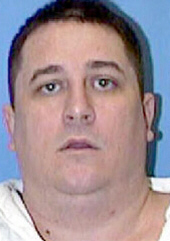 Dennis Wayne Bagwell
Mass murderer · USA · 1995
Dennis Wayne Bagwell was executed by lethal injection in Texas on February 17,…
5 victims
Dennis Wayne Bagwell
Mass murderer · USA · 1995
Dennis Wayne Bagwell was executed by lethal injection in Texas on February 17,…
5 victims
- Gender
- male
- Country
- USA
- Location
- Oklahoma County, Oklahoma, USA
- Date of birth
- 1956
- Age at first offence
- 27
- Characteristics
- robbery
- Victim profile
- Alex Fernandez, 42 (his ex-boss night manager motel)
- Method of murder
- Shooting (.22 caliber rifle)
- Date(s) of murder
- November 18, 1983
- Years active
- 1983
- Date of arrest
- —
- Status
-
Executed
Executed by lethal injection in Oklahoma on June 3, 1999
Case record: Scotty Lee Moore
Background
Scotty Lee Moore was 42 years old at the time of his execution in Oklahoma.
Moore was convicted of the 1983 murder of Alex Fernandez, 42, a desk clerk at Oklahoma City’s Airline Motel. Fernandez had fired Moore a month before the slaying.
Moore’s appeal and post-conviction proceedings involved challenges related to the Oklahoma Pardon and Parole Board, confinement conditions, ineffective assistance of counsel, sentencing instructions, and whether the Oklahoma Court of Criminal Appeals had acted arbitrarily.
The offence
Moore was found guilty of killing Alex Fernandez, a desk clerk at a motel in Oklahoma City. At the time of the killings, Vicki Caster, Moore’s cousin and girlfriend, was in his company.
Caster stated that they entered the motel where Fernandez worked in the late evening of November 17 or early morning of November 18, 1983, for the purpose of robbing it. Moore took a loaded .22 caliber rifle into the motel. The rifle had been stolen during a burglary in Dodge City, Kansas.
Caster gathered up the cash at the motel desk while Moore took Fernandez to a back room. Moore promised Caster that he would not use the weapon, but instead he used it against Fernandez by shooting him five times in the head as the victim lay face down on the floor. Moore later described the appearance of balls of blood as the shots entered Fernandez’s head.
Fernandez’s body was not discovered until 7:00 a.m. on November 18, 1983. The rifle Moore used to kill Fernandez was later recovered from Moore’s brother-in-law, to whom Moore had given the gun for safekeeping for his nephew.
Investigation
Arrest
Trial
Proceedings and conviction
Scotty Lee Moore was convicted in Oklahoma County District Court of Murder in the First Degree. Punishment was assessed at death as the jury recommended to the trial court.
The killing for which Moore was found guilty was described as the felony murder of Alex Fernandez, a desk clerk at the Airline Motel in Oklahoma City. The court record stated that Vicki Caster, an accomplice, was granted immunity and offered incriminating evidence against Moore.
Evidence and witness testimony
Vicki Caster offered testimony that Moore brought a loaded .22 caliber rifle into the motel and shot Fernandez five times in the head while Fernandez lay face down on the floor.
The trial court admitted two 8" x 10" photographs depicting the victim face down on the floor shot in the head with blood splatterings in the surrounding areas. Moore claimed their prejudicial value outweighed their probative content and that smaller photographs were available. The appellate court held that admission of photographs depicting wounds of a homicide victim lay within the trial court’s discretion and that the photographs were not unnecessarily gruesome, their admission was not an abuse of discretion, and they corroborated medical examiner testimony and Caster’s testimony as to how and where Fernandez was killed.
A State ballistics expert compared projectiles that wounded the victim with the rifle retrieved from Moore’s brother-in-law’s possession and testified he believed the projectiles were consistent with having been fired by that particular gun. The expert could not make a conclusive statement.
Moore requested prior to trial funds to hire a ballistics expert. The appellate court addressed whether the trial court’s refusal to grant funds violated 22 O.S. Supp. 1986 464 22-464. The appellate court held that Moore’s defense did not establish the necessity of the requested expert assistance and that the necessity was not present given the neutral, scientific nature of the evidence and the lack of an adequate prior showing.
Legal arguments addressed on appeal
Moore’s arguments included:
- He argued that constitutional principles under Enmund v. Florida should bar the death penalty because the jury rejected malice aforethought murder. The appellate court found the sentencing instructions required the jury to find beyond a reasonable doubt that Moore either participated in planning the killing of Alex Fernandez or actually fired the shots resulting in death before it could consider the death penalty, and held this was stricter than Enmund required.
- He challenged the jury panel composition, asserting a fair cross-section violation under the Sixth and Fourteenth Amendments because individuals seventy years of age and older were excluded due to 38 O.S. 1981 28 38-28. The appellate court held Moore failed to establish the elements for a prima facie violation, including that the group was sufficiently distinctive for the first showing and that representation was not fair and reasonable.
- He sought funds to have his attorney travel to Texas to interview two inmates as potential witnesses and also requested the court compel their presence at trial. The trial counsel traveled to Texas at his own expense and interviewed the individuals; affidavits were filed summarizing the testimony. The appellate court held their testimony concerned instances of prior unrelated violence and other unlawful conduct by Vicki Caster, that it was not allowed as evidence concerning another witness’s character for truthfulness under the Evidence Code, and that it would not have been allowed in the sentencing stage as mitigating evidence. The appellate court also held the trial judge determined the two in question were not material under the Uniform Act to Secure the Attendance of Witnesses from Without the State in Criminal Proceedings.
- During the sentencing stage, an assistant district attorney gave a closing statement first for the State. Moore and his counsel waived the opportunity to make a closing statement, and the trial court allowed the State to make a second closing argument after Moore waived. The appellate court found no abuse of discretion and held that Moore could not foreclose the State’s final argument by waiving his own closing argument. The appellate court also held Moore’s waiver was knowing and not invalid and rejected other claims of trial error relating to closing arguments and comments.
- Moore challenged the admission of comments by the district attorney during closing argument. One quoted comment addressed citizenship and the jury’s duty to serve as jurors. The appellate court quoted the comment verbatim and held it was not equivalent to improper comments found in other cases; it focused on the duty to serve rather than telling the jurors they had to vote death.
- Moore alleged effective assistance of counsel issues tied to closing argument procedure. The appellate court held the assistance of counsel was well planned and considered and characterized the claims as a matter of trial strategy.
Sentencing
At the sentencing stage, the appellate court described that it reviewed the record and the verdict and found that the death sentence was not imposed under the influence of passion, prejudice, or any other arbitrary factor.
The appellate court stated that the evidence supported the jury’s findings of four aggravating circumstances:
- The Defendant was previously convicted of a felony involving the use or threat of violence to the person.
- The murder was especially heinous, atrocious or cruel.
- The murder was committed for the purpose of avoiding a lawful arrest or prosecution.
- The existence of the probability that the Defendant would commit criminal acts of violence that would constitute a continuing threat to society.
Appeals
April 15, 1987 decision and rehearing
The appellate opinion referenced the following procedural history:
- Scotty Lee Moore was convicted in Oklahoma County District Court, Case No. CRF-84-500, of Murder in the First Degree and received a sentence of death.
- The judgment and sentence were affirmed.
- Rehearing was denied.
In the appellate proceedings, the court stated it reviewed issues raised by Moore and found no error warranting reversal or modification, and affirmed the judgment and sentence.
Post-conviction appeal (1991)
Moore filed an application for Post-Conviction Relief, which was denied. Moore appealed from the denial of post-conviction relief, and the judgments and sentences were affirmed.
The per curiam opinion stated that Moore was convicted of First Degree Felony Murder in Oklahoma County District Court, Case No. CRF-84-500, and sentenced to death. It stated that on direct appeal the conviction and sentence were affirmed, and that Moore’s petition for rehearing had been denied. It also stated that Moore filed a petition for Writ of Certiorari in the United States Supreme Court, which was denied.
The post-conviction appeal addressed issues including:
- Moore’s claim that accomplice testimony from Vickie Caster was not adequately corroborated by independent evidence and that the remaining evidence was insufficient. The court held review was waived due to failure to assert the issue upon direct appeal and that res judicata barred consideration.
- Moore’s claim that the trial court admitted prejudicial hearsay testimony of Margie Van Winkle and Sam Hermani. The court held review was waived due to failure to raise it on direct appeal.
- Moore’s claim of prosecutorial misconduct during both stages of trial. The court held the issue had been addressed on direct appeal and further consideration was barred by res judicata.
- Moore’s claim that the trial court admitted irrelevant evidence of other crimes and bad acts. The court held it was waived for failure to raise it on direct appeal.
- Moore’s challenges to a flight instruction, an erroneous and misleading other crimes instruction, and the failure to give a cautionary instruction about the status of Vicki Caster as an informant. The court held these were waived for failure to raise them on direct appeal.
- Moore’s claim that his sentence must be modified to life because the jury was allowed to consider evidence of a dismissed criminal charge in determining whether the aggravating circumstance “continuing threat” existed.
- Moore’s claim that the prosecutor diminished the jury’s sense of primary responsibility in making a life and death sentence in violation of Caldwell v. Mississippi. The court held the issue was waived by failure to raise it on direct appeal.
- Moore’s claim that the evidence was insufficient to prove the aggravating circumstances of “continuing threat” and “the murder was committed for the purpose of avoiding lawful arrest or prosecution.” The court held the issues had been addressed on direct appeal and further consideration was barred by res judicata.
- Moore’s claim that the “continuing threat” aggravating circumstance was construed arbitrarily. The court held the issue could not be reviewed because it could have been addressed on direct appeal.
- Moore’s claims regarding jury instructions and weighing of mitigating factors and burdens of proof. The court held these were waived.
The opinion also addressed claims of ineffective assistance of counsel on direct appeal and applied Strickland v. Washington standards, concluding the performance of Moore’s counsel was reasonable under prevailing professional norms.
The per curiam opinion included a key change: it agreed with Moore’s assignment of error that the aggravating circumstance “especially heinous, atrocious or cruel” was not supported. It stated that in Stouffer v. State the court limited that aggravating circumstance to murders preceded by torture or serious physical abuse, and it held that the record was void of torture or serious physical abuse suffered by Fernandez prior to his death, so the aggravating circumstance could not stand. Because of this, it stated Moore’s fifteenth and nineteenth propositions of error were moot.
Sentence review in post-conviction appeal
The post-conviction opinion included a “SENTENCE REVIEW” section describing that the court had stricken the aggravating circumstance “heinous, atrocious, or cruel” due to insufficient instructions and evidence. It stated that it must conduct a mandatory sentence review and explained that an independent reweighing of aggravating and mitigating circumstances was implicit to the statutory duty to determine factual substantiation and validity of the death sentence.
It stated that it found the evidence sufficient to support the remaining aggravating circumstances:
- continuing threat to society,
- the murder was committed for the purpose of avoiding or preventing a lawful arrest or prosecution,
The opinion described examples of mitigation evidence presented by Moore, including:
- animosity between Moore and the deceased,
- the love and concern of Moore’s family,
- Moore’s drug problem,
- record of being a good and likeable worker on his job,
- immature behavior around guns,
- Moore’s age,
- Moore’s level of education,
- absence of a father figure during childhood.
After discarding evidence supporting the invalid aggravating circumstance and weighing the remaining aggravating circumstances against mitigating evidence, the court found the death sentence factually substantiated and appropriate and affirmed.
Judges’ concurrences
The April 15, 1987 opinion included references to concurrence and special concurrence by Parks and others.
In one special concurrence, Parks wrote about conducting a proportionality review and stated a view that applying 21 O.S. Supp. 1985 701.13 to cases pending on appeal at the time the statute was passed rendered the enactment an ex post facto law, citing Green v. State. He also stated he compared the sentence with previous cases either affirmed or modified.
In another special concurrence to the 1991 post-conviction appeal, Parks wrote that the denial of post-conviction relief should be affirmed and addressed assignments of error. He stated that:
- testimony of Vickie Caster was corroborated and the jury was properly instructed regarding necessary corroboration, citing 22 O.S. 1981 742.
- testimony of Van Winkle and Hermani was admitted to show the victim feared the petitioner; he said they repeated statements by Fernandez showing Fernandez had become afraid of petitioner; and the trial court offered an instruction limiting the jury’s consideration of the evidence to Fernandez’s state of mind, which the defense refused.
- evidence of Moore’s other crimes and bad acts was relevant and admitted under 12 O.S. 1981 2404 12-2404.
- the flight instruction was warranted based on the evidence of Moore’s departure for Texas and attempted escape when stopped by police officers five or six days later.
- the contention that evidence of unadjudicated acts of violence should not be admitted to prove the “continuing threat” aggravating circumstance was not well taken, citing Johnson v. State.
Execution and outcome
Moore’s death sentence was upheld by all courts, and he received execution.
Moore was pronounced dead early Thursday at the Oklahoma State Penitentiary following a flurry of failed last-ditch appeals. The current status stated that he was executed by lethal injection in Oklahoma on June 3, 1999.
The execution followed failed appeals including:
- An appeal challenged the objectivity of the Oklahoma Pardon and Parole Board, which on May 18 denied clemency in a 4-1 vote.
- Another appeal alleged that the conditions of Moore’s confinement and ineffective assistance on behalf of his attorney violated international treaties.
- Another appeal alleged errors in sentencing instructions and that the Oklahoma Court of Criminal Appeals acted arbitrarily.
Moore’s statutory appeals ended in March, when the Attorney General asked the Oklahoma Court of Criminal Appeals to set an execution date. Shortly after 5:15 p.m. Wednesday, the last appeal was denied by the U.S. Supreme Court.
Moore did not request any witnesses for his execution. However, four family members from out of state and his attorney were on his visitation list for Wednesday. Moore did not request a last meal. He was offered a meal from the prison’s dinner menu, including hamburgers, french fries, fruit, and peanut butter cake.
Outside the penitentiary gates, a prayer vigil began about 10:30 p.m. A small group of people each holding a single candle joined in a circle and softly sang “For You Are My God,” based on Psalm 16. Page Dunbar, 12, of Stillwater said: “We shouldn't kill people for killing people. All should have a chance to live and make up for it.”
Michael Johns of the Oklahoma Coalition to Abolish the Death Penalty stood outside wearing a T-shirt with a picture of Sean Sellers, an Oklahoma County killer put to death Feb. 4. Johns said: “He's a very constructive prisoner. He doesn't buy into the negative stuff. He's into resolving conflict. This is a pretty wasteful execution. He could do a lot of good if he was kept in the system.”
On the other side of a roadblock, about a dozen people supported the death penalty, some wearing T-shirts with pictures of murder victims. Judy Busch of Oklahoma City said she was present to represent Fernandez and that inmates get a lot of publicity. Busch said: “The other side will never understand until they have a homicide in their family.”
Moore’s execution was described as attracting much less attention and controversy than those of predecessors such as Sellers, whose confession, poetry, and journal had been put onto an Internet web site and continue to correspond through a chat room.
The record also stated:
- Moore was the 16th inmate put to death in Oklahoma since the state reinstated the death penalty in 1977.
- Moore was the 99th person on record put to death at Oklahoma State Penitentiary.
- Norman Lee Newsted’s execution was set for July 8, and he would be the 100th inmate put to death at Oklahoma State Penitentiary.
- Newsted was sentenced to die for the 1984 murder of Lawrence Donnell Buckley, a cab driver who picked him up at the Tulsa airport.
Other details
Victim details and family
Alex Fernandez was survived by his wife and two sons, and Moore sent money to them in Pakistan. None of Moore’s family witnessed the execution.
The record also identified a separate victim in relation to Judy Busch: Katherine Ann Busch, 7, was killed Feb. 19, 1990, in Yukon.
Moore’s conduct and related claims
Moore wrote from his punishment cell while still incarcerated on death row, and the record included a verbatim quotation from his writing. Moore wrote: “Under my present circumstances I felt it was important to tell you what is happening in H Unit at McAlester. At present, I am incarcerated in the "high max" or punishment cell awaiting my execution. This is a disciplinary cell and used only for punishment. I have been locked up here only because I have an execution date - not because I have broken any prison rules. It is extreme isolation here behind two closed front steel doors. This high max cell is even more removed from human contact than the rest of H Unit is. Human beings are social creatures. When you isolate someone you torture him. I was put in this isolation cell thirty days prior to my execution date. This torturous policy started after Robert Brecheen attempted suicide while hours away from his execution [in 1995, see UA 292/98 for details]. Since then anyone with an execution date is locked up in this punishment cell. The extreme isolation creates suffering yet in the midst of all this I have done my very best to remain hopeful regarding the outcome of my scheduled date. I would like to say that the many letters, cards, telegrams and emails I have received and all the letters sent to Clemency Board members and the Governor have been a tremendous help and support to me. They have helped me maintain hope and connection to the rest of the real world. I am very grateful. Also, I believe that the impact of the international pressure placed upon US state and federal officials IS HAVING A POSITIVE IMPACT. In times past, we became discouraged with the letter writing campaigns, signing of petitions, etc hoping that this would bring relief to death sentenced people and seeing little result. But recently we have seen the tide beginning to turn. There are signs that the pressure, in whatever form, from the international community IS HAVING impact on the political leaders who have been so determined to kill in the name of "Justice". A particular example is of my clemency hearing, where Assistant Attorney General Bill Hume was irate, rude and vicious in his attack against Amnesty International and all international supporters of me. His fear was a signal that what you are doing is working!!! So my word to you is please do not become discouraged... We cannot expect to win them all. The harsh reality is more will be murdered by the state. We cannot allow these state sanctioned killings to overwhelm or defeat us. If we do nothing we can be sure we will get nothing. My hope and prayer is that regardless of the hard task ahead, those of you in the international community will continue in this struggle. I believe St. Augustine said it best: "An unjust law is no law". Please continue this battle and know how much your presence and your contact helps those of us caught up in this nightmare. Thank you and please continue your prayers.”
Legal record references and case identifiers
The appellate record referenced:
- 1987 OK CR 68 736 P.2d 161 with Scotty Lee Moore, Appellant, v. The State of Oklahoma, Appellee, Case No. F-84-760.
- April 15, 1987 and rehearing denied May 15, 1987.
- District Court of Oklahoma County, Case No. CRF-84-500.
- A further appeal identified as 1991 OK CR 43 809 P.2d 63, Case No. PC-88-533, with an appeal from the District Court of Oklahoma County; David Cook, District Judge; dated April 9, 1991.
- The opinion included references to sentencing review under 21 O.S. Supp. 1986 701.13 21-701.13 and other statutory and case law citations.
Verbatim closing argument comment
During the closing argument discussion, the appellate opinion quoted the following comment: “Citizenship in this society doesn't come free. Some of us went to World War II; some of us went to Korea; some of us went to Viet Nam”

Spotted an error, or have more information about this case?