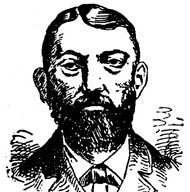
William Kemmler
Murderer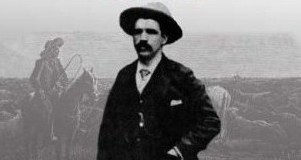 Jackson Lee Davis
Murderer · USA · 1896
Jackson Lee Davis, also known as Diamondfield Jack, was an inmate. · June 4, 18…
2 victims
Jackson Lee Davis
Murderer · USA · 1896
Jackson Lee Davis, also known as Diamondfield Jack, was an inmate. · June 4, 18…
2 victims
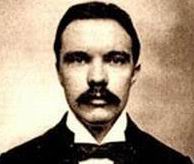 Theodore Durrant
Murderer · USA · 1895
Theodore Henry Durrant was born 1871 in Toronto, Canada. He was the son of Will…
2 victims
Theodore Durrant
Murderer · USA · 1895
Theodore Henry Durrant was born 1871 in Toronto, Canada. He was the son of Will…
2 victims
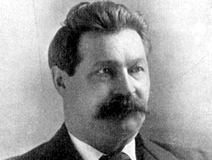 Adolph Luetgert
Murderer · USA · 1897
Adolph Louis Luetgert (also listed as Adolph Louis Luetgert; born December 27,…
1 victim
Adolph Luetgert
Murderer · USA · 1897
Adolph Louis Luetgert (also listed as Adolph Louis Luetgert; born December 27,…
1 victim
 Carlyle Harris
Murderer · USA · 1891
Carlyle Harris was executed by electrocution at Sing Sing Prison on May 7, 1893…
1 victim
Carlyle Harris
Murderer · USA · 1891
Carlyle Harris was executed by electrocution at Sing Sing Prison on May 7, 1893…
1 victim
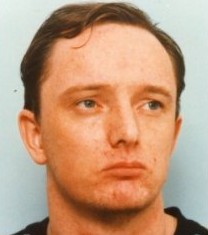 Robert Napper
Homicide · United Kingdom · 1992
Robert Clive Napper (born 25 February 1966) was a paranoid schizophrenic convic…
3 victims
Robert Napper
Homicide · United Kingdom · 1992
Robert Clive Napper (born 25 February 1966) was a paranoid schizophrenic convic…
3 victims
 Tommy Sands Groover
Murderer · USA · 1982
Tommy Sands Groover was born on 04/03/58. He was tried in the Fourth Judicial C…
3 victims
Tommy Sands Groover
Murderer · USA · 1982
Tommy Sands Groover was born on 04/03/58. He was tried in the Fourth Judicial C…
3 victims
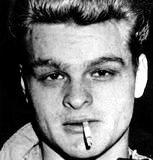 Charles Starkweather
Spree killer · USA · 1957
Charles Raymond Starkweather was born in Lincoln, Nebraska, on November 24, 193…
11 victims
Charles Starkweather
Spree killer · USA · 1957
Charles Raymond Starkweather was born in Lincoln, Nebraska, on November 24, 193…
11 victims
- Gender
- male
- Country
- USA
- Location
- Buffalo, New York, USA
- Date of birth
- May 9, 1860
- Age at first offence
- 29
- Characteristics
- parricide
- Victim profile
- Tillie Ziegler (his common-law wife)
- Method of murder
- Beating with a hatchet
- Date(s) of murder
- March 29, 1889
- Years active
- 1889
- Date of arrest
- —
- Status
-
Executed
Executed by electrocution in New York on August 6, 1890
Case details
William Kemmler (May 9, 1860 – August 6, 1890) was executed by electrocution in New York on August 6, 1890. He was described as having committed murder against his common-law wife, Tillie Ziegler, in Buffalo, New York.
Kemmler was otherwise called John Hart.
The offence
William Kemmler murdered Tillie Ziegler, his common-law wife, with a hatchet on March 29, 1889, in Buffalo. Ziegler was breathing when found in the morning by neighbors and the police, but died soon afterward without recovering consciousness. Kemmler was described as having gloat ed over the dead and making admissions that furnished evidence that convicted him.
The story also described that Kemmler came to Buffalo with Matilda Zeigler (described as his mistress) eighteen months before, three days after marrying in Camden, N.J., Ida Porter, a young woman who at that time had a husband living. The husband of the eloping woman was Fred Zeigler.
Background
Kemmler was born in Philadelphia on May 9, 1860, of German Lutheran parents and was one of eleven children. He had no schooling, and could neither read or speak German or English correctly. As a boy he assisted his father and the trade of butcher. After growing up he worked irregularly as a huckster. Both Kemmler and the woman he murdered were given to drink and to quarreling. He and Tillie Ziegler were described as having been involved in a drunken quarrel.
Timeline
- March 29, 1889 — Kemmler murdered Tillie Ziegler with a hatchet in Buffalo; she was breathing when found by neighbors and police but died soon afterward without recovering consciousness.
- May 10, 1890 — Kemmler was convicted of murder in the Erie Court of Oyer and Terminer in Buffalo on May 10, 1890.
- Three days later (date stated as three days after May 10, 1890) — Judge Childs sentenced Kemmler under a law fixing electricity as a method of execution.
- May 23 (year as stated in the narrative) — Kemmler was taken from Buffalo to Auburn, arriving a little before midnight on May 23.
- June 3 (year as stated) — Kemmler was scheduled to be produced before the Circuit Court of the United States for the Northern District of New York at Canandaigua.
- June 24 (year as stated) — Evidence was taken before County Judge S. Edwin Day on June 24.
- July 30 (year as stated) — The case was adjourned to July 30 for evidence taken before Referee Tracy C. Becker.
- August 6, 1890 — Kemmler was executed by electrocution in New York on August 6, 1890.
- August 7, 1890 — Cable reports from London discussed the killing of Kemmler by electricity.
- September 18 (year as stated) — Arguments on the evidence taken before Referee Becker were made in court at Auburn before Judge Day.
- October 10 (year as stated) — Judge Day’s decision was rendered, pronouncing the law imposing death by electricity constitutional and remanding the prisoner to Warden Durston for execution.
- October 18, 1889 — Before Justice Parker, Dwight and Macomber, of the General Term of the Supreme Court, in session at Rochester, the constitutionality question was again argued.
- December 30, 1889 — A decision affirming County Judge Day’s order dismissing the writ of habeas corpus and remanding the prisoner was handed down.
- February 23 (year as stated) — Two appeals were argued before the Court of Appeals in Albany.
- March 21 (year as stated) — The Court of Appeals issued a unanimous opinion written by Judge Dennis O’Brien affirming the judgment of the courts below.
- March 31 (year as stated) — Kemmler was brought to Buffalo for resentenced.
- April 23 (year as stated) — Proceedings were again arrested by another writ of habeas corpus.
- May 5 (year as stated) — In Buffalo, another writ of habeas corpus was granted by Judge Corbett requiring Kemmler to be produced before County Judge Underwood at Auburn on Thursday, May 10.
- May 10 (year as stated) — Judge Underwood, in Chambers, issued a pro forma order overruling the demurrer and remanding the prisoner with an understanding that appeals would be taken.
- May 19 (year as stated) — The Court announced it would hear the application on May 19.
- May 20 (year as stated) — The United States Supreme Court heard Mr. Roger Sherman's argument on his application for a writ of error.
- May 23 (year as stated) — The Chief Justice Fuller delivered the opinion of the Supreme Court of the United States denying the motion for a writ of error.
- June 23 (year as stated) — Chief Justice Ruger decided that the Legislature had the right to make the law as it had made it and affirmed the decision of the lower court.
- June 23 (year as stated) — In accordance with these final decisions, Kemmler was once again taken to Buffalo and sentenced to be put to death by electricity at Auburn Prison sometime during the week beginning Monday, August 4.
- August 6, 1890 (execution-related time markers within the execution day, as stated) — Kemmler was awakened at 5:00 a.m., shaved on the morning of his execution, and entered the execution room at 6:38 a.m.; he was declared dead after the second electrical shock and approximately eight minutes elapsed for the entire execution.
Investigation and evidence
Kemmler was convicted of murder in Buffalo. He made admissions described as furnishing the evidence that convicted him.
Arrest and custody
Kemmler was taken from Buffalo to Auburn, arriving a little before midnight on May 23 (year as stated). He was held at Auburn State Prison under a death sentence carried into effect on August 6, 1890.
Trial
Kemmler was convicted of murder in the Erie Court of Oyer and Terminer in Buffalo on May 10, 1890.
Sentencing
Three days later Judge Childs sentenced Kemmler under the law fixing electricity as a method of execution. The signed warrant sent to Warden Durston of Auburn State Prison directed that the execution take place within the week beginning on the 24th day of June, 1889.
On March 31, Kemmler was brought to Buffalo for resentenced. Judge Childs pronounced the order that the former sentenced be carried into effect within the week beginning April 28 and that the prisoner be returned to the State Prison at Auburn and be kept in close confinement until the time of the execution.
Appeals and legal proceedings
Habeas corpus and constitutional litigation
An application for a writ of habeas corpus was made to Judge Charles C. Dwight, of the Supreme Court, by Charles S. Hatch, the attorney who had defended Kemmler on his trial in Buffalo. Judge Dwight granted the application.
The case was argued in Auburn on June 24, before County Judge S. Edwin Day. Mr. Bourke Cockran and George S. Quimby, the District Attorney for Erie county, appeared for Kemmler; Mr. Cockran argued that the mode of punishment proposed was cruel and unusual. Attorney General Tabor maintained the constitutionality of the law.
Before a referee, Counselor Tracy C. Becker, of Buffalo, was appointed referee. The case was adjourned to July 30. Many experts were called before the referee and a mass of testimony was taken. Arguments on the evidence taken before Referee Becker were made in court at Auburn before Judge Day on September 18. Messrs. Cockran and Hatch represented Kemmler; Attorney General Tabor and Assistant Kennepick, of Buffalo defended the electrical execution law.
Judge Day’s decision was rendered October 10, pronouncing the law imposing death by electricity constitutional and remanding the prisoner to Warden Durston for execution.
Before Justice Parker, Dwight and Macomber, of the General Term of the Supreme Court, in session at Rochester, the constitutionality question was again argued on October 18, 1889.
A decision affirming the order of County Judge Day dismissing the writ of habeas corpus and remanding the prisoner, with an elaborate opinion by Judge Dwight, was handed down on December 30, 1889.
Court of Appeals
Two appeals on the half of Kemmler were argued before the Court of Appeals in Albany on February 23. The appeal from conviction was argued by C. S. Hatch for Kemmler and by George J. Quimby for the respondent. The question on the constitutionality of law was fear read argued by Bourke Cockran and Attorney General Charles F. Tabor.
On March 21, the Court of Appeals issued a unanimous opinion written by Judge Dennis O’Brien affirming the judgment of the courts below. The decision held that no error was committed on the trial in declaring the electrical execution act constitutional and affirmed that the Legislature proceeded with care. It also affirmed that the mode proposed was not cruel within the meaning of the Constitution, although unusual, and that the testimony taken by the referee did not impeach the validity of the Legislature's acts.
Resentencing and further federal and state processes
On April 23, after completion of arrangements for carrying out the sentence, final testings of the apparatus, and final private farewells between Kemmler and his prison attendants, all proceedings were again arrested by another writ of habeas corpus. This was granted by Judge William J. Wallace, Judge of the Circuit Court, and commanded Warden Durston to produce William Kemmler before the Circuit Court of the United States for the Northern District of New York, to be held at Canandaigua on June 3. Roger M. Sherman announced himself as Kemmler’s attorney, and the federal courts were asked to pass upon whether the State law violated the eighth and fourteenth amendments of the federal constitution.
On May 5, Roger M. Sherman applied to the United States Supreme Court in Washington, and presented an extended argument for the original writ of habeas corpus pursuant to the directions made by Judge Wallace. This application was denied. On Justice Blatchford’s suggestion, Mr. Sherman made application for a writ of error, and the Court announced it would hear the application on May 19.
On May 5 also, in Buffalo, another writ of habeas corpus was granted by Judge Corbett requiring the production of Kemmler before County Judge Underwood at Auburn on Thursday, May 10. The ground was the claim that only the Sheriff of Erie county could legally execute Kemmler.
On May 10 Judge Underwood, in Chambers, issued a pro forma order overruling the demurrer and remanding the prisoner with the understanding that appeals would be taken at once to General Term of the Supreme Court and then to the Court of Appeals.
The United States Supreme Court on May 20 heard Roger Sherman's argument on his application for a writ of error. Chief Justice Fuller delivered the opinion on May 23, denying the motion for a writ of error. The last legal determination in the case was announced in Saratoga June 23. On that date Chief Justice Ruger decided that the Legislature had the right to make the law as it had made it and affirmed the decision of the lower court.
In accordance with these final decisions, Kemmler was taken to Buffalo again and sentenced to be put to death by electricity at Auburn Prison sometime during the week beginning Monday, August 4.
Execution
Preparation and time markers
On the morning of his execution, August 6, 1890, Kemmler was awakened at 5:00 a.m. He dressed quickly and put on a suit, necktie and white shirt. After breakfast and some prayer, the top of his head was shaved.
At 6:38 a.m., Kemmler entered the execution room. He was presented 17 witnesses by the warden. Witnesses remarked Kemmler was composed; he did not scream, cry or resist.
He was ordered up by the warden so a hole could be cut in his suit for a second electrical lead to be attached. He was strapped to the chair, his face was covered, and the metal restraint was put on his bare head. The warden Charles Durston said: "Goodbye William"
Kemmler said: "Take it easy and do it properly, I'm in no hurry."
Kemmler looked at the chair and said: "Gentlemen, I wish you luck. I'm sure I'll get a good place, and I'm ready."
He was electrocuted with an initial charge of 1,000 volts for 17 seconds. A horse had been successfully electrocuted the day before.
During the execution, witnesses reported the smell of burning flesh and that several nauseated spectators fled the room. The power was turned off and Kemmler was declared dead, but witnesses noticed he was still breathing. Dr. Edward Charles Spitzka and Dr. Charles F. Macdonald examined Kemmler. After confirming Kemmler was still alive, Spitzka reportedly called out: "Have the current turned on again, quick — no delay."
In the second attempt, Kemmler was shocked with 2,000 volts. Blood vessels under the skin ruptured and bled and his body caught fire. In all, the entire execution took approximately eight minutes.
Westinghouse later commented: "They would have done better using an axe."
A reporter who witnessed it also said it was: "an awful spectacle, far worse than hanging."
Witnesses, medical staff, and named officials
The narrative described District Attorney George Quimby as leaving the room before the affair had been carried to its conclusion.
The execution involved these named medical practitioners and attendants in the execution-room narrative and/or autopsy narrative: Dr. Edward Charles Spitzka, Dr. Charles F. Macdonald, Dr. Fell, Dr. Jenkins, Dr. Balch, Dr. Shrady, Dr. Carlos F. McDonald, Dr. W. T. Jenkins, Dr. Clayton M. Daniels, Dr. Carlos F. McDonald, Dr. George F. Shrady, Dr. Oliver A. Jenkins, Dr. Joseph C. Velling, Dr. Michael Conway, Dr. George Grantham Bain, Dr. Frank W. Mack, Dr. George F. Shrady, and Dr. George F. Irish (as named among the certificate signatories).
Named prison and officials included Warden Charles F. Durston and his assistant deputy Vieling (Joseph C. Velling appears later among certificate signatories in the names list). Also named were Sheriff Conway of Troy, and turnkey and electricians.
The execution-room narrative included a death-warrant and certificate process supervised by Warden Durston.
Kemmler’s last statements and actions during the execution
Kemmler’s last speech was recorded as: "Well, gentleman, I wish everyone good luck in this world, and I think I am going to a good place, and the papers have been sang a lot of stuff that isn't so. That's all I have to say."
Earlier, during the straps-and-harness phase, Kemmler said: "Durston, see that things are right."
He also said: "There's plenty of time."
During the adjustment of the head electrode, he said: "Oh, you better press that down further, I guess," and: "Press that down."
He added: "well, I wanted to the best I can," and: "I can do any better than that."
When released from his clothing and chair positioning, he said: "Gave me a chair, will you,"
He said to the workers at the straps: "Take your time; don't be in a hurry; do it well; be sure everything is all right."
At one point he also said: "Well, I wish everybody good luck,"
At the end of pre-switch preparations he thanked: "Thank you,"
and the warden asked whether he was ready, and the doctors said: "Ready?" "Ready," followed by: "Goodbye"
Certificate and signing
After the execution, Warden Durston affixed his signature to a certificate of death and witnesses signed it.
The certificate stated that William Kemmler, otherwise called John Hart, was executed in conformity with the judgment and sentence and in accordance with the provisions of the Code of Criminal Procedure of the State of New York. The certificate was dated at Auburn, Cayuga county, State of New York, on the 6th day of August, 1890, and signed: "CHARLES F. DURSTON, Agent and Warden."
The certificate names included: Louis Balch, W. T. Nellis, J. M. Jenkins, W. T. Jenkins, Joseph Fowler, Henry A. Argue, C. W. Daniels, A. P. Southwick, O. A. Houghton, C. R. Huntley, H. E. Allison, T. K. Smith, E. C. Spitzka, Carlos F. McDonald, George C. Fell, Oliver A. Jenkins, Joseph C. Velling, Horatio Yates, Tracy C. Becker, Michael Conway, George Grantham Bain, Frank W. Mack, George F. Shrady, George W. Irish, Robert Dunlop.
Autopsy
An autopsy was described as being held three hours after death. The autopsy supervision and roles were described as involving Drs. Carlos F. McDonald, D.C. Spitzka and George F. Shrady of New York, with the procedure performed by Dr. W. T. Jenkins of New York assisted by Dr. Clayton M. Daniels of Buffalo.
The account described results including:
- Rigor mortis was marked particularly in the muscles of the job, neck and thorax, and gradually extended from above downwards, involving the feet and lungs last.
- The post-mortem hyperstasis was marked over the lower portion of the body and extending up as far as the anterior auxiliary line, also on the pendant surface of the upper and lower extremities.
- Upper extremities were partly flexed and rotated out words, with nails showing post-mortem lividity.
- Marked discoloration of the forehead about an inch wide with corresponding strap positions beginning at the hair line on the left side and extending to the hair line on the right side.
- A corresponding discoloration from the pressure of the chin strap.
- The burned integument of the back, when removed, showed spinal muscles underneath to be cooked like "overdone beef" throughout their entire thickness.
- The spinal cord was removed entire but showed no gross appearances of pathological addition.
- Portions of brain tissue and structure were preserved for purposes of hardening and microscopic examination.
- Blood taken immediately after death showed under the microscope a markedly granular condition almost suggesting an electrolytic dissolution of the red corpuscles.
The execution-room narrative also described autopsy findings including a brain weight described as forty-five ounces and blood in small blood vessels between brain and skull like charcoal, with the skull badly burned and burning most terrible at the base of the spinal cord where the electrode touched; the examination of the spinal cord showed negative results, and they found no trace of the current that had passed through it.
Medical dispute after execution
The narrative stated that the doctors disagreed, described as Buffalo physicians against New York physicians and Spitzka against McDonald.
Dr. Spitzka made statements including: "For me, first the guillotine, second the gallows, and last of all electrical execution." and: "I do not regard the execution a failure, but it did not appear to be what it had promised to be." and: "I believe that 5 seconds after the current was turned on Kemmler was a dead man." and: "In fifteen seconds he was dead." and: "The object of the system was to written capital punishment of its features of barbarity and cruelty." and: "What I have seen satisfies me that the scale of capital punishment is first the guillotine, second the gallows, and for in the rear the electrical execution." and: "It is no credit to those having this in charge that Kemmler's death was not infinitely more ghastly then it appeared to be;" and: "Kemmler showed signs of animation and certain gurgling sounds after the current was first turned off." and: "It is shown by the system that under conditions that those that existed to-day ... the execution could be made absolutely frightful."
Dr. McDonald was quoted as stating: "while this is not so great a success as I had hoped it would be, it is demonstrated to my mind that this method is infinitely preferable to hanging." and: "It is impossible to say whether the man was dead or not at the first contact." and: "It is an outrage and a terrible hardship to place this duty on the shoulders of the Wardens of our State prisons, and I shall try my best of the next session of the Legislature to have lost so amended as to do away with the present defects."
Dr. Southwick was quoted as stating: "it is one of the grandest successes of the age." and: "If they had consulted me I should have said thirty seconds." and: "The reason for body was burned in the back was that the sponges of the electro was small and got try, and the bear cup touched him."
Dr. Fell was quoted as stating: "death was instantaneous; there was no doubt of that." and: "Whatever action after the relaxation-after the current-there was purely mechanical." and: "The same muscular action is found in boys who have been drowned when attempts are made to resuscitate them, and the chickens with their heads cut off."
A separate telegram quoted Dr. C. W. Daniels as stating the execution would have been a success but for Spitzka: "the execution of Kemmler would have been a success had it not been for Spitzka." and: "Through some unfortunate combination of circumstances he came near ruining the whole affair." and: "I am satisfied that he was not." and: "I am fully satisfied that he was unconscious." and: "The trouble is," he continued, "that the public will hold the apparatus responsible and that is not where the bland lawns."
Deputy Coroner Jenkins was quoted as stating Kemmler was rendered unconscious at once while also saying he was not dead instantly: "he was undoubtedly unconscious, but not dead." and: "No, he was not." and: "Yes, I think he was," and: "It was at least a minute, perhaps more, before the pallor of death appeared and machine was stopped, backspace." and: "There was a slight scorching at the point of contact."
The narrative also stated that consciousness was said to be stricken instantly and that the result of not instantly killing the body was attributed to improper contact or insufficient voltage or pressure, including mention of test lamps and the voltage drawn by lamps.
Aftermath and public reaction
After the execution, observers described widespread reaction and discussion of the electrical execution law.
George Westinghouse commented: "I do not care to talk about it. It has been a brutal affair. They could have done better with an axe." and: "My predictions have been verified." and: "I regard the manner of the killing as a complete vindication of all our claims."
Bourke Cockran was quoted: "this is horrible" and: "It is a sort of ghastly triumph for me." and: "I will not give and extended opinion on the matter now, but you can save this: — after Kemmler is awful punishment no other State will adopt the electrical execution law."
Commodore Gerry declined to comment, saying he wanted to read a more scientific report and thought reports might be sensational and not correct.
London newspaper comments were quoted, including: "The Chronicle, commenting upon the killing of Kemmler by electricity, says the scene was worthy of the darkest chambers of the Inquisition in the 16th century." and: "The Times says it would be impossible to imagine a more revolting exhibition." and: "The Standard says:— "the scene can be described as a disgrace TO humanity. It will send a thrill of indignation throughout the civilized world. We cannot believe that Americans will allow the electrical execution act to stand.""
Also described were proposed actions, including that Governor Hill may act and that efforts might be made to convene an extraordinary session of the Legislature to repeal the law. Acting District Attorney Gunning S. Bedford was quoted: "I assumed that the death penalty inflicted upon Kemmler was carried out properly as prescribed by statute, but the horrible manner of his death takes me sick to contemplate." and: "I, for one, shall use my best endeavors to have the present death penalty abolished by the Legislature and some other penalty made a law, as I regard it as an utter failure." and: "Instead of executions by electricity making the death penalty better it has made it infinitely worse."
Recorder Smyth was quoted: "I never was in favor of the bill that changed the mode of death penalty for murder from hanging to electricity, and did all in my power to defeated when it was before the Legislature." and: "Death by hanging is good enough for any murderer."
Coroner Ferdinand Levy was quoted: "The law for electrical executions will not stand after this," and: "he added that he thought the courts would now hold that electrical death was a "cruel and unusual punishment.""
An editorial attributed to Dr. George F. Shrady, editor of the Medical Record of New York, was quoted as: "The lengthened agony of suspense regarding the efficiency of electricity as a means of executing criminals has been signally terminated and illegal killing of Kemmler." and: "As was reasonably anticipated, death was instantaneous." and: "As far as can be judged, the unfortunate subject of the experiment died without pain." and: "The spectacle presented was, however, by no means edifying to such as hope for improvements of old methods." and: "We venture to predict that public opinion will soon banish the desk chair has it has done the rope, and that imprisonment for life will be the only proper punishment metted to a murderer." and: "This is indeed the only rational method which science, justice and religion can consistently recommend." and: "The death chair will yet to be the altar from watch this doctrine will be preached."
Other details
People and places named in the execution narrative
The execution-room narrative named prison attendants and related individuals including McNaughton and Dunlon as keepers, and Rev. W. E. Houghton as Kemmler’s spiritual adviser. District Attorney George Quimby was described as arriving and fainting after leaving the execution room.
The execution logistics narrative described electric apparatus and locations including the dynamo room, described as in the northwest wing of the person and between eight hundred and a 1000 feet from the chair. It also described that Electrician E.T. Davis was stationed at the volt meter in this room, and that the man in charge of the switch was named as E.T. Davis with helpers.
Electric chair construction and operational description
The execution narrative described that the chair was fashioned like a square, high backed, easy chair with perforated wood seat and arms, three wooden braces across the back, hard rubber cushion, heavy cotton band, metal cup and sponge electrodes, figure four framework, spiral wiring, and wooden clamps allowing movement of the frame. It described the straps as broad leather straps arranged to go around Kemmler’s chest into diagonal directions across his legs and around each of his limbs.
Signal system
The dynamo room signals were described as: two taps of the bell to start the dynamo; two taps repeated for more pressure; and one tap to stop. The narrative described that if the two taps were repeated it meant that still greater pressure was required.
Statements in the execution reporting about the failure and autopsy timing
A report stated the correspondent described Kemmler’s execution as the beginning and end of electrocution and described that the scene was too horrible to picture. It described that an inquiry might be needed and included claims about instruments being stolen and dynamos being faulty or briberies being made (as described in the narrative). The report also described division of the body in the autopsy and doctors taking parts of the dead man’s body.
Alternate name and warrant description
The certificate included that Kemmler was otherwise called John Hart and referenced the Court of Oyer and Terminer in Erie County, with the State of New York, County of Cayuga ss.
Disposal of remains
The narrative described that the people would be grateful that Kemmler was dead and that his remains would be disposed of using quicklime as the law imposes and in the prison cemetery.
Spotted an error, or have more information about this case?