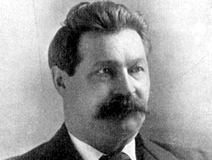
Adolph Luetgert
Murderer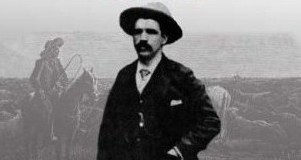 Jackson Lee Davis
Murderer · USA · 1896
Jackson Lee Davis, also known as Diamondfield Jack, was an inmate. · June 4, 18…
2 victims
Jackson Lee Davis
Murderer · USA · 1896
Jackson Lee Davis, also known as Diamondfield Jack, was an inmate. · June 4, 18…
2 victims
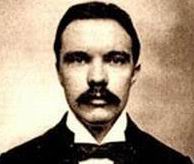 Theodore Durrant
Murderer · USA · 1895
Theodore Henry Durrant was born 1871 in Toronto, Canada. He was the son of Will…
2 victims
Theodore Durrant
Murderer · USA · 1895
Theodore Henry Durrant was born 1871 in Toronto, Canada. He was the son of Will…
2 victims
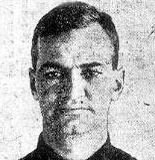 William Williams
Murderer · USA · 1905
William Williams was a Cornish immigrant who worked as a miner in Saint Paul, M…
2 victims
William Williams
Murderer · USA · 1905
William Williams was a Cornish immigrant who worked as a miner in Saint Paul, M…
2 victims
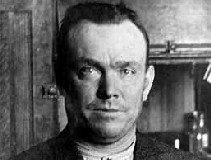 Albert Horsley
Murderer · USA · 1905
Albert Edward Horsley was sentenced to death for the 1905 political assassinati…
1 victim
Albert Horsley
Murderer · USA · 1905
Albert Edward Horsley was sentenced to death for the 1905 political assassinati…
1 victim
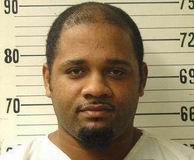 James Stout
Murderer · USA · 1995
James P. Stout and three accomplices were accused of carjacking, abducting and…
1 victim
James Stout
Murderer · USA · 1995
James P. Stout and three accomplices were accused of carjacking, abducting and…
1 victim
 Tracy Lee Housel
Murderer · USA · 1985
Tracy Lee Housel was executed by lethal injection in Georgia on March 12, 2002.…
2 victims
Tracy Lee Housel
Murderer · USA · 1985
Tracy Lee Housel was executed by lethal injection in Georgia on March 12, 2002.…
2 victims
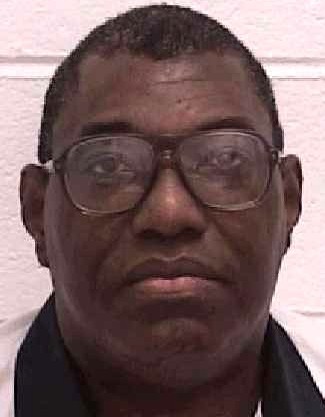 Robert Lewis Collier
Murderer · USA · 1978
Robert Lewis Collier was sentenced to death in August 1978. His death sentence…
1 victim
Robert Lewis Collier
Murderer · USA · 1978
Robert Lewis Collier was sentenced to death in August 1978. His death sentence…
1 victim
 Dorsie Lee Johnson
Murderer · USA · 1986
Dorsie Lee Johnson, Jr. was convicted in the death of Jack Huddleston, 53, a co…
1 victim
Dorsie Lee Johnson
Murderer · USA · 1986
Dorsie Lee Johnson, Jr. was convicted in the death of Jack Huddleston, 53, a co…
1 victim
 Chevie Kehoe
Murderer · USA · 1996
Chevie Kehoe was born on January 19, 1973, and was identified as the oldest of…
3 victims
Chevie Kehoe
Murderer · USA · 1996
Chevie Kehoe was born on January 19, 1973, and was identified as the oldest of…
3 victims
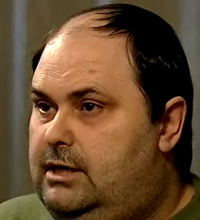 Nelson Hart
Murderer · Canada · 2002
Nelson Hart (born c 1968) was a Newfoundland, Canada resident. He lived with hi…
2 victims
Nelson Hart
Murderer · Canada · 2002
Nelson Hart (born c 1968) was a Newfoundland, Canada resident. He lived with hi…
2 victims
- Gender
- male
- Country
- USA
- Location
- Chicago, Illinois, USA
- Date of birth
- December 27, 1845
- Age at first offence
- 52
- Characteristics
- domestic violence
- Victim profile
- Louise Luetgert (his wife)
- Method of murder
- Drowning? - Poisoning?
- Date(s) of murder
- May 1, 1897
- Years active
- 1897
- Date of arrest
- 6 days after
- Status
-
Died in custody
Sentenced to life in prison on February 9, 1898; died in prison on July 7, 1899
Case record: Adolph Luetgert
Background
Adolph Louis Luetgert (also listed as Adolph Louis Luetgert; born December 27, 1845–died July 7, 1899) was a German-American meat packer.
He was originally named Adolph Ludwig Lütgert and was born in Gütersloh, Westphalia (now Germany).
His parents were Christian Heinrich Lütgert and Margreta Sophia Severin. They had ten other children besides Adolph; eight other sons and two daughters. Adolph was the third born in the family.
He had a twin named Heinrich Friedrich “Fritz” Luetgert, who died before Adolph around 1894 or 1895.
While Adolph was growing up, his father dealt with animal hides and tallow wool and also dabbled in real estate.
Adolph’s schooling lasted from about the age of seven until the age of fourteen. After that, he became an apprentice for Ferdinand Knabel, who taught him about the tanning business.
During the apprenticeship, Adolph continued to live in Westphalia while living with his boss instead of his family. After working for Knabel for two and a half years, Luetgert began to travel around Germany, working wherever he could.
At the age of nineteen, Luetgert traveled to London, England, and stayed for about six months. He left because he was unable to find a job other than scrubbing restaurant floors.
Life in America
Adolph Luetgert came to New York in around 1865 or 1866 when he was about twenty years old. He boarded a ship bound for the United States with about thirty dollars to his name.
He arrived in New York and, after a short time, went to Quincy, Illinois to meet friends of his brother who were living there. He stayed in Quincy for about four months before moving to Chicago to search for a job at a tannery.
He found a job at Union Hide and Leather Company. He did not have a steady job or constant pay at the tannery, so he took on random jobs such as moving houses.
From 1867 to 1868, Luetgert got a job at another tannery called Engle, Crossley & Co. He later worked at another tannery called Craig, Clark & Company, but returned to work at the Engle Brother’s Tannery until 1872.
Luetgert then started his own business with four thousand dollars he had saved. Initially, he went into the liquor business before starting his sausage company in 1879.
Family relationships
Luetgert married his first wife, Caroline Roepke, sometime between 1870 and 1872. Caroline Roepke died on November 17, 1877.
Luetgert married his second wife, Louise Bicknese, two months after Caroline’s death, on January 18, 1878. The marriage was also stated as occurring on January 18, 1878.
Luetgert and Louise Bicknese had six children—two with Caroline and four with Louise. Only three of his children survived past the age of 2.
Louise Bicknese disappeared on May 1, 1897.
Louisa’s brother was Diedrich Bicknese.
Another named person connected to the case was Mary Simerling, identified as a girl connected to Luetgert and as Louisa’s “nice and a household servant.”
The offence
Louisa disappeared on May 1, 1897.
During the investigation and trial, Luetgert was accused of murdering his wife and dissolving her body in acid in one of his sausage vats at the A.L. Luetgert Sausage & Packing Company in 1897.
The evidence described included arsenic and potash purchases, remains and residues found in the furnace/vat area, and human bone fragments identified by a forensic anthropologist.
Investigation
Adolph told his children that their mother had gone to visit her sister on the previous night but never came back.
After a few days, Diedrich Bicknese went to the police to report her disappearance. Luetgert told police that she ran away with another man.
Police learned that the couple had a history of domestic violence and that the couple fought on a regular basis.
The police investigation discovered that on the night of May 1, 1897, when Louisa disappeared, she was seen entering the factory with her husband at 10:30pm.
A watchman from the sausage plant confirmed that Luetgert gave him an errand to run and told him that he could take the rest of the night off.
Police also discovered bills indicating that Luetgert bought arsenic and potash the day before the murder.
Due to accumulated evidence, a detective was convinced that Luetgert killed his wife, boiled her in acid, and disposed of her in a factory furnace.
Officers searched in the furnace and found burned foul sausages and human residue.
Two of Louisa’s rings were found, including one with the initials “LL” engraved.
Bone fragments identified by a forensic anthropologist included metatarsal bones, toe phalanx, rib and head of a human female.
Arrest
Because of the evidence, Luetgert was arrested while still claiming his innocence.
A date of May 7, 1897 was also stated for the arrest.
Louetgert was indicted for the crime a month later.
Trial
Adolph Luetgert’s murder trial began in the end of August in 1897 and took place in the Cook County Courthouse.
The judge was Richard Tuthill.
Luetgert’s defence was by William Vincent.
The prosecution was by Charles Deneen, who would later be elected Governor of Illinois and a U.S. Senator for Illinois.
The trial focused on the disappearance of Louise Luetgert on May 1, 1897.
The prosecution used bones and a ring found in one of the grinders in Luetgert’s sausage factory as main evidence. The ring was inscribed with the initials L.L.
The defence argued that Louise Luetgert left her house on May 1, 1897 and also cited claims of people that they had seen her around the United States following the beginning of the trial.
During the trial, observers thought Luetgert seemed unconcerned and overly confident that he would be found innocent.
The jury was unable to reach a unanimous verdict, so the case was retried.
A hung jury was also described as occurring on October 21 after jurors failed to agree on a suitable punishment. It was stated that some argued for the death penalty while others voted for life in prison. It was also stated that only one juror thought Luetgert might be innocent.
Luetgert’s second trial began in January 1898 at the same courthouse.
The prosecution used George Amos Dorsey, an anthropologist at the Field Columbian Museum in Chicago, to prove that the bones found were human bones.
The jury reached a unanimous decision that Luetgert was guilty.
Sentencing
Luetgert was convicted and sentenced to life imprisonment.
He was sentenced to life in prison on February 9, 1898.
Appeals
No appeal information was provided.
Outcome
Luetgert died in prison on July 7, 1899.
A date of July 7, 1899 was given for his death in prison.
Aftermath
After the news of the trial became public, rumors spread that Luetgert had turned his wife into sausage and sold the “sausage” to unknowing consumers.
It was stated that this has been proven to be false as her body was dissolved and burned, but the legend persisted.
Another legend stated that the ghost of Louisa Luetgert haunted the old factory grounds and the couple’s former home in Chicago.
There were “sightings” of Mrs. Luetgert after the trial began. She was sighted in 12 different states but was never found.
One famous myth was that she was seen boarding a ship in New York bound for Europe. When Adolph heard this, he said he thought she was definitely fleeing the country.
The factory was described as having been built at a stated location: the southwest corner of Hermitage and Diversey Parkway.
It was also stated that some claimed the Luetgert factory burned to the ground in 1902, but research by Robert Loerzel showed the factory still stood, and that a fire occurred on June 26, 1904. The fire was described as burning the inside of the building, destroying sausage vats while leaving the external structure standing.
The factory’s later status was described as being converted into condominiums on the south side of the 1700 block of West Diversey Parkway.
A separate narrative stated that local rumors included that she had been ground into sausage, and that sausage sales declined substantially in 1897.
It was stated that after Luetgert was taken away to prison, he babbled incoherently to guards, claiming his dead wife was haunting him and intent on having her revenge, even though he was said to be innocent of her murder.
It was also stated that Luetgert was possibly insane by this time, and that he died in 1900 in that narrative; however, his death date was also given as July 7, 1899.
Luetgert’s attorney was described as Lawrence Harmon. It was stated that Harmon believed Luetgert was telling the truth and that he did not kill his wife, and that she spent over $2,000 of his own money and devoted the rest of his life to finding Louisa. It was also stated that Harmon eventually went insane and died in a mental institution.
The narrative further stated that after Luetgert was sent to prison, Louisa’s ghost began to be seen inside the Luetgert house, and neighbors claimed to see a woman in a white dress leaning against the mantel in the fireplace. It also stated that the house was rented out but tenants did not stay there for long and that the ghost was reported inside the sausage factory. Portions of the factory were later turned into condominiums, and it was stated that no reports of the ghost in the new structures had surfaced as of the writing.
Finally, it was stated that the couple’s former home and the former A.L. Luetgert Sausage and Packing Company were located on the southwest corner of Hermitage Avenue and Diversey Parkway, just before Paulina Street, on Chicago’s North Side.
Other details
The record referenced “a celebrity case” and described media coverage, including that newspapers from Chicago reported on it daily and some tried to eavesdrop on jury deliberations.
It was also stated that the case was credited with putting murder trials in the media and that it was one of the first to use forensic experts to solve a crime.
It was also stated that Luetgert built a sausage plant at the southwest corner of Hermitage and Diversey Parkway in 1894 and built a three-story frame house next door to the factory that he shared with his wife Louisa.
As a wedding gift, it was stated that Luetgert gave Louisa a unique heavy gold ring with “L.L.” inscribed.
A detail stated that Luetgert moved his bedroom from the house to a small chamber inside of the factory.
It was also stated that the factory had been closed for ten weeks for reorganization prior to Louisa’s disappearance, and that the day before Louisa vanished Luetgert ordered 378 pounds of crude potash and fifty pounds of arsenic.
A detail stated that officer Walter Dean found a small piece of a skull fragment and two gold rings while officers searched and drained the vat residue.
A date of May 7 was also given for Luetgert’s arrest, and October 21 was also given for the hung jury in the first trial.


Spotted an error, or have more information about this case?