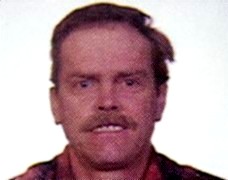
Daniel Bondeson
Murderer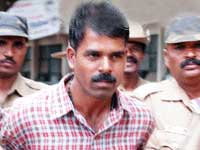 Umesh Reddy
Murderer · India · 1998
Umesh Reddy was sentenced to death on October 27, 2006. The Karnataka High Cour…
18 victims
Umesh Reddy
Murderer · India · 1998
Umesh Reddy was sentenced to death on October 27, 2006. The Karnataka High Cour…
18 victims
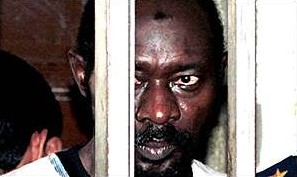 Mohammed Adam Omar
Murderer · Yemen · 1995
Mohammed Adam Omar was a morgue assistant at Sanaa University’s medical faculty…
16 victims
Mohammed Adam Omar
Murderer · Yemen · 1995
Mohammed Adam Omar was a morgue assistant at Sanaa University’s medical faculty…
16 victims
 Robert Martines Perez
Murderer · USA · 1994
Name: Robert Martines Perez · Other name used in proceedings: Robert Martinez P…
15 victims
Robert Martines Perez
Murderer · USA · 1994
Name: Robert Martines Perez · Other name used in proceedings: Robert Martinez P…
15 victims
 Billy Frank Vickers
Murderer · USA · 1993
Billy Frank Vickers Vickers was executed by lethal injection in Texas on Januar…
14 victims
Billy Frank Vickers
Murderer · USA · 1993
Billy Frank Vickers Vickers was executed by lethal injection in Texas on Januar…
14 victims
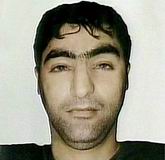 Farda Gadirov
Murderer · Azerbaijan · 2009
Farda Gadirov (also given as Farda Asad oglu Gadirov; Azeri: Fərda Qədirov; Geo…
12 victims
Farda Gadirov
Murderer · Azerbaijan · 2009
Farda Gadirov (also given as Farda Asad oglu Gadirov; Azeri: Fərda Qədirov; Geo…
12 victims
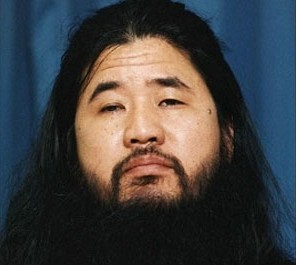 Shoko Asahara
Murderer · Japan · 1995
Shoko Asahara was the founder of Japan's controversial Buddhist religious group…
12 victims
Shoko Asahara
Murderer · Japan · 1995
Shoko Asahara was the founder of Japan's controversial Buddhist religious group…
12 victims
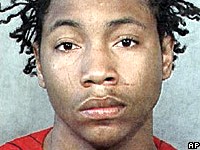 Ronell Wilson
Murderer · USA · 2003
Ronell Wilson was federally sentenced to death on January 30, 2007. Ronell Wils…
2 victims
Ronell Wilson
Murderer · USA · 2003
Ronell Wilson was federally sentenced to death on January 30, 2007. Ronell Wils…
2 victims
 Gary Ploof
Murderer · USA · 2001
Gary W. Ploof was a U.S. Air Force Staff Sergeant stationed with his wife, Heid…
1 victim
Gary Ploof
Murderer · USA · 2001
Gary W. Ploof was a U.S. Air Force Staff Sergeant stationed with his wife, Heid…
1 victim
 Aset Magomadova
Murderer · Canada · 2007
Aset Magomadova was convicted of manslaughter for strangling her daughter, Amin…
1 victim
Aset Magomadova
Murderer · Canada · 2007
Aset Magomadova was convicted of manslaughter for strangling her daughter, Amin…
1 victim
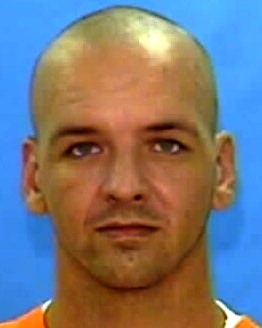 Brandy Bain Jennings
Murderer · USA · 1995
Brandy Bain Jennings was sentenced to death on December 2, 1996. He was convict…
3 victims
Brandy Bain Jennings
Murderer · USA · 1995
Brandy Bain Jennings was sentenced to death on December 2, 1996. He was convict…
3 victims
- Gender
- male
- Country
- —
- Location
- —
- Date of birth
- 1950
- Age at first offence
- 53
- Characteristics
- abuse
- Victim profile
- Walter Morrill, 78 (church member)
- Method of murder
- Poisoning (arsenic) Loca tion : New Sweden, Maine, USA
- Date(s) of murder
- April 27, 2003
- Years active
- 2003
- Date of arrest
- —
- Status
-
Died in custody
Committed suicide by shooting himself five days later, May 2, 2003
Case information
Daniel Bondeson was implicated in arsenic poisonings at Gustaf Adolph Lutheran Church in New Sweden. He later died by suicide.
Timeline
- April 27, 2003 — Walter Morrill died of arsenic poisoning after drinking coffee at the Gustaf Adolph Lutheran Church in New Sweden; 15 other, mostly elderly, churchgoers became ill, with three becoming seriously ill.
- April 28, 2003 — Walter Reid Morrill died during the early morning hours.
- April 29, 2003 — Detectives with the Maine State Police learned that extremely high levels of arsenic had been found in a liquid coffee sample collected from the church on April 27, 2003; Dr. Michael Ferenc, Deputy Chief Medical Examiner for the State of Maine, performed an autopsy on Walter Reid Morrill; after receiving laboratory results, he concluded Mr. Morrill died as a result of acute arsenic poisoning and ruled the death a homicide; numerous laboratory tests confirmed the source of arsenic was in the brewed coffee and that tap water, sugar, and unbrewed coffee at the scene tested negative.
- May 2, 2003 — Investigators were dispatched to a shooting at the Daniel and Norma Bondeson residence located at 113 Bondeson Road in Woodland, Maine; Daniel Bondeson was found with a single gunshot wound and transported to the Cary Medical Center in Caribou where he later died; detectives observed a handwritten note on the kitchen table that appeared to be authored by Daniel Bondeson; Dr. Michael Ferenc performed an autopsy on Daniel Bondeson and determined the cause of death was a gunshot wound to the chest and ruled his death a suicide.
- May 6, 2003 — Authorities said the principal suspect left a suicide note containing “important information” that required further investigation into the plot that sickened more than a dozen churchgoers and killed one; Steve McCausland confirmed that a note was found in Bondeson’s home and stated that investigators would be continuing their investigation based on important information contained in that note.
- May 7, 2003 — Police said Bondeson did in fact kill himself and that the suicide note contained “important information”; Maine state police spokesman Stephen McCausland said the note prompted continued investigation into the poisoned coffee at Gustaf Adolph Lutheran Church in New Sweden.
- April 18, 2006 — Assistant Attorney General William R. Stokes and Colonel Craig A. Poulin held a news conference concluding the case and stating there was insufficient evidence to believe anyone other than Daniel Bondeson was involved.
- May 10, 2003 — A police affidavit filed in a Massachusetts court in connection with a request for a warrant to search the Amesbury, Mass., home of Bondeson’s sister, Norma, contained the contents of the suicide note as reported by the Portland Press Herald.
Background
Daniel Bondeson was a church member who was 53 years old at the time of the poisonings and 53 at the time of his death.
The offence
On April 27, 2003, more than a dozen members of the Gustaf Adolph Lutheran Church in New Sweden became very ill after consuming light refreshments and coffee at the conclusion of the morning worship service. Walter Reid Morrill became ill after drinking coffee served at the conclusion of the morning worship service on April 27, 2003.
Physicians at the Cary Medical Center in Caribou admitted multiple ill church members. Walter Reid Morrill was later pronounced dead after the poisonings. Laboratory testing confirmed that extremely high levels of arsenic were found to be present in a liquid coffee sample collected from the church on April 27, 2003, and confirmed that the source of arsenic was in brewed coffee. Tests on the tap water, sugar, and unbrewed coffee found at the scene were all negative. Abnormally high levels of arsenic were also confirmed in biological samples from the surviving victims.
The investigation produced no evidence supporting the conclusion that the introduction of the substance (later determined to be arsenic) into the coffee was accidental.
Investigation
Maine State Police and the Maine Bureau of Public Health responded on Monday, April 28, 2003. Investigators recovered water samples and numerous items reportedly used in the preparation and serving of the coffee. These items were submitted to the Maine Bureau of Health and Environmental Testing Laboratory for analysis.
Early in the investigation, police believed the poisonings sprang from an internal dispute within the church and that Bondeson had at least one accomplice. Police also said investigators were looking at disagreements within the church while searching for a motive. Investigators maintained their stance until Tuesday, when they declared the case closed and said there was insufficient evidence to show that anyone other than Bondeson was involved.
Police declined to release the contents of Bondeson’s suicide note, citing confidentiality. They also said they would not discuss suspects, and a lead investigator described that investigators were reluctant to “just close the case and go away.”
Deputy Attorney General William Stokes said Friday he did not know whether testing was done on a urine analysis request involving Norma Bondeson.
Arrest / death in custody
Daniel Bondeson was found at his residence in Woodland, Maine, after police were dispatched to a shooting on May 2, 2003. Officers found Daniel Bondeson with a sustained single gunshot wound. He was transported to the Cary Medical Center in Caribou where he later died. Investigators treated the death as a suicide and ruled it as such after an autopsy.
Trial
No trial is described.
Sentencing
No sentencing is described.
Appeals
No appeals are described.
Outcome
A news conference held on April 18, 2006 concluded the investigation and stated that there was insufficient evidence to believe anyone other than Daniel Bondeson was involved in the arsenic poisoning at the Gustaf Adolph Lutheran Church in New Sweden, Maine, on April 27, 2003.
Assistant Attorney General William R. Stokes and Colonel Craig A. Poulin stated that they were satisfied that on the morning of Sunday April 27, 2003, Daniel Bondeson drove alone to the Gustaf Adolph Lutheran Church in New Sweden, entered the kitchen while the members of the congregation were attending the worship service, poured an undetermined amount of liquid arsenic into the percolator and the brewed coffee, and then left the building. The statement further said they were satisfied that the source of the arsenic was a chemical container located at the Bondeson farm, and that container had been recovered. The statement also said no further investigative efforts were planned in connection with the case.
Aftermath
A suicide note was found at the Bondeson residence on May 2, 2003. Police said its contents tied him to the poisonings, and that it contained important information requiring continued investigation at the time of its discovery.
Suicide note excerpts and quotations
Bondeson’s handwritten suicide note was described as streaked with blood and found in the farmhouse where he shot himself on May 2, 2003.
“I acted alone. I acted alone. One dumb poor judgement ruins life but I did wrong,” read the note, in which the first “I acted alone” was underlined.
The note said Bondeson, 53, did not know that the chemical he put in the coffee pot before church members gathered socially after the Aug. 27, 2003, Sunday service was arsenic.
“I thought it was something? I had no intent to hurt this way. Just to upset stomach, like the church goers did me,” the note read.
Authorities declined to elaborate on the contents of the note beyond describing it as containing “important information” and said police would not release the note contents on confidentiality grounds.
Steve McCausland said: “Investigators say that 'based upon important information contained in that note, we will be continuing our investigation into the poisoning homicide in New Sweden,'”
Deputy Attorney General William Stokes stated: “I did not know whether that testing was done,”
Stokes also read the following statement at a news conference:
“On Sunday April 27, 2003, more than a dozen members of the Gustaf Adolph Lutheran Church in New Sweden, Maine, became very ill after consuming light refreshments and coffee at the conclusion of the morning worship service. Several members of the church, including Walter Reid Morrill, became ill and were admitted to the Cary Medical Center in Caribou.
“During the early morning hours of Monday, April 28, 2003, Walter Reid Morrill died. Physicians at the Cary Medical Center informed the Maine State Police that it was suspected that the affected members of the church had ingested a poison. Members of the church were interviewed and the common denominator appeared to be that everyone who had become ill had consumed coffee served at the conclusion of the morning worship service on April 27, 2003.
“On Monday, April 28, 2003, investigators from the Maine State Police and the Maine Bureau of Public Health responded to New Sweden to investigate the incident at the Gustaf Adolph Lutheran Church. The investigators recovered water samples and numerous items reportedly used in the preparation and serving of the coffee. These items were submitted to the Maine Bureau of Health and Environmental Testing Laboratory for analysis.
“On Tuesday, April 29, 2003, detectives with the Maine State Police learned that extremely high levels of arsenic had been found to be present in a liquid coffee sample that had been collected from the church on April 27, 2003. Also on April 29, 2003, Dr. Michael Ferenc, Deputy Chief Medical Examiner for the State of Maine, performed an autopsy on Walter Reid Morrill. After receiving the results of the laboratory testing, he concluded that Mr. Morrill died as a result of acute arsenic poisoning and ruled the death a homicide. During the course of the investigation, the Maine Bureau of Health as well as a private lab - National Medical Services of Pennsylvania- conducted numerous laboratory tests. Those tests confirmed the following: the source of arsenic was in the brewed coffee. Tests done on the tap water, the sugar and unbrewed coffee found at the scene were all negative. Abnormally high levels of arsenic were also confirmed in biological samples from the surviving victims. The investigation into this case produced no evidence supporting the conclusion that the introduction of the substance (later determined to be arsenic) into the coffee was accidental.
“On Friday, May 2, 2003, detectives with the Maine State Police were dispatched to a shooting that had occurred at the Daniel and Norma Bondeson residence located at 113 Bondeson Road in Woodland, Maine. Upon arriving at the residence, officers found Daniel Bondeson, who had sustained a single gunshot wound. Mr. Bondeson was transported to the Cary Medical Center in Caribou where he later died. While at the Bondeson home, detectives observed a handwritten note on the kitchen table, which appeared to the authored by Daniel Bondeson. Based upon the contents of that note, investigators were satisfied that Mr. Daniel Bondeson was involved in the poisoning incident at the Gustaf Adolph Lutheran Church on April 27, 2003.
“On May 5, 2003, Dr. Michael Ferenc performed an autopsy upon Daniel Bondeson and determined that that cause of death was a gunshot wound to the chest. Dr. Ferenc ruled Daniel Bondeson’s death to be a suicide.
“Following Daniel Bondeson’s death, the investigation into the poisoning incident continued in an effort to determine whether persons in addition to Daniel Bondeson may have been involved.
“Through the Grand Jury process, we have now had the opportunity to examine evidence that was previously unavailable to us, but which we cannot disclose because of Grand Jury secrecy requirements. Based upon that previously unavailable information, and the information gathered through the investigation over the last three years, we have concluded that there is insufficient evidence at this time to believe that anyone other than Daniel Bondeson was involved in the arsenic poisoning at the Gustaf Adolph Lutheran Church in New Sweden, Maine on April 27, 2003.
“We are now satisfied that on the morning of Sunday April 27, 2003, Daniel Bondeson drove alone to the Gustaf Adolph Lutheran Church in New Sweden and there entered the kitchen while the members of the congregation were attending the worship service. While inside the kitchen, Daniel Bondeson poured an undetermined amount of liquid arsenic into the percolator and the brewed coffee. He then left the building.
“We are now satisfied that the source of the arsenic was a chemical container located at the Bondeson farm. That container has been recovered.
“We have met with members of the church and family members of the victims of the poisoning to give them an update on the investigation and our conclusions.
“No further investigative efforts are planned in connection with this case.”
Other details
Maine state police investigator Lt. Dennis Appleton stated: “We never discuss suspects. We just feel we shouldn't stop [with Bondeson],” and: “The overall investigation gives us a feeling that that possibility exists,” and: “We just really are reluctant to just close the case and go away -- we won't sleep well,” and: “Based on our theories, we can't put it to bed.” and: “Perhaps they weren't as candid at first as they could have been,” and: “I think they just wanted to be asked specific questions.”
A police spokesperson was quoted: “We don't know what the motive is,” “We don't know who is responsible for doing this.”
CBSNews reported that Maine state police spokesman Stephen McCausland said: “At least three people are still in the hospital, in Bangor, in critical condition,” and that: “Investigators declined to do so Tuesday.”
People mentioned (relationships and roles)
- Walter Morrill (78) died of arsenic poisoning.
- Walter Reid Morrill (78) was admitted to the Cary Medical Center in Caribou and later died.
- Daniel Bondeson (53) was implicated and later shot himself and died.
- Norma Bondeson was Bondeson’s sister; the police affidavit asked for Norma Bondeson to be physically taken into custody, taken to a medical facility, monitored for 24 hours, and any urine specimens taken for analysis for arsenic presence; she declined interview requests during the investigation.
- Sanford Carlisle owned the Amesbury home where Norma Bondeson had lived sporadically.
- Stephen McCausland was described as a Maine state police spokesman.
- William Stokes was Deputy Attorney General.
- Steve McCausland and Lt. Dennis Appleton were described in relation to statements about investigation.
- Dr. Michael Ferenc was Deputy Chief Medical Examiner for the State of Maine and performed autopsies on Walter Reid Morrill and Daniel Bondeson.
- Peter Kelley was the attorney Daniel Bondeson consulted with the day before his suicide; attorney-client privilege remained in force after death.
- Alan F. Harding was described as a lawyer for the estate.
- Kurt/elements: Sanford Carlisle, Deputy Chief Medical Examiner for the State of Maine, National Medical Services of Pennsylvania, Maine Bureau of Health and Environmental Testing Laboratory, and the chief medical examiner’s office were referenced in the investigation.
Places
- Gustaf Adolph Lutheran Church, New Sweden, Maine
- New Sweden, Maine
- Cary Medical Center, Caribou
- Amesbury, Mass.
- Woodland, Maine
- 113 Bondeson Road, Woodland, Maine
- Caribou, Maine
- Bangor (hospital) where at least three people were in critical condition
Medical and forensic findings
- Walter Reid Morrill died of acute arsenic poisoning; the death was ruled a homicide.
- Daniel Bondeson’s cause of death was a gunshot wound to the chest; his death was ruled a suicide.
- Extremely high levels of arsenic were found in a liquid coffee sample collected from the church on April 27, 2003.
- Tests confirmed the source of arsenic was the brewed coffee and that tap water, sugar, and unbrewed coffee at the scene tested negative.
- Abnormally high levels of arsenic were confirmed in biological samples from surviving victims.
- Police recovered water samples and numerous items reportedly used in the preparation and serving of the coffee and submitted them for analysis.

Spotted an error, or have more information about this case?