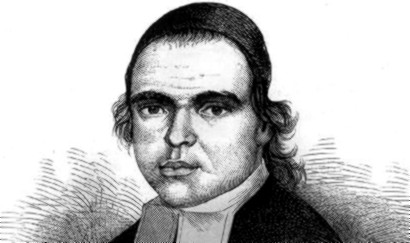
Louis Bonafous
Homicide? Martin Dumollard
Serial killer · France · 1855
Martin Dumollard — husband of Marie Dumollard; accused and executed. · Marie Du…
6 victims
Martin Dumollard
Serial killer · France · 1855
Martin Dumollard — husband of Marie Dumollard; accused and executed. · Marie Du…
6 victims
 Robert Allen Weitzel
Homicide? · USA · 1995
Robert Allen Weitzel was a psychiatrist charged in relation to the deaths of fi…
5 victims
Robert Allen Weitzel
Homicide? · USA · 1995
Robert Allen Weitzel was a psychiatrist charged in relation to the deaths of fi…
5 victims
 Marcel Petiot
Serial killer · France · 1942
Marcel André Henri Félix Petiot was a French doctor. He was convicted of multip…
27 victims
Marcel Petiot
Serial killer · France · 1942
Marcel André Henri Félix Petiot was a French doctor. He was convicted of multip…
27 victims
 Thierry Paulin
Serial killer · France · 1984
Thierry Paulin was born in Fort-de-France, Martinique on November 28, 1963. His…
21 victims
Thierry Paulin
Serial killer · France · 1984
Thierry Paulin was born in Fort-de-France, Martinique on November 28, 1963. His…
21 victims
 Christian Dornier
Spree killer · France · 1989
Christian Dornier Christian Dornier was found insane on November 10, 1989 and w…
14 victims
Christian Dornier
Spree killer · France · 1989
Christian Dornier Christian Dornier was found insane on November 10, 1989 and w…
14 victims
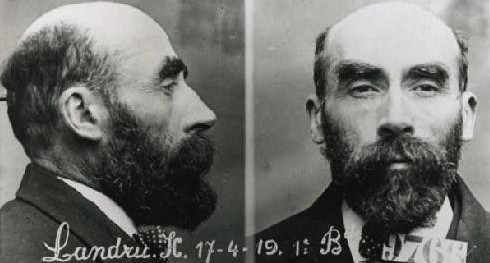 Henri Landru
Serial killer · France · 1915
Henri Désiré Landru (born April 12, 1869; died February 25, 1922) was a French…
11 victims
Henri Landru
Serial killer · France · 1915
Henri Désiré Landru (born April 12, 1869; died February 25, 1922) was a French…
11 victims
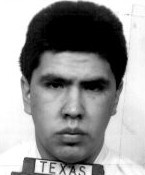 Oswaldo Soriano
Homicide · USA · 1992
Oswaldo Soriano Oswaldo Soriano was sentenced to death on May 6, 1994. His deat…
1 victim
Oswaldo Soriano
Homicide · USA · 1992
Oswaldo Soriano Oswaldo Soriano was sentenced to death on May 6, 1994. His deat…
1 victim
 Eva Coo
Murderer · USA · 1934
Eva Coo was an American murderer who was executed by electric chair at Sing Sin…
1 victim
Eva Coo
Murderer · USA · 1934
Eva Coo was an American murderer who was executed by electric chair at Sing Sin…
1 victim
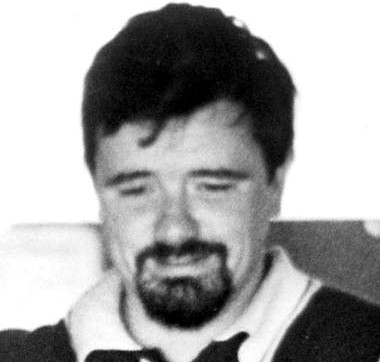 Erwin Mikolajczyk
Mass murderer · Germany · 1994
Erwin Mikolajczyk killed himself by detonating a homemade bomb the same day as…
6 victims
Erwin Mikolajczyk
Mass murderer · Germany · 1994
Erwin Mikolajczyk killed himself by detonating a homemade bomb the same day as…
6 victims
 Mechele Linehan
Justice miscarriage? · USA · 1996
Mechele Linehan was a former dancer and a former fiancée of Kent Leppink. She w…
0 victims
Mechele Linehan
Justice miscarriage? · USA · 1996
Mechele Linehan was a former dancer and a former fiancée of Kent Leppink. She w…
0 victims
- Gender
- male
- Country
- France
- Location
- Toulouse, France
- Date of birth
- ???
- Characteristics
- rape
- Victim profile
- Cécile Combettes, 14
- Method of murder
- H eavy blow to her skull
- Date(s) of murder
- April 10, 1847
- Years active
- 1847
- Date of arrest
- —
- Status
-
Died in custody
Sentenced to hard labor for life on April 4, 1848; died in prison on January 27, 1850
Case overview
Louis Bonafous, known in religion as Frere Leotade, was convicted for the murder of Cecile Combettes.
Timeline
- April 1847 — A gravedigger at the St. Aubin cemetery in Toulouse, France, unlocked the gate on an early April morning and discovered the body of Cecile Combettes in the cemetery.
- April 1847 — Cecile Combettes disappeared the day before her body was discovered; she was later found dead in the cemetery.
- April 4, 1848 — Louis Bonafous was sentenced to hard labor for life.
- January 27, 1850 — Louis Bonafous died in prison.
Background
A cemetery in Toulouse, France, was wind-swept and wet after rain the prior evening, and it smelled of damp earth and flowers, including geraniums.
The offence
Cecile Combettes was a woman of about fifteen who was last seen alive on the grounds next to a cemetery area connected with the Institute of Christian Bretheren. The body of Cecile Combettes was found in a corner of the graveyard where two high walls met; on the opposite side of one wall was a religious institution, and on the opposite side of the other wall was a public street. Her position appeared to resemble kneeling in prayer, though in an awkward position, with her knees drawn beneath her, her hands supporting her head, and her elbows pointed out at the sides.
A police surgeon determined that Cecile Combettes had been violated and then killed with a heavy blow to her skull, and that she died shortly after eating her breakfast.
Investigation
Police scrutiny focused on the scene in the cemetery. It would later be said that there were no footprints in the soft earth around her body, and that the ivy covering the wall between the cemetery and the street was undisturbed. The only logical explanation discussed was that she was thrown over the wall from the garden of the Bretheren; however, the circumstances were treated as puzzling, including how a ninety-pound girl could be thrown from a height of ten feet and land in the observed way. Questions were raised about whether her body had been gripped by rigor mortis before it was thrown or whether police had overlooked the footprints of the beast who may have posed her.
Trace evidence was used as part of the scientific proof. A thorough examination was made of the dirt and organic material found on Cecile Combettes’s body, clothing, and in her hair, including:
- a single petal of a geranium that grew in the Bretheren’s garden,
- a few shreds of what appeared to be fibers of a rope identical with a rope found in the Bretheren’s garden,
- some grains of fig also found on a shirt numbered 562 in the Institute’s laundry,
- other shreds of purported proof that she had been in the Bretheren’s garden.
Arrest and suspects
At first, suspicion fell on a bookbinder named Bertrand Conte. Conte was described as being of ignoble character, and he was said to have been overly involved with his sister-in-law a few years before. A witness said that Cecile Combettes complained of advances from Conte. Conte’s careless attitude toward her disappearance was also counted against him.
Bertrand Conte was arrested. At first, Conte suggested that Cecile Combettes must have left the Institute of her own volition and encountered evil. On further reflection, Conte remembered that he left Cecile in the hallway of the Institute with two of the brothers, though no other witness saw anyone else there. Conte added that he knew a thing or two about one of the brothers’ character, or lack thereof, though no other witness corroborated Conte’s suspicions. This was enough to clear Conte and redirect the attention of the police.
Anti-Church sentiment was described as being very strong in France at the time. The authorities seized on Louis Bonafous, known in religion as Frere Leotade. Bonafous denied that he owned shirt 562, denied that he had been in the vestibule on the morning of Cecile’s visit, and denied ever knowing of her existence until he was accused of her murder.
Because Conte was described as the sole witness against the holy father, the case against Bonafous was described as extraordinarily weak. Despite that, it was said that overzealous efforts were made to “help” Father Leotade. Bonafous’s supporters were described as having perjured themselves in weak and obvious ways in a futile attempt to rescue him.
Trial
Louis Bonafous was found guilty. He was sentenced to life in prison. He declared his innocence until the day he died.
Sentencing
Louis Bonafous was sentenced to hard labor for life on April 4, 1848.
Outcome
Louis Bonafous died in prison on January 27, 1850.
Aftermath
The Combettes-Leotade affair later came to be regarded as a double tragedy. The case remained mysterious, and it continued to engender speculation in France.
Other details
- Cecile Combettes was described as a ninety-pound girl.
- The Institute of Christian Bretheren was described as housing 500 men of holy orders.
- Cecile Combettes was an apprentice in the employ of the bookbinder Bertrand Conte.
- Conte and Cecile, along with an older woman, visited the Institute the morning before to deliver some baskets of books.
- Conte dismissed the older woman and gave Cecile orders to wait for him in the entrance hall.
- Conte was away from the hall for forty or fifty minutes before returning and finding that Cecile was nowhere to be found.
- Conte later said he assumed the girl had gone to visit her sick mother.
- The only persons described as having taken notice of the girl's disappearance were members of her family.
- There was a later discussion that Cecile was thrown over the wall from the garden of the Bretheren.
- The case involved evidence including geranium, rope fibers, fig grains, and material said to be found in the Bretheren’s garden and on shirt numbered 562 in the Institute’s laundry.
- The sentencing and death details were tied to April 4, 1848 and January 27, 1850 respectively.
Sources and references in the case record
- “The Mysterious Murder of Cecile Combettes,” in Instigation of the Devil, by Edmund Lester Pearson, Scribner’s, 1930.
- “Le Forcat de Dieu: L'Affaire Cecile Combettes” by Jean-Pierre Fabre, noted as being very old and rare in some references, with a recently reissued edition in Paris.

Spotted an error, or have more information about this case?