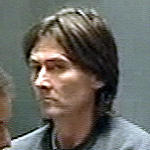
Peter James Knight
Murderer Carl Williams
Murderer · Australia · 2003
Carl Antony Williams (b. October 13, 1970) was an Australian convicted hitman a…
4 victims
Carl Williams
Murderer · Australia · 2003
Carl Antony Williams (b. October 13, 1970) was an Australian convicted hitman a…
4 victims
 Ashley Coulston
Murderer · Australia · 1992
Ashley Coulston was an Australian sailor and triple murderer who was serving th…
3 victims
Ashley Coulston
Murderer · Australia · 1992
Ashley Coulston was an Australian sailor and triple murderer who was serving th…
3 victims
 Bandali Debs
Murderer · Australia · 1997
Bandali Michael Debs (born 18 July 1953) was an Australian murderer. Debs was f…
3 victims
Bandali Debs
Murderer · Australia · 1997
Bandali Michael Debs (born 18 July 1953) was an Australian murderer. Debs was f…
3 victims
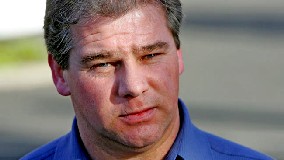 Robert Farquharson
Murderer · Australia · 2005
Robert Donald William Farquharson (born 1969) was an Australian father convicte…
3 victims
Robert Farquharson
Murderer · Australia · 2005
Robert Donald William Farquharson (born 1969) was an Australian father convicte…
3 victims
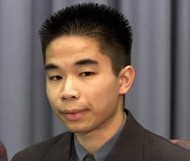 Sef Gonzales
Murderer · Australia · 2001
Sef Gonzales (born September 16, 1980) was an Australian man who was convicted…
3 victims
Sef Gonzales
Murderer · Australia · 2001
Sef Gonzales (born September 16, 1980) was an Australian man who was convicted…
3 victims
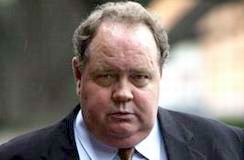 Bruce Burrell
Murderer · Australia · 1995
Bruce Allan Burrell was an Australian convicted double murderer who was sentenc…
2 victims
Bruce Burrell
Murderer · Australia · 1995
Bruce Allan Burrell was an Australian convicted double murderer who was sentenc…
2 victims
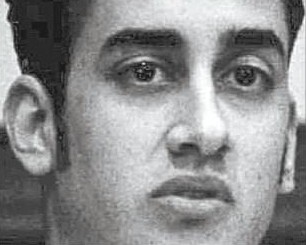 Mario Benjamin Murphy
Murderer · USA · 1991
Mario Benjamin Murphy was a Mexican national. He was scheduled to be executed i…
1 victim
Mario Benjamin Murphy
Murderer · USA · 1991
Mario Benjamin Murphy was a Mexican national. He was scheduled to be executed i…
1 victim
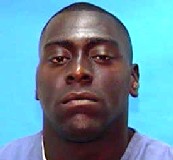 Benjamin Tony Atkins
Serial killer · USA · 1991
Benjamin Tony Atkins, also known as the Woodward Corridor Killer, was an Americ…
11 victims
Benjamin Tony Atkins
Serial killer · USA · 1991
Benjamin Tony Atkins, also known as the Woodward Corridor Killer, was an Americ…
11 victims
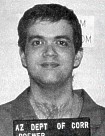 John George Brewer
Murderer · USA · 1986
John George Brewer lived in a Flagstaff apartment with his girlfriend, Rita Bri…
1 victim
John George Brewer
Murderer · USA · 1986
John George Brewer lived in a Flagstaff apartment with his girlfriend, Rita Bri…
1 victim
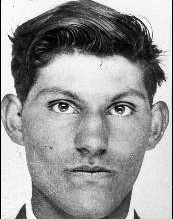 Edwin Albert Bush
Murderer · United Kingdom · 1961
Edwin Albert Bush was convicted of murder and was executed by hanging at Penton…
1 victim
Edwin Albert Bush
Murderer · United Kingdom · 1961
Edwin Albert Bush was convicted of murder and was executed by hanging at Penton…
1 victim
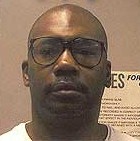 Jessie Lee Wise
Murderer · USA · 1971
Jessie Lee Wise was executed in Missouri on May 26, 1999. Jessie Lee Wise was c…
2 victims
Jessie Lee Wise
Murderer · USA · 1971
Jessie Lee Wise was executed in Missouri on May 26, 1999. Jessie Lee Wise was c…
2 victims
- Gender
- male
- Country
- Australia
- Location
- Melbourne, Australia
- Date of birth
- January 1, 1954
- Age at first offence
- 47
- Characteristics
- mentally ill
- Victim profile
- Stephen Rogers, 44 ( security guard in an abortion clinic)
- Method of murder
- Shooting (rifle)
- Date(s) of murder
- July 16, 2001
- Years active
- 2001
- Date of arrest
- —
- Status
-
Life imprisonment
Sentenced to life in prison, with a minimum of 23 years, on November 19, 2002
Case information
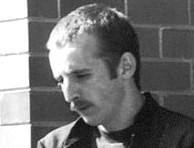
Peter James Knight (born 1 January 1954) was an anti-abortion activist who shot dead a security guard in an Australian abortion clinic.
The offence
On 16 July 2001 at about 10.20 a.m., Knight entered the East Melbourne Fertility Clinic, a private abortion provider, in Melbourne, Australia, carrying a rifle and other items he had prepared.
Knight entered the reception area by the main door from Wellington Parade at a time when there were only two women in the reception area and after the clinic’s security guard would normally have finished duty. He was wearing gloves and carrying two bags. One bag was designed so that the fact it contained a rifle was not obvious. The other bag contained other items, most of which were made by Knight by hand, and which were items designed for a massacre.
At that time, there were 15 staff and 26 patients or friends of patients in the clinic.
Knight’s planned massacre was disrupted in multiple ways. Sandro De Maria returned and needed to re-enter through the main door; for him to get in, Knight had to move. Steven Rogers then came into the reception area through the western door. Rogers spoke to Knight. Knight told Rogers that he had a gun and that he was serious. Knight put the rifle to his shoulder, pointed it at Rogers, and fired the rifle once. Rogers was struck by the bullet, knocked back against filing cabinets, and slumped to the floor. Knight re-cocked the rifle.
Hue Luu ran out the western door through which Rogers had come.
Knight turned and pointed the gun at Lilian Kitanov’s stomach. Kitanov was four months pregnant. Sandro De Maria grabbed the gun and pulled up the barrel, and a struggle for the gun between Knight and De Maria ensued. The gun was swung in various directions. As it was pointed up, another shot was discharged into the ceiling.
Timothy Anderson got hold of the gun and Brett Cassar took it outside. Knight was overpowered and pinned down.
Knight had initially been described as planning to massacre everyone in the clinic and progressively rid Melbourne of all its abortion clinics.
The murder took place at the Fertility Control Clinic at 116 Wellington Parade, and Knight was found guilty by a jury of the murder of Steven Rogers on 16 July 2001.
Investigation and arrest
Police did not know Knight’s identity until 3 months after his arrest, even though his photographs were published in major newspapers.
For many weeks after his arrest, Knight refused to answer questions altogether and refused to cooperate with investigations.
Trial
Knight was found guilty by a jury of the murder of Steven Rogers on 16 July 2001.
During sentencing, the judge addressed Knight’s conduct at trial, including that he:
- exercised the right not to be legally represented
- exercised the right to decline to give evidence
- declined to answer certain questions put to him by police
- chose to be selective in exercising other rights
The judge stated that he would not punish Knight for exercising rights, but said he could not give the benefit that might have been open if Knight had chosen to be more open and less cryptic.
The judge also addressed Knight’s submissions, including that Knight had declined to answer certain matters and, in particular, had not stated what his purpose was in going to the clinic at that time with a rifle and other items capable of mass murder.
Sentencing
On 19 November 2002, Knight was sentenced to imprisonment for life and the judge set a non-parole period of 23 years.
Court’s sentencing findings and reasoning
Knight’s offence was treated as a very serious crime, and the judge said it should be treated more seriously because of the context in which Knight carried out the murder. The judge described Knight as having been a loner on a personal crusade aimed at effecting social change, and said Rogers got in the way of that crusade and was characterised by Knight as being in “the abortion racket”.
The judge said that Knight went to the clinic with a plan for a massacre and that he made Rogers “pay the supreme sacrifice because he got in the way.”
The judge found that life imprisonment was called for, and with significant reservations also fixed a non-parole period.
The judge referred to the importance of protection of society, stating that Knight represented a considerable danger to the community. The judge stated that in July 2001 Knight was able to put together a collection of items with the potential to result in the death of dozens of people, that Knight engaged in detailed planning and preparation, and that planning included noting the usual timing of Rogers’s departure and entering at a time shortly after the expected departure. The judge also said Knight planned for means of escaping and not being held accountable, and expressed concern that Knight’s mental state could worsen.
The judge said Knight had not shown any remorse in the sense of sincere repentance or regret that Rogers was killed, and said Knight argued that Rogers’s death was just bad luck.
The judge noted that until July 2001 Knight had no prior convictions.
The judge discussed Knight’s mental condition at the time of the murder, stating that there were reports from three psychiatrists: Drs Barry-Walsh and Senadipathy and Professor Mullen. The judge described Dr Senadipathy’s opinion as that Knight suffered from chronic paranoid schizophrenia, with reasoning and lifestyle controlled by a systematised delusional process. The judge described that the opinions of Dr Senadipathy and Barry-Walsh were tested by questioning before the court and that the judge was not disposed to accept a diagnosis of schizophrenia. The judge said Knight adhered rigidly to certain beliefs and that Knight’s fanaticism at times may merge into delusion. The judge proposed to treat the mental state bordering on delusional disorder as a factor in mitigation.
The judge also stated that Knight had served 492 days by way of pre-sentence detention, and directed that this be noted in the court records.
Victim impact statements
The judge said seven victim impact statements were read carefully and reflected upon. Two statements were from the mother and partner of Steven Rogers. Four were from persons in the reception area on 16 July 2001: Lilian Kitanov, Sandro De Maria, Timothy Anderson, and Hue Luu. The seventh was from Dr Louis Rutman about the trauma suffered by others at the clinic, speaking of depression, anxiety, fear, anger, sleepless nights, nightmares, hypervigilance, and other devastating consequences.
Advice, rights, and submissions discussed at sentencing
The judge addressed Knight’s submissions and legal arguments, including that Knight had submitted that a jury had to be sure and certain of elements of a crime to return a guilty verdict, while the judge stated the law was that jurors must be satisfied beyond reasonable doubt. The judge also stated that Knight had submitted that the judge should decide guilt based on the jury verdict and that Knight’s responsibility was zero; the judge stated that the role of the judge was only to act on a view of the facts that conformed with the jury’s verdict.
The judge said Knight’s submissions included sarcasm and irony and contained points that the judge characterised as cryptic, and that Knight had dismissed the evidence of kerosene, gags, door-stoppers, handwritten notices, and the like. The judge also stated that Knight chose not to use cross-examination as a means of clarifying confusing testimony.
Verbatim sentencing remarks by the judge
You have been found guilty by a jury of the murder of Steven Rogers on 16 July 2001 at East Melbourne. The murder took place at the Fertility Control Clinic at 116 Wellington Parade. Steven Rogers was a security officer, who worked shifts at the clinic.
...
You were born on 1 January 1954 at Bathurst. You were one of six children. Your father, who is still alive but is troubled by dementia, worked as a farmer. Your mother, who is no longer alive, looked after the home.
...
I sentence you to imprisonment for life. I set a non-parole period of 23 years.
Background and preparation leading to the offence
The judge described Knight’s life leading up to the incident, including that Knight for many years had lived as a hermit, much of the time in a makeshift but semi-permanent humpy in the Killanbutta State Forest out of Molong in New South Wales. The judge said Knight left that home from time to time and travelled to other parts of Australia, including Melbourne, by bicycle.
Crusade against abortion and planning
The judge said that in the year 2000, on a visit to Melbourne, Knight looked through a Yellow Pages telephone directory for a printer, and that a page or two before listings for “Printers” were listings for “Pregnancy Termination Services”. The judge stated Knight examined advertisements displayed among those listings, realised the extent to which abortion was available, and decided to crusade against abortion.
In December 2000, the judge stated Knight went to where other persons were protesting against abortion outside the East Melbourne clinic and proposed a campaign against the advertising of such clinics. The judge said Knight prepared a letter linked to such a campaign and no positive outcome was said to have occurred.
In early January 2001, the judge said Knight spoke with Margaret Tighe, the president of the Right to Life organisation, about organising a boycott of telephone directory advertising. The judge said she queried the value of the proposed boycott, asked Knight to put the proposal in writing, and that Knight returned with a letter and spoke with her again. The judge said Knight signed the letter not “Peter Knight”, but “Peter Sweeney”. No positive outcome was said to have occurred.
On 12 March 2001, the judge said Knight was in Sydney and took part in an anti-abortion protest outside the premises of Radio 2UE, holding up a placard with the image of a foetus. When asked his name on that occasion, Knight said he was Peter Knight. Knight’s crusade was described as having achieved little by that stage, and he returned to his humpy in the forest.
Steps taken to prepare for the massacre
The judge stated Knight scavenged twine and tools and metal brackets and other items, and fashioned a miscellany of implements for preparation for the massacre.
The judge stated that in May 2001 Knight rode his bike to Parkes, broke into a store, removed a Winchester rifle and some ammunition, made a rifle bag designed to be unlikely to be identified as a rifle bag, cut and fastened the bag to permit continuing use of the rifle while inside it, and modified the rifle by gluing two half washers alongside the hammer to reduce the risk of the hammer being obstructed when the concealed rifle was fired.
The judge stated that in June 2001 Knight came to Melbourne and set up a campsite in Candlebark Park, Templestowe. From there, Knight checked out the East Melbourne clinic, circled individual letters of the alphabet in a June newspaper clipping, and treated the resulting message as a cryptic message spelt out by the circled letters about “abortionists and death”.
The judge said Knight prepared lists of what he needed, including items such as gloves and twine and notes, with some abbreviations such as “K” and “DOOR ST .” that the judge inferred were abbreviations for kerosene and door stoppers. The judge stated Knight prepared containers of kerosene for use either in lighting a fire or in increasing the speed of the spread of fire or both. The judge stated Knight prepared bundles of twigs and foam joined by twine capable of being used as a form of flaming torch. The judge stated Knight prepared bundles of rag and foam with twine attached for use as gags. The judge stated Knight fashioned metal tube pieces and nuts and wire into devices that could be used to prevent doors being used to get out of the clinic, and that Knight handled items with gloves on.
Notes and items carried on 16 July 2001
On 16 July 2001, Knight wrote out handwritten notes to be stuck to entry doors. One referred to a fatal accident that day. The judge’s discussion included the note Knight carried.
A handwritten note read:
"We regret to advise that as a result of a fatal accident involving some members of staff, we have been forced to cancel all appointments today"
Knight placed his bicycle in the rubbish alcove of apartments in East Melbourne, described as a block away from the clinic for escape.
The judge stated Knight loaded seven live rounds into the rifle, put the rifle in the special bag, and packed other items in the other bag, and left gloves on as he walked around to the clinic with the two bags.
Statements about intent
The judge stated that Knight had planned a massacre to support his crusade, and that Knight intended to massacre everyone in the clinic and progressively rid Melbourne of all its abortion clinics.
Personal circumstances and mental condition
The judge described Knight’s birth and upbringing. Knight was born on 1 January 1954 at Bathurst. The judge said Knight was one of six children. Knight’s father was described as still alive but troubled by dementia and worked as a farmer. Knight’s mother was described as no longer alive and looked after the home. The judge said Knight was raised as a Catholic and the family lived at Bathurst and at Molong. Knight was educated to Year 10 at Catholic schools and left school at age 16. The judge said Knight had a good grasp of language and could write fluently.
The judge stated Knight worked in the Bathurst and Orange area for several years, left home in his early twenties and travelled for about 2 years, lived in the Brisbane area for 14 to 15 years, worked in factories there, and generally kept his own company. The judge said Knight later left Brisbane to return to the area where he was raised.
The judge stated Knight chose to live the life of a hermit, in almost complete isolation from the community, partly due to a desire to avoid declaring income for tax purposes and to avoid declaring income. The judge said Knight chose not to accept the dole, built his humpy in Killanbutta State Forest, scavenged, lived largely on flour and vegetables, chose not to sign documents, and chose to avoid having his photo taken.
The judge described Knight’s beliefs as strong, to the point of obsession and fanaticism, including strong views against cigarettes, strong views against abortion, strong views against the taking of oaths, and a belief in his own brand of Christianity, relying on the Bible. The judge stated that Knight was not of weak faith, would hold high his faith, and believed that nobody could do anything to him which had not been permitted by God for his own eventual good.
Regarding mental condition, the judge said the mental condition at the time of murder was the focus of evidence on the plea, and that there were reports from three psychiatrists: Dr Barry-Walsh, Dr Senadipathy, and Professor Mullen. The judge said Dr Senadipathy thought Knight suffered from chronic paranoid schizophrenia, with reasoning, lifestyle, and behaviour controlled by a systematised delusional process. The judge stated he was not disposed to accept schizophrenia as a diagnosis. The judge said Knight’s mental state bordering on delusional disorder would be treated as a factor in mitigation.
People involved
- Peter James Knight (defendant)
- Steven Rogers (murder victim; security officer working shifts at the clinic; struck by a bullet in the chest and killed)
- Hue Luu (reception desk staff member at the clinic)
- Lilian Kitanov (prospective patient; four months pregnant when Knight aimed a gun at her stomach)
- Sandro De Maria (friend of Lilian Kitanov; grappled for the gun)
- Timothy Anderson (was in the room adjoining the reception area; got hold of the gun during the struggle)
- Brett Cassar (was in the room adjoining the reception area; took the gun outside)
- Margaret Tighe (president of the Right to Life organisation)
- Dr Louis Rutman (provided the seventh victim impact statement about the trauma suffered by others)
- Dr Barry-Walsh (psychiatrist; report used in sentencing)
- Dr Senadipathy (psychiatrist; report used in sentencing)
- Professor Mullen (psychiatrist; report used in sentencing)
Timeline
- 16 July 2001 — Knight entered the East Melbourne Fertility Clinic carrying a rifle and other prepared items; Steven Rogers was shot and killed; Knight was overpowered and pinned down.
- 12 March 2001 — Knight took part in an anti-abortion protest in Sydney outside the premises of Radio 2UE and held up a placard with the image of a foetus.
- May 2001 — Knight rode a bicycle to Parkes, broke into a store, removed a Winchester rifle and ammunition, and modified the rifle and rifle bag.
- June 2001 — Knight came to Melbourne, set up a campsite in Candlebark Park, Templestowe, and prepared lists and items for the planned massacre.
- December 2000 — Knight went to where other persons were protesting against abortion outside the East Melbourne clinic and proposed a campaign against the advertising of such clinics.
- Early January 2001 — Knight spoke with Margaret Tighe about organising a boycott of telephone directory advertising and later returned with a letter.
- 19 November 2002 — Knight was sentenced to life imprisonment with a minimum of 23 years (non-parole period).
Spotted an error, or have more information about this case?