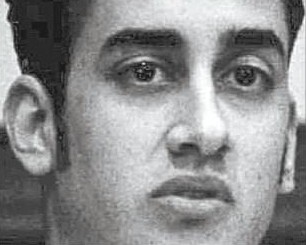
Mario Benjamin Murphy
Murderer Brian Kevin Rosenfeld
Murderer · USA · 1985
Brian Kevin Rosenfeld Brian Kevin Rosenfeld was sentenced to three concurrent l…
23 victims
Brian Kevin Rosenfeld
Murderer · USA · 1985
Brian Kevin Rosenfeld Brian Kevin Rosenfeld was sentenced to three concurrent l…
23 victims
 Russell Ellwood
Murderer · USA · 1991
Russell Ellwood was a former taxi driver. Authorities suspected him of killing…
20 victims
Russell Ellwood
Murderer · USA · 1991
Russell Ellwood was a former taxi driver. Authorities suspected him of killing…
20 victims
 Robert Martines Perez
Murderer · USA · 1994
Name: Robert Martines Perez · Other name used in proceedings: Robert Martinez P…
15 victims
Robert Martines Perez
Murderer · USA · 1994
Name: Robert Martines Perez · Other name used in proceedings: Robert Martinez P…
15 victims
 Billy Frank Vickers
Murderer · USA · 1993
Billy Frank Vickers Vickers was executed by lethal injection in Texas on Januar…
14 victims
Billy Frank Vickers
Murderer · USA · 1993
Billy Frank Vickers Vickers was executed by lethal injection in Texas on Januar…
14 victims
 Sukhwinder Dhillon
Serial killer · Canada / India · 1995
Sukhwinder Singh Dhillon was convicted of first-degree murder for fatally poiso…
5 victims
Sukhwinder Dhillon
Serial killer · Canada / India · 1995
Sukhwinder Singh Dhillon was convicted of first-degree murder for fatally poiso…
5 victims
 Gu Kailai
Murderer · China · 2011
Gu Kailai (born 15 November 1958) was a Chinese lawyer and businesswoman. She w…
1 victim
Gu Kailai
Murderer · China · 2011
Gu Kailai (born 15 November 1958) was a Chinese lawyer and businesswoman. She w…
1 victim
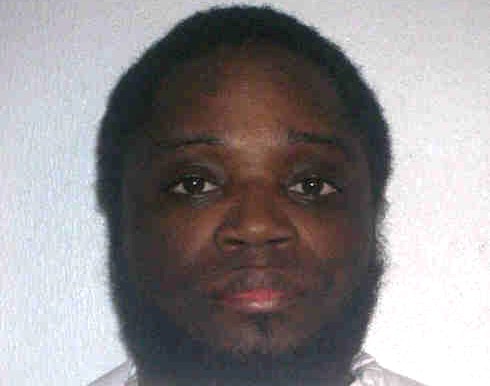 Mickey David Thomas
Murderer · USA · 2004
Mickey David Thomas was sentenced to death in Arkansas on September 28, 2005. A…
3 victims
Mickey David Thomas
Murderer · USA · 2004
Mickey David Thomas was sentenced to death in Arkansas on September 28, 2005. A…
3 victims
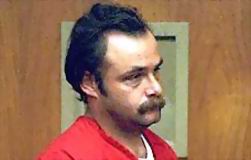 Wesley Shermantine
Serial killer · USA · 1984
Wesley Shermantine Wesley Shermantine was sentenced to death in California on M…
24 victims
Wesley Shermantine
Serial killer · USA · 1984
Wesley Shermantine Wesley Shermantine was sentenced to death in California on M…
24 victims
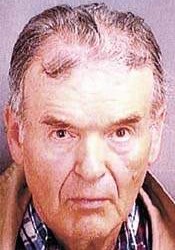 Sergei Babarin
Homicide · USA · 1999
1995 — Sergei Babarin was arrested in Salt Lake City after an incident in a dep…
2 victims
Sergei Babarin
Homicide · USA · 1999
1995 — Sergei Babarin was arrested in Salt Lake City after an incident in a dep…
2 victims
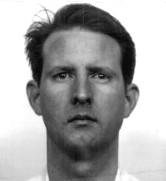 Markham Duff-Smith
Murderer · USA · 1971
Name: Markham Duff-Smith Age: 46 Education level: Some college · October 15, 19…
4 victims
Markham Duff-Smith
Murderer · USA · 1971
Name: Markham Duff-Smith Age: 46 Education level: Some college · October 15, 19…
4 victims
- Gender
- male
- Country
- USA
- Location
- Virginia Beach, Virginia, USA
- Date of birth
- 1972
- Age at first offence
- 19
- Characteristics
- murder for hire, financial gain, convicted rapist
- Victim profile
- James Radcliff
- Method of murder
- Beating with a steel pipe - St abbing with knife
- Date(s) of murder
- July 28, 1991
- Years active
- 1991
- Date of arrest
- September 4, 1992
- Status
-
Executed
Executed by lethal injection in Virginia on September 17, 1997
Case record: Mario Benjamin Murphy
Background
Mario Benjamin Murphy was a Mexican national. He was scheduled to be executed in Virginia on 17 September 1997. Murphy was one of six people charged with the 1991 murder of Navy Petty Officer James Radcliff, but was the only one sentenced to death.
Four of Murphy’s co-defendants pleaded guilty in exchange for sentences of life imprisonment. The fifth defendant, Radcliff’s wife Robin, refused a plea agreement and was tried on a charge of capital murder but was spared the death penalty; she received a sentence of life plus 20 years’ imprisonment. Amnesty International did not know why Murphy was not offered the same plea-bargain as his co-defendants.
Murphy believed that he was “singled out” because of his Mexican nationality. He was 19 at the time of the crime and had no prior criminal convictions for violence.
The offence
James Radcliff’s death resulted from a murder-for-hire scheme initiated by Robin Radcliff and Gerard Hinojosa, with whom she was having a relationship. The prosecution stated at Hinojosa’s sentencing hearing:
“it’s clear that this defendant was the moving party in arranging for the death of...James Radcliff.”
The pair recruited Hinojosa’s roommate, Radcliff’s son-in-law, and Murphy to kill Radcliff. Murphy also recruited a teenager.
Radcliff was murdered as he slept. After the killing, Robin Radcliff rolled in her husband’s blood so as to appear to be a victim of the attack. She then called police saying that her husband had been beaten by burglars.
Murphy’s plea was entered in the Circuit Court of the City of Virginia Beach to murder-for-hire and to conspiracy to commit capital murder. The court entered convictions on both counts and expressly found that Murphy’s pleas were voluntary and intelligent.
Murphy’s sentencing followed a separate sentencing hearing. The court found that Murphy’s conduct constituted “aggravated battery” and demonstrated “depravity of mind” and that Murphy represented “a continuing serious threat to society.” The court sentenced Murphy to death for the murder of James Radcliff and imposed a twenty-year sentence for the conspiracy conviction.
Murphy was hired by James Radcliff’s wife, Robin Radcliff, and her lover, Gary Hinojosa, to kill James Radcliff for $5,000.
Murphy and others planned for Robin to pretend her car had broken down and for Murphy to kill James when he came to help her. Murphy recruited two cohorts, Aaron Turner and James Hall, to help stage a burglary in which they would kill James Radcliff. Robin helped Murphy prepare for the killing by driving him to the apartment complex where she lived, pointing out her husband’s car, and telling Murphy the specific bedroom in which James slept.
On July 28, 1991, Murphy, Turner, and Hall met at Hinojosa’s residence, where they dressed in dark clothes and armed themselves with a metal pipe and two knives before going to the Radcliffs’ apartment. When the three assailants arrived at the Radcliffs’ apartment, they entered through a window that Robin had unlocked as planned.
The Virginia Supreme Court described what happened in the Radcliffs’ apartment:
“When Murphy, Turner, and Hall entered the hallway leading to the bedroom, Robin left the bedroom, walked past the assailants, and went to the living room. The three men entered the bedroom where James was sleeping and closed the door. Turner struck James "pretty hard" in the head with a metal pipe. James then sat up in bed and Turner handed the pipe to Murphy, who hit James in the head with the pipe at least twice. James appeared to be "knocked out" as a result of the blows to his head. Murphy and Turner began stabbing him. Murphy "had a big rush of adrenaline" and he stabbed the victim twice, "once in the front of ... his upper body and then once in the back." Turner placed a knife to James' neck and "tried to slit his throat." Hall, "right behind" Murphy and Turner, was hitting James with a pipe. James "was just laying in the bed bleeding." Murphy grabbed a telephone and handed it to Hall, who "ripped it out of the wall." Murphy, Turner, and Hall ran from the bedroom to the living room, where they removed a videocassette recorder and a video game. Hinojosa, Robin, and Tina and Michael Bourne had instructed them to remove these items "to make it look like a burglary." Murphy, Turner and Hall placed these items in a duffel bag. They left the apartment through the window that they had entered. Id., 431 S.E.2d at 50-51.”
After the police arrived, James Radcliff was taken to the hospital where he was pronounced dead.
Murphy carried out the murder in Virginia Beach in 1991 using a steel pipe to bash in the head of James Radcliff. Murphy also recruited other people for the assignment. It was stated that they were hoping to collect on a $100,000 insurance policy, with Murphy to be paid $5,000 for the hit.
Investigation and arrest
Murphy was arrested by the Virginia Beach police on September 4, 1991. When Murphy was arrested by the Virginia Beach police on September 4, 1992, he waived his constitutional rights and confessed to killing James Radcliff.
Plea and trial
Murphy pleaded guilty in the Circuit Court of the City of Virginia Beach to murder-for-hire and to conspiracy to commit capital murder.
After a separate sentencing hearing, the court found that Murphy’s conduct constituted “aggravated battery” and demonstrated “depravity of mind” and that Murphy represented “a continuing serious threat to society.” The court sentenced Murphy to death for the murder of James Radcliff and imposed a twenty-year sentence for the conspiracy conviction.
The convictions and sentences were affirmed by the Virginia Supreme Court.
The state courts dismissed Murphy’s state habeas claims, finding them all to be either procedurally barred or without merit.
Murphy noted an appeal to the Virginia Supreme Court on August 24, 1994, but did not file his petition for appeal until November 2, 1994, one day too late under Virginia law. The Virginia Supreme Court dismissed the appeal as untimely.
Murphy filed his federal habeas petition on April 30, 1996, claiming that both his conviction and death sentence were constitutionally invalid because the Virginia Beach authorities failed to notify him that, as a foreign national of Mexico, he had a right under the Vienna Convention on Consular Relations to contact the consulate of Mexico.
The district court rejected all of his claims, holding that his Vienna Convention claim was procedurally defaulted because it had not been raised in state court.
On appeal, Murphy’s principal argument was that his Vienna Convention rights were violated. Murphy also argued for the first time on appeal that the violation of the Vienna Convention rendered his guilty plea involuntary.
Sentencing
At sentencing, the court found that Murphy’s conduct constituted “aggravated battery” and demonstrated “depravity of mind” and that Murphy represented “a continuing serious threat to society.” The court sentenced Murphy to death for the murder of James Radcliff and imposed a twenty-year sentence for the conspiracy conviction.
Appeals
The case in federal court was listed as:
- 116 F.3d 97 Mario Benjamin Murphy, Petitioner-Appellant, v. J.D. Netherland, Warden, Respondent-Appellee
- United Mexican States, Amicus Curiae
- No. 96-14
- Federal Circuits, 4th Cir.
- June 19, 1997
- Before NIEMEYER, LUTTIG, and MICHAEL, Circuit Judges
It was described as “Dismissed by published opinion.” Judge LUTTIG wrote the opinion, in which Judge NIEMEYER and Judge MICHAEL concur.
In the federal appeal, it was stated that Murphy pleaded guilty to murder-for-hire and to conspiracy to commit capital murder and was sentenced to death, and that he appealed the federal district court’s denial of his habeas petition arguing that Virginia violated his rights under the Vienna Convention on Consular Relations by failing to inform him that he could contact the Mexican consulate.
The court stated it would deny the motion for a certificate of appealability and dismiss the appeal because Murphy had not made a “substantial showing of the denial of a constitutional right.”
Vienna Convention allegations and discussion
The habeas appeal addressed Murphy’s contention that Virginia Beach authorities failed to notify him that he had a right under the Vienna Convention on Consular Relations to contact the consulate of Mexico.
The case described that, as a citizen of Mexico, Murphy was entitled under the Vienna Convention on Consular Relations (1963) to be informed of his right to contact the Mexican Embassy and ask for assistance. It stated that at no time, from his arrest by the Virginia Beach police department on 4 September 1991 to the imposition of his death sentence on 19 October 1992, was he informed of this right.
Article 36(1b) (as quoted in the record) provided:
“If he so requests, the competent authorities of the receiving state shall, without delay, inform the consular post of the sending state if, within its consular district, a national of that state is arrested or committed to prison or to custody pending trial or is detained in any other manner.... The said authorities shall inform the person concerned without delay of his rights under this sub-paragraph.” (Emphasis added).
The record stated that the USA ratified the Vienna Conventions in 1969 without reservations. It stated that Murphy’s conviction and sentencing occurred without any involvement from the Mexican consul.
It further stated that even after Murphy learned of his consular rights in May 1996, the prison warden and Virginia’s Attorney General refused to pass on his requests for a visit from the Mexican Consulate.
The record included a comment attributed to Virginia Beach Commonwealth’s Attorney Robert Humphreys when asked to comment on Virginia’s violation of Article 36:
“ridiculous”
It also included a statement attributed to Humphreys:
“at the time of prosecution he had no idea that Murphy was a Mexican national and that the prosecution were not 'mind-readers''.”
Humphreys was quoted as saying:
“the burden is on [defendants] to say, 'Hey, excuse me, I'm a Mexican citizen. Tell my embassy.' But he didn't. He never thought of it until his lawyers thought it up for him.''
The record stated that Amnesty International was not aware of evidence to suggest that Murphy was any more blameworthy than his co-defendants and saw no reason why he alone had been sentenced to death.
It further included a statement attributed to the Attorney General of Virginia, responsible for representing the prosecution during the appeal process:
“that Mr Murphy was more culpable than any of his co-defendants ....(is) simply wrong.''
The record said this contradicted statements Humphreys had made, quoting him:
“We regarded the two most culpable people in the case as Mario Murphy and Robin Radcliff”
The record said Humphreys cited Murphy’s recruitment of the teenager to take part in the crime as justification for that view.
It stated that Robin Radcliff recruited her son-in-law, Michael Bourne, and that Hinojosa enlisted his housemate James Hall and Murphy, and concluded that Hinojosa should also have had the death penalty sought against him instead of being offered a plea-bargain.
The record stated there were at least 60 foreign nationals on death row in the USA whose rights under the Vienna Convention on Consular Relations may have been contravened.
It stated that on 14 May 1997 American attorneys representing many of these foreign nationals urged the State Department to take strong action against violations of the convention.
The record stated that the most recent execution of a foreign national by the USA was that of Irineo Tristan Montoya in Texas on 18 June 1997, and said that prior to Montoya’s execution the US State Department asked the Texas authorities to investigate the breach of the Convention. It stated that state officials refused a full investigation on the grounds that Texas was not a signatory to the Convention.
Outcome
The federal appeal was dismissed.
The court’s disposition included the statement:
- “DISMISSED.”
Aftermath
Amnesty International stated that Murphy’s execution was scheduled for 17 September 1997 in Virginia and discussed the Vienna Convention consular-communication issues related to Murphy’s case.
Other details
When Murphy was described as being hired for the hit, it was stated he was to be paid $5,000 for the hit.
It was stated that Murphy confessed to carrying out a contract murder on James Radcliff at the behest of Radcliff’s wife and her boyfriend.
The record described a plan in which Robin was to pretend her car had broken down and Murphy was to kill James when he came to help her.
After the killing, the planned staging involved removing a videocassette recorder and a video game and placing them in a duffel bag “to make it look like a burglary.”

Spotted an error, or have more information about this case?