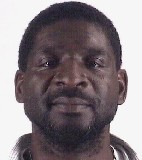
Curtis Don Brown
Serial killer Carl Eugene Watts
Serial killer · USA · 1974
Carl Eugene Watts (born November 7, 1953; died September 21, 2007), also known…
100 victims
Carl Eugene Watts
Serial killer · USA · 1974
Carl Eugene Watts (born November 7, 1953; died September 21, 2007), also known…
100 victims
 Rodney Alcala
Serial killer · USA · 1977
Rodney James Alcala (born August 23, 1943) was also known as Rodrigo Jacques Al…
100 victims
Rodney Alcala
Serial killer · USA · 1977
Rodney James Alcala (born August 23, 1943) was also known as Rodrigo Jacques Al…
100 victims
 Glen Edward Rogers
Serial killer · USA · 1993
Glen Edward Rogers was a spree killer whose cross-country rampage in 1994-95 le…
70 victims
Glen Edward Rogers
Serial killer · USA · 1993
Glen Edward Rogers was a spree killer whose cross-country rampage in 1994-95 le…
70 victims
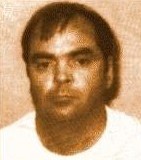 Donald Leroy Evans
Serial killer · USA · 1975
Donald Leroy Evans (born July 5, 1957) was an American serial killer who murder…
60 victims
Donald Leroy Evans
Serial killer · USA · 1975
Donald Leroy Evans (born July 5, 1957) was an American serial killer who murder…
60 victims
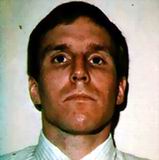 Michael Swango
Serial killer · USA · 1981
Michael Swango (Joseph Michael Swango) was a physician and American serial kill…
60 victims
Michael Swango
Serial killer · USA · 1981
Michael Swango (Joseph Michael Swango) was a physician and American serial kill…
60 victims
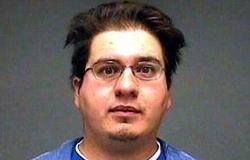 Efren Saldivar
Serial killer · USA · 1989
Efren Saldivar (born 30 September 1969) was an American serial killer who murde…
50 victims
Efren Saldivar
Serial killer · USA · 1989
Efren Saldivar (born 30 September 1969) was an American serial killer who murde…
50 victims
 Steven Anthony Jones
Murderer · USA · 2004
Steven Anthony Jones was sentenced to death for killings connected to a robbery…
2 victims
Steven Anthony Jones
Murderer · USA · 2004
Steven Anthony Jones was sentenced to death for killings connected to a robbery…
2 victims
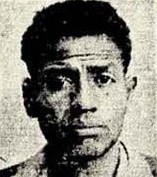 Jorge Villanueva Torres
—
Jorge Villanueva Torres was known as el 'Negro Torpedo' and as el 'Monstruo de…
Jorge Villanueva Torres
—
Jorge Villanueva Torres was known as el 'Negro Torpedo' and as el 'Monstruo de…
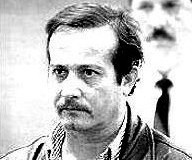 Ricardo Caputo
Serial killer · USA / Mexico · 1971
Ricardo Caputo was known to authorities as "The Lady Killer." He was sentenced…
4 victims
Ricardo Caputo
Serial killer · USA / Mexico · 1971
Ricardo Caputo was known to authorities as "The Lady Killer." He was sentenced…
4 victims
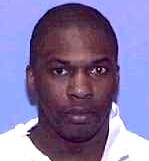 Travis Dwight Green
Murderer · USA · 1998
Travis Dwight Green had the TDCJ number 999373. His date of birth was 1/0/1968.…
2 victims
Travis Dwight Green
Murderer · USA · 1998
Travis Dwight Green had the TDCJ number 999373. His date of birth was 1/0/1968.…
2 victims
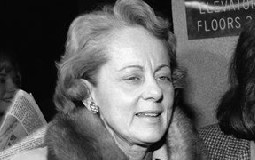 Jean Harris
Murderer · USA · 1980
Jean S. Harris was born Jean Struven in 1923 in Cleveland, USA. Her mother, Mil…
1 victim
Jean Harris
Murderer · USA · 1980
Jean S. Harris was born Jean Struven in 1923 in Cleveland, USA. Her mother, Mil…
1 victim
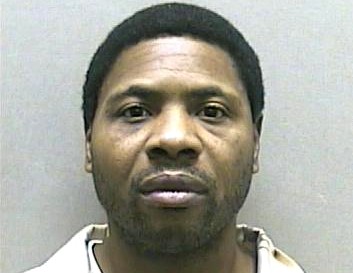 Jerome Dennis
Serial killer · USA · 1991
Jerome Dennis was a paroled rapist who was charged with five murders and four r…
5 victims
Jerome Dennis
Serial killer · USA · 1991
Jerome Dennis was a paroled rapist who was charged with five murders and four r…
5 victims
- Gender
- male
- Country
- USA
- Location
- Tarrant County, Texas, USA
- Date of birth
- September 2, 1958
- Age at first offence
- 26
- Characteristics
- kidnapping, rape
- Victim profile
- Terece Gregory, 29 / Sharyn Kills Back, 18 / Jewel Woods, 51
- Method of murder
- Shooting / Strangulation
- Date(s) of murder
- 1984 - 1986
- Years active
- 1984–1986
- Date of arrest
- —
- Status
-
Life imprisonment
Sentenced to life in prison in 1989; sentenced to two life terms in 2009
Case record
Curtis Don Brown was convicted and sentenced to life in prison in 1989. He later pleaded guilty to the kidnapping and killings of two other Tarrant County women and was sentenced to two life terms in 2009 that ran consecutively.
Background
Curtis Don Brown was called a “person of interest” in several unsolved killings of Tarrant County women in the mid-1980s. The deaths in that period sparked fears that a serial killer was on the loose.
A relative named Betty Phenix contacted the Fort Worth Star-Telegram to speak in Brown’s behalf after police announced that Brown was a suspect in 18 unsolved slayings, most of them taking place between 1984 and 1986. Phenix said Brown had a troubled childhood marked by tragedy and crime, including the burning of his mother in a house fire in 1972 that killed two of her children (one was 3 years old and the other was just 5 1/2 months). Phenix said Brown was 13 at the time and escaped unharmed. Phenix said that in Brown’s mid-20s he came to Texas to live with his mother, who had moved to Fort Worth from their native California, and that by then Brown had already served time for armed robbery.
Phenix said Brown married in 1984 and had a daughter a year later. She said he worked sporadically as a laborer and as a machinist. Phenix said that in 1986 Brown pleaded guilty to raping and killing Jewel Woods, a 51-year-old nurse, in her Fort Worth home. Phenix said police reported that Brown beat Woods to death with a rock. Phenix said he was found about a half-hour later out of breath and sweating carrying two purses wrapped in a towel, including one carrying Woods’ identification.
Phenix said Woods’ body, nude from the waist down, was found the next morning near her apartment in a patch of tall weeds. Phenix said police believed that wasn’t the first woman Brown killed and that his first victim may have been Catherine Davis, an aspiring model who went missing on September 30, 1984. Phenix said that by December of that year, eight women were missing, especially in neighborhoods near Texas Christian University, and that there was a growing fear that a serial killer was among them.
Phenix described the murder drawing the most attention as that of Cindy Heller, a TCU graduate and former beauty contestant, who vanished on October 22, 1984. Phenix said that night Heller stopped to help a stranded motorist and ended up sharing drinks with her. Phenix said that at about 11:30 p.m., Heller and the stranded motorist parted ways, and that Heller was never seen alive again.
Phenix said that on January 5, just days after police had found another body, a group of children playing near a creek on the TCU campus noticed something odd floating in the water. She said it appeared to be a headless corpse tangled in the branches of a fallen tree. Phenix said the children ran to tell their parents, who sent an older boy to check it out, and that he confirmed their story. Phenix said the parents called police and that the press immediately speculated it might be Heller’s body because she had lived a half-mile away from the creek.
Phenix said identification was difficult because Heller’s body had been decomposing for months, with most of the upper body (including the head, the right arm, and the chest) separated from the rest of the torso. She said firefighters pumped the creek and drained the three-acre Worth Hills Lake that the creek fed into. Phenix said they eventually found enough to identify the body as Heller’s. Phenix said that two hours later another body was found: that of a 20-year-old waitress named Lisa Griffin.
Phenix said most cops already thought there was a serial killer on the loose and that Reyes was instructed to stop and help any stranded female motorist. Phenix said some women were so scared they wouldn’t even open their windows to talk to Reyes until he could prove he was a cop.
Phenix said shortly after Griffin’s body was discovered, Fort Worth police held a closed-door meeting and decided to form a task force to look into the serial killings, but that they never caught the killer. Phenix said that Reyes believed they had identified the killer in Brown, and that while Brown had not been linked through DNA evidence to the murder of Davis, Heller, or Griffin, Reyes and others thought he could be responsible for those slayings and more.
Phenix said DNA evidence had linked Brown to the murders of Terese Gregory, a 29-year-old waitress killed in 1985, and Sharyn Kills Black, an 18-year-old also killed in that year. Phenix included a statement attributed to J.D. Thornton about Brown’s possible involvement and investigations. Thornton said:
“I can’t pinpoint the exact number he may be responsible for. We have eliminated him as a suspect in some of the murders--we can’t say which ones--but we’re confident there’s more. They’re similar enough in the victim’s background, the m.o. and everything else. The only ones I’m going to eliminate him on are the ones that occurred while he was in prison.”
Phenix said that until Fort Worth police finished their investigation of Brown, no trial date would be set. Phenix said Brown’s attorney Tim Brown said there had been no talk of a plea bargain and that Brown maintained his innocence. Tim Brown said:
“He maintains his innocence. They’ve made him out to be the serial killer of the ’80s, and they only have DNA evidence linking him to two murders. It’s completely inaccurate.”
Phenix said Brown’s attorney also described the possibility that Brown might be innocent of the murders Reyes had linked him to, and that DNA evidence had been successfully challenged across the country. The narrative then said Reyes felt confident Brown and others were guilty. The narrative included a statement attributed to Reyes:
“I’d say it’s about a one in a trillion chance we’re wrong.”
The offence
Jewel Woods (Fort Worth, 1986)
Curtis Don Brown pleaded guilty to raping and killing Jewel Woods, a 51-year-old nurse. Phenix said police reported that he beat her to death with a rock and that she was found about a half-hour later carrying two purses wrapped in a towel. Phenix said Woods’ body was found the next morning near her apartment in a patch of tall weeds.
The summary of other events stated that Brown killed Jewel Woods outside her east Fort Worth apartment when police learned in February 2005 that a DNA database had linked his profile to semen found in the body of Terece Gregory. The record described Woods’ age as 51 and identified her as a nurse.
Gregg Woods, Jewel Woods’ son, described what prosecutors had done in 1986. Gregg Woods said Brown “snuck into Jewel Woods’ apartment, ambushed the woman and then dragged her to a weed-filled lot where she was raped and beaten to death with a rock.” Gregg Woods said he was disappointed that in 1986 prosecutors struck a deal with Brown that allowed him to plead guilty to murder and burglary of a habitation in exchange for two life sentences to run concurrently. He said he believed the plea agreement reached Wednesday would be positive because Brown “will never be released from prison.”
In that context, Gregg Woods said:
“This result is a big improvement over what was accomplished in 1986 with two concurrent life terms and eligibility for parole after seven years.”
Timeline
- March 14, 1985 — A letter arrived at the Pine Ridge Indian Reservation in South Dakota. Sharyn Kills Back wrote that she was coming home in two weeks to visit.
- March 15, 1985 — Sharyn Kills Back disappeared after asking her roommate Barbara Bouknight to walk with her to a friend’s house.
- March 17, 1985 — Barbara Bouknight filed a missing-persons report with police.
- March 23, 1985 — A plumber discovered Sharyn Kills Back’s body in a south Arlington storm drain near the 1400 block of Bandera Drive.
- May 29, 1986 — Brown was described as serving a life sentence for the capital murder of Jewel Woods.
- May 30, 1985 — Terece Gregory’s body was found floating in the Trinity River.
- February 2005 — Police learned that a DNA database had linked Brown’s profile to semen found on the body of Terece Gregory.
- September 28, 2005 — A capital murder arrest warrant was obtained for Brown in Sharyn Kills Back’s case.
- September 2005 — Police received confirmation that Brown’s DNA matched semen recovered from the body and clothing of Kills Back.
- October 12, 2006 — Jesse Hyde’s piece “Caught Cold” was published in DallasObserver.com.
- January 8, 2009 — Curtis Don Brown pleaded guilty to the kidnapping and killings of Terece Gregory and Sharyn Kills Back in exchange for avoiding the death penalty.
- 2009 — Brown was sentenced to two life terms that ran consecutively.
Investigation
Fort Worth police re-examined 25 unsolved homicides that occurred while Brown lived in Tarrant County, after a DNA database linked Brown’s profile to semen found in the body of Terece Gregory. The record stated that more than a dozen required a closer look.
The record also stated that Arlington detectives re-examined their cold cases for possible links to Brown. In September 2005, confirmation was received that Brown’s DNA matched semen recovered from the body and clothing of Kills Back.
Fort Worth Cold Case detectives later contacted Arlington Cold Case detectives to share information. The record said Arlington detectives had solved the 20-year-old murder of Sharyn Killsback by matching DNA evidence to a suspect currently serving a life sentence for another murder in Fort Worth, and that on March 23, 1985, a plumber had found Killsback’s fully-clothed body in an east Arlington creek/storm drain on the 1400 block of Bandera Drive.
The record stated that on the 1985 evidence, the technology available at the time did not allow detection of sperm; later, DNA testing using new technology enabled extraction of a DNA profile. The record said a comparison revealed that DNA evidence taken from the victim’s body and clothing matched Brown’s DNA, and that fluids had been entered into the national Combined DNA Index System (CODIS).
Homicide Sgt. J.D. Thornton commented on the status of other homicide cases Brown was suspected of, stating that Brown had not been eliminated as a suspect. Thornton said:
“The proximity and time and details surrounding the death of Ms. Gregory and Ms. Kills Back indicate a possible connection to the other cases. We certainly will not rule out such a relationship and will continue to pursue those investigations for the benefit of the victims and their families.”
The record also included a statement attributed to Thornton about what DNA tests had ruled out:
“We have received some results and have been unable to exclude Brown in any of those cases. They require further testing. On some of the other cases, we have not yet received initial results.”
The record also said that Thornton believed Brown had not been caught for every crime of this type because of his method of operation, the fact that he targeted strangers, and the amount of traveling he was doing during that period. Thornton said:
“His MO [method of operation], the fact that he targets strangers and the amount of traveling he was doing during that period makes it highly likely that he has not been caught for every crime of this type that he has committed. There are other victims out there.”
Arrest
Arlington police obtained a capital murder arrest warrant for Brown in connection with the death and sexual assault of Sharyn Kills Back. Brown remained in the Tarrant County Jail.
People and victims
- Curtis Don Brown — convicted murderer serving a life sentence; defendant who pleaded guilty to kidnapping and killings.
- Jewel Woods — victim; a 51-year-old nurse.
- Terece Gregory — victim; 29-year-old waitress.
- Sharyn Kills Back — victim; 18-year-old member of the Oglala Sioux tribe.
- Jim Gregory — Terece Gregory’s brother.
- Suzanna Kills Back — Sharyn Kills Back’s older sister.
- Gregg Woods — Jewel Woods’ son.
- Barbara Bouknight — roommate of Sharyn Kills Back.
- Betty Phenix — relative who contacted the Fort Worth Star-Telegram to speak in Brown’s behalf.
- Tim Moore — attorney for Brown (also described as representing Brown in later proceedings).
- Bill Ray — attorney described as defending Brown.
- Christy Jack — prosecutor who prosecuted the case along with Alan Levy.
- Alan Levy — prosecutor and chief of the criminal division of the Tarrant County district attorney’s office.
- Tim Brown — attorney referred to as Brown’s attorney in one part of the narrative (no relation stated).
- Manny Reyes — Fort Worth cold case Detective; described as sharing suspicions with Arlington investigators.
- J.D. Thornton — homicide Sgt.; later described as heading the Fort Worth homicide division and leading the investigation.
- Jim Ford — Arlington homicide detective.
- John Bell — Arlington homicide detective.
- Mowis Kills Back — Sharyn Kills Back’s father.
- Blanche Kills Back — another sister who commented on Sharyn’s life and training.
- Audrey Ione Bad Hair — Sharyn Kills Back’s mother.
- Sgt. Mark Simpson — identified as stating confirmation from the Tarrant County Medical Examiner’s Office.
- Homicide Sgt. J.D. Thornton and Sgt. Mark Simpson — law enforcement officials referenced in relation to evidence and confirmation.
Trial
Plea and court statements (January 8, 2009)
On January 8, 2009, Curtis Don Brown pleaded guilty to the kidnapping and killings of Terece Gregory and Sharyn Kills Back in exchange for avoiding the death penalty. The record stated that Brown testified and admitted to killing both women in separate kidnappings in 1985.
The record included the statement that Brown twice took the stand and offered limited insight. It also included courtroom exchanges:
- Brown answered “yes sir” as Alan Levy asked him whether he was responsible for shooting Gregory in the face and strangling Kills Back.
- When asked where he had met Terece Gregory, Brown paused several seconds before replying, “I don’t remember the name, but the area was Woodhaven.”
No further details about how he encountered Kills Back in Arlington were asked for or offered.
Sentencing
In exchange for his plea, Brown would be sentenced to two life terms that ran consecutively. The record stated that he was sentenced to two life terms in 2009. The status also stated he was sentenced to life in prison in 1989.
The record included a statement attributed to Prosecutor Christy Jack describing parole eligibility and the effect of the added sentences. Jack said:
“I can understand Mr. Gregory’s anger. There are some wounds that will never heal even after 20 years, and certainly losing a beloved sister is one of those wounds. But he’s eligible for parole right now in the Jewel Woods case and so, with the addition of these two capital life sentences, there’s no doubt he’ll stay in prison the rest of his life. He’ll die in prison, and it’s no longer left up to the Board of Pardons and Parole.”
The record included comments from Tim Moore, who along with attorney Bill Ray defended Brown, saying that the plea was a “very wise decision.” Moore said:
“I thought there was a strong possibility if a jury convicted him that . . . he would get the death penalty.”
Appeals
No appeal facts were included in the provided material.
Outcome
The outcome of the later case was that Brown pleaded guilty to kidnapping and killings in 2009 and received consecutive life sentences, while also being described as already serving a life sentence for Jewel Woods.
The plea agreement prompted anger from relatives of Terece Gregory. Jim Gregory did not attend the hearing but issued harsh words for the district attorney’s office regarding the plea deal. The record said Gregory could not have been more emphatic that the death penalty be pursued in his sister’s case. Gregory was described as living in Arizona and accused prosecutors of doing “absolutely nothing” other than rescheduling the case. Gregory said in an e-mail to the Star-Telegram:
“The scum is already serving a life sentence for the murder of Jewel Woods,” Gregory said in an e-mail to the Star-Telegram on Wednesday. “Another life sentence is the equivalent of his receiving no punishment for this crime. It is disgusting, and, as far as I’m concerned, a crime in itself.”
Suzanna Kills Back said her family was pleased with the plea agreement and grateful they would not need to attend Brown’s trial. The record said Kills Back did not care whether prosecutors sought the death penalty so long as he paid for what he had done. Suzanna Kills Back said:
“I was kind of getting scared the closer we were getting to the trial,” Suzanna Kills Back said. “I told my sister I didn’t know if I could handle it.”
Alan Levy defended the plea agreement for seeking the public’s interest. The record included a quote from Levy:
“Here’s what you have to ask yourself: 'What’s in the public’s interest?’ Is it better to make sure this guy never, ever gets out and you have a sure thing, or is it better to the roll the dice? Because if you miss, you’re done.”
Aftermath
The record stated that Brown was serving a life sentence for the murder of Jewel Woods and that investigators continued reviewing cold cases, including about 60 cold cases dating back to 1968.
The record also stated that detectives had cleared three other murder cases by arrest since the Cold Case Unit formed in November 2004, and had cleared eight other murder cases where there were enough facts and information to substantiate issuing a warrant for suspects' arrest; those eight cases were closed because the suspects were deceased.
In Sharyn Kills Back’s case, the record included family statements about coping with the loss. Barbara Bouknight said:
“I blame myself now,” Bouknight said. “Maybe she would still be alive today if only I had gone with her that day. I don’t think this guy would have gotten both of us if I were there.”
Suzanna Kills Back said Sharyn’s mother blamed herself after her death. The record said Sharyn’s mother died of complications from diabetes less than 3 years later and was 45 years old when she died. Suzanna Kills Back said:
“It took a toll on her,” Suzanna Kills Back said. “She just really went downhill fast. She was only 45 years old when she died.”
The record said Sharyn’s father, Mowis Kills Back, died 3 summers ago, also from complications of diabetes. Blanche Kills Back said:
“It’s just sad that Mom and Dad aren’t here to hear it,” Blanche Kills Back said.
The record included comments from Gregg Woods about the 1986 outcome and his views on the 2009 plea agreement. Gregg Woods said he was disappointed in 1986 when prosecutors struck a deal allowing Brown to plead guilty to murder and burglary of a habitation in exchange for two life sentences to run concurrently, and that Brown would never be released from prison. Gregg Woods also said he extended his prayers to surviving family members of Brown’s other unknown victims:
“For the past three years my heart has gone out to both the Gregory family and the Kills Back family,” Woods said Wednesday. “Today it is being extended to the surviving family members of his other unknown victims. Those families will always be held in my prayers.”
Other details
Evidence and victim circumstances (Sharyn Kills Back)
The record stated that Sharyn Kills Back’s body was found fully clothed inside a storm drain in the 1400 block of Bandera Drive, near a residential neighborhood under construction, and that a rope was wrapped tightly around her neck. The record stated that because there was no identification found on her body, police released a description to the news media including tattooed initials “SKB” on her left hand.
The record stated that one of Sharyn Kills Back’s roommates previously reported her missing on March 17, 1985. The roommate called investigators after seeing news reports and recognizing Sharyn’s tattoo. The roommate told police that she had last seen Sharyn walking near Texas 360 and east Park Row Drive at about 8 p.m. March 15, 1985.
The record stated that Sharyn’s disappearance occurred on March 15, 1985, after she asked her roommate Barbara Bouknight to walk her to a friend’s house and that within a minute or two Bouknight changed her mind. Bouknight said in an interview:
“When I turned back around, I didn’t see her,” Bouknight recalled Tuesday in a telephone interview from New Mexico. “She was already gone.”
The record stated that when Sharyn did not return home, Bouknight called police and said she was told she had to wait a span of hours before a missing-persons report could be filed. Bouknight said:
“I couldn’t wait,” Bouknight said. “I didn’t know what to do. I kept going out looking for her. I couldn’t sleep.”
The record also stated that two days later, on March 17, 1985, Bouknight filed a missing-persons report, and about a week later she spotted a story on the news about an unidentified woman’s body found in Arlington and feared it was Sharyn. Bouknight called Arlington police again. Bouknight said:
“That’s when the detective came out and talked to me, then showed me some pictures,” Bouknight said. “I said, 'Yes, that’s her.'”
Timing and relationship history (Sharyn Kills Back)
The record stated that Sharyn Kills Back was described as the youngest girl among 9 siblings, longed for a life outside the Pine Ridge reservation, and at age 16 set out for the Clearfield Job Corps Center in Utah for 2 years of vocational training. It included comments from Blanche Kills Back:
“I was happy for her because she was happy,” said Blanche Kills Back, another sister. “Life on a reservation is hard. She wanted to go and explore the world.”
The record stated that after training, Sharyn was given an option of 3 places to work in: Stockton, Calif., Atlanta, or Arlington. Blanche Kills Back said:
“I told her to take Stockton, California,” Blanche Kills Back recalls. “She chose Texas. I don’t know why.”
The record stated that Sharyn’s mother, Audrey Ione Bad Hair, warned her not to walk by herself. The record stated that Sharyn assured her mother that she was safe and had friends who gave her rides so she would not have to walk, but it described that within the day of March 15, 1985, she did ask Bouknight to walk with her.
Additional comments about prosecution and death penalty pursuit
The record stated that Jim Gregory accused prosecutors of “absolutely nothing” other than rescheduling. It also contained criticism that the plea deal incensed at least one relative of one of the victims, and that Gregory had harsh words for the district attorney’s office.
Prosecutor Christy Jack defended the plea agreement, and Levy said he planned to seek the death penalty against Brown in the third slaying investigation while Brown awaited trial in the Gregory case. The record included Levy quoted about Brown’s criminal past and randomness of victims and said that Levy planned to seek the death penalty against Brown:
Levy was quoted in the Star-Telegram in 2005 as saying that Brown’s criminal past and the randomness with which he selected his victims “certainly puts him in a category of murderers likely to have multiple homicide victims.”
Levy was also quoted as saying:
“It has all the earmarks of a serial killer,” Levy said. Asked whether he considers Brown a serial killer, Levy replied, “I do now.”
Other unsolved slayings
The record stated that homicide Sgt. J.D. Thornton declined to discuss the status of evidence in other homicides. Thornton also said that while Brown had not been scientifically linked to the other unsolved slayings, he had not been eliminated as a suspect, and that the proximity and time and details surrounding Gregory and Kills Back indicated a possible connection to other cases. It said Moore would not comment on the other unsolved cases and said:
“My gut feeling is, they’ve had 3 1/2 years to investigate those other homicides and if they haven’t linked him to them yet, I doubt they will,” Moore said.
In one part of the narrative, the record stated that Brown had been called a person of interest in more than a dozen unsolved homicides from the 1980s and that he was linked through DNA evidence to Kills Back’s rape and strangulation. The record stated that Brown had not been eliminated as a suspect in other cases even though he had not been scientifically linked.
Indictment in a third slaying (March 25, 2008)
The record included that Brown was indicted in a third slaying connected with the strangulation of Sharyn Kills Back, 18, who disappeared March 15, 1985. It said that a plumber discovered her body on March 23, 1985, in a south Arlington storm drain near the 1400 block of Bandera Drive and that her face and the front of her body were caked in mud. It said a rope was around her neck. It said she moved off the Pine Ridge Indian Reservation in South Dakota at age 16 and was living and working in Arlington when she was killed.
The record also stated that her slaying went unsolved for more than 20 years until September 2005, when police learned Brown had been linked through a DNA database to Kills Back’s rape and strangulation. It said the case had been reopened several months earlier after Fort Worth Detective Manny Reyes and homicide Sgt. J.D. Thornton told Arlington investigators they suspected Brown might be responsible for several slayings in the Metroplex in the mid-1980s. It said Brown had served 19 years of a life sentence for the murder of Jewel Woods in 1986 outside her east Fort Worth apartment, and that Brown had also recently been linked by a DNA database to the slaying of Terece Gregory, whose body was found floating in the Trinity River on May 30, 1985. It said Gregory disappeared after driving away from a downtown Fort Worth nightclub called the Caravan of Dreams and that she had been raped and shot. It said Brown was indicted on a capital murder charge in Gregory’s death in July 2005 and was brought back to Fort Worth from prison and remained in the Tarrant County Jail awaiting trial in the Gregory case.
The record stated that with the recent indictment in the Kills Back case, he could be prosecuted in that slaying as well. It also stated that the courthouse was closed Friday so prosecutors were not available for comment and that neither was Brown’s attorney Tim Moore. It stated that Alan Levy planned to seek the death penalty against Brown and included the Levy quote from 2005 about criminal past and randomness.
Spotted an error, or have more information about this case?