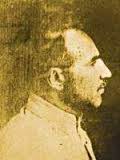
Ali Asghar Borujerdi
Serial killer Mohammed Bijeh
Serial killer · Iran · 2004
Mohammed Bijeh (Persian: محمد بيجه ) was an Iranian serial killer. He confessed…
20 victims
Mohammed Bijeh
Serial killer · Iran · 2004
Mohammed Bijeh (Persian: محمد بيجه ) was an Iranian serial killer. He confessed…
20 victims
 Saeed Hanaei
Serial killer · Iran · 2000
Saeed Hanaei Saeed Hanaei was found guilty and was hanged at dawn in Mashhad Pr…
19 victims
Saeed Hanaei
Serial killer · Iran · 2000
Saeed Hanaei Saeed Hanaei was found guilty and was hanged at dawn in Mashhad Pr…
19 victims
 Georg Karl Grossmann
Serial killer · Germany · 1913
Georg Karl Grossmann, who commonly called himself just Karl Grossman (also give…
50 victims
Georg Karl Grossmann
Serial killer · Germany · 1913
Georg Karl Grossmann, who commonly called himself just Karl Grossman (also give…
50 victims
 Billy Gohl
Serial killer · USA · 1903
Billy Gohl (? - 1928) was an American serial killer who, while working as a uni…
40 victims
Billy Gohl
Serial killer · USA · 1903
Billy Gohl (? - 1928) was an American serial killer who, while working as a uni…
40 victims
 Kaspars Petrovs
Serial killer · Latvia · 2000
Kaspars Petrovs was a convicted serial killer who was sentenced to life in pris…
38 victims
Kaspars Petrovs
Serial killer · Latvia · 2000
Kaspars Petrovs was a convicted serial killer who was sentenced to life in pris…
38 victims
 Rhonda Wisto
Murderer · USA · 2010
Rhonda Maye Wisto was accused alongside her son, Frank Jacob York, in the Septe…
1 victim
Rhonda Wisto
Murderer · USA · 2010
Rhonda Maye Wisto was accused alongside her son, Frank Jacob York, in the Septe…
1 victim
 Jesse Lee Johnson
Murderer · USA · 1998
Jesse Lee Johnson was convicted of aggravated murder. He was later sentenced to…
1 victim
Jesse Lee Johnson
Murderer · USA · 1998
Jesse Lee Johnson was convicted of aggravated murder. He was later sentenced to…
1 victim
 Russell Ellwood
Murderer · USA · 1991
Russell Ellwood was a former taxi driver. Authorities suspected him of killing…
20 victims
Russell Ellwood
Murderer · USA · 1991
Russell Ellwood was a former taxi driver. Authorities suspected him of killing…
20 victims
 John Frank Hickey
Serial killer · USA · 1883
John Frank Hickey, “The Postcard Killer,” was one of the first known and captur…
3 victims
John Frank Hickey
Serial killer · USA · 1883
John Frank Hickey, “The Postcard Killer,” was one of the first known and captur…
3 victims
- Gender
- male
- Country
- Iran
- Location
- Baghdad, Iraq / Tehran, Iran
- Date of birth
- 1893
- Age at first offence
- 15
- Characteristics
- homosexual rapist, rape, serial rapist
- Victim profile
- Adolescent boys
- Method of murder
- ????
- Date(s) of murder
- 1908 - 1934
- Years active
- 1908–1934
- Date of arrest
- January 1934
- Status
-
Executed
Executed by hanging in front of an immense crowd in Tehran's Sepah Square on June 26, 1934
Case record: Ali Asghar Borujerdi
Ali Asghar Borujerdi (Persian: عَلی اَصغَر بروجردی) was known in Iran as اصغر قاتل (Asghar-e Ghatel or Asghar Qatel: Asghar the Murderer) (1893 - June 26, 1934). He was described as the first Iranian serial killer and rapist reported in 20th century.
Timeline
- 1893 — Ali Asghar Borujerdi was born in the Western Iranian town of Borujerd.
- June 26, 1934 — Ali Asghar Borujerdi was executed by hanging in front of an immense crowd in Tehran's Sepah Square.
- 31 December 1933 — The first bodies, heads severed, were found.
- early March 1934 — Police detained Borujerdi again; he confessed.
- 1933 — Ali Asghar Borujerdi escaped back to Iran after killings in Baghdad; he arrived in Tehran and continued killing.
- six years later — After leaving for Iraq at age eight, Ali Asghar Borujerdi moved on to Baghdad.
- six years later (age fourteen) — At fourteen, he moved on to Baghdad and began sexually abusing adolescent boys.
Background
Ali Asghar Borujerdi was born in 1893 in the Western Iranian town of Borujerd. At the age of eight, he left with his mother and siblings for Karbala, Iraq. Six years later, he moved on to Baghdad.
The offence
Ali Asghar Borujerdi assaulted and raped adolescent boys in Baghdad. He learned to kill them in order to get rid of police who were observing him for assaulting and raping young adults.
According to his testimony, he killed 25 people in Iraq before escaping back to Iran. He also confessed to having had sexual intercourse and subsequently killed thirty-three adolescent boys.
In Tehran after his return from Baghdad, he continued his murders. He was arrested once and released for lack of evidence, but after police detained him again, he confessed and was tried and convicted.
Investigation
The first bodies, heads severed, were found on 31 December 1933. In 1933, he was about to be reported to police after he was watched by another boy while he was raping and killing the last Iraqi teenager. He then escaped back to Iran.
Arrest
Borujerdi was arrested once and released for lack of evidence. In early March of 1934, the police detained him again, and this time he confessed.
Trial
After being detained in early March 1934 and confessing, Ali Asghar Borujerdi was tried and convicted. He made an unsuccessful appeal.
Sentencing
After an unsuccessful appeal, Ali Asghar Borujerdi was hung in front of an immense crowd in Tehran's Sepah Square on 26 June.
Outcome
He was convicted for raping and killing 33 young adults, eight in Tehran and the rest in Baghdad.
Other details
After arriving in Tehran in 1933, Ali Asghar Borujerdi worked as a porter and vegetable-seller. He took up residence in Bagh-e Ferdous, a neighborhood in Tehran's poor popular south. He killed eight boys, most of them homeless vagrants. In addition, murders in Iraq involved sexually abusing adolescent boys after he moved to Baghdad at about fourteen.
References included:
- "Serial Murder in Tehran: Crime, Science, and the Formation of Modern State and Society in Interwar Iran", History Comparative Studies in Society and History, 47(4) October 2005, pp 836-862.
- Cyrus Schayegh (2005). Serial Murder in Tehran: Crime, Science, and the Formation of Modern State and Society in Interwar Iran. Comparative Studies in Society and History, 47, pp 836-862. doi:10.1017/S001041750500037X.
- Wikipedia.org Ali Asghar Borujerdi Tehran, 1934.
Spotted an error, or have more information about this case?