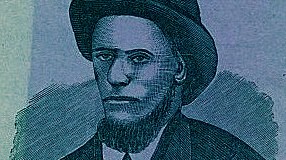
Joseph LaPage
Murderer John Wesley Hardin
Murderer · USA · 1867
John Wesley (Wes) Hardin (1853-1895) was an American outlaw, gunfighter, and co…
42 victims
John Wesley Hardin
Murderer · USA · 1867
John Wesley (Wes) Hardin (1853-1895) was an American outlaw, gunfighter, and co…
42 victims
 Henry Wirz
Murderer · USA · 1864
Henry Wirz (also known as Heinrich Hartmann Wirz) (November 25, 1823 – November…
11 victims
Henry Wirz
Murderer · USA · 1864
Henry Wirz (also known as Heinrich Hartmann Wirz) (November 25, 1823 – November…
11 victims
 Henry Newton Brown
Murderer · USA · 1870
Henry Newton Brown — 19th century gunman; orphan; raised by relatives in Rolla,…
6 victims
Henry Newton Brown
Murderer · USA · 1870
Henry Newton Brown — 19th century gunman; orphan; raised by relatives in Rolla,…
6 victims
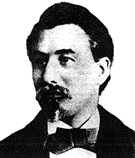 Louis Wagner
Murderer · USA · 1873
Louis Wagner had lived on Smuttynose Island with six Norwegian immigrants: Mare…
2 victims
Louis Wagner
Murderer · USA · 1873
Louis Wagner had lived on Smuttynose Island with six Norwegian immigrants: Mare…
2 victims
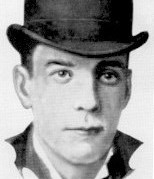 Marion Hedgepeth
Murderer · USA · 1870
Name: Marion Hedgepeth · Also known as: “Handsome Bandit,” “Debonair Bandit,” “…
2 victims
Marion Hedgepeth
Murderer · USA · 1870
Name: Marion Hedgepeth · Also known as: “Handsome Bandit,” “Debonair Bandit,” “…
2 victims
 Joseph Palczynsky
Spree killer · USA · 2000
Joseph C. Palczynski was a spree killer in the suburbs of Baltimore, Maryland.…
4 victims
Joseph Palczynsky
Spree killer · USA · 2000
Joseph C. Palczynski was a spree killer in the suburbs of Baltimore, Maryland.…
4 victims
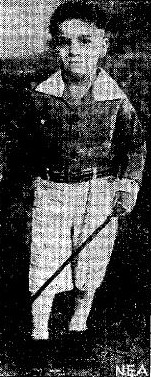 Peter Kudzinowski
Serial killer · USA · 1924
Peter Kudzinowski (1903 – December 21, 1929) was a serial killer who committed…
3 victims
Peter Kudzinowski
Serial killer · USA · 1924
Peter Kudzinowski (1903 – December 21, 1929) was a serial killer who committed…
3 victims
 David Knotek
Murderer · USA · 1994
David Knotek was a man from Raymond. He was accused of participation in the tor…
3 victims
David Knotek
Murderer · USA · 1994
David Knotek was a man from Raymond. He was accused of participation in the tor…
3 victims
 Nikko Jenkins
Murderer · USA · 2013
Nikko Jenkins spent nearly his entire life in prison. In 1993, a 7-year-old boy…
4 victims
Nikko Jenkins
Murderer · USA · 2013
Nikko Jenkins spent nearly his entire life in prison. In 1993, a 7-year-old boy…
4 victims
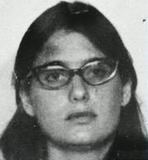 Kathy Boudin
Murderer · USA · 1981
Kathy Boudin pleaded guilty. She was sentenced to 20 years to life in prison. S…
3 victims
Kathy Boudin
Murderer · USA · 1981
Kathy Boudin pleaded guilty. She was sentenced to 20 years to life in prison. S…
3 victims
- Gender
- male
- Country
- USA
- Location
- Vermont/New Hampshire, USA
- Date of birth
- 1838
- Age at first offence
- 36
- Characteristics
- rape, decapitation, dismemberment, torture
- Victim profile
- A school teacher named Miss Ball / Josie Langmaid, 17
- Method of murder
- Stabbing with knife and straight-razors
- Date(s) of murder
- 1874 / 1875
- Years active
- 1874–1875
- Date of arrest
- October 14, 1875
- Status
-
Executed
Executed by hanging in New Hampshire on March 15, 1878; executed on March 16, 1878 at the State prison in Concorde, New Hampshire.
Background
Joseph LaPage was described as a French-Canadian trapper who donned a bearskin and mask to rape and mutilate young women around the Halloween season. He was the tender hired by Charles Fowler, the father of Josie's friend, for his threshing machine. LaPage lived in Pembroke and was known as a hard character with dissipated habits and a reputation for violence.
A private citizen’s connection, involving Joseph LaPage, was said to have led authorities to solve two murders.
Josie Langmaid was a seventeen-year-old schoolgirl in Pembroke, New Hampshire. She was well liked, pretty and intelligent, and loved by her friends, family and neighbors. She was not supposed to die on October 5, 1875, but fate dictated otherwise. She was found in the woods near town after her death.
Miss Fowler was a friend of Josie Langmaid and attended Pembroke Academy. The case summary stated that Miss Fowler’s Christian name was not ascertained.
Miss Ball was a school teacher in St. Albans, Vermont, who had been raped, murdered and mutilated.
The offence
Josie Langmaid was murdered after being raped and brutally mutilated. Her head was severed. Her remains were found in an isolated place in the woods about 150 feet from the road.
The head had been found early the next morning nearly 400 yards away from her body.
The post mortem revealed Josie had been severely beaten about the head with a blunt instrument. There were contusions and cuts, and the imprint of a boot heel on her right cheek. Bones in her right hand were broken and were determined to be defensive wounds. Parts of her anatomy were missing, as well as one of her earrings and a black-enameled gold ring. The doctor conducting the autopsy thought her head had been cut off while she was still alive.
The case summary also described that LaPage had consumed by a need to kill and that he apparently decided that Josie Langmaid would do in the place of Miss Fowler, who was described as his intended victim. It said LaPage disappeared following the murder.
Miss Ball was described as being raped, murdered and mutilated in 1874 in St. Albans, Vermont, in a similar fashion.
Investigation
Within a few days, under intense community pressure, an investigative team arrested William Drew on suspicion of Josie Langmaid’s murder. Drew lived in Pembroke and was known as a hard character with dissipated habits and a reputation for violence. However, there was no evidence that pointed directly at Drew.
Charles Moody was also arrested and later released. An anonymous tramp believed to have what was termed a “mental abberation” was also arrested and released.
The investigation involved a detective who came from Boston to take charge of the case, aided by local police.
During the investigation, Charles Fowler and his son came forward with a tale about Joseph LaPage. Charles Fowler had recently hired a tender for his threshing machine, a Frenchman named Joseph LaPage. LaPage began paying particular notice to Fowler’s daughter and asked the son many questions about his sister—who the girl was, where she went to school, and what road she took to get there. The unsuspecting son took LaPage into the woods and along the road, showing the man exactly where his sister passed on her way to Pembroke Academy.
The case summary stated that the Boston detective and his team could find no trace of the missing man after the murder, so they discounted Fowler’s story at first.
The investigation connected the Josie Langmaid murder to a similar prior murder in 1874. It said that in 1874 a school teacher named Miss Ball had been raped, murdered and mutilated in St. Mr. Abell, the man from whom Miss Ball had rented a room in his lodging house, read about Josie Langmaid’s murder in the newspaper, including Fowler’s details about the mysteriously absent Frenchman. Abell recognized the psudonym LaPage and knew the man also went by the name Joseph Parish, and that he had lived in the neighborhood when Miss Ball was killed.
Abell was aware that LaPage was living in Suncook with his wife and children and undertook to communicate this information to New Hampshire authorities. Fowler was taken to Suncook to LaPage’s house, where he immediately identified the man who had taken such a dangerous interest in his daughter.
At LaPage’s house, a search turned up a knife and a pair of bloody straight-razors hidden on a shelf, and bloodstains on LaPage’s vest and jacket.
When questioned, he had no alibi for the time of the murder. It transpired that he had been seen going in the direction of the woods around the time of Josie’s attack.
A solid “dingle” wagon stick about 1½ inches in diameter and more than three feet long, found near the girl’s body, was identified as belonging to LaPage and was said to have been seen in his possession on the Saturday prior to the murder.
Arrest
After the community pressure and investigative actions, the team arrested William Drew on suspicion of Josie Langmaid’s murder.
A black man, Charles Moody, was arrested but later released.
An anonymous tramp believed to have what was termed a “mental abberation” was also arrested but later released.
Fowler was taken to Suncook to LaPage’s house, where identification occurred immediately. The case summary then described the seizure of items and the absence of an alibi.
Trial
Joseph LaPage was tried, convicted and sentenced to hang.
The case summary stated that LaPage eventually confessed to both murders.
It also stated that it seemed certain that LaPage had brutalized and killed Miss Ball in 1874, and that LaPage had been a strong suspect in the case of Miss Ball but had to be released for lack of evidence even though he lied about not knowing the school teacher; it was proved at the time he was acquainted with her.
Now LaPage’s sons, who had previously given their father an alibi for Miss Ball’s murder, recanted their testimony.
Sentencing
Joseph LaPage was sentenced to hang.
Appeals
No appeals were described.
Outcome
Joseph LaPage was executed on March 16, 1878 at the State prison in Concorde, New Hampshire. The case summary also stated he was executed on March 16, 1878, while the status field stated “Executed by hanging in New Hampshire on March 15, 1878.”
It was reported that he went to his death relieved and easy in his mind, having made a detailed confession of his crimes to a priest, and even drawing a map that would lead the police to the hiding place where LaPage had buried the missing earring and black-enameled ring that had belonged to Josie Langmaid.
The case summary stated that families of Miss Ball and Josie Langmaid continued to mourn their loss, and that they at least gained a measure of peace when LaPage went to his death on the public gallows.
Aftermath
The case summary described continued mourning by the families of Miss Ball and Josie Langmaid.
Timeline
October 5, 1875 — Josie Langmaid was murdered; her body was found in the woods near town. Early the next morning (after October 5, 1875) — Josie Langmaid’s head was found nearly 400 yards away from her body. 8:30 in the evening (after October 5, 1875) — Josie Langmaid’s remains were found in an isolated place in the woods, 150 feet from the road. March 15, 1878 — Joseph LaPage was executed by hanging in New Hampshire (as stated in the status field). March 16, 1878 — Joseph LaPage was executed at the State prison in Concorde, New Hampshire. 1874 — Miss Ball was raped, murdered and mutilated in St. Albans, Vermont; Joseph LaPage was described as a strong suspect but released for lack of evidence.
Other details
Josie Langmaid and Miss Fowler were friends and both attended Pembroke Academy. They walked to school together, taking a country road winding a mile and a half through heavy growth of white birches and alders.
On the morning of the murder, Josie’s sixteen-year-old brother Waldo left their house on Duck Street a half-hour before, taking the same path to the school. When Josie did not arrive, Waldo assumed she had decided not to attend classes and did not raise alarm until he came home that afternoon and learned she was not there.
Inquiries at houses of people who lived near the road revealed that Josie was last seen passing the Hartford house about a half-mile from the school. The townpeople helped in a search.
It was described that trampled ground near Josie was a sign that a terrific struggle had taken place and that it was clear Josie fought for her life. Torn pieces of her clothing were scattered over her naked body.
Miss Fowler went to the wood as usual and waited for Josie Langmaid to arrive. A neighbor stopped and offered Miss Fowler a ride to school in his carriage; she accepted gratefully, which the case summary said saved her own life and condemned Josie to a horrible death.
Josie arrived at the meeting place realizing Miss Fowler was already gone, and made haste to catch up, supposing her friend was on foot. The case summary stated that on an isolated stretch of road far away from anyone who might hear her screams, LaPage attacked and raped Josie, cut off her head, and mutilated her body.
After the murder, LaPage disappeared. The case summary stated that Try as they might, the Boston detective and his team could find no trace of the missing man.
Charles Fowler’s involvement included that he had recently hired a tender for his threshing machine, a Frenchman named Joseph LaPage. Fowler also came forward with his tale during the investigation.
A mother and daughter said LaPage once waylaid them in a local wood, carrying a large stick, and that only timely intervention of a gentleman passing by saved them from what they believed would have been an assault.
Witnesses testified that LaPage had a habit of inquiring after teenage girls in his neighborhood, loitering where he could watch them, and occasionally following one that caught his interest. Several girls said they had been chased and frightened by LaPage.
LaPage’s wife testified that her husband had beaten and raped her sister in Canada some years earlier.
The case summary stated that LaPage acknowledged he had been arrested for the crime but released when another man was proven guilty. It further stated that LaPage escaped by assaulting the arresting officers, then fled to Vermond to avoid prosecution.
In the case of Miss Ball’s murder, the case summary stated that LaPage had to be released for lack of evidence even though he lied about not knowing the school teacher; it was proved at the time he was acquainted with her.
LaPage’s sons previously gave their father an alibi for Miss Ball’s murder; they later recanted their testimony.
LaPage was also described as going by the name Joseph Parish.
LaPage was said to have buried the missing earring and black-enameled ring that belonged to Josie Langmaid, and drew a map that would lead the police to the hiding place.


Spotted an error, or have more information about this case?