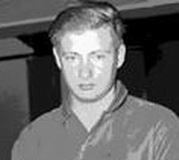
Victor Ernest Hoffman
Mass murderer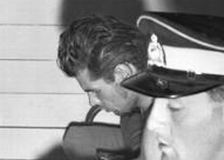 Robert Raymond Cook
Mass murderer · Canada · 1959
Robert Raymond Cook (also known as Bobby Cook): convicted murderer; eldest son…
7 victims
Robert Raymond Cook
Mass murderer · Canada · 1959
Robert Raymond Cook (also known as Bobby Cook): convicted murderer; eldest son…
7 victims
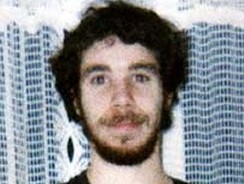 Marc Lepine
Mass murderer · Canada · 1989
Marc Lépine committed a shooting at the École Polytechnique engineering school…
14 victims
Marc Lepine
Mass murderer · Canada · 1989
Marc Lépine committed a shooting at the École Polytechnique engineering school…
14 victims
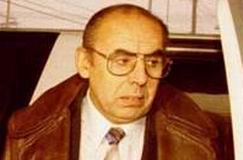 Roger Warren
Mass murderer · Canada · 1992
Roger Warren was convicted of 9 counts of second-degree murder in connection to…
9 victims
Roger Warren
Mass murderer · Canada · 1992
Roger Warren was convicted of 9 counts of second-degree murder in connection to…
9 victims
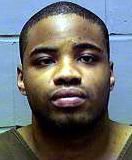 Reginald & Jonathan Carr
Spree killers · Kansas · 2000
The Wichita Massacre, also known as “The Wichita Horror,” was a murder/assault/…
5 victims
Reginald & Jonathan Carr
Spree killers · Kansas · 2000
The Wichita Massacre, also known as “The Wichita Horror,” was a murder/assault/…
5 victims
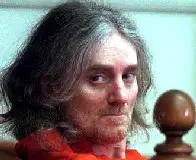 Donald Moeller
Murderer · USA · 1990
Donald Moeller was convicted of first-degree rape and first-degree murder invol…
1 victim
Donald Moeller
Murderer · USA · 1990
Donald Moeller was convicted of first-degree rape and first-degree murder invol…
1 victim
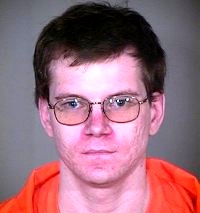 Christopher Hargrave
Murderer · USA · 2002
Christopher Hargrave worked at Jack in the Box from April to May of 2002 and ha…
3 victims
Christopher Hargrave
Murderer · USA · 2002
Christopher Hargrave worked at Jack in the Box from April to May of 2002 and ha…
3 victims
 Walter LaGrand
Murderer · USA · 1982
Walter LaGrand was convicted for his role in a bungled armed robbery of the Val…
1 victim
Walter LaGrand
Murderer · USA · 1982
Walter LaGrand was convicted for his role in a bungled armed robbery of the Val…
1 victim
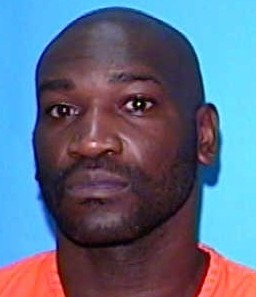 David Cook
Murderer
Name: David Cook · Date of birth: 02/01/64 · Court / jurisdiction: Eleventh Jud…
1984 victims
David Cook
Murderer
Name: David Cook · Date of birth: 02/01/64 · Court / jurisdiction: Eleventh Jud…
1984 victims
- Gender
- male
- Country
- Canada
- Location
- Shell Lake, Saskatchewan, Canada
- Date of birth
- 1946
- Age at first offence
- 21
- Characteristics
- former mental patient, mentally ill
- Victim profile
- James Peterson, 47, his wife Evelyn, 42, and their children, Jean, 17; Mary, 13; Dorothy, 11; Pearl, 9; William, 5; Colin, 2; and Larry, 1
- Method of murder
- Shooting
- Date(s) of murder
- August 15, 1967
- Years active
- 1967
- Date of arrest
- 4 days after
- Status
-
Acquitted / overturned
Found not guilty by reason of insanity in February 1968; put under the custody of the provincial Health Ministry and sent to a mental institution; died under custody on May 21, 2004
Case overview
Victor Ernest Hoffman (born 1946; died May 21, 2004) was found not guilty by reason of insanity in February 1968 on non-capital murder charges. He was put under the custody of the provincial Health Ministry and sent to a mental institution. He later died under custody on May 21, 2004.
The Shell Lake murders were a single mass murder incident committed by Victor Ernest Hoffman in Shell Lake, Saskatchewan, during the early morning of August 15, 1967. Nine people, all members of James Peterson's family, were shot in the head. The incident was described as a mass murder, and Victor Hoffman was later described as “Canada’s worst random mass murderer.”
The offence
On the morning of August 15, 1967, Hoffman entered James Peterson's farm armed with a .22-calibre Browning pump-action repeater rifle. He proceeded to shoot all members of the Peterson family at close range around the four-room house. The police said 28 shots were fired in total, of which 27 found their target.
James Peterson was shot in the kitchen. His wife, Evelyn, and their one-year-old baby were found in the backyard. The other six children were shot while sleeping in their bedrooms. The children’s ages ranged from 2 to 17 years old, and Phyllis Peterson, then 4 years old, was the lone survivor.
Phyllis Peterson was sleeping under the bedclothes between her two sisters and was not noticed by Hoffman. Hoffman later declared that he spared her because “she had the face of an angel.” After the killings, the family’s dog—a black mongrel with white markings—cowered under the back porch while police searched for clues.
Victims
James Peterson (47) was killed.
Evelyn Peterson (42) was killed.
Their children killed included:
- Jean Peterson (17)
- Mary Peterson (13)
- Dorothy Peterson (11)
- Pearl Peterson (9)
- William Peterson (5)
- Colin Peterson (2)
- Larry Peterson (1)
Phyllis Peterson (4) survived.
Investigation
Police described the murder scene and search efforts. The incident was discovered around 9 a.m. Tuesday by a neighbor who called at the isolated four-room house to ask Mr. Peterson for help with haying operations. Police said Mr. Peterson’s body, clad only in undershorts, lay facing the kitchen door. The bodies of Mrs. Peterson and the baby were found in the yard and the remaining children were in bed.
Coronor Dr. Calvin S. Lambert estimated the time of death at “possibly 2 a.m.” A coronor’s jury estimated that 14 shots had been fired. RCMP said 28 bullets were fired, of which 27 found their mark, and that each had been shot at least twice with .22-calibre bullets, many at close range. A report on scene details said powder burn indicated the victims were shot at close range, and that because no weapon was found, “I don’t think there was a suicide.”
RCMP officers set up roadblocks and brought dogs to search nearby bush. Inspector Brian Sawyer said a search party of up to 250 persons was “ready to go.” The only confirmed clue turned up so far were five spent cartridge casings. An unconfirmed report told of a .22-calibre weapon being found by youngsters, but this was denied by police.
A neighbour, W. J. Lange, discovered the killings when he called on Mr. Peterson at about 9 a.m. Tuesday. Mr. Lange opened the door to the Peterson home after he saw Mr. Peterson’s body by the kitchen door. The house was not ransacked. Mr. Lange found the keys in the Peterson family’s 1957 station wagon and drove the car to the nearest telephone. Police said the neighbor had to go four miles to the nearest phone at Shell Lake; Spiritwood was also referenced as 16 miles away.
Arrest
On August 19, 1967, Hoffman was arrested by the RCMP without putting up resistance. He was found at his parents’ home in Leask, about 65 km (40 mi) southwest of Shell Lake.
Inspector Brian Sawyer, in charge of the investigation, later said Hoffman surrendered without a struggle at his home about 5:30 p.m. CST Saturday, some three hours after the funeral of Mr. and Mrs. Peterson and seven of their nine children at Shell Lake.
The RCMP announced that Hoffman (21) of the Leask district had been arrested in the slaying of nine members of the James Peterson family. It also stated that he would be arraigned in district judge’s court in North Battleford.
Inspector Sawyer said police found a .22-calibre Belgian Browning pump-action repeater rifle Friday, and that tests at the RCMP ballistics laboratory in Regina “positively identified it as the murder weapon.”
Inspector Sawyer said the RCMP advised Hoffman's parents to retain a lawyer for their son.
Hoffman was described as single, of average build, about five feet eight inches tall, and weighing about 165 pounds. Inspector Sawyer said he “was not a bit scared” and behaved normally since his arrest. Inspector Sawyer paid tribute to the RCMP men who had worked on the case: “This makes me very, very proud of being a member of this force, he said. ‘Credit goes to the 75 men we had in the area as well as to many more at other detachments elsewhere.’ He said most of the men in the immediate area had put in at least 18 hours a day since Tuesday, and that a few had worked as much as 36 hours without a break.
The police said there was no apparent motive for the slayings, and Inspector Sawyer said no motive had been established for the slaying. He said: “The arrest was the culmination of a very casual conversation that one of our members had with an individual and we decided it would be wise to check the Hoffman residence.”
After his arrest, Hoffman told the police that he had fought the devil before the murders and described him as being “tall, black and having no genitals.”
Remand and diagnosis
Hoffman was remanded to a mental hospital in North Battleford, where he was diagnosed with paranoid schizophrenia.
Trial
Hoffman was found not guilty by reason of insanity on non-capital murder charges in February 1968.
During the trial, Crown prosecutor Serge Kujawa called Hoffman “the craziest man in Saskatchewan.”
Sentencing and custody
Hoffman was put under the custody of the provincial Health Ministry and sent to a mental institution. He remained most of the time in an Ontario-based institution until December 2001, when he was granted supervised access to the towns of Penetanguishene, Port McNicol and Midland in Ontario. The decision was described as involving controversy because the hospital was only required to inform the local police of Hoffman's release.
Aftermath
A Canadian journalist, Peter Tadman, wrote a book about the murders in 1992 and had the chance to interview Hoffman several times. Tadman reported that Hoffman felt no guilt about the murders and reported that he still saw the devil that compelled him to commit them.
Hoffman died of cancer under custody on May 21, 2004.
Other details
Inspector Brian Sawyer said Mr. Peterson was 47 years old at the time of the slaying. The victims included children and a one-year-old baby.
The timeline referenced “early Tuesday” for the killings, and also described that RCMP found a murder weapon and ballistic identification after Hoffman’s arrest.
Spotted an error, or have more information about this case?