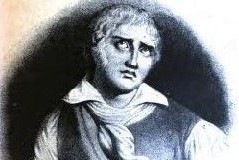
Joseph Lesurques
Murderer? Dr. Pierre Marie Bougrat
Murderer? · France · 1925
Dr. Pierre Marie Bougrat was a doctor in France. He had been awarded the Milita…
1 victim
Dr. Pierre Marie Bougrat
Murderer? · France · 1925
Dr. Pierre Marie Bougrat was a doctor in France. He had been awarded the Milita…
1 victim
 Marguerite Steinheil
Murderer? · France · 1908
Marguerite Jeanne “Meg” Japy Steinheil was a French woman born in Beaucourt on…
2 victims
Marguerite Steinheil
Murderer? · France · 1908
Marguerite Jeanne “Meg” Japy Steinheil was a French woman born in Beaucourt on…
2 victims
 Mark Brandon Read
Murderer? · Australia · 1979
Mark Brandon “Chopper” Read (born 17 November 1954) was an Australian ex-convic…
19 victims
Mark Brandon Read
Murderer? · Australia · 1979
Mark Brandon “Chopper” Read (born 17 November 1954) was an Australian ex-convic…
19 victims
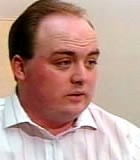 Richard Allen Williams
Murderer? · USA · 1992
Boone County Prosecutor Kevin Crane dismissed the charges in August 2003 after…
10 victims
Richard Allen Williams
Murderer? · USA · 1992
Boone County Prosecutor Kevin Crane dismissed the charges in August 2003 after…
10 victims
 Dr. Teet Härm
Murderer? · S weden · 1984
The District Court jury returned a guilty verdict, but the High Court overturne…
9 victims
Dr. Teet Härm
Murderer? · S weden · 1984
The District Court jury returned a guilty verdict, but the High Court overturne…
9 victims
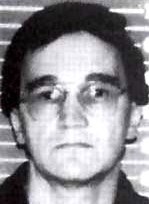 James DeBardeleben
Murderer? · USA · 1965
James DeBardeleben (James Mitchell “Mike” DeBardeleben), born March 20, 1940, w…
8 victims
James DeBardeleben
Murderer? · USA · 1965
James DeBardeleben (James Mitchell “Mike” DeBardeleben), born March 20, 1940, w…
8 victims
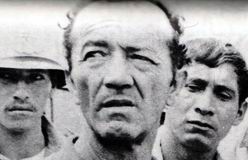 Daniel Camargo Barbosa
Serial killer · Colombia / Ecuador · 1974
Daniel Camargo Barbosa was a psychopathic serial killer from Colombia. It was b…
72 victims
Daniel Camargo Barbosa
Serial killer · Colombia / Ecuador · 1974
Daniel Camargo Barbosa was a psychopathic serial killer from Colombia. It was b…
72 victims
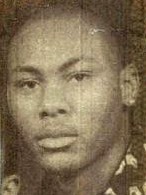 Regis Deon Thomas
Murderer · USA · 1992
Regis Deon Thomas was a member of a notorious Los Angeles gang known as "Bounty…
3 victims
Regis Deon Thomas
Murderer · USA · 1992
Regis Deon Thomas was a member of a notorious Los Angeles gang known as "Bounty…
3 victims
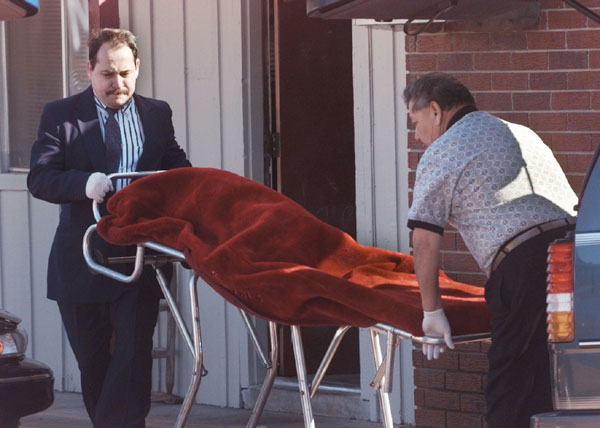 Edwin Bell
Mass murderer · USA · 1999
February 12, 1999 — Edwin Bell shot his estranged girlfriend, their three young…
5 victims
Edwin Bell
Mass murderer · USA · 1999
February 12, 1999 — Edwin Bell shot his estranged girlfriend, their three young…
5 victims
 Loran Cole
Murderer · USA · 1994
02/21/94 — Defendant arrested. · 03/04/94 — Defendant entered a plea of “not gu…
1 victim
Loran Cole
Murderer · USA · 1994
02/21/94 — Defendant arrested. · 03/04/94 — Defendant entered a plea of “not gu…
1 victim
 Glen Burton Ake
Homicide · USA · 1979
Glen Burton Ake was sentenced to death and later had that death sentence overtu…
2 victims
Glen Burton Ake
Homicide · USA · 1979
Glen Burton Ake was sentenced to death and later had that death sentence overtu…
2 victims
- Gender
- male
- Country
- France
- Location
- Lieursaint, France
- Date of birth
- 1763
- Age at first offence
- 33
- Characteristics
- miscarriage of justice, robbery
- Victim profile
- M ail-coach men
- Method of murder
- St abbing with knife and sword
- Date(s) of murder
- April 27, 1796
- Years active
- 1796
- Date of arrest
- May 11, 1796
- Status
-
Executed
Executed by guillotine on October 3, 1796
Case record: Joseph Lesurques
Status / legal outcome
Joseph Lesurques was executed by guillotine on October 3, 1796.
The offence
In late eighteenth-century France, a brutal night-time robbery of the Lyon Mail occurred when France was still recovering from the revolution. The robbery resulted in the escape of the highwaymen with 75,000 livres (about £3000) in bank bills and silver.
The mail-coach was found abandoned at the roadside near the village of Lieursaint the following morning. The driver lay dead in his seat with wounds to his chest and his throat cut so badly that the head was nearly severed from the trunk. The postilion lay dead on the road with savage head and chest wounds. Letters were found scattered in the vicinity of the coach.
Investigation
After the mail-coach was found, an investigation began. Several articles were found near the victims, including a great-coat with a narrow dark-blue border, a broken sabre with its sheath, the sheath of a large knife, another sabre sheath, and a plated spur with chain attached that had been broken and mended with a bit of large cord. The blade of the sabre was red with blood and bore the legend, "Lhonnenr me conduit, Pour le saint de ma patrie", described as a strange sentiment for a highwayman to carry about him.
An inquest was held after the discovery. Witness testimony indicated four men on horseback had been along the road in the afternoon of April 27 as far as Lieursaint but not beyond, and that these same men, in company with a fifth horseman, had returned towards Paris in the night. The coach had carried but one passenger, a man wrapped in a great-coat with a narrow dark border who had taken his seat beside the courier at Paris; this passenger was nowhere to be found and was treated as an accomplice who escaped on the missing horse, described as the fifth horseman of the witnesses.
A bloody sabre picked up on the road near Melun was produced and was said to have fit exactly the odd sheath found at the scene of the murder.
A volunteer who had mounted guard in Paris at the Barrière de Rambouillet between four and five o'clock in the morning of April 28 testified to the entrance into the city at about that time of five horsemen riding at full speed on horses reeking with sweat and almost spent.
The police secured the missing posthorse, which was found astray in Paris near the Place Royale. They then looked up the other four. It was discovered that about five o'clock on the morning of April 28, a man named Courriol had left at a tavern in Paris four foaming horses with another man, taking them away again at seven o'clock. Courriol was said to have lodged in the Rue de Petit Reposoir before April 27 but had not slept there on the night of the murder, nor returned since. From April 28 to May 6, Courriol was said to have lodged with his mistress in the Rue de la Boucherie at the house of one Richard. It was also stated that on May 6 the two had taken out passports for Troyes and left the city together in a post-chaise.
Fugitives were traced to the house of a man named Golier in Chateau Thierry. The police found a citizen of Douai named Guesno there as well, who had arrived from Paris where he had lodged with Richard. Guesno and Golier were arrested along with Courriol and Courriol’s mistress, and all four were taken to the capital. Because about one fifth of the stolen property was recovered from Courriol, he was committed for trial. Guesno and Golier were described as convincing the magistrate, Daubanton, of their innocence and were discharged from custody. They were instructed to call next day to obtain papers seized from Guesno’s room at Richard’s. It was also stated that Guesno was well acquainted with Joseph Lesurques.
After Guesno was released, he encountered Joseph Lesurques the morning after his release while both were on the way to Daubanton’s office. Guesno told Lesurques about his experience. Lesurques accompanied him to the magistrate’s office and they seated themselves in an ante-room full of country people, described as witnesses in Courriol’s case. Two women present were said to have eyed them closely and whispered until summoned to Daubanton. When the door of Daubanton’s private room closed on the women, it was said to open again and an officer called the two friends in. Daubanton questioned them briefly in the presence of the two women, who were said to have scrutinized them even more attentively than before. They were then requested to withdraw and, soon after, were again summoned and informed that they were positively identified by the women as two of the four horsemen seen around Lieursaint on the day of the robbery of the Lyon mail. They were ordered to produce papers.
Lesurques was said to have never provided himself with a carte de sûreté and to have in his pocket two cartes, one bearing the name of his cousin André and the other blank. The matter was set for trial at Melun in early July. The accused exercised their right of removal, after which the case was referred to the criminal court at Paris, presided over by Jerome Gohier.
The accused were described as six in number: Courriol, Richard, Guesno, Lesurques, Bernard, and Bruer. Richard had been arrested before the visit of Lesurques and Guesno to Daubanton’s office.
Arrest / custody
Joseph Lesurques was held on suspicion of highway robbery and murder after witnesses identified him and his friend as two of the four horsemen.
Trial
The trial began on the 2d of August. Ten witnesses living on the Lyons road testified against Lesurques and said they recognized in him a tall, light-complexioned man who had been a notable figure in the little cavalcade of April 28. Seven of these ten witnesses positively and unhesitatingly recognized Lesurques. Three qualified their recognition by saying they believed him to be the man they had seen in the party.
An innkeeper and his wife testified that Lesurques had mended his spur at their house with a piece of cord, and they identified that cord as part of the spur and string found near the dead bodies of the courier and postilion. Another witness stated that Lesurques had dined at Montgeron in the same room with the four highwaymen and that Lesurques was one of the four and wore long boots with spurs like the one shown in court.
The examination of Lesurques was described as showing the prosecution’s theory. It included the following exchanges:
Q. Where did you sleep on the night of the 8th Floreal?
R. At home; that is to say, at my cousin's, André Lesurquess.
Q. Are you sure? It seems to be pretty well ascertained that you did not.
R. I am sure. I had not slept out of the house a single night for several months.
Q. Why did you go with Guesno to M. Daubantons office?
R. Simply to accompany my friend, M. Guesno.
Q. Did you not go in behalf of Richard and Courriol?
R. No, I did not go in anybodys behalf, and I have no acquaintance with Courriol.
Q. How do you account for the fact that these witnesses identify you as one of the four horsemen?
R. Granting their testimony to be honest, I can only account for it on the ground that I bear a strong resemblance to one of the four.
Q. How does it happen that you have no carte de sfiret6, but carry your cousins and a blank one?
R. I have never provided myself with a carte de sfiretd, because I am a peaceable and law-abiding citizen, with plenty of friends, and have not had particular occasion to use one. Any man of decent reputation can get one at any time. My cousins carte happened to be lying on my mantel-piece, aiid when I went out I picked it up and put it in my pocket, for safe-keeping. The blank carte was one of several odd scraps of paper that I happened to have about me, and as it bears no seal is worthless for any criminal purpose. Of course, if I were guilty, I should not lack plausible papers.
Q. What kind of spurs are you in~ the habit of using?
R. I have not used any spurs for more than a year. Those that I own are old-fashioned ones, and not like the spurs used nowadays.
Lesurques presented a defense based on good reputation and an alibi. He brought fifteen witnesses to prove his presence in Paris on the 8th Floreal. Eight of these witnesses were persons with whom he had had dealings that day; four identified as Legrand, Aldenhof, Ledru, and Baudard were personal friends; and the list also included his wife, his cousin André, and André’s wife. Legrand and Aldenhof were described as jewelers, and Ledru and Baudard as artists. The witnesses were said to have been well acquainted with each other and with Lesurques. Aldenhof and Ledru were said to have been from Douai and to have known Guesno.
The stated account of Lesurques’s actions on the 8th Floreal, drawn from witness evidence, was that he passed part of the morning at Legrand’s shop in the Palais Royal where he met Aldenhof and took him home to dine. At the house, they found Ledru, and the three dined and then went out for a walk. Lesurques met Guesno on the Boulevard des Italiens at about half past six, returned to the house at about half past seven, and soon thereafter Baudard appeared. The account stated that they separated and that Lesurques passed the evening and night at home.
Legrand was described as being the first defense witness called, testifying that Lesurques passed part of the morning of the 8th Floreal at his shop. When asked why he remembered, Legrand said that while Lesurques was there, Aldenhof had come in, bought a soup ladle, and sold him a pair of ear-rings, and that he was confident the transaction took place on the 8th Floreal. Legrand said he appealed to his books. Legrand was instructed to produce the book containing the original entry, which he passed to Gohier. When Gohier looked at the page indicated, Gohier was said to have exclaimed:
"This is a gross attempt to defeat the ends of justice! This date has been tampered with. Arrest the witness."
Guinier, Lesurques’ counsel, and Legrand were said to have been thunderstruck, seized the book when it was handed back to them, and examined the date. Guinier later argued that the figures were clearly manifest in a way that disproved any criminal intent. Legrand remained under arrest and continued his testimony but was said to have become confused and contradicted himself in a way that damaged Lesurques in the eyes of the court. It was also stated that Gohier conducted the trial as if assured of guilt, intimidating the witnesses and creating an unfavorable opinion in the jury.
Courriol, Bernard, and Lesurques were pronounced guilty of highway robbery and murder. Richard was found guilty of receiving stolen property. Guesno and Bruer were acquitted.
After hearing the verdict, Lesurques was described as turning pale with horror. He then raised his hands as if in deprecation and said:
"Unquestionably the crime of which I am accused is a terrible one, and deserves to be punished with death; but if murder on the highway is a crime, the abuse of law to strike an innocent man is no less criminal. The day will come when my innocence shall be established; then my blood be on the heads of the jurors who have convicted me without due reflection, and on the judge who has influenced them to do so."
Courriol was described as making a first effort to save Lesurques, rising and crying out:
"Lesurques and Bernard are innocent! Bernard only lent the horses. Lesurques had nothing to do with the matter."
The court’s remonstrances were described as availing nothing. Lesurques, Courriol, and Bernard were condemned to death, while Richard was condemned to twenty-four years imprisonment. It was stated that the property, real and personal, of all four men was confiscated.
Sentencing
Joseph Lesurques was condemned to death.
Appeals / review
It was stated that Courriol had two interviews with the authorities in hope of saving Lesurques. Courriol gave names of accomplices as Durochat, Tidal, Dubosc, and Roussy. Courriol said that Durochat, under an assumed name, had taken his place on the coach beside the courier, and that the rest met at the Barrière de Charenton and proceeded on horseback to Lieursaint, dining on the way at Montgeron. Courriol declared that the spur found on the ground belonged to Dubosc, who resembled Lesurques and was confounded with him by the witnesses. Courriol appealed to his mistress for corroboration about resemblance between Dubosc and Lesurques, and she was said to have affirmed a strong likeness between them, heightened by a blond wig worn by Dubosc on the day of the murder, and to have confirmed other details to the extent she was acquainted.
The case was said to have been brought to the notice of the Directory, then referred to the Council of Five Hundred, and then referred to a committee. The committee reported adversely to Lesurques, and nothing further was said to remain.
Outcome
He died at the age of thirty-three years.
On the day before his execution, he took leave of his wife and children. On the evening of the same day, he cut off his hair with his own hands, enclosed it in a packet for his wife, and addressed it:
"A Ia citoyenne Veuve Lesurques."
He also bade farewell in the following lines:
"When you read this letter I shall be no more; the cruel knife will have cut short my days, days so happily consecrated to you. I am to be judicially murdered. It is my fate, and there is no escape from it. I have endured my lot with all the constancy and courage of which human nature is capable. May I hope that you will imitate my example? Your life is not yours; it belongs to your children and to your husband, if he was dear to you. This is all I have to ask. A little packet of my hair will be handed to you. Keep it carefully, and when my children are grown share it with them. It is all that I have to leave them for inheritance. Farewell forever. My last sigh shall be for you and my unfortunate children."
He wrote to his friends:
"The truth could not manifest itself, and I am about to perish, the victim of a mistake. May I hope that you will entertain for my wife and children the same friendly feelings that you have always shown for me, and aid them under all circumstances? I thank M. Guinier, my defender, for the pains that he has taken in my behalf. Now receive, one and all, my last farewell."
He also addressed an open letter to Dubosc for insertion in the newspapers:
"You, in whose stead I am about to die, rest content with the sacrifice of my life. If ever you fall into the hands of justice, think of my three children, covered with infamy, and of their mother, a prey to despair, and do not prolong the misfortunes caused by the fatal likeness that I bear to you."
Lesurques was described as dressing completely in white as a final token of his innocence. Four months after these events, the police succeeded in arresting Durochat. He was fully recognized as the pretended traveler on the Lyons coach and eventually made a full confession sustaining the account given by Courriol. Durochat said that Bernard had a share of the plunder and that he had never known Lesurques, including the following statement:
"I have heard that a man named Lesurques was condemned for complicity with us. Truth compels me to say that I never knew the man, neither when we planned the job nor when we did it. I did not know him, and I never saw him."
It was stated that Vidal and Dubosc were captured before Durochat was executed, and that they escaped from prison before they could be brought to trial. Vidal was soon recaptured, tried, condemned, and executed. Dubosc remained at large for some time and was finally guillotined on December 25, 1800. Roussy was arrested in Madrid toward the close of the year 1803 and was executed the following June. It was stated that Roussy acknowledged the justice of his sentence with his latest breath and left a paper with the priest who shrived him, enjoining the priest not to open it until six months elapsed. When opened, it was found to contain:
"I declare the man Lesurques to be innocent; but my confessor, to whom I give this declaration, must not deliver it to the authorities until six months after my death."
Aftermath
After Lesurques’s execution, his wife and children were left in much distress, and it was stated that his property was seized according to procedure.
A later acknowledgement was described as authorities having tragically executed an innocent man due to double coincidence, and that no help had been given to his wife and children.
Spotted an error, or have more information about this case?