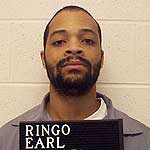
Earl Ringo
Murderer Russell Ellwood
Murderer · USA · 1991
Russell Ellwood was a former taxi driver. Authorities suspected him of killing…
20 victims
Russell Ellwood
Murderer · USA · 1991
Russell Ellwood was a former taxi driver. Authorities suspected him of killing…
20 victims
 Robert Martines Perez
Murderer · USA · 1994
Name: Robert Martines Perez · Other name used in proceedings: Robert Martinez P…
15 victims
Robert Martines Perez
Murderer · USA · 1994
Name: Robert Martines Perez · Other name used in proceedings: Robert Martinez P…
15 victims
 Billy Frank Vickers
Murderer · USA · 1993
Billy Frank Vickers Vickers was executed by lethal injection in Texas on Januar…
14 victims
Billy Frank Vickers
Murderer · USA · 1993
Billy Frank Vickers Vickers was executed by lethal injection in Texas on Januar…
14 victims
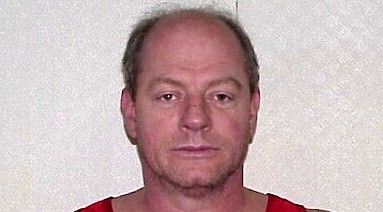 Thomas Clyde Bowling
Murderer · USA · 1990
Name: Thomas Clyde Bowling Also known as: Thomas Clyde Bowling Jr.; T.C. Date o…
2 victims
Thomas Clyde Bowling
Murderer · USA · 1990
Name: Thomas Clyde Bowling Also known as: Thomas Clyde Bowling Jr.; T.C. Date o…
2 victims
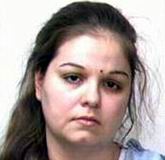 Monique Berkley
Murderer · USA · 2005
Monique Berkley was a Clayton, North Carolina woman at the center of a fatal lo…
1 victim
Monique Berkley
Murderer · USA · 2005
Monique Berkley was a Clayton, North Carolina woman at the center of a fatal lo…
1 victim
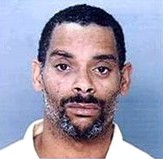 Juan Covington
Serial killer · USA · 1998
Juan Covington was an American serial killer in Philadelphia, Pennsylvania. Cov…
3 victims
Juan Covington
Serial killer · USA · 1998
Juan Covington was an American serial killer in Philadelphia, Pennsylvania. Cov…
3 victims
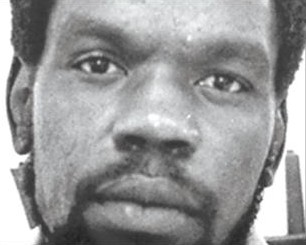 Charles Stamper
Murderer · USA · 1978
Charles Stamper was convicted and sentenced to death for three capital murders…
3 victims
Charles Stamper
Murderer · USA · 1978
Charles Stamper was convicted and sentenced to death for three capital murders…
3 victims
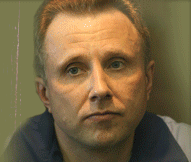 Alexey Pichugin
Murderer · Russia · 1998
Alexei Vladimirovich Pichugin (Aleksey Pichugin) was born in the town of Orekho…
5 victims
Alexey Pichugin
Murderer · Russia · 1998
Alexei Vladimirovich Pichugin (Aleksey Pichugin) was born in the town of Orekho…
5 victims
- Gender
- male
- Country
- USA
- Location
- Boone County, Missouri, USA
- Date of birth
- November 29, 1973
- Age at first offence
- 25
- Characteristics
- robbery
- Victim profile
- Dennis Poyser, 45, and Joanna Baysinger, 22
- Method of murder
- Shooting
- Date(s) of murder
- July 4, 1998
- Years active
- 1998
- Date of arrest
- 9 days after
- Status
-
Executed
Sentenced to death on July 26, 1999; executed by lethal injection in Missouri on September 10, 2014
Background
Earl Ringo, Jr. was a prisoner under sentence of death in the State of Missouri. He was executed by lethal injection in Missouri on September 10, 2014.
Ringo and Quentin Jones planned an early morning robbery of the Ruby Tuesday restaurant in Columbia, Missouri, where Ringo had formerly been employed. Ringo and a friend, Quentin Jones, traveled to Columbia, Missouri, in a rented U-Haul truck, and Ringo rented the truck to move his belongings from Columbia to Jeffersonville, Indiana. During the trip, Ringo concocted a plan for the robbery, drawing on his recollection of the early morning routine from his former employment.
Ringo shared his plan with Jones on July 3, 1998. Jones agreed to join him. Ringo believed that the cash proceeds from the previous day’s operation would be left in a safe and that their take could amount to several thousand dollars.
The offence
On July 4, 1998, delivery driver Dennis Poyser arrived and was met by 22-year-old manager trainee JoAnna Baysinger. Ringo and Jones hid behind a grease pit in the back of the Ruby Tuesday restaurant before sunrise.
Ringo and Jones approached the restaurant from the rear. They entered through an unlocked gateway guarding the back of the restaurant. Ringo closed the gates behind him, and the two remained within the gated area waiting for a manager or another employee to arrive.
At 5:55 a.m., Poyser arrived. Jones panicked and attempted to flee by climbing the wall, but Ringo instructed him to hide. Jones complied and located a hiding place between a trash dumpster and a grease pit. The two then put on ski masks.
Baysinger opened the rear door, and Poyser opened the outer gates. Baysinger came out to the gateway and spoke with Poyser. She then returned to the building along with Poyser. Carrying his pistol, Ringo ran in after them. Ringo shot Poyser in the face from a distance of about six inches, killing him instantly. Poyser fell to the floor. Hearing the gunshot, Jones entered and found Poyser on the floor and Baysinger screaming. Baysinger had blood on her hand and ankle.
Ringo grabbed Baysinger, forced her into the restaurant office, and demanded that she open the safe. While in the office, Ringo directed Jones to go to the front of the restaurant and make sure no one else had arrived. After Jones returned, Ringo and Baysinger were next to the safe. Ringo filled the backpack with cash from the petty cash and cash drawers located in the top part of the safe while Baysinger tried to open the bottom part containing the cash proceeds from the previous day’s business. Ringo told Jones to make certain the back door was closed. Jones closed the door and returned to see Baysinger struggling with the bottom part of the safe while Ringo became increasingly frustrated. Ringo demanded that Baysinger “hurry up” as Jones knocked the telephone to the floor in order to scare her.
Suddenly, another employee arrived and knocked on the back door. Ringo handed Jones the gun and his right glove. Ringo said: "If she moves, shoot her." Ringo left Jones in charge of controlling Baysinger. Despite the employee knocking on the door, Ringo dragged Poyser’s body into the walk-in cooler by the legs. Meanwhile, the employee became discouraged and left the restaurant to try calling from a nearby McDonald’s restaurant.
Baysinger continued having difficulty opening the lower part of the safe. She finally asked Jones if he would try, and Jones refused. Jones then became uncomfortable holding the gun used to kill Poyser, so he set it on the floor. Ringo returned to the office, no longer wearing the ski mask, and asked Jones why the gun was on the floor. Jones picked up the gun and handed it back to Ringo, who promptly fired a shot at the floor beside Baysinger to hasten her. Baysinger stood, covered her ears with her hands and screamed.
After collecting herself, Baysinger again tried unsuccessfully to open the lower portion of the safe. At one point, Ringo also tried. As before, the attempt failed and Ringo gave up. Frustrated, Ringo asked Baysinger how much money she had, seized her purse, and emptied it onto a table. Ringo instructed Baysinger to find a piece of paper and write a note saying "I'm sorry." As she wrote, Ringo took Jones aside and asked him if he wanted to kill Baysinger. Jones shrugged his shoulders and shook his head but took the gun from Ringo.
Baysinger announced she had finished writing the note. Jones pointed the gun at her head and looked at Ringo, who encouraged him to quit stalling and shoot her. Finally, Jones squeezed the trigger, shooting Baysinger in the head. Baysinger fell to the floor. Jones picked up the backpack and placed the gun inside.
The two men left Ruby Tuesday through the front door and walked back to the truck. They fled the scene in the truck, heading east on Interstate Highway 70. Along the way, they disassembled the gun and discarded the parts and the T-shirts at various points. Once in Indiana, they split the $1,400 obtained from the robbery.
Investigation and evidence
Interviews with restaurant workers and former workers led police to Ringo. Detectives found a blue ski mask, gun receipt, bulletproof vest and other evidence at the home of Ringo’s mother.
Arrest and co-offender
Ringo was arrested nine days after the murders in Jeffersonville, Indiana. Jones turned himself in the same day.
Jones pleaded guilty to first-degree murder and was sentenced to life imprisonment. Jones agreed to testify against Ringo in order to avoid the death penalty.
Trial
Charges and jury findings
The jury found Ringo guilty of two counts of first-degree murder and recommended that he be sentenced to death for each. The trial court sentenced him accordingly.
In Ringo’s appeal history, the case facts described Ringo as being convicted of two first-degree murders and the jury recommended death sentences for each. The Missouri Supreme Court affirmed.
Sentencing
Ringo was sentenced to death. On July 26, 1999, he was sentenced to death.
Appeals
Missouri Supreme Court direct appeal
The Missouri Supreme Court affirmed the convictions. The opinion provided that the judgment of the Boone County Circuit Court was affirmed and that all concur.
The Missouri Supreme Court addressed multiple points raised by Ringo, including:
- A decision to strike an African-American venirewoman for cause based on self-contradictory answers on her ability to judge another person, and that the strike did not indicate racial motive.
- Refusal to answer a jury question about sentencing during the penalty phase deliberation, stating the court could give no further instructions.
- Denial of access to grand juror depositions and personally identifiable information about people on grand juror lists.
- Challenges to certain closing arguments, including statements that life in prison as a reward could be argued permissibly, and comparisons of strife endured by the defendant with that of the victims’ families.
- Claims of improper vouching relating to the co-conspirator’s plea agreement for “truthful testimony.”
- Jury instruction challenges, including “reasonable doubt” instruction submission and the word “encourage” in the accomplice liability verdict director.
- Challenges about aggravators being duplicative and insufficiently narrow, and sufficiency of evidence supporting aggravating circumstances.
- A motion to suppress statements he made to police, including findings that his Miranda rights were waived and the confession was voluntary and not coerced.
- A reply argument invoking sec. 565.035 for racial prejudice review, concluding the death sentences were proportionate and not the product of pervasive racism.
The case included quotations from voir dire questioning, including the following statements attributed to the state and to the venirewoman: STATE: Is there anyone here who, for religious, moral, personal reasons, philosophical reasons, just could not sit in judgment of a fellow human being? .... Anybody else feel the same way [Ms. W.] does? Or I mean for any other reason? Or [Mr. K.]? Yes, ma'am. [Ms. B.]? MS. B.: I do also. STATE: Okay. MS. B.: I do also. STATE: All right. And you could not do that. Is that correct, ma'am? MS. B.: Correct. THE COURT: Miss [W.], you had said that, because of your personal religious beliefs, that you did not believe that one ought to sit in judgment of another human being. Is that correct? MS. W.: Right. THE COURT: And it is because of religious beliefs or just the way you were brought up? MS. W.: Both. THE COURT: Both. And I'm not sure that I heard correctly, Ms. B. Did you voice those same opinions? MS. B.: Yes, I had. THE COURT: That you did not believe that you could sit in judgment of another individual. MS. B.: I could. THE COURT: You are -- MS. B.: But -- THE COURT: You are able to. MS. B.: Yes, I could. THE COURT: All right. And you don't have any religious or moral beliefs that would prevent you from making such a decision; is that right? MS. B.: I could make a judgment -- just conclusion. I think, you know, with everything laid out in front of me, I can make a decision. THE COURT: In other words, you could consider the evidence and follow the Court's instructions. MS. B.: Yes.
In the penalty phase discussion, the Missouri Supreme Court described the following exchange:
THE STATE: Ladies and gentlemen, don't reward Earl Ringo --
DEFENSE COUNSEL: Objection. That is improper. That is not what a sentence of life without the possibility of probation or parole is.
THE COURT: The objection is overruled. I don't know what [the prosecutor] is going to say. You may proceed.
THE STATE: Don't reward the defendant for his conduct in this case. He is -- he is not a creature of his past circumstances. Ladies and gentlemen, he is the creator of his current circumstances.
The Missouri Supreme Court also quoted testimony and questions related to the plea agreement:
THE STATE: And that is the agreement between yourself and the state. Your attorney also signed it, as well as myself. Correct?
JONES: Yes, sir.
THE STATE: Okay. In a nutshell, the agreement, is that in exchange for your truthful testimony --
Post-conviction relief (PCR)
Ringo petitioned for post-conviction relief. The motion court denied petition and Ringo appealed. The Missouri Supreme Court affirmed the denial.
The Missouri Supreme Court’s holdings in PCR included:
- Ringo failed to raise issue of prosecutorial misconduct.
- He did not state claim for relief based on underrepresentation of African-Americans in venire.
- Counsel’s decision to call certain witnesses but not others did not constitute ineffective assistance.
- The court indicated that the denial of an evidentiary hearing was appropriate where the record conclusively showed Ringo was not entitled to relief.
During the PCR discussion of expert testimony and mental health evidence, the record included references to Dr. Robert Briggs’s findings and Dr. Briggs’s suggestion. The PCR discussion included the following quotation:
“I would not recommend retesting this patient from a neuropsychological point of view unless, of course, significant changes warrant further evaluation.”
The PCR opinion described experts retained by trial counsel, including Dr. Wanda Draper (child development expert), Dr. Robert Briggs (psychologist), and Dr. Wheelock (learning disorder expert). It also described a social worker, James Dempsey, who investigated Ringo’s background through family interviews.
Federal habeas corpus
Ringo petitioned for federal habeas relief. The United States Court of Appeals for the Eighth Circuit affirmed the denial of habeas relief.
The Eighth Circuit described that:
- Ringo’s ineffective assistance of counsel claims regarding investigation and presentation of PTSD testimony were rejected under AEDPA’s standards.
- The denial of discovery request for racial and gender composition of the grand jury did not warrant relief.
The Eighth Circuit described the evidence presented at Ringo’s trial, including that Ringo’s mother, sister, and both grandmothers testified during the penalty phase about his troubled childhood. The jury recommended death on both counts, and the trial court sentenced him accordingly. The Missouri Supreme Court upheld the conviction on direct appeal.
Outcome
Ringo was executed by lethal injection in Missouri on September 10, 2014 after the U.S. Supreme Court refused to halt the execution and federal appeals courts also rejected the appeal.
Aftermath
Final meal and final statement
Ringo declined to request a last meal and ate the Salisbury steak, macaroni and cheese, salad, vegetables, and cake offered to other inmates.
Ringo left behind a note with his final words and a quote from the Quran: "O my Lord bestow wisdom on me, and join me with the righteous"
Details related to execution protocol controversy
Missouri executed Ringo after a court turned down his attorney’s appeal based on a report that officials had lied over the drugs used in lethal injections. Attorney Kay Parish sought a stay of execution, citing a St. Louis Public Radio report that said state officials administered midazolam on every inmate executed since November, in addition to pentobarbital. The Missouri Department of Corrections said it administers midazolam before executions and not as part of its execution protocol.
The appeal process involved the U.S. Court of Appeals for the Eighth Circuit and the U.S. Supreme Court rejecting the appeal.
Missouri’s Attorney General, Chris Koster, made a statement: "It should not be lost in the national debate over the death penalty that Earl Ringo Jr. was responsible for the murders of two innocent Missourians. For 16 years he avoided payment for this crime. Tonight he has paid the penalty,"
Ringo declined to request a last meal, and he quoted from the Koran in his written final statement. A statement from Jama Brown, the widow of Dennis Poyser, included: "Please do not make this about how executions shouldn’t take place. Put your effort on how we can stop people from committing these terrible actions," "Please remember these two wonderful people who just wanted to go to work on the Fourth of July to support their families."

Spotted an error, or have more information about this case?