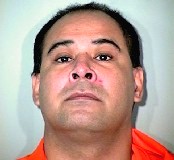
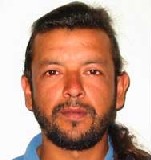
Samuel Villegas Lopez
Murderer Brian Kevin Rosenfeld
Murderer · USA · 1985
Brian Kevin Rosenfeld Brian Kevin Rosenfeld was sentenced to three concurrent l…
23 victims
Brian Kevin Rosenfeld
Murderer · USA · 1985
Brian Kevin Rosenfeld Brian Kevin Rosenfeld was sentenced to three concurrent l…
23 victims
 Yahweh ben Yahweh
Murderer · USA · 1980
Yahweh ben Yahweh was born and legally named Hulon Mitchell Jr. (October 27, 19…
23 victims
Yahweh ben Yahweh
Murderer · USA · 1980
Yahweh ben Yahweh was born and legally named Hulon Mitchell Jr. (October 27, 19…
23 victims
 Russell Ellwood
Murderer · USA · 1991
Russell Ellwood was a former taxi driver. Authorities suspected him of killing…
20 victims
Russell Ellwood
Murderer · USA · 1991
Russell Ellwood was a former taxi driver. Authorities suspected him of killing…
20 victims
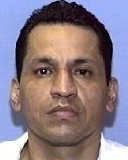 Jesse Joe Hernandez
Murderer · USA · 2001
Defendant: Jesse Joe Hernandez · Race: Hispanic · Gender: Male · Age: 47 · Educ…
1 victim
Jesse Joe Hernandez
Murderer · USA · 2001
Defendant: Jesse Joe Hernandez · Race: Hispanic · Gender: Male · Age: 47 · Educ…
1 victim
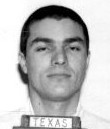 Victor Saldano
Murderer · USA · 1995
Victor Saldano, appellant. · In 1996, Victor Saldano was convicted of capital m…
1 victim
Victor Saldano
Murderer · USA · 1995
Victor Saldano, appellant. · In 1996, Victor Saldano was convicted of capital m…
1 victim
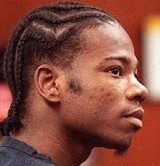 Donte Johnson
Mass murderer · USA · 1998
Donte Johnson was sentenced to death on May 3, 2005 after a jury returned a dea…
4 victims
Donte Johnson
Mass murderer · USA · 1998
Donte Johnson was sentenced to death on May 3, 2005 after a jury returned a dea…
4 victims
 Steven Anthony Jones
Murderer · USA · 2004
Steven Anthony Jones was sentenced to death for killings connected to a robbery…
2 victims
Steven Anthony Jones
Murderer · USA · 2004
Steven Anthony Jones was sentenced to death for killings connected to a robbery…
2 victims
- Gender
- male
- Country
- USA
- Location
- Maricopa County, Arizona, USA
- Date of birth
- J une 30, 1962
- Age at first offence
- 24
- Characteristics
- rape
- Victim profile
- Estafana Holmes, 59
- Method of murder
- St abbing with knife
- Date(s) of murder
- October 29, 1986
- Years active
- 1986
- Date of arrest
- —
- Status
-
Executed
Sentenced to death on June 25, 1987; executed by lethal injection in Arizona on June 27, 2012
Case record: Samuel Villegas Lopez
Other details
Samuel Villegas Lopez was convicted in Arizona of first-degree murder, sexual assault, kidnapping, and burglary relating to the rape and killing of 59-year-old Estefana Holmes.
Estefana Holmes lived alone. Police found her half-naked body in her home. Her body had three major stab wounds to her head, one on her face, and 23 stab wounds in her left breast and upper chest. She also had three stab wounds in her lower abdomen and her throat had been slit. She had been blindfolded and gagged with her own clothing, including pajama bottoms tied around her eyes and a lace scarf crammed tightly into her mouth. Blood was splattered on walls in the kitchen, bathroom, and bedroom. Semen found on her body matched Lopez after he was arrested in a separate rape less than a week later.
Police responded to a “check welfare” call at the apartment residence of Estefana Holmes. Officers noticed a broken window next to the front door. Entering the apartment, they discovered the partially nude body of the victim, with overturned and broken furnishings indicating a tremendous struggle prior to the murder. An autopsy revealed her throat had been slashed, and she had been stabbed twenty-three times in her left breast and upper chest and three times in her lower abdomen. Seminal fluid was found in both her vagina and anus.
Lopez was seen in the neighborhood the night of the crime and was also seen in the early morning after the murder walking down the street, soaking wet, as if he had recently washed himself. Several days after the murder, police questioned Lopez about an unrelated matter when he mentioned something about a woman who had been stabbed and had her throat slashed. Information about the victim’s throat being cut had not been released to the public. A check of Lopez’s fingerprints matched those found at the victim’s apartment, and his body fluids matched those obtained from the victim’s body.
In later proceedings, Lopez’s final meal was one red and one green chili burrito, Spanish rice, jalapeno, avocado, cottage cheese, french fries, vanilla ice cream, and pineapple.
In habeas corpus proceedings, Lopez challenged the denial of habeas relief from his death sentence. He also argued, in violation of the Due Process Clause, that the government suppressed exculpatory evidence regarding an unrelated sexual assault arrest. A handwritten note about that unrelated sexual assault was discovered later in a police file. The note’s author was unknown, and it stated there were “no findings by a physician indicating sexual assault”; that the victim’s claims “were not corroborated by [the] physician’s report”; and that the victim had a previous consensual sexual relationship with Lopez. Lopez was never charged with a crime as a result of that incident. The note was not made available to Lopez until his habeas claims were pending in federal court.
Lopez was also described as having childhood history presented as part of mitigation arguments in clemency-related proceedings, including poverty, neglect, abuse, and periods of homelessness, and a reported history of addicted sniffing paint. Lopez wrote in an affidavit provided to the board that he had “no memory of the crime because he had been spending so much time sniffing paint that he would forget entire days.”
ClarkProsecutor.org information listed the Arizona Department of Corrections inmate details as: “SAMUEL V. LOPEZ DOC#: 043833 DOB: 06/30/1962 Defendant: Hispanic Victim: Hispanic.”
Timeline
- October 29, 1986 — Phoenix police responded to a “check welfare” call at Estefana Holmes’s apartment; officers found her partially nude body and evidence of a prolonged struggle.
- April 16, 1987 — Start of trial.
- April 27, 1987 — Verdict.
- June 25, 1987 — Sentencing (death sentence for murder).
- August 3, 1990 — Resentencing.
- June 27, 2012 — Executed by lethal injection in Arizona.
- June 27, 2012 — U.S. Supreme Court denied death-row inmate Samuel Lopez’s final appeal, clearing the way for execution at 10 a.m. local time and he was pronounced dead at 10:37 a.m., state officials said.
- June 25, 1987 — Sentence of death was imposed on the murder count.
- May 15 — Lopez won a temporary reprieve after successfully arguing that he would not get a fair hearing from the state Board of Executive Clemency because some members had not completed their training.
- 2011 — Lopez v. Ryan resulted in habeas consideration in the U.S. Court of Appeals for the Ninth Circuit.
The offence
On October 29, 1986, Lopez broke into the apartment of 59-year-old Estefana Holmes. Lopez raped, beat, and stabbed Ms. Holmes. Her body was found nude from the waist down, with her pajama bottoms tied around her eyes. A lace scarf was crammed tightly into her mouth, and her throat had been slit. She was stabbed 23 times in the left breast and upper chest, three times in her lower abdomen, and her throat was cut.
The medical evidence included semen found on her body, which matched Lopez. Authorities found her body with her eyes blindfolded with her pajama pants and her mouth stuffed tightly with a lace scarf. She was naked from the waist down and had been stabbed 23 times in the chest and three times in the abdomen. Death was caused by the slit throat and multiple stab wounds to the chest.
Investigation
Phoenix police responded to a “check welfare” call based on a concern from the victim’s fellow employees that she inexplicably failed to arrive at work. Entering the apartment, they discovered the partially nude body of the victim, with overturned and broken furnishings in a blood-splattered apartment indicating a tremendous struggle. A scarf had been stuffed into the victim’s mouth, and she had been blindfolded with her pajama pants.
An autopsy revealed that her throat had been slashed, and she had been stabbed twenty-three times in her left breast and upper chest and three times in her lower abdomen.
Several days after the murder, police questioned Lopez about an unrelated matter when he mentioned something about a woman who had been stabbed and whose throat had been slashed. The information that the victim’s throat had been slashed had never been released to the public.
Trial
A jury convicted Lopez of first degree murder, sexual assault, kidnapping, and burglary. The trial court imposed the death penalty for the murder.
The case included issues on appeal related to jury instructions and sufficiency of evidence for sexual assault counts. Sexual assault counts involved theories of vaginal penetration and anal penetration, and the jury convicted on one count of sexual assault and acquitted on the other after deliberations and a jury inquiry regarding those theories. The jury was instructed on intoxication’s legal effect, and the trial court denied a request for a second degree murder instruction.
The state filed an allegation of dangerousness pursuant to A.R.S. § 13–604 alleging that the crimes were committed with a deadly weapon or dangerous instrument, to wit: a knife or knife-type instrument. The jury instruction defined a dangerous offense as involving “use of a deadly weapon or dangerous instrument, or the intentional or knowing infliction of serious bodily injury upon another.”
Sentencing
At the first sentencing, after a sentencing hearing, the trial judge found two statutory aggravating circumstances:
- the defendant had a prior conviction for resisting arrest, which was considered a death-qualifying conviction under A.R.S. § 13–703(F)(2);
- the murder was committed in an especially heinous, cruel or depraved manner under A.R.S. § 13–703(F)(6).
For mitigation, Lopez argued that his capacity to appreciate the wrongfulness of his conduct or to conform his conduct to the requirements of law was significantly impaired. The trial court found he did not prove this mitigating factor by a preponderance of the evidence, found no other mitigation, and sentenced Lopez to death for the murder and to aggravated, consecutive terms of twenty-one years for each of the other convictions.
At resentencing (August 3, 1990), the trial court again sentenced Lopez to death. The sentencing again found the murder was especially cruel, heinous, and depraved and that there were no mitigating factors sufficiently substantial to call for leniency.
The trial judge’s findings at the second sentencing included the following text:
- The Defendant did commit the offense in an especially heinous and depraved manner.
The Defendant's sexual assault of the victim, whether it occurred before or after death, the securing of the pajama bottoms about her eyes, the cramming of a scarf in the victim's mouth, all constitute evidence of the Defendant's heinous and depraved mind.
At the resentencing, additional evidence was submitted. On the issue of whether the murder was especially cruel, heinous, or depraved, the defense introduced testimony of Dr. Phillip Keen, a Yavapai County medical examiner. On the issue of intoxication, the defense submitted the videotaped deposition of Dr. Otto Bendheim, a psychiatrist, and the taped pretrial statements of two witnesses who had seen the defendant on the night of the murder. Dr. Robert Dean, a psychiatrist, testified for the state on the intoxication issue and some arrest records were received in explanation of his opinion testimony.
On the issue of mitigation by reason of defendant’s in-custody behavior, the court received prison records and the testimony of Deputy Sheriff Rick Bailey.
On the intoxication mitigation arguments, defendant’s counsel asserted different theories including statutory mitigation under A.R.S. § 13-703(G)(1) and pathological intoxication. The trial court concluded the evidence did not rise to any level of medical certainty and found the defendant failed to meet his burden of proof of establishing pathological intoxication as a mitigating factor by a preponderance of the evidence. The trial court also found defendant’s in-custody behavior was not mitigating.
Appeals
Lopez’s direct appeals and later habeas petition included review by the Arizona Supreme Court and the U.S.
In State v. Lopez, 163 Ariz. 108, 786 P.2d 959 (Ariz. 1990), the Arizona Supreme Court affirmed the convictions but remanded for resentencing on the murder count after setting aside one statutory aggravating circumstance. The court held that defendant’s prior conviction for resisting arrest could not be used as an aggravating circumstance under A.R.S. § 13–703(F)(2). The court also upheld other aspects of the case, including jury instructions and findings on cruelty, and rejected challenges relating to Willits instructions and dangerousness instruction.
In State v. Lopez, 175 Ariz. 407, 857 P.2d 1261 (Ariz. 1993), the Arizona Supreme Court affirmed the death sentence after resentencing. The court held evidence sustained findings that the homicide was cruel, heinous, and depraved; evidence supported rejection of intoxication as a mitigating factor; and defendant’s conduct during incarceration was not a mitigating factor sufficient to relieve him from the death penalty.
In Lopez v. Ryan, 630 F.3d 1198 (9th Cir. 2011), the U.S. Court of Appeals for the Ninth Circuit affirmed the district court’s denial of habeas relief. The court held that Lopez had not been denied individualized sentencing determination; had not been diligent in state post-conviction proceedings in developing his ineffective assistance claim regarding pathological intoxication; had not been prejudiced by counsel’s alleged ineffective assistance by not providing expert with eyewitness testimony; and that the handwritten note about the unrelated sexual assault was not material under Brady.
Outcome
Lopez was sentenced to death and his conviction and death sentence were affirmed in direct appeals and upheld through federal habeas proceedings. His execution proceeded after the U.S. Supreme Court denied his final appeal and after a denial by the clemency board and other late-stage efforts to block execution.
The sentencing date was June 25, 1987. Lopez was executed by lethal injection in Arizona on June 27, 2012.
The Reuters report described Lopez’s execution timing as beginning at 10:08 a.m. local time and he being pronounced dead at 10:37 a.m. local time. The article also stated that Lopez had no last words and listed his final meal as: one red and one green chili burrito, Spanish rice, jalapeno, avocado, cottage cheese, french fries, vanilla ice cream and pineapple.
The Arizona Attorney General Tom Horne stated:
“Almost 26 years later, justice has been served for the family of Essie Holmes.”
Horne also stated:
“The judge who sentenced Lopez to death found that the crime was especially heinous, cruel and depraved, and among the worst he had ever seen,”
and:
“Now that Samuel Villegas Lopez has paid the penalty for his terrible crime, it is my hope that his victims and their families will find some peace that justice has been carried out,”
The sister quote included in clemency-related narrative was:
“Let me ask you, Mr. Lopez, did our sister plead for her life as you stabbed her two dozen times?”
“Did she beg you not to rape her? Did she plead with you to spare her life as you almost decapitated her? Did she?”
and: “Nothing will bring her back, but you should pay for it,”
Aftermath
Lopez’s execution was described as the first in which witnesses would watch prison officials inject the lethal drug via closed-circuit TV. The Reuters report stated that attorneys for inmates in prior executions condemned the practice of inserting catheters into the prisoners’ groins and that officials said it was difficult to find suitable veins in the arms and legs. It also stated that in earlier executions witnesses only saw the prisoner after the catheters had been inserted.

Spotted an error, or have more information about this case?