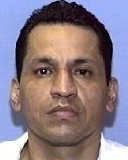
Jesse Joe Hernandez
Murderer Russell Ellwood
Murderer · USA · 1991
Russell Ellwood was a former taxi driver. Authorities suspected him of killing…
20 victims
Russell Ellwood
Murderer · USA · 1991
Russell Ellwood was a former taxi driver. Authorities suspected him of killing…
20 victims
 Robert Martines Perez
Murderer · USA · 1994
Name: Robert Martines Perez · Other name used in proceedings: Robert Martinez P…
15 victims
Robert Martines Perez
Murderer · USA · 1994
Name: Robert Martines Perez · Other name used in proceedings: Robert Martinez P…
15 victims
 Billy Frank Vickers
Murderer · USA · 1993
Billy Frank Vickers Vickers was executed by lethal injection in Texas on Januar…
14 victims
Billy Frank Vickers
Murderer · USA · 1993
Billy Frank Vickers Vickers was executed by lethal injection in Texas on Januar…
14 victims
 Junko Ogata
Serial killer · Japan · 1996
Junko Ogata (緒方 純子 Ogata Junko, born February 25, 1962) was a Japanese woman wh…
7 victims
Junko Ogata
Serial killer · Japan · 1996
Junko Ogata (緒方 純子 Ogata Junko, born February 25, 1962) was a Japanese woman wh…
7 victims
 Alexander Komin | Russia
Serial killer · Russia · 1995
Alexander Komin was an electrician from Vyatskiye Polyany, Russia. He used his…
4 victims
Alexander Komin | Russia
Serial killer · Russia · 1995
Alexander Komin was an electrician from Vyatskiye Polyany, Russia. He used his…
4 victims
 Johann Otto Hoch
Serial killer · USA · 1890
Johann Otto Hoch (1855 - 1906) was the most famous and last-used alias of a Ger…
15 victims
Johann Otto Hoch
Serial killer · USA · 1890
Johann Otto Hoch (1855 - 1906) was the most famous and last-used alias of a Ger…
15 victims
 Michael Apelt
Murderer · USA · 1988
Michael Apelt and his brother, Rudi, came to Arizona from West Germany and bega…
1 victim
Michael Apelt
Murderer · USA · 1988
Michael Apelt and his brother, Rudi, came to Arizona from West Germany and bega…
1 victim
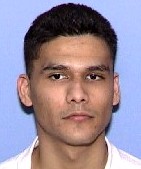 Manuel Fernando Garza
Murderer · USA · 2001
Manuel Fernando Garza, TDCJ Number 999434, was born on 08/08/1980. He was liste…
1 victim
Manuel Fernando Garza
Murderer · USA · 2001
Manuel Fernando Garza, TDCJ Number 999434, was born on 08/08/1980. He was liste…
1 victim
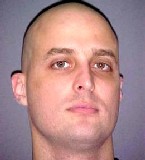 Michael Edward Hooper
Murderer · USA · 1993
Michael Edward Hooper was an Oklahoma State Penitentiary death row inmate. He w…
3 victims
Michael Edward Hooper
Murderer · USA · 1993
Michael Edward Hooper was an Oklahoma State Penitentiary death row inmate. He w…
3 victims
- Gender
- male
- Country
- USA
- Location
- Dallas County, Texas, USA
- Date of birth
- J une 8, 1964
- Age at first offence
- 37
- Characteristics
- child abuse, babysitter, rape, alcohol
- Victim profile
- Karlos Leverett, 11 months old
- Method of murder
- Struck in the head with a flashlight
- Date(s) of murder
- April 11, 2001
- Years active
- 2001
- Date of arrest
- Same day
- Status
-
Executed
Sentenced to death on August 8, 2002. Executed by lethal injection on March 28, 2012
Case identification
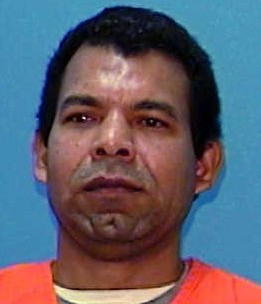
- Defendant: Jesse Joe Hernandez
- Race: Hispanic
- Gender: Male
- Age: 47
- Education: 10 years
- Occupation: laborer
- Hair color: Black
- Eye color: Brown
- Height: 5' 3"
- Weight: 145
- Native county: Dallas
- County of offense: Dallas
- Date of offense: 04/11/2001
Background
Hernandez was convicted in the trial court, Dallas County, of the capital murder of a child under the age of six and was sentenced to death. Hernandez had a prior prison record: TDCJ-ID #705762, on a 3 year sentence from Dallas County for 1 count each of indecency with a child and possession of a controlled substance cocaine.
- 07/11/1997 returned from mandatory supervision
- 07/14/1998 released on mandatory supervision in absentia
- 12/11/1998 received mandatory supervision discharge
At the time of the assaults, Misty Leverett and her children, Karlos (10 months old) and Melodi (4), were living with Hernandez, his wife Mary Rojas, their young son Joshua, and Gilbert Gomez. The children had been left in the care of Hernandez when the incident took place.
The offence
On 04/11/2001, in Dallas, Texas, Hernandez struck an 11 month old Hispanic male and his sister in the head with a flashlight.
- The sister survived her injuries.
- The 11 month old did not. Karlos Borja was a 10-month-old boy who was being babysat by Hernandez. Karlos died a week after the beating. Karlos suffered a skull fracture and bruises on his forehead, temple, abdomen and genitalia. Melodi suffered injuries to her face and head, with police describing “red splotches,” and bruises and swelling were seen when she was taken for treatment.
Hernandez was convicted of murder for hitting Karlos and his sister with a flashlight.
Investigation
When police began investigating the assault on Karlos, they went to Hernandez’s home where Hernandez and his wife had been babysitting Misty Leverett’s ten-month-old son, Karlos, and Karlos’ four-year-old sister Melodi. Police discovered that Hernandez had some outstanding warrants, arrested him, and transported him to the police station.
Detective Warren Breedlove spoke with Hernandez at the police station to obtain general information and inquire about the injuries to the children. Hernandez gave an affidavit denying any knowledge of what happened to Karlos and Melodi and was later transported to the county jail.
After police spoke with Karlos’ doctor and with Melodi, Hernandez became a suspect. Breedlove met with Hernandez, read him his Miranda warnings, and began an interview. Over approximately an hour and a half, Hernandez repeatedly admitted and then denied striking the children. Breedlove asked Hernandez about a flashlight found at the scene and Hernandez admitted he may have hit Karlos with the flashlight.
Detective Daniel Lesher took over the interview after Hernandez became upset with Breedlove. Lesher asked Hernandez to make a written, voluntary statement after speaking with his wife and using the restroom.
In Hernandez’s statement, he admitted hitting Karlos and Melodi because they cried for no reason, because he was upset over recently losing his grandmother, and because he had a bad day with his wife. He added that he was sorry for hitting them. Hernandez’s written statement included that he “just exploded and hit them with the back of my hand not realizing I was hurting them.” There was nothing in Hernandez’s written statement about hitting Karlos with a flashlight.
After police began investigating the assault on Karlos, police found Hernandez’s DNA in Karlos’ blood on a pillowcase and on the child’s clothing.
Arrest
After police were notified, they investigated the assault on Karlos and went to Hernandez’s home. Police discovered outstanding warrants, arrested Hernandez, and transported him to the police station.
Trial
Charges and conviction
In July of 2001, Hernandez was convicted of the capital murder of Karlos Borja, a child under the age of six. Tex. Pen. Code § 19.03(a)(8).
Pursuant to the jury’s answers to the special issues set forth in Texas Code of Criminal Procedure Article 37.071, §§ 2(b) and 2(e), the trial judge sentenced Hernandez to death. Art. 37.071 § 2(g). Direct appeal was automatic. Art. 37.071 § 2(h).
Sentencing
Hernandez was sentenced to death by lethal injection. He was sentenced to death on August 8, 2002.
Evidence and admissibility rulings
The trial court admitted Hernandez’s custodial statement that he might have used a flashlight, holding it admissible under the rule of optional completeness.
The trial court admitted photographs of injuries sustained by Melodi as same transaction contextual evidence. The trial court admitted photographs of Karlos, including gruesome autopsy photographs. The trial court also rejected a request to include an instruction on parole law, holding parole eligibility was not a proper consideration for the jury in a capital punishment hearing. The trial court did give the statutory instruction regarding parole, Art. 37.071 § 2(e)(b). The court rejected the mitigation special issue argument that the issue omitted a burden of proof.
The Court of Criminal Appeals affirmed the judgment of the trial court.
Prosecutor argument about testimony
The prosecutor argued to the jury:
“Look, we haven't come in here and made promises that we can't back up. We presented evidence to you that shows him guilty. We haven't come in with innuendo. You know, where is this proof about him striking something over in the jail causing him to swell his hand? Where is that proof there? You haven't heard it from any witness. We're not the ones coming in here making these promises we can't back up.”
The appellate issue stated Hernandez claimed the prosecutor’s argument was an improper comment on Hernandez’s failure to testify. Hernandez did not object at trial, and the Court of Criminal Appeals held the claim was forfeited.
Appeals
Texas Court of Criminal Appeals (direct appeal)
Hernandez appealed and raised fourteen points of error. The Court of Criminal Appeals (Cochran, J.) held:
- Hernandez’s custodial statement that he might have struck Karlos with a flashlight was admissible under the rule of optional completeness.
- Photographs of injuries sustained by Melodi were admissible as same transaction contextual evidence.
- Photographs of Karlos, including gruesome autopsy photographs, were admissible.
- Hernandez was not entitled to a jury instruction on parole law.
- A mitigation special issue that omitted burden of proof did not violate due process.
- The trial court was not required to define “probability,” “criminal acts of violence,” or “continuing threat to society” in the jury charge.
- The death penalty scheme’s “12-10 rule” did not violate due process.
MEYERS, J., concurred in point of error number six and otherwise joined the opinion of the court.
Federal habeas proceedings
Hernandez v. Thaler, 440 Fed. Appx. 409 (5th Cir. 2011) (Habeas).
- Hernandez sought federal habeas relief after conviction in state court of capital murder.
- The United States District Court for the Northern District of Texas (Jorge A. Solis, J.) denied petition in 2008 WL 2097161, and Hernandez requested a certificate of appealability (COA).
The Court of Appeals (Priscilla R. Owen, Circuit Judge) held:
- Hernandez’s failure to comply with Texas’s contemporaneous objection rule was an adequate and independent state procedural ground for the state court’s decision not to address his claim that the prosecutor violated his Fifth Amendment rights by commenting on his failure to testify.
- The prosecutor did not comment on Hernandez’s failure to testify when, during rebuttal closing argument, the prosecutor stated there was no proof that Hernandez injured his hand by pounding the walls of his jail cell, as claimed by the defense.
The motion was denied.
Outcome
Hernandez was executed by lethal injection after being sentenced to death.
- Sentenced to death: August 8, 2002
- Executed: March 28, 2012 Hernandez was pronounced dead at 6:18 p.m., 10 minutes after the lethal dose was administered.
Final statement and conduct at execution
Hernandez made a final statement:
“God bless everyone; continue to walk with God,”
Jason Clark, a spokesman for the Texas Department of Criminal Justice, said Hernandez also yelled “Go Cowboys.”
Another report quoted Hernandez as saying:
“Tell my son I love him very much. God bless everybody,”
“Continue to walk with God. Go Cowboys!”
He also addressed those gathered:
“Thank you. I can feel it. I taste it. It is not bad,”
Another account quoted Hernandez:
“Love y'all, man,”
“… Thank you. I can feel it, taste it. It's not bad.”
As the drugs took effect, Hernandez repeated his appreciation for those who gathered to witness the execution and took about 10 deep breaths before being no longer moving.
Aftermath
After Karlos died, Hernandez’s appeal included claims about last-ditch appeals and asserted issues relating to trial and post-conviction procedure. In trying to stop the execution, Hernandez’s attorneys argued unsuccessfully that trial lawyers were deficient because they did not pursue evidence that the boy was prematurely removed from life support and had toxic levels of the drug pentobarbital in his blood. They also argued an initial appeals lawyer did not investigate beyond the trial record and that this failure cost Hernandez his lone opportunity to raise substantive legal claims following his conviction.
The Texas attorney general’s office opposed any delay and questioned whether the high court even had jurisdiction because constitutional claims were not raised earlier in state courts.
Other details
Misty Leverett’s account included that she went to work and left the children in the care of Hernandez and Rojas. Mary Rojas testified that after Leverett left for work around noon, she stayed home with the children while Hernandez and Gomez left to run errands. Rojas testified that when Hernandez and Gomez returned about two hours later, Rojas left for her sister-in-law’s house and was gone approximately thirty to forty-five minutes. Rojas testified that when she got home, she heard Hernandez screaming at Joshua, picked him up, and took him to the room she shared with Hernandez. Rojas testified that she asked where Karlos and Melodi were and Hernandez replied that they were sleeping in the next room. Rojas testified that she later heard Hernandez preparing a bottle and told Hernandez she was going to go into the room where Karlos and Melodi were sleeping. Rojas testified that Hernandez instructed her not to enter the room for fear she would wake them up. Despite having seen blood stains on Hernandez’s shirt, Rojas waited until Leverett got home from work to check on the children.
Leverett testified that when she arrived home, she went into the dark room she shared with the children and found Melodi complaining that her head hurt. Rojas and Leverett took Melodi out into the kitchen and saw her head swollen with “red splotches.” Leverett decided to take Melodi to the hospital. After they left, Rojas checked on Karlos and noticed his lips were swollen, determined Karlos was badly hurt, and took Karlos and Joshua down the street to her sister-in-law’s house to call an ambulance. Leverett testified that when she returned home, Hernandez was alone and he told her that Karlos was at his sister’s house. Leverett asked Hernandez to take her there but he refused. Moments later, police arrived and informed Leverett that Karlos had been rushed to Children’s Hospital by ambulance where he later died.
The hospital workers asked Leverett if she had any other children, and after she replied that she did, they instructed her to return home and get her son immediately.
Court records showed Hernandez and his wife of six years had been living for about three days with the two children and their 22-year-old mother in a Dallas house that had no running water. Their plan was to watch the children while the mother was working as a waitress. On the night of April 11, 2001, Hernandez’s wife left to run errands. When she returned he told her the kids were sleeping and not to disturb them. Hours later, after their mother returned from work, the girl complained her head was hurting and was taken to a hospital. While the mother and girl were gone, Hernandez’s wife discovered Karlos’s injuries and called paramedics. Police were then notified.
The sister drew stick figures for police to help describe her attack. Hernandez denied beating the children but told a detective he may have hit the boy with a flashlight. He did not include the flashlight reference in a written confession where he said he “just exploded” and struck them with the back of his hand. In the written statement, Hernandez wrote:
“They were being very bad by crying a lot for nothing,”
“I just exploded and hit them with the back of (his) hand.”
The slain boy’s mother subsequently lost legal custody of her surviving daughter to the girl’s grandmother.
Spotted an error, or have more information about this case?