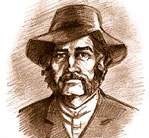
John Lynch
Serial killer John Justin Bunting
Serial killer · Australia · 1992
John Justin Bunting (born 4 September 1966 in Inala, Queensland) was an Austral…
11 victims
John Justin Bunting
Serial killer · Australia · 1992
John Justin Bunting (born 4 September 1966 in Inala, Queensland) was an Austral…
11 victims
 Robert Joe Wagner
Serial killer · Australia · 1992
Robert Joe Wagner (born 28 November 1971 in Parramatta, New South Wales) was an…
10 victims
Robert Joe Wagner
Serial killer · Australia · 1992
Robert Joe Wagner (born 28 November 1971 in Parramatta, New South Wales) was an…
10 victims
 Eric Edgar Cooke
Serial killer · Australia · 1959
Eric Edgar Cooke (25 February 1931 – 26 October 1964) was an Australian serial…
8 victims
Eric Edgar Cooke
Serial killer · Australia · 1959
Eric Edgar Cooke (25 February 1931 – 26 October 1964) was an Australian serial…
8 victims
 Christopher Worrell
Serial killer · Australia · 1976
Christopher Worrell was described as a rapist and was later killed in a car acc…
7 victims
Christopher Worrell
Serial killer · Australia · 1976
Christopher Worrell was described as a rapist and was later killed in a car acc…
7 victims
 Ivan Milat
Serial killer · Australia · 1989
Ivan Milat was convicted of seven murders and received multiple life sentences.…
7 victims
Ivan Milat
Serial killer · Australia · 1989
Ivan Milat was convicted of seven murders and received multiple life sentences.…
7 victims
 James William Miller
Serial killer · Australia · 1976
James William Miller was convicted of six counts of murder in the Truro murders…
7 victims
James William Miller
Serial killer · Australia · 1976
James William Miller was convicted of six counts of murder in the Truro murders…
7 victims
 Giancarlo Giudice
—
Defendant: Giancarlo Giudice · Victim profile: Prostitutas italianas (incluyend…
Giancarlo Giudice
—
Defendant: Giancarlo Giudice · Victim profile: Prostitutas italianas (incluyend…
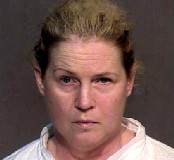 Carol Hatley
Murderer · USA · 2012
Carol Hatley was sentenced to 22 years in prison for the murder of her mother,…
1 victim
Carol Hatley
Murderer · USA · 2012
Carol Hatley was sentenced to 22 years in prison for the murder of her mother,…
1 victim
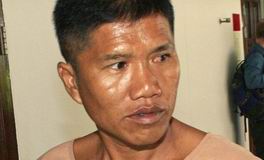 Uthai Dechawiwat
Murderer · Thailand · 2008
Uthai Dechawiwat — Thai police officer and former sergeant; defendant. · Leo De…
2 victims
Uthai Dechawiwat
Murderer · Thailand · 2008
Uthai Dechawiwat — Thai police officer and former sergeant; defendant. · Leo De…
2 victims
 Yudenia Rodriguez
Murderer · USA · 2013
Yudenia Rodriguez, the accused. · Sonia Santiesteban, 65, Rodriguez’s mother an…
1 victim
Yudenia Rodriguez
Murderer · USA · 2013
Yudenia Rodriguez, the accused. · Sonia Santiesteban, 65, Rodriguez’s mother an…
1 victim
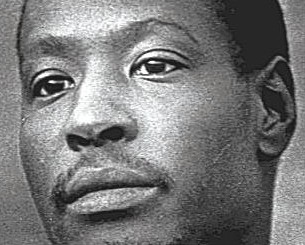 Coleman Gray
Murderer · USA · 1995
Coleman Gray was put to death by lethal injection in Virginia on February 26, 1…
1 victim
Coleman Gray
Murderer · USA · 1995
Coleman Gray was put to death by lethal injection in Virginia on February 26, 1…
1 victim
- Gender
- male
- Country
- Australia
- Location
- Berrima, New South Wales, Australia
- Date of birth
- 1813
- Age at first offence
- 22
- Characteristics
- robbery, rape, arson
- Victim profile
- Thomas Smyth; William Frazer (son & father); a young black boy (maybe 'Billy') and Edmund Ireland; John and Bridget Mulligan and her children John and Mary MacNamara and Kernes Ladrigan
- Method of murder
- Bashed to death with a heavy blunt instrument
- Date(s) of murder
- 1835 - 1841
- Years active
- 1835–1841
- Date of arrest
- February 21, 1841
- Status
-
Executed
Executed by hanging at Berrima Jail on April 22, 1842
Background
John Lynch murdered multiple people in the Berrima district in New South Wales, Australia.
The offence
On the morning of February 19, 1841, a drover, Hugh Tinney, stopped near the Ironstone Bridge just outside Berrima and noticed a dingo rummaging around a pile of brush and trying to get at whatever was concealed beneath. On closer inspection, Tinney found the body of a man whose skull had been pulverised at the back, indicating he had been bashed to death with a heavy blunt instrument. The man was lying on his back with a smile on his face, indicating he had been in good humor when attacked from behind and had no idea what hit him.
John Lynch was identified through the investigation as the person implicated in these killings and in murder-disappearances of at least eight other people.
Lynch later confessed to multiple murders, including the murder of:
- Kearns Landregan, whom Lynch killed with a tomahawk after driving him to the Ironside Bridge and camping for the night, with Lynch taking £40 from Landregan’s pockets.
- Ireland, a man whom Lynch killed with a tomahawk, after plotting to murder him and kill a black (aboriginal) boy who had been traveling with Ireland.
- A black (aboriginal) boy, whom Lynch killed by smashing the back of the boy’s head with a tomahawk as the boy walked ahead in the scrub and well away from the camp.
- A father and son named Frazer, whom Lynch killed at Cordeaux Flat by hitting each with a tomahawk.
- Mr. and Mrs. Mulligan, whom Lynch killed with an axe.
- Johnny, the Mulligans’ young son, whom Lynch killed with a single blow from his axe to the back of his skull.
- The Mulligans’ 14-year-old daughter, whom Lynch repeatedly raped and then struck with the axe, causing her death.
In Lynch’s confession, after killing the Mulligans, Lynch assembled the Mulligan family’s bodies in the bush and set them alight atop a huge pyre, describing that “They burnt like bags of fat,” and stating that every personal item and all of the dead family’s clothing were burned.
Lynch also described taking possession of stolen teams and farm produce, and using deception to create confusion about the missing people and the status of the farm.
Investigation
Kearns Landregan’s body was discovered at the scene near Ironstone Bridge. Items found on the body led to identification of the deceased as the local farmhand Kearns Landregan.
Landregan was last seen in the company of a farmer named Dunleavy, when the pair had dinner two nights earlier at the Woolpack Inn at Nattai not far from where Landregan’s body was discovered.
The trail led to a nearby farm once owned by the Mulligan family but now owned by John Dunleavy, who had allegedly bought it from the Mulligans for £700, after the family of Mr. and Mrs. Mulligan and their teenage son and daughter had mysteriously packed up and left town without telling anyone.
The barmaid from the Woolpack Inn identified the mysterious farmer Dunleavy as a local whose real name was John Lynch.
Arrest
On February 21, 1841, John Lynch was charged with the murder of Kearns Landregan.
Trial
On March 21, 1842, John Lynch appeared before the Chief Justice of New South Wales, Sir James Dowling, at Berrima Court House. The jury deliberated for only an hour before finding him guilty of murder.
After the guilty verdict, the court heard that Lynch was also implicated in the murder-disappearances of at least eight other people.
Lynch maintained his innocence even in light of the evidence against him.
Sentencing
Sir James Dowling sentenced Lynch to death by hanging.
Before passing sentence, Justice Dowling said:
“John Lynch, the trade in blood which has so long marked your career is at last terminated, not by any sense of remorse, or the sating of any appetite for slaughter on your part, but by the energy of a few zealous spirits, roused into activity by the frightful picture of atrocity which the last tragic passage of your worthless life exhibits. “It is now credibly believed, if not actually ascertained, that no less than eight other individuals have fallen by your hands. How many more have been violently ushered into the next world remains undiscovered, save it in the dark pages of your memory. “By your own confession it is admitted that as late as 1835 justice was invoked on your head for a wilful murder committed in this immediate neighbourhood. Your unlucky escape on that occasion has, it would seem, whetted your tigrine relish for human gore but at length you have fallen into toils from which you cannot escape.”
When announcing sentence, the judge said:
“You are sentenced to be hanged by the neck until you are dead.”
Appeals
Part Two stated that Lynch steadfastly clung to his story that he was innocent, and only after every avenue of appeal was exhausted did he confess to his crimes.
Outcome
John Lynch was hanged at Berrima Jail on April 22, 1842.
In his confession, Lynch stated that he believed he had gone about his robbing and killing under the watchful, approving eye of God, and he said that only when there was no hope left did he lose his faith in the Lord.
On the eve of his execution, Lynch called a priest and police magistrates to his cell to witness his full confession.
Other details
John Lynch arrived in Australia in 1832 on the convict ship Dunregon Castle after being sentenced to deportation for stealing offences in County Cavan, Ireland, where he was born.
Lynch was described as a diminutive but solidly built man of just 5-foot-3 with a fair, rugged complexion and brown hair, and he was 19 when he arrived in Australia.
After working as a convict laborer at numerous farms, Lynch joined a renegade gang and became a bushranger, robbing and stealing throughout the countryside and selling his ill-gotten gain around the district.
In 1835, Lynch was charged with the murder of Tom Smith shortly after Smith had given evidence against Lynch’s gang. Lynch and two other bushrangers were tried for Smith’s murder; although Lynch admitted taking part in killing Smith, the jury chose not to believe him and Lynch was set free while the other two bushrangers were found guilty and hanged.
Lynch said that a dispute with Mulligan over the price of stolen items started him on his career as a multiple murderer. He described asking Mulligan for payment for some stolen goods, and Mulligan paying about a quarter of what Lynch was asking, which led to a bitter argument and Lynch storming off swearing revenge.
Lynch stole an eight-bullock team from a farm at nearby Oldbury where he had once worked for the owner, T. B. Humphrey, and he said:
“I’d broken them myself,” Lynch said in his confession. “I took them because I wanted to start out again honest. I intended taking the bullocks to Sydney and selling them.”
Lynch described meeting a cove named Ireland and falling in with him at Razorback Mountain, with Ireland traveling with a black (aboriginal) boy. Lynch stated:
“It seemed to me,” said Lynch in his confession, “that it would pay me better to kill Ireland and take possession of the dray and its load of saleable produce than to drive Mr. Humphrey’s bullocks to Sydney.”
Lynch said that, after consulting God, he continued. He stated that as the black boy walked ahead in the scrub and well away from the camp, Lynch crept up behind him and smashed the back of the boy’s head in with a tomahawk, and he said:
“All it needed to kill him,” Lynch said, “was just one tap with the tomahawk. He dropped like a log of wood.”
Lynch described telling Ireland that the boy had gone looking for the bullocks and they should eat without him, and when Ireland’s back was turned, Lynch cracked his head open with the tomahawk.
After dragging the bodies to a cleft between two rocks and covering them with brush and stones, Lynch set the bullocks and dray loose toward Berrima and took possession of Ireland’s team carrying the farm produce. Lynch stated he remained at the camp for two days and described that he was joined by Lagge and Lee, who ate, drank and sang well into the night and performed an Irish jig for him.
Lynch described the encounter with Thomas Cowper near Liverpool. Lynch said:
“I’m glad I’ve seen you. I was just wondering whether I’d knock into you. The fact is that your man Ireland was taken ill back there and begged me to take the load to Sydney for you. He said I’d probably meet you somewhere along the way.”
Lynch described employing the services of a drunk to sell the produce so he could not be incriminated later, and so he could stick to his story about Ireland being taken ill and that the produce had been stolen from the back of the dray while it was unattended.
Lynch said that, as he neared the George’s River, he saw Chief Constable McAlister of Campbelltown, and he said:
“As I neared the George’s River I saw Chief Constable McAlister of Campbelltown, and fearing he’d recognise me I turned into a cross track leading towards the Berrima Road,”
and:
“This close shave frightened the living daylights out of me and I decided that I would get rid of Cowper’s team at the first opportunity as it could only eventually get me into trouble.”
Lynch described meeting the Frazers and traveling with them to a campsite at the Bargo Brush, where two married couples were already camped. Lynch described hiding under the dray and a trooper riding into the camp, asking Frazer if he had seen the dray Lynch had stolen from Cowper. Lynch said:
“The trooper didn’t see me under the dray,” Lynch said, “and much to my surprise he rode off.”
Lynch then described setting his bullock team free at night and telling the Frazers in the morning:
“My team appears to have strayed,”
and:
“I’ll have to go home and fetch another one. Meanwhile I’d better hide the dray. Could you give me a hand.”
After killing young Frazer, Lynch said:
“When I told him he was looking for the other horse,” Lynch said, “he became agitated, not because he suspected I killed the boy, but because the horses had never strayed before.”
Lynch described killing elder Frazer with a blow and said:
“he hit him ‘a nice one on the back of the head and he dropped like a log of wood.’”
When he returned to the Mulligan farmhouse and spoke with Mrs. Mulligan, Lynch said:
“The £30 your husband owes me,” he replied.
Mrs. Mulligan asked what £30, and Lynch replied:
“You know very well what -- for the articles which I got from burglaries and highway robberies I did at the risk of my life and which your old man was supposed to be holding for me,” Lynch said.
Lynch said:
“There’s only £9 in the house,” Mrs Mulligan replied, giving Lynch the impression that she was fobbing him off until she could talk to her husband.
Lynch said:
“I was much discouraged by her putting me off but I didn’t show it. Being a fair man I decided to wait until her husband returned and give him the chance to pay me my money and if he refused then I would see to it that he would get to meet the Almighty.”
Lynch walked to the Black Horse Hotel at Berrima and bought rum.
After murdering Johnny and being confronted by Mrs. Mulligan, Lynch described his exchange and the urgency she insisted upon, stating:
“But if I do it will alert the police,” Lynch said as Mr. Mulligan appeared and asked what was going on.
Lynch described killing Mr. Mulligan and then killing Mrs. Mulligan after tripping her up, and he described going into the house and confronting the 14-year-old daughter. He quoted her fear response and his commands verbatim:
“I saw her standing behind a table holding a butcher’s knife,” Lynch confessed. “She was sobbing with fear and trembling violently. I hadn’t been prepared for this so I just stood there staring at her. Then I yelled ‘put that knife down’ but she didn’t move so I yelled again ‘put that knife down’. “She stiffened, her eyes bulging fearfully from their sockets, with a strange animal noise squealing from her tightly compressed mouth. The lobes of her nostrils were flared and she stood there impotent with terror. “’Put that knife down,’” I told her. “’I don’t want to kill you, but if I let you live you’ll only put me away.’” I then ordered her to get down on her knees and prey as she only had ten minutes to live.”
Lynch confessed he repeatedly raped the girl, and he described trying to comfort her before distracting her attention and striking her with the axe:
“I then brought her back out into the kitchen and tried to comfort her saying that life was full of trouble and that she’d be better off dead. Then I mercifully distracted her attention and as she turned away I struck her with the axe and she fell dead without a murmur,” he confessed.
Lynch described burning the bodies and other items, saying:
“They burnt like bags of fat,” he said.
Lynch described inserting an advertisement in the Sydney Gazette stating that Mrs. Mulligan had left the family home without her husband’s consent and that he, John Mulligan, wouldn’t be responsible for her debts. He also described writing to his creditors that he had sold the farm to John Dunleavy for £700 and that Dunleavy had taken responsibility for outstanding debts, and he described forging a deed of assignment stating that John Mulligan had signed over the farm and all its affects to John Dunleavy.
Lynch described his motivation for leaving clues in relation to the murder of Landregan, stating that he was convinced he was under the protection of a supreme being and beyond capture.
Lynch stated he had met Landregan on his way back from Sydney and offered him a job fencing on his farm. He said:
“After I heard that I was determined to get rid of him,” said Lynch, despite his own history of theft and armed robbery.
Lynch described dinner at the Woolpack Inn at which Lynch’s killing was witnessed by staff and numerous patrons, and he described setting up camp at the Ironside Bridge and killing Landregan with multiple blows to smash in the back of his skull after Landregan did not die with the first blow.
Spotted an error, or have more information about this case?