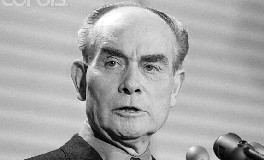
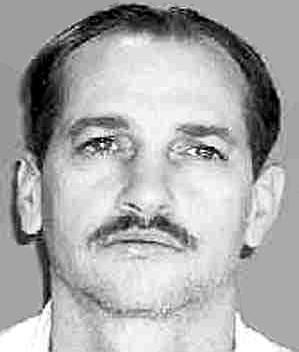
William Anthony Boyle
Murderer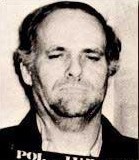 Ervil LeBaron
Murderer · USA · 1972
Ervil Morrell LeBaron (1925 to August 16, 1981) was the leader of a polygamous…
35 victims
Ervil LeBaron
Murderer · USA · 1972
Ervil Morrell LeBaron (1925 to August 16, 1981) was the leader of a polygamous…
35 victims
 Marvin Gray
Murderer · USA · 1975
Marvin Gray was convicted killer who claimed responsibility for 23 slayings and…
23 victims
Marvin Gray
Murderer · USA · 1975
Marvin Gray was convicted killer who claimed responsibility for 23 slayings and…
23 victims
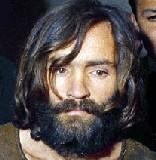 Charles Manson
Murderer · USA · 1969
Charles Milles Manson (born November 12, 1934) was an American criminal and mus…
9 victims
Charles Manson
Murderer · USA · 1969
Charles Milles Manson (born November 12, 1934) was an American criminal and mus…
9 victims
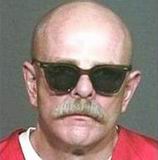 Barry Byron Mills
Murderer · USA · 1979
Barry Byron Mills (born 1948) was a leader of the Aryan Brotherhood (AB) prison…
8 victims
Barry Byron Mills
Murderer · USA · 1979
Barry Byron Mills (born 1948) was a leader of the Aryan Brotherhood (AB) prison…
8 victims
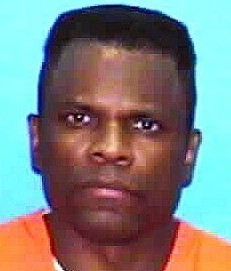 John Errol Ferguson
Murderer · USA · 1977
John Errol Ferguson was sentenced to death and was executed by lethal injection…
8 victims
John Errol Ferguson
Murderer · USA · 1977
John Errol Ferguson was sentenced to death and was executed by lethal injection…
8 victims
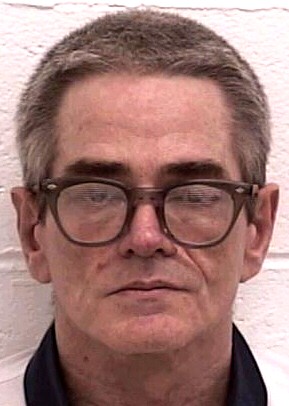 James Willie Brown
Murderer · USA · 1975
James Willie Brown was a white male who was scheduled for execution in Georgia…
1 victim
James Willie Brown
Murderer · USA · 1975
James Willie Brown was a white male who was scheduled for execution in Georgia…
1 victim
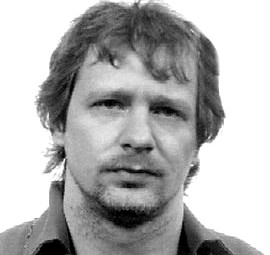 James Games
Murderer · USA · 1983
April 5, 1984 — Games was sentenced to death. · 06-15-99 — On remand, Marion Co…
1 victim
James Games
Murderer · USA · 1983
April 5, 1984 — Games was sentenced to death. · 06-15-99 — On remand, Marion Co…
1 victim
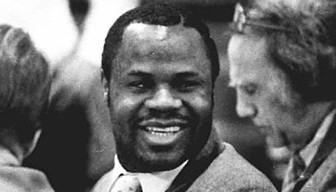 Larry Davis
Murderer · USA · 1986
Larry Davis (May 28, 1966 - February 20, 2008) changed his name to Adam Abdul-H…
6 victims
Larry Davis
Murderer · USA · 1986
Larry Davis (May 28, 1966 - February 20, 2008) changed his name to Adam Abdul-H…
6 victims
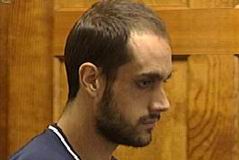 James Soares
Murderer · USA · 2008
James Soares Jr. was the son of James Soares Sr. and Marian Soares. In 2002, Ja…
2 victims
James Soares
Murderer · USA · 2008
James Soares Jr. was the son of James Soares Sr. and Marian Soares. In 2002, Ja…
2 victims
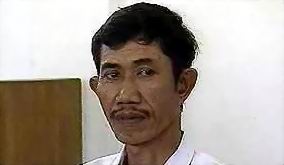 Ahmad Suradji
Serial killer · Indonesia · 1986
Ahmad Suradji (born 10 January 1949) was a serial killer in Indonesia. He was a…
42 victims
Ahmad Suradji
Serial killer · Indonesia · 1986
Ahmad Suradji (born 10 January 1949) was a serial killer in Indonesia. He was a…
42 victims
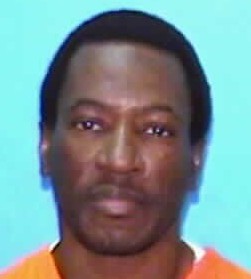 Ian Lightbourne
Murderer · USA · 1981
Ian Deco Lightbourne was convicted and sentenced to death for the first-degree…
1 victim
Ian Lightbourne
Murderer · USA · 1981
Ian Deco Lightbourne was convicted and sentenced to death for the first-degree…
1 victim
- Gender
- male
- Country
- USA
- Location
- Clarksville, Pennsylvania, USA
- Date of birth
- December 1, 1904
- Age at first offence
- 65
- Characteristics
- murder for hire, history of mental illness
- Victim profile
- The union dissident, Joseph A. Yablonski, 59; his wife, Margaret, 57, and their daughter, Charlotte, 25
- Method of murder
- Shooting
- Date(s) of murder
- December 31, 1969
- Years active
- 1969
- Date of arrest
- —
- Status
-
Died in custody
Sentenced to three consecutive terms of life in prison in April 1974; conviction overturned January 28, 1997; resentenced to three consecutive terms of life in prison in February 1978; died in prison on May 31, 1985
Case overview
William Anthony "Tony" Boyle (December 1, 1904 - May 31, 1985) was president of the United Mine Workers of America (UMWA) from 1963 to 1972. He was president of the United Mine Workers of America union and was described as autocratic and bullying, facing significant opposition from rank-and-file miners and UMWA leaders from the beginning of his administration.
Background
Boyle was born in a coal mining camp in Bald Butte, Montana, in 1904 to James and Catherine (Mallin). His father was a miner. The Boyle family was of Irish descent, and several generations of Boyles had worked as miners in England and Scotland. Boyle attended public schools in Montana and Idaho before graduating from high school. He went to work in the mines alongside his father. Shortly thereafter, Boyle's father died of tuberculosis in his arms.
Boyle married Ethel Williams in 1928, and they had a daughter, Antoinette. Boyle joined the United Mine Workers of America (UMWA) soon after going to work in the mines.
Boyle was appointed president of District 27 (which covers Montana) and served in that capacity until 1948. During World War II, Boyle served on several government wartime production boards, and on the Montana State Unemployment Compensation Commission. In 1948, UMWA president John L. Lewis named him as an assistant to the president of the Mine Workers, and he served until 1960.
Boyle acted as Lewis' chief trouble-shooter and the union's chief administrator. Lewis simultaneously appointed him director of UMWA District 50 and regional director of the Congress of Industrial Organizations (CIO) for four Western states.
Boyle was elected vice president of UMWA in 1960. Lewis retired in 1960, and 73-year-old Thomas Kennedy assumed leadership of the union. Kennedy had been vice president since 1947. Although Lewis favored Boyle as his successor, Kennedy was well-liked and well-known. Kennedy was in failing health, however, and Boyle took over many of the president's duties. In November 1962, Kennedy became too frail and ill to continue his duties, and Boyle was named acting-president. Kennedy died on January 19, 1963, and Boyle was elected president.
UMWA presidency and internal opposition
Boyle was autocratic and bullying as Lewis, but was not well-liked. From the beginning of his administration, Boyle faced significant opposition from rank-and-file miners and UMWA leaders.
Miners' attitudes about their union changed. Miners wanted greater democracy and more local autonomy for their local unions. There was a widespread belief that Boyle was more concerned with protecting mine owners' interests than those of his members. Grievances filed by the union often took months—sometimes years—to resolve, lending credence to critics' claim. Wildcat strikes occurred as local unions, despairing of UMWA assistance, sought to resolve local disputes with walkouts.
The offence
Yablonski challenge and murder
In 1969, Joseph "Jock" Yablonski challenged Boyle for the presidency of UMWA. Yablonski had been president of UMWA District 5 (an appointed position) until Boyle had removed him in 1965.
In an election widely seen as corrupt, Boyle beat Yablonski in the election held on December 9 by a margin of nearly two-to-one (80,577 to 46,073). Yablonski conceded the election, but on December 18, 1969, asked the United States Department of Labor (DOL) to investigate the election for fraud. He also initiated five lawsuits against UMWA in federal court.
On December 31, 1969, three hitmen shot Yablonski, his wife, Margaret, and his 25-year-old daughter, Charlotte, as they slept in the Yablonski home in Clarksville, Pennsylvania. The bodies were discovered on January 5, 1970, by Yablonski's son, Kenneth.
The killings had been ordered by Boyle. Boyle had demanded Yablonski's death on June 23, 1969, after a meeting with Yablonski at UMWA headquarters had degenerated into a screaming match.
In September 1969, UMWA executive council member Albert Pass received $20,000 from Boyle (who had embezzled the money from union funds) to hire assassins to kill Yablonski. Paul Gilly, an out-of-work house painter and son-in-law of a minor UMWA official, and two drifters, Aubran Martin and Claude Vealey, agreed to do the job.
The murder was postponed until after the election to avoid suspicion falling on Boyle. After three aborted attempts to murder Yablonski, the killers did their job. A report described that they cut the telephone wires and that the daughter was shot first, then the wife was shot while trying to hide under the bedclothes; the husband was reaching for his own gun when he was cut down by a deadly volley of five bullets.
Statements attributed in the prosecution account
Prosecuting Attorney Richard Sprague was described as telling the jury: "Why was Yablonski killed? To get rid of Yablonski's fighting spirit."
Former U.M.W. Official William Turn-blazer testified about a June 23, 1969 meeting with Boyle at U.M.W. headquarters in Washington. Turn-blazer recounted Boyle's statement: "We're in a fight. We've got to kill Yablonski. Take care of him."
Boyle was described as testifying in his own defense with the statement: "Did I have anything to do with the murder?" and later: "Absolutely not. It was a shock to me. I usually work a 14-hour day, but I went home early that day and was sick."
Boyle was also described as stating: "Jock Yablonski and I were very close friends," and: "The day after I heard of the murder I put up $50,000 in reward money for the apprehension of the killers."
Suzanne Richards, Boyle's executive assistant for 20 years, was described as saying that she proposed a reward—for $100,000—and prepared a press release. Richards then stated: "I gave it to Boyle, who said he'd think about it. Later, he said he was against any reward at all, but finally agreed to put up $50,000."
State Judge Francis Catania was described as telling the jury that under Pennsylvania law, if a defendant is found guilty of ordering a murder, he is as culpable as the actual triggermen.
The jury foreman was quoted as saying: "Guilty, in the first degree," and then "Guilty, in the first degree," again and once again, while leveling three counts of murder.
Investigation
After the killings, the FBI was described as checking fingerprints left at the scene and quickly arresting three men: Paul Gilly and Aubran Martin and Claude Vealey.
Richard A. Sprague, described as the first assistant district attorney in Philadelphia, was described as getting Vealey to confess and then winning convictions of Martin and Gilly.
It was described that Sprague got Gilly's wife to implicate her father, a minor U.M.W. official named Silous Huddleston. Huddleston was described as saying that the plot had been conceived in Washington, and that his boss in the scheme was Albert Pass, a member of the U.M.W.'s international executive board.
Turnblazer was described as being a good friend of Boyle, who had given him his job, and Sprague was described as having a hunch that Turnblazer was troubled and knew something. FBI Special Agent Henry Quinn was described as being instructed: "Take all the time in the world." Turnblazer later agreed to talk while a lie detector monitored his replies and described that it was incomplete until he was told the box showed his account was incomplete.
Turnblazer described a June 23, 1969 meeting in the U.M.W.'s national headquarters at which Yablonski and Boyle staged a shouting match that ended with each calling the other a crook. After Yablonski left, Turnblazer described that Boyle took Pass and Turnblazer aside and told them: "This guy is going to murder us." Turnblazer further described that Boyle said that Yablonski "ought to be killed or done away with."
Turnblazer described that three months later Pass returned from a trip to Washington to say that Boyle had confirmed the slaying contract and that the two had figured out a way of embezzling $20,000 of union funds to finance the killing.
DOL investigation and union election litigation
On January 8, 1970, Yablonski's attorney requested an immediate investigation of the 1969 election by DOL.
The Department of Labor had taken no action on Yablonski's complaints while he lived, but after his murder Labor Secretary George P. Shultz assigned 230 investigators to the UMWA investigation.
The Labor Management Reporting and Disclosure Act (LMRDA) of 1959 was described as regulating the internal affairs of labor unions by requiring regular secret-ballot elections for local union offices and providing for federal investigation of election fraud or impropriety. DOL was described as being authorized under the act to sue in federal court to have the election overturned.
Miners for Democracy (MFD) formed in April 1970 while the DOL investigation continued. Its members included most of the miners who belonged to the West Virginia Black Lung Association and many of Yablonski's supporters and campaign staff. Chief organizers of MFD were described as including Yablonski's sons, Joseph (known as "Chip") and Ken, Trbovich, and others.
DOL filed suit in federal court in 1971 to overturn the 1969 UMWA election. On May 1, 1972, Judge William Bryant threw out the results of the 1969 UMWA international union elections. Bryant scheduled a new election to be held over the first eight days of December 1972. Bryant agreed that DOL should oversee the election to ensure fairness.
Over the weekend of May 26 to May 28, 1972, MFD delegates gathered in Wheeling, West Virginia, nominated Arnold Miller, a former miner and leader of a black-lung organization, as their candidate for the presidency of UMWA. On December 22, 1972, the Labor Department certified Miller as UMWA's next president. The vote was described as 70,373 for Miller and 56,334 for Boyle.
Arrest
Timeline context around arrest
In the prosecution narrative, Boyle was described as being brought to the arrest after being in Washington giving a deposition in another union case and being cross-examined by Joseph ("Chip") Yablonski.
The arbitration and related accounts described that with an FBI agent lightly holding each of Boyle's arms, he was led away after the killers had been arrested and charged.
Trial
Indictment, prosecution, and first convictions
In early March 1971, Boyle was indicted for embezzling $49,250 in union funds to make illegal campaign contributions in the 1968 presidential race.
He was convicted in December 1973 to a three-year sentence and imprisoned at the federal penitentiary in Springfield, Missouri.
In September 1973, Boyle was tried on first degree murder charges in the deaths of Jock Yablonski and his family. In that month, Boyle attempted suicide but failed.
He was convicted in April 1974 and sentenced to three consecutive terms of life in prison.
Appeal and second trial
On January 28, 1977, then Supreme Court of Pennsylvania overturned Boyle's conviction and ordered a new trial. The court found that the trial judge had improperly refused to allow a government auditor to testify. Boyle's attorneys said the auditor's testimony could have exonerated Boyle.
Boyle was tried a second time for the Yablonski slayings and found guilty in February 1978.
Charges and conviction description in jury account
The conviction described that the jury found him guilty in the first degree on three counts of murder.
Boyle was led out of the courtroom after the verdict with head bowed.
The prosecutor was described as feeling "right back from the beginning that it was Boyle" and that it was "going to be a slow process." Sprague was quoted as: "I felt right back from the beginning that it was Boyle. I knew that I would never get to the top in one snap. It was going to be a slow process. Had we lost any one of the previous cases leading up to Boyle, the chain would have been broken."
The prosecutor described examining more than 50 witnesses and placing FBI agents on the stand who had investigated the December 31, 1969 killings.
The prosecutor described the chain of events leading to a contention that Boyle had authorized Yablonski's murder three weeks after the insurgent announced that he would challenge him for the union presidency.
Sentencing
In April 1974, Boyle was sentenced to three consecutive terms of life in prison.
In February 1978, after the Supreme Court of Pennsylvania ordered a new trial on January 28, 1977, Boyle was found guilty and was resentenced to three consecutive terms of life in prison.
Appeals
Boyle's conviction was overturned on January 28, 1977, and a new trial was ordered.
Boyle filed a third appeal to overturn his conviction in July 1979, but the motion was denied.
The current status field also described that his conviction was overturned January 28, 1997.
Outcome
Boyle died in prison on May 31, 1985.
The sentencing and death details included that he served his murder sentence at the state correctional institution in Dallas, Pennsylvania. He suffered from stomach and heart ailments in his final years and was repeatedly hospitalized. He had a stroke in 1983. He died at a hospital in Wilkes-Barre, Pennsylvania on May 31, 1985, at the age of 83.
Other details
Union election and leadership changes tied to the offence
The account described that Boyle took over many of the president's duties when Kennedy became too frail and ill to continue his duties, and that Kennedy died on January 19, 1963, after which Boyle was elected president.
The account described that Boyle removed Yablonski as president of District 5 in 1965, based on reforms enacted by Boyle in which district presidents were appointed rather than elected.
The account described that Yablonski's death led to significant reforms in the union.
Portrayal in popular culture
The Yablonski murders were portrayed in a 1986 HBO television movie, Act of Vengeance. Charles Bronson portrayed Yablonski and Wilford Brimley played Boyle.
The murders were also included in Barbara Kopple's 1976 documentary, Harlan County USA, as a segment on Yablonski's murder and its aftermath. The documentary included the song "Cold Blooded Murder" (also known as "The Yablonski Murder"), sung by Hazel Dickens, about the murder.
Spotted an error, or have more information about this case?